
deutsch |  english |  español  |  français  |  italiano  |  nederlands  |  polski  |  português  |  svenska  |  türkçe  |  中文  |  عربي  |  русский

latest news

World economy
"Central banks are flying blind"

19/05/2013: Increasing concerns and contradictions

  World Economy

South Africa
Mass retrenchment threat in mining industry demands mass action

18/05/2013: Workers and Socialist Party calls for one-day-general strike

  South Africa

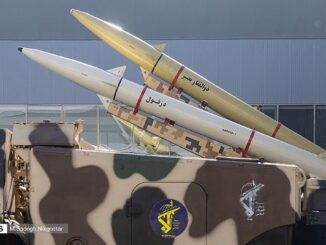
Iran
What would a Rafsanjani presidency mean?

18/05/2013: Iran’s June 14 presidential election takes place against the background of deep divisions in society and the regime.

  Iran

Australia
Labour approves WA’s first uranium mine

17/05/2013: Australia’s federal environment minister Tony Burke gave the go ahead to Toro’s $270 million uranium mining project in the Wiluna region of Western Australia.

  Australia, Environment

New Zealand
Racism and recession in New Zealand

15/05/2013: Working class unity needed to defend rights and living standards

  New Zealand

Australian budget
Say ‘NO’ to the cuts agenda of the major parties

14/05/2013: We shouldn’t let either of the major parties tell us that ‘tough decisions’ or ‘hard cuts’ are required.

  Australia

Ireland
‘Bus Eireann workers in front line of class war - We should all support them!’

13/05/2013: Bus workers take strike action over savage wage cuts and attacks on conditions

  Ireland Republic

Italy
The economic crisis becomes a political and institutional crisis

11/05/2013: The latest events that have happened in Italian politics mark a new phase of development in the crisis in the third European industrial power.

  Italy

Turkey / Kurdistan
PKK announces ceasefire

11/05/2013: On 8 May the PKK has begun to withdraw from Turkey. Millions are hoping now for an end to oppression and for democratic rights.

  Kurdistan, Turkey

Malaysia
Election ’victory’ based on fraud

10/05/2013: Ruling Barisan Nasional’s widespread fraud enrages opposition supporters and young people

  Malaysia

Greece
Challenging the Golden Dawn

10/05/2013: On 2 May the neo-fascist Golden Dawn attempted to distribute food in Syntagma square in Athens to people holding proof of Greek nationality.

  Greece

British county elections
Capitalist parties rejected

10/05/2013: Time for a new mass workers’ party

  Britain

Tunisia
The calm before the storm

09/05/2013: New clashes on the horizon

  Tunisia

Pakistan
General elections held amid political turmoil

08/05/2013: Big landlords, capitalists and influential families are calling the shots

  Pakistan

Sri Lanka
Successful May Day

08/05/2013: The United Socialist Party’s May Day demonstration passed successfully through a number of populous areas of Colombo, ending at Grand Pass Junction.

  May Day, Sri Lanka

Hong Kong
Dockworkers’ strike ends after 40 days

07/05/2013: Union representatives declare a “half success” with a pay rise of 9.8 percent – but important issues are unresolved

  Hong Kong

Britain’s ’precariat’
Fighting for real jobs

06/05/2013: ’Get a job!’ is the constant refrain of privileged Tory ministers and vicious right-wing tabloids. A million unemployed young people are the subject of a relentless campaign of smears and lies.

  Britain, Youth

Liverpool
Rally marks 30 year anniversary of election of socialist council

05/05/2013: Great event remembers the ’47’ struggle

  Britain, History

 Women and the struggle for socialism
It doesn’t have to be like this

05/05/2013: Christine Thomas’ book outlines how inequalities and discrimination against women have not disappeared and women’s struggles must be bound up with wider class struggle to be successful. Read the complete book online here.

  Women

Australian budget
Say ‘NO’ to the cuts agenda of the major parties

04/05/2013: Those who created the crisis should be forced to pay.

  Australia

 Nigerian May Day arrests
All DSM members released [updated]

03/05/2013: The last set of DSM members still in the detention of the state security service (SSS) in Kaduna, Northwest Nigeria, and Ibadan Oyo state, Southwest Nigeria, as of yesterday, has been released.

  May Day, Nigeria, Solidarity

 Pakistan
May Day 2013

03/05/2013: Progressive Workers Federation (PWF), TURCP and SMP organised and intervened in the May Day activities across the country

  May Day, Video

Bangladesh building collapse
Casualties of a rotten profit system

03/05/2013: It is said that where labour is cheap, life is cheap. This is never more so than in the recent horrific deaths of over 400 garment workers crushed in a collapsed building in Dhaka, the capital of Bangladesh.

  Bangladesh

Hong Kong
Dockers’ strike shines a spotlight on Li Ka-shing’s business empire

03/05/2013: Li Ka-shing owns 13 percent of the world’s port capacity and much more besides…

  Hong Kong

Taiwan
Over 20,000 march on May Day

02/05/2013: ‘Defend pensions! Stop corruption!’

  May Day, Taiwan

Pakistan
May Day demonstration in Sindh

02/05/2013: Photos of May Day demonstration in Sindh

  May Day, Pakistan

 Nigeria
Militarisation of May Day rallies

02/05/2013: DSM comrades arrested and detained

  May Day, Nigeria, Solidarity

Portugal
Constitutional court ruling sends government into disarray

01/05/2013: CC rules budget illegal for second time, government declares war against it

  Portugal

May Day Greetings

01/05/2013: The CWI sends revolutionary greetings and solidarity to workers, young people and all those exploited by capitalism.

  May Day

Europe
EU austerity budget – cuts, cuts, cuts

30/04/2013: Irish Presidency brought unprecedented levels of cuts to the EU budget.

  Europe

Scotland
Anti-Bedroom Tax Federation launched

29/04/2013: Writing off of any debt accrued due to the bedroom tax, supporting the building of new social housing, opposing all cuts and austerity measures

  Scotland

Britain
Break with Thatcher’s legacy!

28/04/2013: Socialist policies needed

  Britain

Israel
Social worker union prepares for the coming battle

28/04/2013: SSM member, Suiher Daska and other left candidates were elected to the leadership of the union on the background of the coming struggles against austerity

  Israel / Palestine

History

Russian revolution 90th anniversary

www.socialistworld.net, 11/10/2007
website of the committee for a workers' international, CWI

The October Revolution – when the working class took power

Peter Taaffe, General Secretary, Socialist Party

The capitalist media have made little comment on the 90th anniversary of the 1917 October Revolution in Russia. Yet on the 80th anniversary in 1997, capitalist commentators and historians produced books and articles seeking to denigrate revolutions in general and the Russian Revolution in particular. This year, just one such book by Robert V. Daniels: The Rise and Fall of Communism in Russia has so far been published.

Peter Taaffe looks at the events of the October revolution and asks: does this comparative silence have something to do with the changed background to discussion about the events of October 1917?

pdf version, opens in new window

Russian revolution 90th anniversary

Unlike ten years ago, a kaleidoscope of ‘colour’ or ‘flower’ revolutions in Eastern Europe and the former Soviet Union, and now the ‘saffron’ revolution in Burma, have broken out. These ‘revolutions’ are acceptable to representatives of the possessing classes because they have not challenged the foundations of capitalist rule but, if anything, have sought to consolidate and ‘perfect’ them.

The October 1917 Russian Revolution by contrast instituted for the first time working-class power. As tsarist General Zalessky, speaking for the ‘dispossessed’ capitalists and landlords, said when he mournfully surveyed the Russian Revolution:

“Who would believe that the janitor or watchman of the Court building would suddenly become Chief Justice of the Court of Appeals, or the hospital orderly manager of the hospital, the barber a big functionary, yesterday’s ensign [junior military officer] the commander-in-chief, yesterday’s lackey or common labourer burgomaster, yesterday’s train oiler chief of division or station superintendent, yesterday’s locksmith head of the factory?”

But that was precisely what Russia became after the Bolsheviks led the Russian masses to overthrow the landlord and capitalist system, crowned by the tsarist dictatorship, that was a torture chamber for the mass of the people. Moreover, only in Russia, following the October overturn, did the workers take power and establish real workers’ democracy.

In the last 90 years there have been many opportunities for the working class to follow the path of the Russian workers of 1917. Robert V. Daniels argues falsely that revolutions are a product of “underdeveloped” societies in the first stages of industrialisation.

Yet, in the post-second world war period, a revolutionary wave even greater than that following the Russian Revolution swept Western Europe – in Italy, in France, even in Britain, where troops voted Labour en masse because they were determined to end the mass unemployment and poverty of the interwar years.

In 1968, in France, there was a general strike of ten million workers, the greatest in history. They occupied the factories and reached out for power but were blocked by the leaders of their own organisations, the Communist Party, trade union and ‘socialist’ leaders.

In the Portuguese Revolution of 1974, the capitalist state disintegrated. The great majority of Portugal’s officer caste was enormously radicalised, moving in the direction of socialism, (in Russia, the officers remained implacably hostile, in the main, to the revolution).

In all these cases, the revolutionary process took place in Europe, in ‘developed’ advanced industrial countries. Revolution, a social overturn, unfolds when there is no other way out. Before this, the masses advance and retreat several times before they believe it is necessary to undertake the ‘final assault’. This is how the Russian Revolution developed over nine months, through different phases of revolution and counter-revolution.

The July Days prepared the ground for the counter-revolution’s offensive, with its brutal hounding of the Bolsheviks and massive slander. This culminated in tsarist General Kornilov’s attempt, under the cover of the Kerensky coalition, to drown the revolution in blood with a march on Petrograd.

The Menshevik/Social Revolutionary coalition government was suspended in mid-air as the masses themselves, under the leadership of the Bolsheviks – some of them released from jail like Trotsky to defend Petrograd – smashed Kornilov’s coup.

Similarly, when General Spinola attempted to derail the revolution in Portugal by seizing power in March 1975, the Portuguese working class, emulating the actions of their brothers and sisters 58 years before – without knowing it – completely undermined Spinola’s forces. Workers’ fraternisation tactics even won over Spinola’s special battalions of paratroopers. This in turn propelled the revolution forward, resulting in 70% of industry being taken over.

Kornilov’s defeat in 1917, however, did not result in a similar outcome because of the Mensheviks’ and Social Revolutionaries’ hostility to the idea of taking power and establishing a socialist regime.

A revolution is not the product of a handful of individuals proceeding to stage a ‘coup’, as capitalist historians argue. Daniels’ book implies that the October Revolution could have been prevented: “The moderate soviet leaders could have forestalled the Bolshevik demand for ‘All power to the soviets’ only by taking full power themselves.”

He cites another historian: “If Kerensky had made immediate peace and given all land to the peasants, it is possible that Lenin would never have come to the Kremlin. Such a programme, of course, was Bolshevism in 1917. Its rejection by the moderate elements assured the triumph of their opponents.”

But these ‘moderates’, tied hand and foot to capitalism and landlordism, could not carry out this programme. Thoroughgoing land reform met the resistance of the landlords and the capitalists, who were very often one and the same, united through bank capital.

The agricultural revolution in Russia – one of the tasks of the capitalist-democratic revolution – could only be implemented by a workers and peasants’ government coming to power. The Bolsheviks, and only the Bolsheviks, worked for this throughout the tumultuous events of 1917.

Initially, the masses were confused and hostile to the Bolsheviks’ ideas. In July, when the Bolsheviks were persecuted and driven underground, the Donetz miners, then under the influence of the compromising Mensheviks and Socialist Revolutionaries, took an oath at a gathering of 5,000 people reading: “We swear by our children, by God… that we will never relinquish the freedom bought with blood on 28 February 1917… we will never listen to the Leninists [who] are leading Russia to ruin, whereas the Social Revolutionaries and Mensheviks say: ‘The land to the people, land without indemnities; the capitalist structure must fall after the war and in place of capitalism there must be a socialist structure’.”

As Trotsky commented, this oath directed against the Bolsheviks in reality led straight to the Bolshevik revolution. They were the only ones who could give land, peace, bread and freedom. Their opponents were tied to the system that was incapable of delivering this to them.

Slowly, as the masses saw and understood what the Bolsheviks stood for, hostility to their policies was remoulded into deep, implacable support. One soldier in the Moscow garrison said: “After the attempt of Kornilov, all the troops acquired a Bolshevik colour… All were struck by the way in which the statement (of the Bolsheviks) came true… that General Kornilov would soon be at the gates of Petrograd.”

Growth of Bolsheviks

The Bolsheviks grew massively in August and September. The masses “drink up the Bolshevik slogans just as naturally as they breathe air”. Conversely, the Social Revolutionaries and Mensheviks collapsed; the former from 375,000 votes in elections to the Moscow Duma in June to only 54,000 in September.

The Petrograd garrison boasted 90% for the Bolsheviks, in some detachments over 95%. In the shop and factory committees, the same process was clear. At the beginning of the revolution in February, the Bolsheviks were a small minority with 1% or 2% in the soviets and only 4% when Lenin returned to Russia in April 1917.

At that stage, Lenin declared: “We must base ourselves only upon the consciousness of the masses. Even if it is necessary to remain in a minority, so be it … We will carry on the work of criticism in order to free the masses from deceit. Our line will prove right. All the oppressed will come to us. They have no other way out.” And so it proved in the tumultuous months following Kornilov’s defeat.

Revolution is a process, which Daniels points out, “develops over a period of years, through discernible stages”. This description, generally correct in its time-scale, did not apply to Russia because the urgency of ending the slaughter of the first world war gave the revolution its concentrated character and high tempo.

But revolutions, ultimately, arrive at decisive moments when power is posed. If the oppressed masses do not seize the opportunity, then a downswing occurs where the former exploiters seek to take back the revolution’s gains through counter-revolution.

Sometimes this assumes a bloody character, as it did after the defeat of the 1925-27 revolution in China, in the bloody terror of Chiang Kai-shek’s Guomindang and the murder, rape and brutality of invading imperialist armies like the Japanese.

Undoubtedly, if the working class had not taken power, then a new Kornilov and a reign of terror, not the ‘tranquil’ humane capitalist democracy dreamed of by capitalist professors, would have ensued. But a revolution is determined by the whole preceding period and the existence of certain prerequisites. In Russia, the ruling classes – the nobility, monarchy, bureaucracy and the politically weak capitalists, with no real roots in the mass of the people – were rotting away.

The oppressed nationalities’ demands for freedom were denied by the compromisers. The revolt of the peasantry and the demand for the land was widespread. 77% of the peasant departments were in revolt that autumn. The working class – concentrated in big factories and a dynamic force – felt that they “could no longer live like this”. This was undoubtedly the mood in autumn 1917.

These conditions may exist, yet a revolutionary opportunity can still be missed through faulty leadership. History shows this, both before 1917 and since. Friedrich Engels, co-founder of the ideas of scientific socialism with Karl Marx, pointed out that there can be periods in the life of society when 20 years is like one day and then there can be one day when the events of 20 years are concentrated.

Broadly speaking, this is what characterises a revolutionary period. Lenin, in urging the Bolshevik party to lead the revolution, wrote from the Finnish underground where murder threats had driven him after the July days, that the fate of Russia could be decided in two or three days.

In reality, the possibility of the working class and poor peasants taking power lasted only two or three months, probably in September and October. Immediately before the October overturn, the masses in Petrograd and elsewhere were becoming impatient, muttering that perhaps the Bolsheviks were like other parties, would dither and not take power. To the left of the Bolsheviks, the anarchists began to grow.

Fearful that the Bolsheviks could miss the opportunity and, from exile, fearing that even the soviets had degenerated under Menshevik and Social Revolutionary influence, Lenin urged the Bolshevik party to take power, basing itself on the more representative shop stewards and factory committees.

Trotsky, present in Petrograd, was more in touch with the colossal changes being wrought in the soviets. The ‘parent’ of all Russia’s soviets, the Petrograd soviet, swung decisively towards the Bolsheviks. Meanwhile, Kerensky’s coalition government sought to move the most revolutionary battalions of soldiers out of Petrograd, obviously in preparation for a march on ‘Bolshevik’ Petrograd.

To counter this the Petrograd soviet, which had installed Trotsky as its chairman in September, organised a Military Revolutionary Committee to defend the revolution’s gains. This body carried through the October insurrection. For this to be achieved, it needed the existence of the ‘subjective factor’, the Bolshevik party. The existence of this party led to the successful October Revolution.

International impact

Daniels argues that the Bolsheviks failed in their ‘internationalist’ perspective: “Despite the high hopes of 1919, world revolution failed to materialise.” On the contrary, the October Revolution initiated the ‘Ten Days that Shook the World’. Lenin and Trotsky saw the Russian Revolution as the impetus to a European and world revolution.

There were revolutions in Germany in 1918, in Hungary in 1919 and a series of upheavals which, if the working class of the rest of Europe had possessed a leadership like the Bolsheviks, would have completely transformed the situation in Europe and the world, and with it changed history.

The role of a mass party cannot be separated from the process of revolution. It is like the forceps for an obstetrician at a difficult birth. Without this, revolutions can and have resulted in abortions.

Despite abundant revolutionary opportunities in the 20th century and in this one (Nepal, for instance), only in Russia did the working class directly take power and establish – for a short time (1917-23), it is true – workers’ democracy. This meant the election of all officials, the right of recall, no official to receive more than the average worker, etc.

Because of the blight of totalitarian Stalinism, the atrophy and collapse of the old working class organisations - the social democracy and communist parties - and their hollowing out into empty bureaucratic machines, new generations of young people and workers tend to reject the idea of ‘parties’ and even organisation.

Yet, without the lever of a mass party with a farsighted revolutionary leadership, history shows that a revolutionary opportunity can be squandered with terrible consequences for the masses. The lesson of the Russian Revolution is that a party is required but one that bases itself on politically aware workers with their conscious control, democracy and influence reflected at all levels.

The same applies to the kind of state needed in transition from capitalism to socialism. Daniels writes: “Every great revolution has ended in some sort of dictatorship.” So it has been, so it will be in the future, he implies. Entirely discounted are the objective realities confronting revolutions up to now.

For instance, the great 18th century French Revolution took place in a state with a higher economic and cultural level than those surrounding it. Mortally afraid that they would meet the same fate as France’s royalty and aristocracy, feudal Europe, together with the British capitalists, ganged up against revolutionary France. This was one factor leading the revolution from the extreme democracy of the sans culottes through stages to Bonaparte’s dictatorship.

The Russian Revolution, the greatest single event in human history, was carried through on the basis of the most democratic organisations of the working class, the soviets (workers’ committees) and of the most democratic workers’ state ever seen.

It degenerated not because Stalinism was inherent in Marxism-Leninism, as Daniels and others imply, but because of the Russian Revolution’s isolation. Lenin and Trotsky never perceived it possible to establish socialism in isolation in such an economically and culturally backward society. Only the triumph of the European revolution would have guaranteed the maintenance and extension of the democracy from the outset, through the construction of a European socialist united states.

Instead, the young workers’ state was confronted with civil war, as the dispossessed landlords and capitalists collaborated with 21 armies of imperialism to try to destroy this state. At one stage, the revolution was confined to two cities, Petrograd and Moscow. The rest of Russia was in the hands of landlord-capitalist reaction.

However, the revolution’s class and internationalist appeal ultimately led to victory, which would have been impossible without the mass support of the European and worldwide working class.

Daniels’ arguments about Bolshevism’s inherent dictatorial character during the civil war are bogus. He indicts the Bolsheviks for banning parties opposed to them. He leaves out one small detail. All these parties except for the fascistic, right-wing reactionary Black Hundreds, were allowed to exist in the first stage after the revolution. Only when they took up arms, resorted to the methods of civil war, did the Bolsheviks take action.

How did Abraham Lincoln act towards the slaveholders during the American Civil War? Did he allow their representatives to function in areas controlled by the Union? Did Oliver Cromwell and the parliamentary forces in the English Civil War let King Charles I’s forces operate in their areas?

Merely posing the question shows how absurd and abstract is ‘democracy’ for the exploiters in a civil war, a war between the classes. Such methods, however, would not be necessary when a revolution develops in an advanced industrial country, which will inevitably spread internationally. There are now convulsions on the world financial markets - a harbinger of coming economic recession.

Much as some sneer at the prospect of revolution in the modern era, these convulsions, together with massive ‘unfortunate‘ social eruptions (which they freely describe as ‘revolutions’ when they are on capitalism’s ‘periphery’), will become a reality in the 21st century in the ‘advanced’ societies as well.

This is the final article in our series on the events of 1917 in Russia. See previous postings for the first three parts.

Special feature from The Socialist, paper of the Socialist Party, cwi in England and Wales.


Europe

 video

Pakistan: May Day 2013, 03/05/2013

 further videos

CWI - get involved


solidarity

tamil solidarity campaign kazakhstan

featured links

Paul Murphy, MEP

cwi links

Marxist.net, CWI marxist archive

cwi comment & analysis

world economic crisis

analysis and commentary


cwi publications

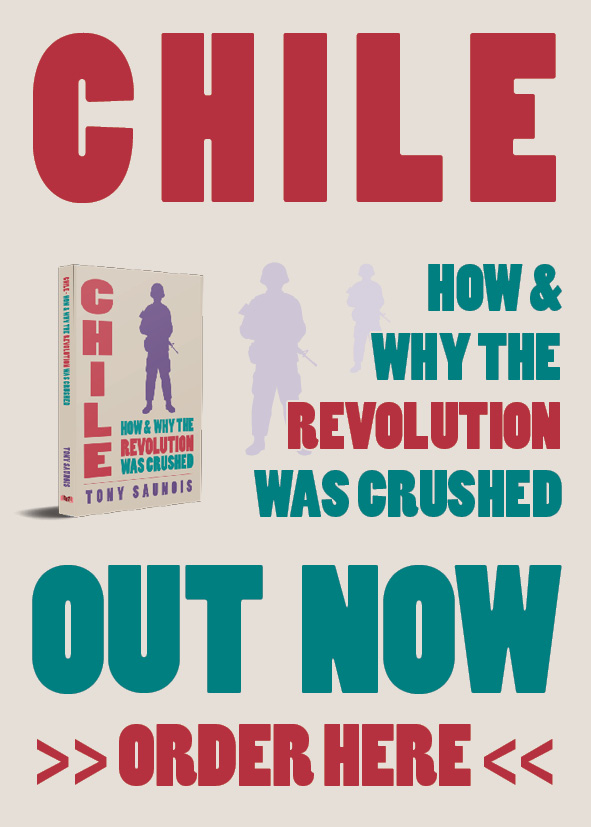
marxism in today's world che

Che Guevara: Símbolo de Lucha

Por Tony Saunois

A socialist world is possible, the history of the cwi with new introduction by Peter Planning green growth, a contribution to the debate on enviromental sustainability

NEWS

South Africa: Mass retrenchment threat in mining industry demands mass action
18/05/2013, DSM (CWI South Africa) reporters:
Workers and Socialist Party calls for one-day-general strike

Iran: What would a Rafsanjani presidency mean?
18/05/2013, Kave Heydari, Iranian CWI supporter in Britain:
Iran’s June 14 presidential election takes place against the background of deep divisions in society and the regime.

Australia: Labour approves WA’s first uranium mine
17/05/2013, Socialist Party (CWI Australia) reporters Perth:
Australia’s federal environment minister Tony Burke gave the go ahead to Toro’s $270 million uranium mining project in the Wiluna region of Western Australia.

New Zealand: Racism and recession in New Zealand
15/05/2013, Jared Phillips, CWI New Zealand:
Working class unity needed to defend rights and living standards

Australian budget: Say ‘NO’ to the cuts agenda of the major parties
14/05/2013, Editorial comment from ‘The Socialist’, paper of the Socialist Party (CWI Australia):
We shouldn’t let either of the major parties tell us that ‘tough decisions’ or ‘hard cuts’ are required.

Ireland: ‘Bus Eireann workers in front line of class war - We should all support them!’
13/05/2013, Socialist Party (CWI Ireland) Reporters:
Bus workers take strike action over savage wage cuts and attacks on conditions

May Day in Nigeria: Jonathan government intensifies attacks on democratic rights
12/05/2013, Ebike Iseru, DSM (CWI Nigeria):
15 DSM members arrested at May Day rallies

Italy: The economic crisis becomes a political and institutional crisis
11/05/2013, Marco Veruggio, ControCorrente (CWI Italy):
The latest events that have happened in Italian politics mark a new phase of development in the crisis in the third European industrial power.

Malaysia: Election ’victory’ based on fraud
10/05/2013, Ravichandren, CWI Malaysia:
Ruling Barisan Nasional’s widespread fraud enrages opposition supporters and young people

Greece: Challenging the Golden Dawn
10/05/2013, Katerina Kleitsa , Xekinima (CWI Greece):
On 2 May the neo-fascist Golden Dawn attempted to distribute food in Syntagma square in Athens to people holding proof of Greek nationality.

British county elections: Capitalist parties rejected
10/05/2013, Editorial of the Socialist, paper of the Socialist Party (CWI England & Wales):
Time for a new mass workers’ party

Tunisia: The calm before the storm
09/05/2013, CWI reporter in Tunis:
New clashes on the horizon

Pakistan: General elections held amid political turmoil
08/05/2013, Khalid Bhatti, SMP (CWI Pakistan), Lahore:
Big landlords, capitalists and influential families are calling the shots

Sri Lanka: Successful May Day
08/05/2013, USP(CWI, Sri Lanka):
The United Socialist Party’s May Day demonstration passed successfully through a number of populous areas of Colombo, ending at Grand Pass Junction.

Hong Kong: Dockworkers’ strike ends after 40 days
07/05/2013, Vincent Kolo, chinaworker.info:
Union representatives declare a “half success” with a pay rise of 9.8 percent – but important issues are unresolved

Britain’s ’precariat’: Fighting for real jobs
06/05/2013, Claire Laker-Mansfield, Socialist Party (CWI England & Wales), first published in The Socialist:
’Get a job!’ is the constant refrain of privileged Tory ministers and vicious right-wing tabloids. A million unemployed young people are the subject of a relentless campaign of smears and lies.

Liverpool: Rally marks 30 year anniversary of election of socialist council
05/05/2013, Dave Walsh, Unite Convener for Liverpool City Council, from The Socialist, paper of the Socialist Party (CWI England & Wales):
Great event remembers the ’47’ struggle

Australian budget: Say ‘NO’ to the cuts agenda of the major parties
04/05/2013, Editorial comment from the May 2013 edition of ‘The Socialist’, paper of the Socialist Party (CWI Australia):
Those who created the crisis should be forced to pay.

Nigerian May Day arrests: All DSM members released [updated]
03/05/2013, Press statement by Segun Sango, general secretary DSM (CWI Nigeria):
The last set of DSM members still in the detention of the state security service (SSS) in Kaduna, Northwest Nigeria, and Ibadan Oyo state, Southwest Nigeria, as of yesterday, has been released.

Pakistan: May Day 2013
03/05/2013, Syed Fazal Abass Shah, secretary general PWF, Pakistan:
Progressive Workers Federation (PWF), TURCP and SMP organised and intervened in the May Day activities across the country

Bangladesh building collapse: Casualties of a rotten profit system
03/05/2013, The Socialist, paper of the Socialist Party (CWI England & Wales):
It is said that where labour is cheap, life is cheap. This is never more so than in the recent horrific deaths of over 400 garment workers crushed in a collapsed building in Dhaka, the capital of Bangladesh.

Hong Kong: Dockers’ strike shines a spotlight on Li Ka-shing’s business empire
03/05/2013, Dikang, Socialist Action (CWI supporters in Hong Kong):
Li Ka-shing owns 13 percent of the world’s port capacity and much more besides…

Taiwan: Over 20,000 march on May Day
02/05/2013, Chris Dite in Taipei, chinaworker.info:
‘Defend pensions! Stop corruption!’

Pakistan: May Day demonstration in Sindh
02/05/2013, SMP (CWI Pakistan), Sindh:
Photos of May Day demonstration in Sindh

Nigeria: Militarisation of May Day rallies
02/05/2013, Press statement by Segun Sango, general secretary DSM (CWI Nigeria):
DSM comrades arrested and detained

Portugal: Constitutional court ruling sends government into disarray
01/05/2013, Goncalo Romeiro, Socialismo Revolucionario (CWI in Portugal):
CC rules budget illegal for second time, government declares war against it

CWI Comment and Analysis

ANALYSIS

World economy: "Central banks are flying blind"
19/05/2013, Per-Åke Westerlund, from Offensiv, newspaper of Rättvisepartiet Socialisterna (CWI Sweden):
Increasing concerns and contradictions

Turkey / Kurdistan: PKK announces ceasefire
11/05/2013, Festus Okay, Sosyalist Alternatif (CWI Turkey):
On 8 May the PKK has begun to withdraw from Turkey. Millions are hoping now for an end to oppression and for democratic rights.

Women and the struggle for socialism: It doesn’t have to be like this
05/05/2013, Christine Thomas, Controcorrente (CWI Italy):
Christine Thomas’ book outlines how inequalities and discrimination against women have not disappeared and women’s struggles must be bound up with wider class struggle to be successful. Read the complete book online here.

Cyprus: On the edge of a catastrophic slump
25/04/2013, Niall Mulholland, CWI:
Socialist polices needed to resolve crisis in the interests of majority

US: After the Boston Tragedy
23/04/2013, Bryan Koulouris, Boston, Socialist Alternative (CWI supporters in the US):
NO to Racism and Repression

Britain: Combating violence against women
14/04/2013, Hannah Sell, on behalf of the Socialist Party (CWI England & Wales) Executive Committee:
A socialist perspective on fighting women’s oppression

Thatcher: A class warrior for capitalism
12/04/2013, Alistair Tice, Socialist Party regional secretary, Yorkshire:
Millions have been waiting for this day, 8 April 2013. Margaret Thatcher will never be forgiven for the devastation that her Tory governments’ policies wrought on working class communities in the 1980s - and is still being felt today.

Britain: Margaret Thatcher dies
08/04/2013, Peter Taaffe, Socialist Party (CWI England & Wales) general secretary:
Thatcher’s bitter legacy

Britain: A further round of savage austerity
08/04/2013, Peter Taaffe, Socialist Party (CWI England & Wales) general secretary:
We must stop them!

Israel: “There is a future” – of cuts, racism and resistance
05/04/2013, Socialist Struggle Movement (CWI Israel/Palestine):
Weak Israeli government will try to implement austerity budget, and would try to maintain the occupation, possibly under a new cover of "negotiations" with Palestinians. Resistance likely on all fronts.

Cyprus: “Working people pay high price for crisis of euro and capitalism”
31/03/2013, Niall Mulholland spoke with Athina Kariati from New Internationalist Left (CWI in Cyprus) about Cyprus’s deal with the Troika, what it will mean for working people and what is the socialist solution to the crisis:
Interview with a Cypriot socialist

China: New leadership rejects democratisation
28/03/2013, Vincent Kolo, chinaworker.info:
At annual NPC-CPPCC meetings Xi Jinping and Li Keqiang talk of ‘tough reforms’ for economy, but rule out ‘Western models’

Venezuela: After the death of Hugo Chávez
24/03/2013, Tony Saunois, CWI, a shorter version of this article was first published in Socialism Today, magazine of the Socialist Party (CWI England & Wales:
Radical, populist policies and anti-imperialism helped transform the political situation

Italy’s clowns: No joke for establishment parties
23/03/2013, Christine Thomas, ControCorrente (CWI in Italy), first published in Socialism Today, magazine of the Socialist Party (CWI England & Wales):
In his ‘tsunami’ election tour Grillo began to give voice to the deep discontent at economic crisis and austerity

Cyprus/EU: Eurozone back in turmoil
22/03/2013, Tony Saunois, CWI:
No trust in capitalist government! No austerity for the Euro! Kick out the Troika! For a socialist alternative!
[Updated article, 25 March]

South Africa: Workers & Socialist Party launched in Pretoria
21/03/2013, CWI reporters, South Africa:
Launch surpassed all expectations

Iraq: Ten years since ‘shock and awe’
20/03/2013, Niall Mulholland, from The Socialist, weekly newspaper of the Socialist Party (CWI England and Wales):
Imperialism’s harvest of death and destruction

March 8th: The day of international working women’s solidarity
07/03/2013, Clare Doyle, CWI:
Beware the anger of women against the bosses’ system!

Hugo Chavez dies: The struggle continues
06/03/2013, Tony Saunois, CWI Secretary:
Millions of Venezuelan workers, the poor and youth will mourn the death of Venezuelan president, Hugo Chavez

Lebanon: Public sector workers on indefinite strike over wages
04/03/2013, Tamer Mahdi, CWI:
Workers’ unity against big business shows potential for anti-sectarian, socialist alternative

Portugal: New explosion against austerity and the government
03/03/2013, socialistworld.net:
“Screw the Troika – the people are the best rulers”

Tunisia: ‘Buckshot’ Ali Larayedh appointed prime minister
27/02/2013, CWI supporters in Tunisia:
Down with the Ennahdha regime! Down with the system!

Italy: Voters reject austerity in ‘tsunami’ election
27/02/2013, Chris Thomas, Controcorrente (CWI in Italy):
Political instability, crisis and new opportunities ahead

Spain: Corruption scandal leaves government on the brink
24/02/2013, Danny Byrne, CWI:
What strategy to do away with rotten government and system?