

deutsch |  english |  español  |  français  |  italiano  |  nederlands  |  polski  |  português  |  svenska  |  türkçe  |  中文  |  عربي  |  русский

latest news

Algeria
Legislative elections give near-majority to the FLN

20/05/2012: Anger from below, manoeuvres from the top

  Algeria

Burma
Two elections, 90% support but no power

19/05/2012: Workers’ organisations must ensure real change

  Burma

 Russia
CWI supporters arrested during Moscow protests

18/05/2012: Police target socialists at protest camp – urgent protests needed!

  Russia, Solidarity

Lebanon
Union leaders call “a strike without credibility”

18/05/2012: Build fighting, democratic trade unions!

  Lebanon

Germany
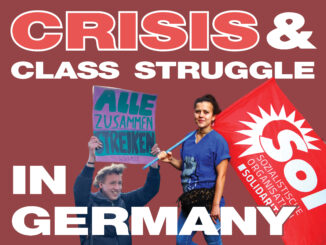
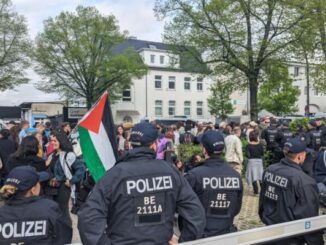
Massive state repression against “Blockupy” movement

18/05/2012: Thousands attempt to occupy squares and blockade the ECB in Frankfurt, Germany. Protests are banned.

  Germany

 Kazakhstan
Activists released

18/05/2012: Leader of the “Leave Peoples’ Homes Alone” campaign and member of the SMK, Larissa Boyar, and others have been released from prison

  Kazakhstan, Solidarity

Greece
New elections due as pro-austerity coalition talks fail

15/05/2012: For a Left government! For anti-austerity, pro-worker, socialist policies!

  Greece

Tunisia
General strikes, power struggles and an economic stalemate

15/05/2012: Republic’s president, Marzouki, afraid of ‘new revolution’

  Tunisia

 Kazakhstan
MEP speaks out against repression

15/05/2012: "Despite this ferocious oppression, the opposition and discontent of the working class cannot be silenced"

  Kazakhstan, Video

US
Socialist candidate challenges corporate politics in Washington state

13/05/2012: "During an election dominated by career politicians who are loyal to big business, I am running as a Socialist Alternative candidate to make sure there is at least one independent left-wing, pro-worker candidate in Washington State worth voting for."

  US

US
In calculated move, Obama supports gay marriage

12/05/2012: Step up the Struggle for Equality

  LGBT, US

Nigeria
Experiences of the explosion of class struggle

12/05/2012: Urgency of a working class alternative proven again

  Nigeria

Russia
Moscow left holds May Day Moscow demonstration

12/05/2012: Lively and political CWI contingent attracts variety of activists

  May Day, Russia

May Day
Demonstration in Uleåborg Finland

12/05/2012: Meeting discusses involvement in Afghanistan

  Finland, May Day

Kazakhstan
Miners’ strike ends in victory for workers

11/05/2012: Campaign Kazakhstan reports that newspapers in Kazakhstan said a strike by miners at KazakhMys ended on 7 May with a complete victory for the workers.

  Kazakhstan

 Irish referendum
No to the austerity treaty!

10/05/2012: On 31 May Irish voters are asked to vote on the European fiscal treaty. This video explains what the treaty is about.

  Ireland Republic, Video

May Day in Nigeria
Fanfare fails to mask workers’ anger

10/05/2012: May Day should have offered opportunity for workers to pose their demands and agitation before the government

  May Day, Nigeria

France
Weekend that shocked Europe

09/05/2012: Austerity rejected in Eurozone’s second biggest economy

  France

Sri Lanka
United left May Day in Colombo

09/05/2012: Socialist organisations march to joint rally

  May Day, Sri Lanka

Britain
Legitimacy of Cameron and Clegg further shattered

07/05/2012: The Con-Dem government suffered a crushing defeat in last Thursday’s elections for local authorities and in the mayoral contests apart from London.

  Britain

The capitalist “vampire squid” and the class struggle in Europe

06/05/2012: As economic crisis worsens and class struggles continue in Spain, Greece, Portugal and elsewhere in Europe, the need for working class fight-back and to build the influence of Marxism grows.

  CWI Comment And Analysis, Europe

Hong Kong
Thousands march on May Day

05/05/2012: Socialist Action (CWI) campaigning against the capitalist 1% and against racism

  Hong Kong, May Day

Sweden
May Day in Gothenburg

05/05/2012: Bobby Seale as guest speaker

  May Day, Sweden

 Kazakhstan
Trial of Vadim Kuramshim resumes

04/05/2012: Solidarity needed to free Vadim!

  Kazakhstan, Solidarity

Pakistan
May Day in Sindh

04/05/2012: Fotos of impressive march

  May Day, Pakistan

Lebanon
Build a mass workers’ movement to get rid of the corrupt ruling class

03/05/2012: For a workers’ programme that puts forward the socialist alternative

  Lebanon, May Day

Germany
Heading towards days of action against Troika austerity

03/05/2012: Days of action planned in Frankfurt/Main against European Central Bank and big finance

  Germany

Britain
"We’re striking back on 10 May"

02/05/2012: Pension cuts, job cuts, service cuts

  Britain

Ireland
Water charges are just paving the way for privatisation

02/05/2012: Irish government doesn’t seem to have learned anything from the massive opposition to its Household Tax

  Ireland Republic

France
Down with Sarkozy and austerity policies!

02/05/2012: Make the rich and the bankers pay for their crisis!

  France

Sweden
Chinese premier’s visit met by vociferous democracy protests

01/05/2012: CWI supporter Zhang Shujie and other activists took to the streets when Wen Jiabao visited Stockholm and Gothenburg

  China, Sweden

May Day 2012
Celebrate working class history and fight for new victories!

30/04/2012: International Workers’ Day and the socialist alternative to austerity and barbarism

  CWI Comment And Analysis, May Day

 Kazakhstan
Three activists jailed for 15 days

29/04/2012: Immediate protests and financial help needed

  Kazakhstan, Solidarity

Latin America

Valuable discussions at CWI Summer School

www.socialistworld.net, 19/02/2008
website of the committee for a workers' international, CWI

A new stage in development of socialist forces on the continent

Johannes Ullrich, CWI Germany, Sao Paulo

The Committee for a Workers’ International (CWI) is currently holding a very successful and enthusiastic Latin American Summer School. More than 80 people are participating, representing CWI sections in Bolivia, Brazil, Chile and Venezuela and visitors from Belgium, Britain, Germany, Sweden and the United States.

The school opened with a lively discussion on world perspectives. Tony Saunois introduced the discussion and Karl Debbaut summed up for the International Secretariat. Contributions to the debate touched on the spreading economic crisis, the presidential elections in the US, the war in Iraq and Afghanistan, the instability in the Middle East and reports by comrades from the European sections present. This meeting represents a huge step forward for the work of the CWI in Latin America. For the first time, in many years, we were able to bring together the comrades, exchange experiences and draw up plans for our collective work in Latin America. Many of the comrades, including some who have been active members for a longer period, have never had the chance to exchange ideas and debate with CWI activists from other countries in Latin America because of the economic conditions and the lack of funding. To hear, for example, for the first time, the comrades in Bolivia really enthused the meeting. This meeting marks a new stage of the development of the CWI in Latin America.

Other debates followed, on Latin America, Trotsky and the Permanent Revolution, the history of the workers’ movement in Latin America, as well as commissions on the trade unions, youth and women, and discussions on building the sections of the CWI. In between, the Venezuelan and US comrades shared their expertise on baseball and the Brazilian football team was routed by the ad hoc 11 of the international selection.

After the discussion on world perspectives, the meeting moved on to debate the general perspectives for Latin America, introduced by Andre Ferrari, complemented over the next two days with more specific introductions on Bolivia, Brazil, Chile and Venezuela. In the next couple of days, we will publish more detailed reports on Bolivia and Venezuela and Brazil and

Chile.

In his opening remarks, Andre Ferrari commented that, “The history of Latin America can be summed up by its struggle against imperialism combined with the failure of its ruling classes of building home grown capitalism independent of the imperialist powers.”

Three different processes are developing simultaneously in Latin America. The first process is typified in the countries of the “Andean Volcano”, which sees more radical nationalist policies adopted in opposition to imperialism in countries such as Venezuela, Ecuador and Bolivia. A second category of countries (like in Argentina, Brazil and Uruguay) are categorized by centre-left governments that have been able to use economic growth over the last few years to establish some stability. In the last group of countries (Colombia, Mexico or Peru) we find openly neo-liberal governments aligned to imperialism.

Setbacks to Bolivarian government

The setback the Bolivarian government of Hugo Chavez in Venezuela suffered when it lost the referendum on constitutional changes, last December, proved to be a turning point. Chavez lost the referendum due to a mass abstention of people who had previously voted for him, while the US-sponsored opposition only gained 300,000 votes. The political answer of Chavez and his government has been to call for a national alliance with the middle classes and the national bourgeoisie against imperialism. The government also voted an amnesty for some of the people involved in the 2002 coup against his government and the trade union leader, Orlando Chirino, leader of the left-wing of the UNT trade union federation, was sacked from the state owned oil company, PDVSA. This represents a swing to the right, which endangers the pro-poor and pro-worker reforms of 9 years of Chavez government. The question of the struggle to end corruption and lack of democracy shown by many trade unions leaders was an important feature in the discussion. There is increasing pressure by the working class for action to be taken to defend its rights, which is bringing workers into conflict with Chavez government and bureaucracy. The failure of the Chavez government to expropriate the key industries means that the ruling class maintains its stranglehold on the economy. Venezuelan comrades reported that many basic products, such as milk, beans and sugar, are unobtainable for weeks on end and that queues outside supermarkets are reminiscent of the situation in Stalinist countries at the end of the 1980’s. The threat of counter-revolution in Venezuela remains because of the failure, so far, to defeat capitalism and to establish a genuine socialist government.

The battle between the government of Evo Morales and the right-wing over the constitutional assembly in Bolivia reached it zenith in November and December, last year. Micaela Sarmiento, from the Bolivian section of the CWI, spoke in the plenary meeting, giving a report on the political situation and the work of the CWI. She painted a vivid picture of the terrible racism used by the right-wing against the indigenous peoples of Bolivia. Governors of the media luna departments (the departments in the east of Bolivia, which hold most of the natural resources of the country) appear on television and use racist insults about indigenous people. The middle and upper class youth of Santa Cruz are forming armed gangs and have carried out attacks, including murders, against indigenous people. A form of anti-indigenous apartheid exists in east Bolivia, with the existence of “Whites only” bars, restaurants and hotels. A referendum to approve the new constitution will be held in the second half of this year. This will provide a new point of confrontation between the government and the right-wing. We will call for a ‘Yes’ vote in the referendum, while stressing the need to prepare for the struggle to implement the promised reforms. While the constitution contains positive points, it will not be enough to radically change the lives of workers and poor in Bolivia. No law or set of laws, alone, will be able to do this. The struggle for democratic socialism based on the democratic nationalization of the economy, under workers’ control and management, is needed to radically break with capitalism.

Mass protests in Brazil

That the second government headed by Lula in Brazil will be totally different from the first period of government is clear. 2007 was marked by a process of national mobilizations against the Lula government, with a total of 1.5 million people participating in protests against austerity measures. While the Lula government enjoys the clear support of the ruling class, and holds the biggest majority in congress since the end of the military dictatorship, it is incapable of overcome the divisions and infighting between the different sections of the ruling class. Lula will not be able to stand in the next presidential elections and the PT (Workers’ Party) seems incapable of finding a suitable successor. With the other traditional parties facing the same leadership problems, P-Sol can have an important influence in the next few years. However, the last presidential election campaign also showed that a struggle inside P-sol will be necessary. The success of the election campaign, with P-Sol candidate, Heloisa Helena, receiving 7 million votes, also made clear that there is a pressure inside P-sol to soften the programme of the party and to give in to ‘electoralism’.

The Brazilian section of the CWI, Socialismo Revolucionario, plays a very important role in unifying the left inside P-sol, to organize the political struggle and to build P-sol as a revolutionary socialist party, using the electoral platform to advance the workers’ cause and also participating in, and initiating, workers’ struggle.

The role played by the CUT (the Brazilian trade union confederation) in supporting the neo-liberal attacks of the Lula government and acting as a break on the capacity of the working class to struggle against these policies, led to important developments. The most important step forward, perhaps, was the initiation of a campaign leading to a foundation congress of CONLUTAS, a confederation of the most militant sections of the Brazilian trade unions, which is due to take place in April.

One of the themes that emerged in the discussion, and later in the commission on the trade unions, is the question of the need to organize those in the informal sector and to link them to the trade unions and working class. This is an important issue throughout Latin America and a crucial task facing the working class. In Brazil, and some other countries, there are important steps being taken to rebuild and reconstruct the workers’ movement.

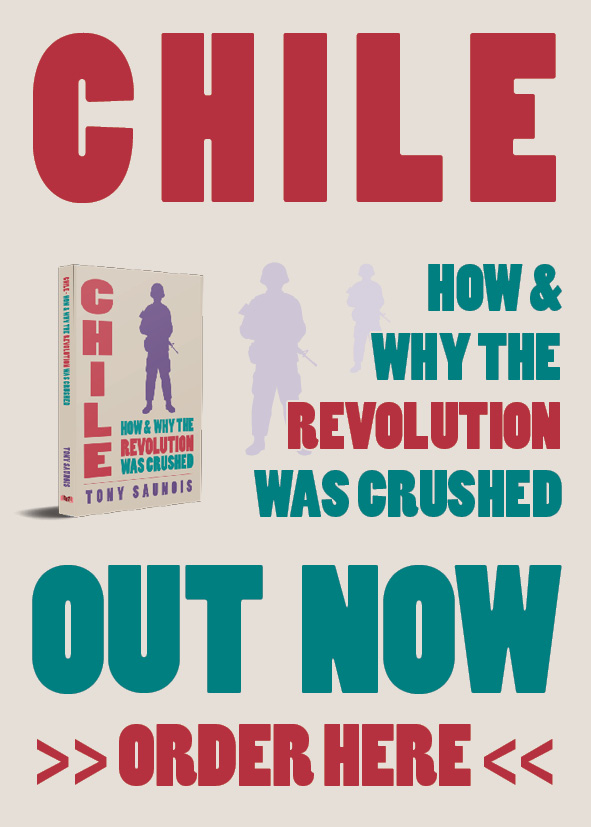
Comrade Patricio, from Chile, stressed the recent strikes in Chile, which followed a school student movement – the ‘Revolt of the Penguins’. In their struggle, copper workers brought together smaller unions, and won a unified contract. All this was against the labour laws introduced by Pinochet and which remain today.

New wave of struggles in Chile

The growing pressure on the trade union bureaucracies in the continent, and the attempts to overcome the obstacles they represent or to build alternative trade union centres, was also mentioned by comrade Celso Calfullan. In Chile, the struggle of the school students, in 2006, opened up a new period of working class struggle, with important strikes initiated by workers who are not represented or underrepresented in the traditional trade union movement. Those who work for subcontractors in the copper industry achieved an important victory against the anti-trade union laws, still in force from the time of the Pinochet dictatorship. This struggle, as with strikes by forestry workers and the struggle of the Mapuche indigenous people, was met with fierce repression by the government and the state. Police shot a young forestry worker and a young Mapuche activist. When it came to power, the Bachelet government raised expectations of change but it is now the least popular government since the end of the Pinochet dictatorship. The extreme neo-liberal policies, followed by the different governments of the ‘concertacion’ means enormous concentration of wealth in the hands of a small minority and poverty for the majority. Chile has 5 representatives in the list of the 10 richest people of the world, while projections predict that 70% of the wages earned by workers, in 2008, will be used next year to pay of personal and housing debt. It is no wonder then that the government has organized a “Comite Ministerial de Crisis” and is trying to reinforce their influence in the trade union movement to stop or control future struggles.

The fraudulent election of Felipe Calderon, in Mexico, and the election of Alan Garcia, in Peru, was heralded by international pro-market commentators as a “turning point”. These elections were taken as proof that the rising tide of class struggle, and the election of governments who rejected neo-liberalism and imperialism, throughout Latin America, was checked.

Several CWI comrades contributed to the discussion about Mexico and Peru, pointing out that the government of Alan Garcia experienced a very short post-election honeymoon, followed by general strikes of teachers and workers of the public sector. The situation in Mexico, after the mass movement lead by Andres Manuel Lopez Obrador against electoral fraud, and a regional uprising, in Oaxaca, remains very unstable. The country’s extreme dependence on the US economy means that it will be hardest hit by an economic recession in North America. Comrades from Brazil stressed this, and the need for the CWI to intervene in this important Latin American country.

In Central America countries, like Costa Rica, Honduras and Guetemala, we witness the beginning of new struggles - albeit at a slower rhythm than in the Andean countries – which represent a second wave of radicalization in Latin America.

Perspectives for Cuba

Comrades also commented on perspectives for Cuba. There is growing questioning by students about the lack of democratic rights. In a video distributed on the internet, Cuban students debate with the chair of the Cuban parliament, asking questions, such as, “Why are we not allowed a google email account? Why are people in charge of government projects not removed when they fail in their duties? Why are we not allowed to travel abroad?”

This questioning reconfirms our analysis of the Cuban regime. It is a regime that has been able, on the basis of a planned economy, to give the people education and health care unobtainable by the masses in Latin America or the US, but, it is also a regime that restricts basic democratic rights. The serious illness of Fidel Castro has opened up a new situation in Cuba, where parts of the bureaucracy, especially in the army, look towards allowing ‘free market forces’ to play a bigger role. A victory for a Democratic Party candidate in the US presidential elections, and a subsequent softening or lifting of the US embargo against Cuba, could reinforce this tendency and lead to a re-introduction of capitalism in Cuba. However, future developments in Cuba will take place against the background of an economic crisis of capitalism on a world scale and strong movements in the rest of Latin America. Nevertheless, a planned economy and the gains of the revolution cannot survive in Cuba without the introduction of workers’ democracy and the removal of the privileges enjoyed by the Cuban state and army officials

Comrade Luciano, from Rio de Janeiro, reflecting the enthusiasm and confidence at the CWI Latin America School and stressed that the continent is at the forefront of workers’ struggles worldwide. More than in any other region of the globe, at this moment, the building of mass socialist and revolutionary movements is on the order of the day. It is time to seize all opportunities - e.g. the upcoming protests, in an economic recession, against the payment of the external debts – to intervene in the class struggles, to build the CWI, and to struggle for a better future through a socialist federation of the Latin American and Caribbean countries!

cwi in Latin America

cwi

mundosocialista.net cwi Latin America website


Free Vadim! Europe

 video

Kazakhstan: MEP speaks out against repression, 15/05/2012

 further videos

CWI - get involved


solidarity

tamil solidarity campaign kazakhstan

featured links

Paul Murphy, MEP

cwi links

Marxist.net, CWI marxist archive

cwi comment & analysis

world economic crisis

analysis and commentary


cwi publications

marxism in today's world che

Che Guevara: Símbolo de Lucha

Por Tony Saunois

A socialist world is possible, the history of the cwi with new introduction by Peter Planning green growth, a contribution to the debate on enviromental sustainability