

deutsch |  english |  español  |  français  |  italiano  |  nederlands  |  polski  |  português  |  svenska  |  türkçe  |  中文  |  عربي  |  русский

latest news

Algeria
Legislative elections give near-majority to the FLN

20/05/2012: Anger from below, manoeuvres from the top

  Algeria

Burma
Two elections, 90% support but no power

19/05/2012: Workers’ organisations must ensure real change

  Burma

 Russia
CWI supporters arrested during Moscow protests

18/05/2012: Police target socialists at protest camp – urgent protests needed!

  Russia, Solidarity

Lebanon
Union leaders call “a strike without credibility”

18/05/2012: Build fighting, democratic trade unions!

  Lebanon

Germany
Massive state repression against “Blockupy” movement

18/05/2012: Thousands attempt to occupy squares and blockade the ECB in Frankfurt, Germany. Protests are banned.

  Germany

 Kazakhstan
Activists released

18/05/2012: Leader of the “Leave Peoples’ Homes Alone” campaign and member of the SMK, Larissa Boyar, and others have been released from prison

  Kazakhstan, Solidarity

Greece
New elections due as pro-austerity coalition talks fail

15/05/2012: For a Left government! For anti-austerity, pro-worker, socialist policies!

  Greece

Tunisia
General strikes, power struggles and an economic stalemate

15/05/2012: Republic’s president, Marzouki, afraid of ‘new revolution’

  Tunisia

 Kazakhstan
MEP speaks out against repression

15/05/2012: "Despite this ferocious oppression, the opposition and discontent of the working class cannot be silenced"

  Kazakhstan, Video

US
Socialist candidate challenges corporate politics in Washington state

13/05/2012: "During an election dominated by career politicians who are loyal to big business, I am running as a Socialist Alternative candidate to make sure there is at least one independent left-wing, pro-worker candidate in Washington State worth voting for."

  US

US
In calculated move, Obama supports gay marriage

12/05/2012: Step up the Struggle for Equality

  LGBT, US

Nigeria
Experiences of the explosion of class struggle

12/05/2012: Urgency of a working class alternative proven again

  Nigeria

Russia
Moscow left holds May Day Moscow demonstration

12/05/2012: Lively and political CWI contingent attracts variety of activists

  May Day, Russia

May Day
Demonstration in Uleåborg Finland

12/05/2012: Meeting discusses involvement in Afghanistan

  Finland, May Day

Kazakhstan
Miners’ strike ends in victory for workers

11/05/2012: Campaign Kazakhstan reports that newspapers in Kazakhstan said a strike by miners at KazakhMys ended on 7 May with a complete victory for the workers.

  Kazakhstan

 Irish referendum
No to the austerity treaty!

10/05/2012: On 31 May Irish voters are asked to vote on the European fiscal treaty. This video explains what the treaty is about.

  Ireland Republic, Video

May Day in Nigeria
Fanfare fails to mask workers’ anger

10/05/2012: May Day should have offered opportunity for workers to pose their demands and agitation before the government

  May Day, Nigeria

France
Weekend that shocked Europe

09/05/2012: Austerity rejected in Eurozone’s second biggest economy

  France

Sri Lanka
United left May Day in Colombo

09/05/2012: Socialist organisations march to joint rally

  May Day, Sri Lanka

Britain
Legitimacy of Cameron and Clegg further shattered

07/05/2012: The Con-Dem government suffered a crushing defeat in last Thursday’s elections for local authorities and in the mayoral contests apart from London.

  Britain

The capitalist “vampire squid” and the class struggle in Europe

06/05/2012: As economic crisis worsens and class struggles continue in Spain, Greece, Portugal and elsewhere in Europe, the need for working class fight-back and to build the influence of Marxism grows.

  CWI Comment And Analysis, Europe

Hong Kong
Thousands march on May Day

05/05/2012: Socialist Action (CWI) campaigning against the capitalist 1% and against racism

  Hong Kong, May Day

Sweden
May Day in Gothenburg

05/05/2012: Bobby Seale as guest speaker

  May Day, Sweden

 Kazakhstan
Trial of Vadim Kuramshim resumes

04/05/2012: Solidarity needed to free Vadim!

  Kazakhstan, Solidarity

Pakistan
May Day in Sindh

04/05/2012: Fotos of impressive march

  May Day, Pakistan

Lebanon
Build a mass workers’ movement to get rid of the corrupt ruling class

03/05/2012: For a workers’ programme that puts forward the socialist alternative

  Lebanon, May Day

Germany
Heading towards days of action against Troika austerity

03/05/2012: Days of action planned in Frankfurt/Main against European Central Bank and big finance

  Germany

Britain
"We’re striking back on 10 May"

02/05/2012: Pension cuts, job cuts, service cuts

  Britain

Ireland
Water charges are just paving the way for privatisation

02/05/2012: Irish government doesn’t seem to have learned anything from the massive opposition to its Household Tax

  Ireland Republic

France
Down with Sarkozy and austerity policies!

02/05/2012: Make the rich and the bankers pay for their crisis!

  France

Sweden
Chinese premier’s visit met by vociferous democracy protests

01/05/2012: CWI supporter Zhang Shujie and other activists took to the streets when Wen Jiabao visited Stockholm and Gothenburg

  China, Sweden

May Day 2012
Celebrate working class history and fight for new victories!

30/04/2012: International Workers’ Day and the socialist alternative to austerity and barbarism

  CWI Comment And Analysis, May Day

 Kazakhstan
Three activists jailed for 15 days

29/04/2012: Immediate protests and financial help needed

  Kazakhstan, Solidarity

CWI European School 2008

World credit crunch and recession

www.socialistworld.net, 06/08/2008
website of the committee for a workers' international, CWI

Consequences for class struggle

Robin Clapp, from England and Wales CWI – section, attending CWI Summer School, Belgium

Over 300 people, from across Europe, Latin America and Asia, are currently attending the 2008 CWI European School, taking place, this week, in Belgium. Over the next few days, we will publish reports of some of the main highlights of the CWI School plenary discussions and commissions.

The following report is on the plenary discussion on the current crisis in the world economy, which was held on 4 August.

socialistworld.net

World credit crunch and recession

Robert Bechert and Lynn Walsh, both from the Committee for a Workers International, (International Secretariat), introduced and replied to the discussion. There were illuminating contributions from comrades from the US, Brazil, Venezuela, Malaysia, Pakistan and other parts of Asia, on the economic, social and political situation in their areas of the world. CWI members from Europe spoke about the crisis in the world economy and consequences for the class struggle.

The present economic crisis illustrates that capitalism has reached a decisive turning point. Just a year ago, the first public reports of the developing crisis in the banking sector began to appear. Now it is very clear that few countries are economically stable and those that appear to be so rest upon very shaky foundations.

This discussion takes place against the background of a significant growth in the forces of the CWI, now represented in all major capitalist countries. We are not mere commentators upon events; but we can play a key role in helping to rearm the working class for the forthcoming economic and political battles. It is the task of the CWI to continue to deepen its analysis and draw the appropriate strategic and tactical conclusions, at every stage.

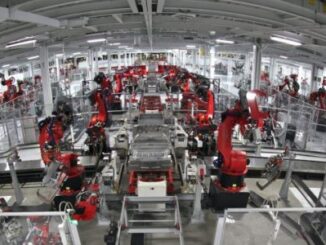
As we foresaw, the crisis that has spread throughout the world economy is not simply a financial crisis but has begun to engulf the real economy. In the world auto industry, General Motors has announced a huge collapse in profits. Adding to the gloom, the IMF warned, last week, that a second wave of the finance crisis has still to hit. $400 billion has been lost by the banks in the last year, but estimates suggest that the eventual cost will rise to $1000 billion.

The effects of this unfolding crisis are being felt upon millions of lives, with food and fuel prices rocketing and causing misery for millions of workers. As street protests erupt across continents, the IMF has stated that 75 countries are “severely weakened” by food and fuel poverty.

The sharpest expression of the crisis is to be found in the neo-colonial countries, but its effects are felt too in rich California. The sub-prime collapse is a symptom of a deeper crisis. Previous growth was not based upon stable economic foundations, nor could continue indefinitely. While the present crisis is not in any sense the final crisis of capitalism, it is mistaken to regard it as only a cyclical, or banking crisis.

The roots of the present crisis lie in the strategy embarked upon by the capitalist class following the end of the post-war economic boom. A fundamental reappraisal was undertaken by the capitalists who concluded that the market could be stretched by embracing unadulterated neo-liberal policies, accompanied by savage attacks on workers’ living standards. Cheap credit and endless speculation, using increasingly complex financial instruments, gave the appearance that the good times would prevail for ever. The financial crisis in Asia, in 1998, and the dot com bubble that burst in 2000, were overtures for the present entirely predictable global crash.

Throughout this period, profits have been ploughed into speculative instruments that offered the illusion of wealth creation, while the rate of capital investment has halved from the levels recorded between 1950-1973. The consequences of this hollowing out of productive capacity will come back to haunt the capitalists in the next period.

Fictitious capital

The boom in finance was not just speculative, but was an important element in sustaining and developing the market through debt. In these years, fictitious capital flourished like weeds. According to the IMF, the sum total of financial securities in 1980 was approximately equal to one year of global output. By 2005, the total value of securities had risen to 3.7 years of global output. This is an unprecedented situation for global capitalism. There is a limit to how far this credit can be used to lubricate the market and the present conjuncture suggests this limit has been reached.

Our fundamental analysis has been proved to be correct. The era of unrestricted globalisation, which began roughly in 1994, has come to a halt. The breakdown in the Doha trade talks is a reflection of this.

These events have staggered the ruling class internationally. They had no perception at the 2007 G-8 meeting that a sub-prime crisis was brewing in America, which would turn into a vicious credit crunch that would wreck banks’ balance sheets, before infecting Main Street and usher in probable recession.

The working class is suffering the consequences of this speculative orgy. In the US, and elsewhere, there is growing anger at the fallout and the fact that workers are being made to pick up the bill. This follows a massive redistribution of wealth, away from the working class, in the boom years – in Austria, today, real wages are below the level of 1991.

The exact magnitude and time scale of the crisis is not clear at the present time. Nevertheless, some estimates put the banks’ final losses as high as $3 trillion; a colossal figure that cannot be easily remedied by government interventions. Despite their assertion that the state can have no decisive role in the epoch of neo-liberal unrestrained globalisation, the bankers and speculators are now howling for state support to bail out their banks and credit houses. The Brown government in Britain was forced to nationalise failed bank Northern Rock. This was undertaken with great reluctance, as New Labour ministers wrestled with the political consequences of being seen to offer state aid to a collapsing private bank, fearful of workers’ demands for government relief tomorrow.

The US Fed’s bankrolling of US mortgage giants, Freddie Mac and Fannie Mae, has, likewise, been a huge blow to the prestige of the neo-liberal capitalists, coming quickly upon the rescue of Bear Stearns.

A slump on the scale of 1929-1933 is unlikely. There will be interventions by the state that seek to stabilise the situation. But preventing a collapse is not the same as promoting a recovery. The most likely scenario is that of so-called L-shaped recession, where a significant period of stagnant flatlining follows a sharp fall. Already, it appears that production is falling in the British manufacturing sector and revised economic data may confirm that this is the case in the US and elsewhere.

IMF warn of system crisis

The IMF, in its latest review of the world economy, talks of a fragile situation and an elevated risk of systemic crisis. Currently there are 10,000 housing repossessions, everyday, in the US.

One of the results of the credit crunch and its ramifications is that the illusion of the decoupling of the major economies has been exposed. China, India, Russia and Brazil cannot become independent locomotives for growth, but are, on the contrary, all getting dragged down by the troubles in the US. China needs to export to the US, but with recession looming, Beijing is waking up to the uncomfortable fact that the golden age of economic expansion is coming to an abrupt end. Cooking oil has doubled in price in one year and the cost of meat has risen by 78% over the same period. China is very vulnerable to contraction in the world market, as only 30% of its GDP is produced in the home market.

World inflation is causing misery for millions of workers. The oil companies have under-invested for years and this, alongside speculation in the futures market and increased demand from Asia, has led to record prices. Food costs too have soared, causing a 7% fall in food spending even in Germany, since 2007.

It is probable that the slowdown will cause falls in food and fuel prices over the next couple of years, but other factors like the expansion of biofuels and climate change mean that basic necessities may stay stubbornly high for some time, thus plunging millions more into poverty.

Not just describe events

The CWI cannot simply describe events. We must prepare for the future by developing perspectives that lead us to finding the road to those workers who are desperately seeking solutions to the crisis of capitalism. We have to analyse class and international relations, through constant dialogue with the working class, seeking to chart the development of consciousness and the direction of its development.

A presidential election impends in the USA. For millions across the world, a victory for Obama will signify a break with the disastrous Bush years. Obama’s policies are to the right of Hillary Clinton’s, in relation to issues like solving the housing crisis, but workers’ perception is that he will assist them in the nightmare of lay-offs and foreclosures.

Obama supports a surge in Afghanistan and, as a graduate of the university of Chicago, is steeped in the economic traditions of neo-liberalism. Despite these factors, Obama can be pushed by events into taking radical economic measures to rescue US capitalism.

Ideologically, the ruling classes have been married to neo-liberalism for a generation, and certain sections have been constrained, even in the last months, from “thinking the unthinkable” and using the state to prop up capitalism. The decisive sections of the ruling class, however, are now rapidly forced to ditch the prevailing orthodoxy and even pro-capitalist journals, like the Economist and the Wall Street Journal, chastised the US government for not going the whole way and nationalising Fannie May and Freddie Mac.

The CWI predicted this situation and warned that the years of debt would end in tears. While the ruling class will seek to transfer the bill to the working class, it will be met by outrage, as workers struggle to defend wages, protect jobs and build organisations that represent their interests. Rivalries between the international blocs will intensify as capitalists seek a way out at their rivals’ expense.

The trade union leaders have, in many cases, become infected by pessimism and an inability to and unwillingness to confront the consequences of the market economy. But workers will be forced into mass struggles and in the process this will shake up and transform unions and create new class struggle organisations. Furthermore, new political parties need to be built that can articulate a programme that can rescue workers from the claws of capitalism.

We are in a new period. The collapse of the Soviet Union, the move to embracing neo-liberalism by the former social democratic organisations, and the complications caused by the series of economic bubble booms, have all conspired to disorientate the working class.

Recession will have harsh consequences for workers, but out of the fog and debris will come anger and a sense of betrayal. Economic crises do not, in and of themselves, lead automatically to a developed socialist consciousness. But opportunities will open up and grow for us all over the globe, as solutions are sought to the crisis of capitalism.

The CWI can build powerful parties across every continent, preparing the way for a socialist transformation of the world.


Free Vadim! Europe

 video

Kazakhstan: MEP speaks out against repression, 15/05/2012

 further videos

CWI - get involved


solidarity

tamil solidarity campaign kazakhstan

featured links

Paul Murphy, MEP

cwi links

Marxist.net, CWI marxist archive

cwi comment & analysis

world economic crisis

analysis and commentary


cwi publications

marxism in today's world che

Che Guevara: Símbolo de Lucha

Por Tony Saunois

A socialist world is possible, the history of the cwi with new introduction by Peter Planning green growth, a contribution to the debate on enviromental sustainability