


deutsch |  english |  español  |  français  |  italiano  |  nederlands  |  polski  |  português  |  svenska  |  türkçe  |  中文  |  عربي  |  русский

latest news

Algeria
Legislative elections give near-majority to the FLN

20/05/2012: Anger from below, manoeuvres from the top

  Algeria

Burma
Two elections, 90% support but no power

19/05/2012: Workers’ organisations must ensure real change

  Burma

 Russia
CWI supporters arrested during Moscow protests

18/05/2012: Police target socialists at protest camp – urgent protests needed!

  Russia, Solidarity

Lebanon
Union leaders call “a strike without credibility”

18/05/2012: Build fighting, democratic trade unions!

  Lebanon

Germany
Massive state repression against “Blockupy” movement

18/05/2012: Thousands attempt to occupy squares and blockade the ECB in Frankfurt, Germany. Protests are banned.

  Germany

 Kazakhstan
Activists released

18/05/2012: Leader of the “Leave Peoples’ Homes Alone” campaign and member of the SMK, Larissa Boyar, and others have been released from prison

  Kazakhstan, Solidarity

Greece
New elections due as pro-austerity coalition talks fail

15/05/2012: For a Left government! For anti-austerity, pro-worker, socialist policies!

  Greece

Tunisia
General strikes, power struggles and an economic stalemate

15/05/2012: Republic’s president, Marzouki, afraid of ‘new revolution’

  Tunisia

 Kazakhstan
MEP speaks out against repression

15/05/2012: "Despite this ferocious oppression, the opposition and discontent of the working class cannot be silenced"

  Kazakhstan, Video

US
Socialist candidate challenges corporate politics in Washington state

13/05/2012: "During an election dominated by career politicians who are loyal to big business, I am running as a Socialist Alternative candidate to make sure there is at least one independent left-wing, pro-worker candidate in Washington State worth voting for."

  US

US
In calculated move, Obama supports gay marriage

12/05/2012: Step up the Struggle for Equality

  LGBT, US

Nigeria
Experiences of the explosion of class struggle

12/05/2012: Urgency of a working class alternative proven again

  Nigeria

Russia
Moscow left holds May Day Moscow demonstration

12/05/2012: Lively and political CWI contingent attracts variety of activists

  May Day, Russia

May Day
Demonstration in Uleåborg Finland

12/05/2012: Meeting discusses involvement in Afghanistan

  Finland, May Day

Kazakhstan
Miners’ strike ends in victory for workers

11/05/2012: Campaign Kazakhstan reports that newspapers in Kazakhstan said a strike by miners at KazakhMys ended on 7 May with a complete victory for the workers.

  Kazakhstan

 Irish referendum
No to the austerity treaty!

10/05/2012: On 31 May Irish voters are asked to vote on the European fiscal treaty. This video explains what the treaty is about.

  Ireland Republic, Video

May Day in Nigeria
Fanfare fails to mask workers’ anger

10/05/2012: May Day should have offered opportunity for workers to pose their demands and agitation before the government

  May Day, Nigeria

France
Weekend that shocked Europe

09/05/2012: Austerity rejected in Eurozone’s second biggest economy

  France

Sri Lanka
United left May Day in Colombo

09/05/2012: Socialist organisations march to joint rally

  May Day, Sri Lanka

Britain
Legitimacy of Cameron and Clegg further shattered

07/05/2012: The Con-Dem government suffered a crushing defeat in last Thursday’s elections for local authorities and in the mayoral contests apart from London.

  Britain

The capitalist “vampire squid” and the class struggle in Europe

06/05/2012: As economic crisis worsens and class struggles continue in Spain, Greece, Portugal and elsewhere in Europe, the need for working class fight-back and to build the influence of Marxism grows.

  CWI Comment And Analysis, Europe

Hong Kong
Thousands march on May Day

05/05/2012: Socialist Action (CWI) campaigning against the capitalist 1% and against racism

  Hong Kong, May Day

Sweden
May Day in Gothenburg

05/05/2012: Bobby Seale as guest speaker

  May Day, Sweden

 Kazakhstan
Trial of Vadim Kuramshim resumes

04/05/2012: Solidarity needed to free Vadim!

  Kazakhstan, Solidarity

Pakistan
May Day in Sindh

04/05/2012: Fotos of impressive march

  May Day, Pakistan

Lebanon
Build a mass workers’ movement to get rid of the corrupt ruling class

03/05/2012: For a workers’ programme that puts forward the socialist alternative

  Lebanon, May Day

Germany
Heading towards days of action against Troika austerity

03/05/2012: Days of action planned in Frankfurt/Main against European Central Bank and big finance

  Germany

Britain
"We’re striking back on 10 May"

02/05/2012: Pension cuts, job cuts, service cuts

  Britain

Ireland
Water charges are just paving the way for privatisation

02/05/2012: Irish government doesn’t seem to have learned anything from the massive opposition to its Household Tax

  Ireland Republic

France
Down with Sarkozy and austerity policies!

02/05/2012: Make the rich and the bankers pay for their crisis!

  France

Sweden
Chinese premier’s visit met by vociferous democracy protests

01/05/2012: CWI supporter Zhang Shujie and other activists took to the streets when Wen Jiabao visited Stockholm and Gothenburg

  China, Sweden

May Day 2012
Celebrate working class history and fight for new victories!

30/04/2012: International Workers’ Day and the socialist alternative to austerity and barbarism

  CWI Comment And Analysis, May Day

 Kazakhstan
Three activists jailed for 15 days

29/04/2012: Immediate protests and financial help needed

  Kazakhstan, Solidarity

Australia

Can Australia avoid a recession?

www.socialistworld.net, 10/11/2008
website of the committee for a workers' international, CWI

The real state of the Australian economy

Anthony Main, Socialist Party (CWI in Australia)

Governments around the world are scrambling to try and limit the effects of the financial crisis. The credit crunch has now affected the entire banking system and in many countries the effects are starting to be felt in the real economy.

In the US for example an estimated 10,000 people per week are loosing their homes due to mortgage defaults. Mortgage defaults are also on the increase in many other parts of the world. Tens of thousands of jobs have already been lost in the finance sector and thousands more job losses are predicted in retail, manufacturing and IT.

Recession looms in many parts of Europe, Asia and the US. In Australia however, some economic commentators are saying that, mainly due to the mining boom and exports to China, the economy will be able to avoid a recession.

All of the major parties in Australia including Labour, the Liberals and the Greens have been unable to answer the questions that workers are now asking in relation to the safety of bank deposits, the manufacturing industry and the property market. Workers also want to know if Rudd’s stimulus package will actually work.

The $10.4 Billion stimulus package

In October Rudd unveiled a finance industry package that guarantees all bank deposits up to $1 million. He also announced a $10.4 billion economic stimulus plan (half of the budget surplus) which was aimed at reviving consumer spending to prevent the economy sliding into recession.

Thanks mainly to credit cards, Australians borrowed $250 billion last year and spent it on goods. This massive amount of spending assisted in stimulating the economy.

But consumer confidence has now plummeted and the overall trend has been weak since the end of 2007. There has been a slump in consumer spending and this reflects a slowing in growth of real household disposable income. This is down to 2 per cent over the year, to mid-2008. With official inflation hitting 5 per cent this means significant wage cuts are already being felt.

Motor vehicle sales are a good indicator of spending. Car sales are continuing to fall and are now more than 10 per cent lower than at the end of 2007. This slowdown in spending will lead to thousands of job losses in retail. The first to go will be casual workers, many of whom are women and young workers.

It is clear that Australians are now at the end of a period of spending other people’s money. The $250 billion credit that fuelled consumer spending last year will be down significantly in the next year. Therefore, a $10.4 billion stimulus package is actually minuscule compared to the potential loss in spending by Australian consumers.

Those eligible for the one off payments proposed in Rudd’s stimulus plan will more than likely not spend that money but use it to consolidate their already massive debts. Since a big chunk of the Australian economy is kept alive by consumer spending, a contraction will have severe repercussions. Rudd’s intervention into the declining market will have little overall effect.

Isn’t the Australian economy different because of the mining boom?

Some economists claim that the mining boom and exports to China will save Australia from sliding into recession. Some of the more serious analysts however are now echoing the views of the Socialist Party. They concede that China’s slowdown in growth will significantly affect the Australian economy.

China has serious problems on its hands. Firstly its main export markets are facing recession, therefore impacting on demand. Growth in export volumes from China to the major economies of the US, Japan and Europe has fallen markedly over the past year.

Growth forecasts for China are now being scaled back for 2009. On that basis, demand for Australian coal and iron ore is already starting to fall.

Share markets and property values in China are also falling. As construction and the boom in China weakens that in turn weakens the demand for steel. The slowdown in production of steel, concrete and energy has already been significant.

Until recently, rising commodity prices had pushed up the Australian dollar. The rise in commodity prices boosted our terms of trade and acted as an additional windfall to growth, company profits and government revenues. This is now coming unstuck.

Latest figures have indicated that the prices of iron ore and coal are likely to decrease by between 15 and 25 per cent next year. This is a huge blow to the mining boom and the overall Australian economy. This is the reason for the nervousness that exists inside the big mining companies.

Far from the Chinese economy keeping the Australian economy out of recession, it is likely that declining growth in China will only help to create severe economic difficulties in Australia.

Manufacturing

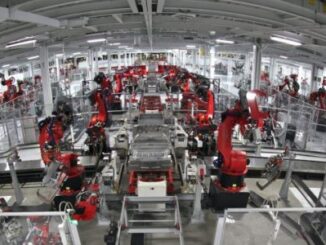
In recent months we have seen a steady stream of job losses in the manufacturing sector. Hundreds of jobs have been lost in the car companies and this has led to thousands more being made unemployed in the auto components sector. Unions claim that for every job lost in a car company six more are lost in related industries.

Even during the upturn, manufacturing went backwards due to a lack of investment and the high Australian dollar. The sector is in a very weak position and only makes up 21 per cent of exports. Because the Australian economy is now dominated by services this will make it much more difficult to come out of a downturn.

As the situation gets worse, more and more manufacturing jobs will be lost. Any argument that the weak Australian dollar will give a boost to exports and therefore the economy will not materialise. This is not only because of the lack of investment in manufacturing but also because the world export market is expected to shrink.

Property

The International Monetary Fund (IMF) has suggested that Australian real estate is overvalued by at least 25 per cent. This makes Australian homes some of the most overvalued in the world.

Due to massive amounts of speculation, a housing bubble was created which has led many people to take out mortgages which are bigger than the real value of their homes. As prices drop closer to their real values this will mean many people will owe more than they own.

Evidence is already emerging to indicate that growing numbers of Australians are struggling to pay their current debts. This is resulting in growing bankruptcies and credit agreements as well as increasing mortgage defaults. This will increase as unemployment rises in the coming months.

Linked to this, it is estimated that up to 65 per cent of small businesses use their family homes as security to obtain business finance. If property prices drop closer to their real values, the capacity of small business owners to keep their doors open will be severely limited.

With house prices falling and significant unemployment, the heavy debt load being carried by many Australians is likely to get worse. Therefore the crisis in property is going to be another part of the downward drag on the Australian economy.

Are the Banks safe?

Kevin Rudd and Wayne Swan have been reassuring ordinary people for some time now that Australian banks are safe. They tell us that Australia has one of the best regulatory systems in the world.

But Australia’s four largest banks are far from immune to the global financial crisis. The shares of all the big banks have plummeted on the stock market. This is despite all of them issuing statements saying that they have relatively small exposures to bad debts. This is an indication that investors are not convinced.

What Rudd and Swan don’t explain about the banks is that there is a real possibility of a loan-loss cycle. This is where housing prices fall and the banks struggle to recover loans from mortgage defaulters. Some commentators are suggesting that unemployment will rise to 9 per cent next year. This will put people in much less of a position to pay their loans.

Australian banks are actually more vulnerable to the credit crunch than many of their global counterparts because of their high levels of loan-to-capital ratios. In Australia banks are leveraged 25-30 times.

This means they have given out 25-30 times more loans than they have in capital. Most other banks around the world are only leveraged 15-20 times. This means that Australian banks are more susceptible than most to a run on investments and a run on deposits. Even if we saw a moderate loan-loss cycle this would create significant bad debts and losses.

Australian banks are dependant on each other and the international banking system. If one bank did happen to go under the Australian financial system could be paralysed overnight. Such a situation would have a severe impact on the overall economy.

The banking guarantee and stimulus package announced by the government did initially give some stability to the banking sector. But within days, much more instability was created. By only guaranteeing certain investments, the Government created a fault line which raised the prospect of a run on banks and financial institutions. The problems with the government’s package are likely to be ongoing.

The financial and banking crisis has come before the crisis in the real economy but it is likely to be made much worse by it. If the Australian government does not back up its guarantee with action then an extreme banking crisis is possible. If however they are forced to bailout banks, as other countries have, the guarantee they have given will mean that the indebtedness will be spread to the government coffers eliminating the budget surplus. This could create the basis for a budget and financial crisis in the state.

Will there be a recession and will it be short?

It is clear that Australia is not just facing one or two economic problems but in fact a series of crises. Regardless of what some commentators say it is likely that Australia will move into to recession quite quickly. This will have a huge effect on the lives of ordinary people.

Some optimistic economists claim that we will see a downturn but that it will be soft and short. The reality is that the property bubble, external credit and international demand from China have been the key motors for Australian growth. What the optimists ignore is that all of these areas of the economy are facing a significant decline.

The fact that the ratio between household debt and household income is hovering around 160 per cent is also extremely significant. This means that on average for every $100 we earn, we owe $160. Back in 1991, in the midst of the last recession, we only owed $48 for every $100 we earned!

Credit has been artificially used to sustain the world and Australian economies for many years. This indebtedness means that economic difficulties will be longer and more drawn out. It is impossible to say with certainty how severe, or how long the coming recession will be, but the one certainty is that that there is still plenty of bad news to come. There will undoubtedly be more attacks on jobs, wages and conditions.

The economic crisis shows the need for workers to be prepared for the economic conditions that are unfolding and the need to be organised in fighting trade unions to defend living standards.

The bipartisan response to the crisis from the two main capitalist parties also shows that workers need their own independent political representation. Both Labour and the Liberals have made it clear that they think it should be workers and not bosses who pay for the crisis. As the two main parties close ranks around their big business mates, the call for a new workers party will gain ground in the period ahead.

Critically, this crisis also shows the need for a total reorganisation of the economy. Economic crisis is not inevitable. It is a product of the unplanned capitalist system that puts profits before the interests of ordinary people. The alternative is a democratic, socialist planned economy that secures the living standards of all workers.

Nationalise ABC Learning

Dean Roberts

Australia’s biggest childcare operator, ABC Learning, was placed into voluntary administration this week. The company, which operates more than 1200 centres across the country, is the latest victim of the global credit crunch.

ABC Learning borrowed extensively to expand its operations into the US and Britain. It almost quadrupled the number of centres it operated worldwide in the short period of two and a half years. A big chunk of the company’s capital was subsequently mixed up with the sub prime loans market in the US.

The sub prime crisis and now the credit crunch has forced up the interest payments on these loans. It is estimated that ABC now owes lenders, which includes Australia’s big four banks, more than $1.2 billion!

With one in every five child care centres in Australia run by ABC, and long waiting lists in every city, the Federal Government was under severe pressure to intervene.

If ABC went under, and widespread closures took place, it would create problems for thousands of working parents and would be a community disaster. ABC accommodates more than 120,000 children and employs more than 16,000 staff. It is for this reason that the Government has been forced to step in with a $22 million lifeline which will allow ABC to operate until the end of the year.

This is on top of the hundreds of millions of dollars that the Government gives ABC annually by way of subsidises for childcare placements. Some reports have suggested that up to 44 per cent of ABC’s revenue comes directly from federal childcare subsidies. This equates to about $1 million every day!

The Government has said that they will use the next two months to “decide what to do next”. More than likely they will suggest that the company is restructured and sold off to a series of smaller operators. It is also not ruled out that they will be forced to give ABC more tax payer funded handouts.

Just as with every company that goes into administration, the commercial creditors will be prioritised to recover their debts above the workers who will be seeking their employment entitlements. The workers have been told to continue working for the next two months even though at this stage their entitlements are not secure.

The childcare workers union, the Liquor, Hospitality and Miscellaneous workers Union (LHMU), is in a very powerful position. The pressure is on the union to launch a campaign involving both childcare workers and parents. Such a campaign should call for ABC Learning to be taken into public ownership and should not rule out industrial action. On the basis of public ownership the workers could be paid decent wages and childcare could be made free.

It is clear that a restructure of ABC would be totally inadequate. The childcare sector needs to be taken out of the hands of the profiteers. It is a matter of urgency that ABC is nationalised under workers’ and community control. This is the only way that both the service and the worker’s entitlements can be guaranteed.

The Socialist Party demands:

  • Not one closure - Not one job loss
  • No more running childcare centres for profit
  • No more Government hand outs to the profiteers
  • Open the books - show the public where the subsidies have gone
  • Free childcare for all and decent wages for all childcare workers
  • Nationalise ABC Learning under workers’ and community control

Free Vadim! Europe

 video

Kazakhstan: MEP speaks out against repression, 15/05/2012

 further videos

CWI - get involved


solidarity

tamil solidarity campaign kazakhstan

featured links

Paul Murphy, MEP

cwi links

Marxist.net, CWI marxist archive

cwi comment & analysis

world economic crisis

analysis and commentary


cwi publications

marxism in today's world che

Che Guevara: Símbolo de Lucha

Por Tony Saunois

A socialist world is possible, the history of the cwi with new introduction by Peter Planning green growth, a contribution to the debate on enviromental sustainability