deutsch |  english |  español  |  français  |  italiano  |  nederlands  |  polski  |  português  |  svenska  |  türkçe  |  中文  |  عربي  |  русский

latest news

Algeria
Legislative elections give near-majority to the FLN

20/05/2012: Anger from below, manoeuvres from the top

  Algeria

Burma
Two elections, 90% support but no power

19/05/2012: Workers’ organisations must ensure real change

  Burma

 Russia
CWI supporters arrested during Moscow protests

18/05/2012: Police target socialists at protest camp – urgent protests needed!

  Russia, Solidarity

Lebanon
Union leaders call “a strike without credibility”

18/05/2012: Build fighting, democratic trade unions!

  Lebanon

Germany
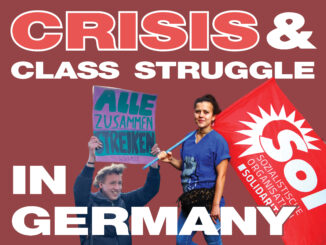
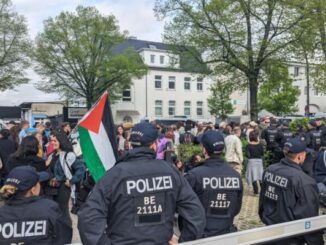
Massive state repression against “Blockupy” movement

18/05/2012: Thousands attempt to occupy squares and blockade the ECB in Frankfurt, Germany. Protests are banned.

  Germany

 Kazakhstan
Activists released

18/05/2012: Leader of the “Leave Peoples’ Homes Alone” campaign and member of the SMK, Larissa Boyar, and others have been released from prison

  Kazakhstan, Solidarity

Greece
New elections due as pro-austerity coalition talks fail

15/05/2012: For a Left government! For anti-austerity, pro-worker, socialist policies!

  Greece

Tunisia
General strikes, power struggles and an economic stalemate

15/05/2012: Republic’s president, Marzouki, afraid of ‘new revolution’

  Tunisia

 Kazakhstan
MEP speaks out against repression

15/05/2012: "Despite this ferocious oppression, the opposition and discontent of the working class cannot be silenced"

  Kazakhstan, Video

US
Socialist candidate challenges corporate politics in Washington state

13/05/2012: "During an election dominated by career politicians who are loyal to big business, I am running as a Socialist Alternative candidate to make sure there is at least one independent left-wing, pro-worker candidate in Washington State worth voting for."

  US

US
In calculated move, Obama supports gay marriage

12/05/2012: Step up the Struggle for Equality

  LGBT, US

Nigeria
Experiences of the explosion of class struggle

12/05/2012: Urgency of a working class alternative proven again

  Nigeria

Russia
Moscow left holds May Day Moscow demonstration

12/05/2012: Lively and political CWI contingent attracts variety of activists

  May Day, Russia

May Day
Demonstration in Uleåborg Finland

12/05/2012: Meeting discusses involvement in Afghanistan

  Finland, May Day

Kazakhstan
Miners’ strike ends in victory for workers

11/05/2012: Campaign Kazakhstan reports that newspapers in Kazakhstan said a strike by miners at KazakhMys ended on 7 May with a complete victory for the workers.

  Kazakhstan

 Irish referendum
No to the austerity treaty!

10/05/2012: On 31 May Irish voters are asked to vote on the European fiscal treaty. This video explains what the treaty is about.

  Ireland Republic, Video

May Day in Nigeria
Fanfare fails to mask workers’ anger

10/05/2012: May Day should have offered opportunity for workers to pose their demands and agitation before the government

  May Day, Nigeria

France
Weekend that shocked Europe

09/05/2012: Austerity rejected in Eurozone’s second biggest economy

  France

Sri Lanka
United left May Day in Colombo

09/05/2012: Socialist organisations march to joint rally

  May Day, Sri Lanka

Britain
Legitimacy of Cameron and Clegg further shattered

07/05/2012: The Con-Dem government suffered a crushing defeat in last Thursday’s elections for local authorities and in the mayoral contests apart from London.

  Britain

The capitalist “vampire squid” and the class struggle in Europe

06/05/2012: As economic crisis worsens and class struggles continue in Spain, Greece, Portugal and elsewhere in Europe, the need for working class fight-back and to build the influence of Marxism grows.

  CWI Comment And Analysis, Europe

Hong Kong
Thousands march on May Day

05/05/2012: Socialist Action (CWI) campaigning against the capitalist 1% and against racism

  Hong Kong, May Day

Sweden
May Day in Gothenburg

05/05/2012: Bobby Seale as guest speaker

  May Day, Sweden

 Kazakhstan
Trial of Vadim Kuramshim resumes

04/05/2012: Solidarity needed to free Vadim!

  Kazakhstan, Solidarity

Pakistan
May Day in Sindh

04/05/2012: Fotos of impressive march

  May Day, Pakistan

Lebanon
Build a mass workers’ movement to get rid of the corrupt ruling class

03/05/2012: For a workers’ programme that puts forward the socialist alternative

  Lebanon, May Day

Germany
Heading towards days of action against Troika austerity

03/05/2012: Days of action planned in Frankfurt/Main against European Central Bank and big finance

  Germany

Britain
"We’re striking back on 10 May"

02/05/2012: Pension cuts, job cuts, service cuts

  Britain

Ireland
Water charges are just paving the way for privatisation

02/05/2012: Irish government doesn’t seem to have learned anything from the massive opposition to its Household Tax

  Ireland Republic

France
Down with Sarkozy and austerity policies!

02/05/2012: Make the rich and the bankers pay for their crisis!

  France

Sweden
Chinese premier’s visit met by vociferous democracy protests

01/05/2012: CWI supporter Zhang Shujie and other activists took to the streets when Wen Jiabao visited Stockholm and Gothenburg

  China, Sweden

May Day 2012
Celebrate working class history and fight for new victories!

30/04/2012: International Workers’ Day and the socialist alternative to austerity and barbarism

  CWI Comment And Analysis, May Day

 Kazakhstan
Three activists jailed for 15 days

29/04/2012: Immediate protests and financial help needed

  Kazakhstan, Solidarity

Egypt

6 April “Day of Anger” - Call from activists for jobs and democratic rights

www.socialistworld.net, 24/04/2009
website of the committee for a workers' international, CWI

Strikes and occupations grow - workers’ party with socialist policies needed!

CWI reporter in Egypt

Around 75,000 young Egyptians signed up to the Facebook site calling for a “Day of Anger” in Egypt on 6 April. They called for strikes and demonstrations, protesting about growing poverty and unemployment, privatisation and suppression of democratic rights. Opposition parties added their voice to the calls for action, although in the end only the broad pro-democracy movement, Kefaya (‘Enough’) took an active role on the day. The Muslim Brotherhood, as usual, faced both ways. On 6 April, their MPs walked out of the People’s Assembly, boycotting a speech by the Prime Minister, in solidarity with the protests. But they did not organise any strikes or large demonstrations themselves, although they participated in student demonstrations.

Last year, a similar number signed up to the April 6th Facebook site, started by a young Egyptian woman. Word spread by texts and blogs. The government response then was heavy-handed; broadcasting warnings that people should not get involved. This alerted many more to the day than might otherwise have known about it. Cairo was unusually quiet as parents kept their children away from school and others stayed at home in case of trouble on the streets. There were isolated strikes. In Mahalla, the city with the largest, most militant factory in the country, a massive security clampdown led to a huge and angry demonstration, with 48 arrests and three shot dead by police. After last year’s event, a group known as the 6th April Youth continued to campaign and initiated the call for action this year.

Despite some brave attempts to publicise the protest day (two women were brutally arrested at Kafr El-Sheikh University while leafleting), there were no strikes. However, there were demonstrations at nine universities, including 1500 at Mansoura and 800 at Helwan. Cairo University had about 200 students on a protest, to start with, growing to 1000.

Cairo city centre was flooded with police, who were on every street corner to prevent protestors gathering. There was a small protest of about 100 outside the Journalists’ Syndicate building, a venue where protests regularly take place, surrounded by rows of police. (On 6 April, 2008, 1,000 took part in a similar protest.)

One important difference between 2008 and 2009 is that food prices had rocketed up last year, but have fallen recently, taking a bit of pressure off the regime. But unemployment is growing, tourism is down, graduates find it very hard to get jobs they are qualified for, remittances from Egyptians abroad are falling and as many as half a million Egyptians may be on their way home after losing construction or oil work in the Gulf. Many of the young activists may feel disappointed that there was not more widespread action. Analysing their experiences will help prepare for future successful struggles.

Internet protests

There were an estimated 10.5 million Internet users last year (out of a population of 82 million), which has doubled since 2006. Although a majority of these will be young and middle class, Internet use is also growing among young workers. In a country where bloggers have been arrested and tortured for opposing the regime, the large number joining the April 6th Facebook site reflects widespread anger at Mubarak’s corrupt circle of government and big businessmen.

The April 6th Youth movement and their supporters should not be sneeringly dismissed as ‘the sons and daughters of the ruling class’, as some have done. Marxists have long observed that ‘when the ground starts to move, the tops of the trees shake first.’ It is significant that so many young people, mainly from the middle class, by calling for strikes are looking to the collective power of the working class as the motor force of change.

This follows large strikes over the last five years, by textile workers at Mahalla and in other Delta cities, by the property tax collectors, train drivers, steel, cement and other workers. About 1.5 million workers have been involved in “the largest social movement the Middle East has seen in over half a century”, according to Joel Beinin, Professor of Middle East Studies at the American University of Cairo.

When thousands of workers have taken united action, employers and the security forces have hesitated to crack down on them as they would against a few hundred young protestors. (The police attack on the April 6th 2008 demonstration in Mahalla was an exception, as workers and their families threatened to take over the city.) When strike leaders have been arrested, they have been quickly released. Significant victories have been won, with government and private companies forced to concede big pay rises.

The April 6th Youth Movement is correct to see the importance of strikes, including a general strike, to defeat the regime. But a lesson to be drawn from the experience of the day, in 2008 and again this year, is that successful strikes need more than calls through the Internet and mobile phones.

Workplace strikes need serious planning

In any workplace, but especially in a dictatorship like Egypt, workers stand to lose a lot in a failed strike – money to support their families and, if victimized afterwards, their job. Striking is a serious step which needs debate and discussion among workers. Leadership is needed from those who have built authority and trust in the eyes of workers through their previous record of struggle. Workers will take action when convinced it is needed and that they will not be alone and isolated if they do. They need to see there is a chance of victory if they strike. Calls for everyone to wear black on April 6th, hang an Egyptian flag from their window or not to shop will not convince workers that a serious challenge is being made. These actions would not seriously worry the regime.

Building for united mass action needs a programme of clear demands that win widespread support. The April 6th Youth movement had a good programme, including a minimum wage of LE1200 a month, decent pensions, health and education, opposition to privatisation, ending police repression and ending rigged elections, and stopping the export of cheap natural gas to Israel. This was clouded by vague references to a “Day of Anger”, implying that anyone opposing the regime could use the day for their own protest, rather than uniting around a common programme.

Demands for an end to rigged elections and dictatorship raise the issue of who and what would replace Mubarak, if a mass movement brought his regime down. The most prominent opposition leader to join the April 6th protest was Ayman Nour, leader of the liberal Ghad (‘Tomorrow’) party. He was released from prison, earlier this year, after serving four years on trumped-up charges, despite ill-health. He has the support of US Congress because US big business sees him as a reliable defender of their interests and a possible future alternative to Hosni Mubarak and his son, Gamal.

History has shown many times that liberal capitalist politicians cannot be relied on to act in the interests of the working class. Real democratic rights include the right to organise independent trade unions and the right to strike, as well as freedom of speech, to assemble, to publish newspapers, organise political parties and vote in free elections. Workers would use these rights to fight for decent pay and jobs, education, health services, housing and all their other needs. Egyptian capitalism will fiercely resist every reform that cuts their profits. When squeezed between the conflicting interests of capitalists and workers, political leaders like Ayman Nour will side with capitalism.

Muslim Brotherhood fill the vacuum?

If the strength of a mass workers’ movement were to bring the hated regime of Mubarak to an end, but there was no mass workers’ party ready to take power, the Muslim Brotherhood (MB) could fill the vacuum. The lessons of the 1979 Iranian revolution show the working class can only rely on itself to carry through democratic reforms and to deliver decent living standards.

The MB is increasing its support, mainly because it provides schools and hospitals where the government has failed to. They are seen as uncorrupted, although striking workers have sometimes found themselves opposing a boss who is a member of the MB. There are signs of developing tensions within the MB between leaders who want to reach an accommodation with the US and come to power, as President Erdogan, the leader of an ‘Islamic party’ did in Turkey, and younger MB members who feel under pressure to join pro-democracy and other protests.

If Egyptian capitalism cannot afford to pay a minimum wage that is enough to live on, or provide decent housing, education, health services, pensions and public transport, then a socialist programme is needed. The banks and big corporations must be nationalised under democratic workers’ control and management, not as the former president Nasser did, where control was in the hands of an undemocratic elite. The wealth and resources of the economy could then be democratically planned to meet the needs of working and poor people.

Ground prepared for revolutionary upheavals

Activists from the April 6th Youth, and those taking part in strikes, community protests and building independent trade unions must draw the conclusion that a workers’ party is needed to bring together all these different movements. Marxists also need to build a party that can win support for a socialist programme and a strategy to take the movement forward. Such a party must be based firmly in the working class. By studying the lessons of previous workers’ struggles, taking part in those now taking place and explaining how these are linked to the need for socialism, the basis for a mass revolutionary party can be prepared.

Although support for April 6th was limited, the last few weeks have seen an increase in workers’ struggles. There have been strikes, occupations or mass protests at Tora Cement, Shebeen el-Kom, Salemco Spinning, Banha Technological Institute, Workers’ University, Ministry of Agriculture temporary workers, by doctors in 19 private clinics, Luxor rail workers and even the State Circus. Now there are reports there may be another strike at Mahalla in May. The Salemco striker who told a reporter: “This country is on the brink of a revolution” may be a little premature. But the ground is being prepared for revolutionary upheavals. Marxists must also prepare for this future.


Free Vadim! Europe

 video

Kazakhstan: MEP speaks out against repression, 15/05/2012

 further videos

CWI - get involved


solidarity

tamil solidarity campaign kazakhstan

featured links

Paul Murphy, MEP

cwi links

Marxist.net, CWI marxist archive

cwi comment & analysis

world economic crisis

analysis and commentary


cwi publications

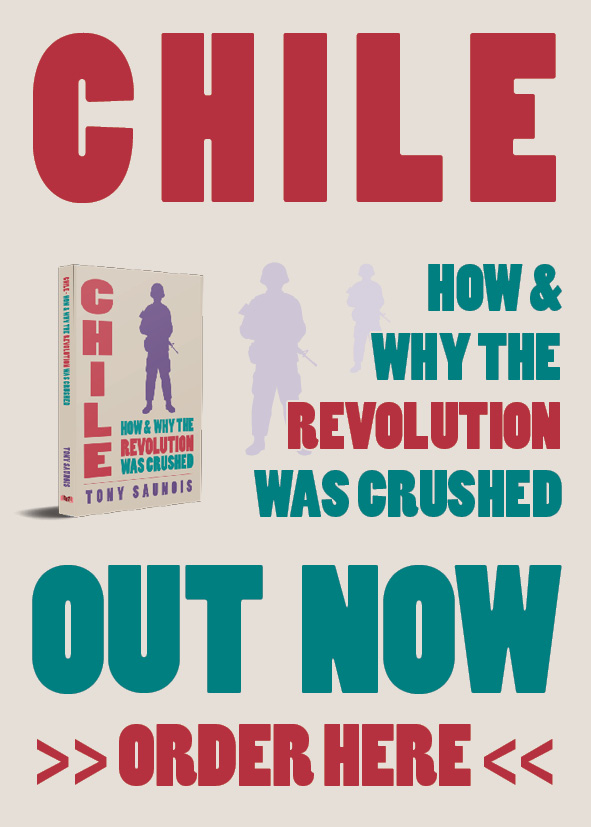
marxism in today's world che

Che Guevara: Símbolo de Lucha

Por Tony Saunois

A socialist world is possible, the history of the cwi with new introduction by Peter Planning green growth, a contribution to the debate on enviromental sustainability