

deutsch |  english |  español  |  français  |  italiano  |  nederlands  |  polski  |  português  |  svenska  |  türkçe  |  中文  |  عربي  |  русский

latest news

30 years ago
Liverpool - a city that dared to fight

24/05/2013: Interview on Militant, the Labour Party and the struggle of the socialist led council 1983-87 in Liverpool

  Britain, History

Britain
Tories in turmoil over Europe

24/05/2013: The Tories are thrashing around in ever-deeper water on the issue of Europe.

  Britain, Europe

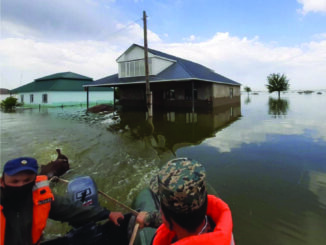
 Kazakhstan
Campaign leader sentenced to ten days in prison

23/05/2013: MEP demands immediate release of Housing Campaigners - solidarity still needed

  Kazakhstan, Solidarity

Britain
No to terrorism! No to racism! No to war!

23/05/2013: Statement on Woolwich killing

  Britain

 Tunisia
the Ministry of Women excuses violations against women rights

23/05/2013: In the «most developped country for women in the Arab world», the struggle for women rights remains more relevant than ever

  Tunisia, Women

Germany
DIE LINKE and the Euro

23/05/2013: After Lafontaine’s proposal to get rid of the Euro – what should the left say?

  Germany, New workers' parties

 Ireland
Tax haven for multinational corporations

22/05/2013: How Ireland is used as a tax haven by multinational corporations while the government is preparing to steal the property tax from people’s wages, social welfare and pensions

  Ireland Republic, Video

Germany
Strike at Amazon

22/05/2013: Union-agreed rates could bring Amazon workers 9000 euros more a year

  Germany

Taiwan
Sea shooting sees Filipino migrants become target of racist backlash

21/05/2013: Anti-racist campaign needed against corrupt ruling elites and capitalism

  Taiwan

Nigeria
President Jonathan declares state of emergency

21/05/2013: An expressway to attacks on democratic rights! For democratic mass working peoples’ defence committees!

  Nigeria

G8 Summit, Northern Ireland
’Why YOU should oppose the G8’

20/05/2013: This year’s G8 summit will be held in County Fermanagh, Northern Ireland, on 17th – 18th June. This gathering brings together the heads of government of eight of the world’s largest capitalist economies to discuss how they can further the interests of those they represent – the super-rich, big business and the bankers.

  Anti-globalisation, Ireland North

World economy
"Central banks are flying blind"

19/05/2013: Increasing concerns and contradictions

  World Economy

South Africa
Mass retrenchment threat in mining industry demands mass action

18/05/2013: Workers and Socialist Party calls for one-day-general strike

  South Africa

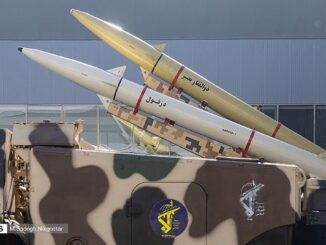
Iran
What would a Rafsanjani presidency mean?

18/05/2013: Iran’s June 14 presidential election takes place against the background of deep divisions in society and the regime.

  Iran

Australia
Labour approves WA’s first uranium mine

17/05/2013: Australia’s federal environment minister Tony Burke gave the go ahead to Toro’s $270 million uranium mining project in the Wiluna region of Western Australia.

  Australia, Environment

New Zealand
Racism and recession in New Zealand

15/05/2013: Working class unity needed to defend rights and living standards

  New Zealand

Australian budget
Say ‘NO’ to the cuts agenda of the major parties

14/05/2013: We shouldn’t let either of the major parties tell us that ‘tough decisions’ or ‘hard cuts’ are required.

  Australia

Ireland
‘Bus Eireann workers in front line of class war - We should all support them!’

13/05/2013: Bus workers take strike action over savage wage cuts and attacks on conditions

  Ireland Republic

Italy
The economic crisis becomes a political and institutional crisis

11/05/2013: The latest events that have happened in Italian politics mark a new phase of development in the crisis in the third European industrial power.

  Italy

Turkey / Kurdistan
PKK announces ceasefire

11/05/2013: On 8 May the PKK has begun to withdraw from Turkey. Millions are hoping now for an end to oppression and for democratic rights.

  Kurdistan, Turkey

Malaysia
Election ’victory’ based on fraud

10/05/2013: Ruling Barisan Nasional’s widespread fraud enrages opposition supporters and young people

  Malaysia

Greece
Challenging the Golden Dawn

10/05/2013: On 2 May the neo-fascist Golden Dawn attempted to distribute food in Syntagma square in Athens to people holding proof of Greek nationality.

  Greece

British county elections
Capitalist parties rejected

10/05/2013: Time for a new mass workers’ party

  Britain

Tunisia
The calm before the storm

09/05/2013: New clashes on the horizon

  Tunisia

Pakistan
General elections held amid political turmoil

08/05/2013: Big landlords, capitalists and influential families are calling the shots

  Pakistan

Sri Lanka
Successful May Day

08/05/2013: The United Socialist Party’s May Day demonstration passed successfully through a number of populous areas of Colombo, ending at Grand Pass Junction.

  May Day, Sri Lanka

Hong Kong
Dockworkers’ strike ends after 40 days

07/05/2013: Union representatives declare a “half success” with a pay rise of 9.8 percent – but important issues are unresolved

  Hong Kong

Britain’s ’precariat’
Fighting for real jobs

06/05/2013: ’Get a job!’ is the constant refrain of privileged Tory ministers and vicious right-wing tabloids. A million unemployed young people are the subject of a relentless campaign of smears and lies.

  Britain, Youth

Liverpool
Rally marks 30 year anniversary of election of socialist council

05/05/2013: Great event remembers the ’47’ struggle

  Britain, History

 Women and the struggle for socialism
It doesn’t have to be like this

05/05/2013: Christine Thomas’ book outlines how inequalities and discrimination against women have not disappeared and women’s struggles must be bound up with wider class struggle to be successful. Read the complete book online here.

  Women

Australian budget
Say ‘NO’ to the cuts agenda of the major parties

04/05/2013: Those who created the crisis should be forced to pay.

  Australia

 Nigerian May Day arrests
All DSM members released [updated]

03/05/2013: The last set of DSM members still in the detention of the state security service (SSS) in Kaduna, Northwest Nigeria, and Ibadan Oyo state, Southwest Nigeria, as of yesterday, has been released.

  May Day, Nigeria, Solidarity

South Africa

ANC returned to power in landslide

www.socialistworld.net, 09/05/2009
website of the committee for a workers' international, CWI

As class polarisation continues, black working class voters vest their hopes in Zuma …for now!

Weizmann Hamilton, Democratic Socialist Movement (CWI in South Africa)

The recently elected South African president Zuma will be formally sworn into office today (9/05/09) in a lavish ceremony attended by heads of state from around Africa and the world. Weizmann Hamilton, from the Democratic Socialist Movement (CWI in South Africa), examines the reasons behind Zuma’s victory in the fierce struggle inside the ANC, the class issues behind the recent elections and the prospects for another ANC term of office.

Socialistworld.net

On 22 April, in a record turnout that reversed falls in voter registration and polling in the two previous elections, 17.9 million voters -- the highest number since the first democratic elections in 1994 – returned the African National Congress (ANC) to power in a landslide, falling short of a two-thirds majority by a fraction of a percentage. The Democratic Alliance, a predominantly white right wing capitalist party, came a distant second with a little over 16%, followed by the ANC breakaway, Congress of the People, (Cope) led by former Congress of South African Trade Unions (Cosatu) general secretary and Gauteng ANC chairperson and premier, Mbhazima Shilowa, and former Defence Minister and ANC national chairperson, Mosiuoa Lekota, with just under 7.5%.

The ANC won an absolute majority in the province of Kwa Zulu Natal for the first time. Although the ANC lost its status as the biggest party in the Western Cape province, its main rival, the DA, failed to win an outright majority

Predictably the ANC leadership attributes the victory to the confidence of the masses in its policies, its effective election campaign, history and loyalty to the party of liberation, explaining its policies to the masses who “understood what we were saying.”

ANC leaders relieved

The triumphalism of the leadership is understandable, but it is also tinged with relief. For the last four years, and especially over the past eighteen months, the ANC was torn apart by the deepest divisions since its founding in 1912 as internal conflict shook the oldest liberation movement on the African continent to its foundations.

Mbeki’s resignation after being recalled from the presidency – the culmination of a rebellion by the party rank-and file that began after his dismissal of Zuma as the country’s deputy president in 2005 -- detonated the split that gave birth to Cope and with it, a genuine fear within the ANC leadership that the party would suffer a crippling decline in electoral support.

Opinion polls consistently predicted that the ANC was at risk of losing a number of provinces and its two-thirds majority. Internal ANC assessments, open divisions in the provinces, tensions in the ANC Youth League, the SACP and Cosatu all showed an ANC in the grip of a debilitating factional war which threatened the decisive majority it had enjoyed thus far. Following Cope’s launch entire branches defected to it from the ANC. Cope’s membership exploded to a claimed 500,000 with the leadership making confident predictions that over 50 senior ANC members would resign and join it.

The election results appear to confirm the ANC as the unquestioned party of the masses that will rule, in Zuma’s controversial words, “until Jesus comes”. However, the real significance of these elections lie in their confirmation of the ANC’s continued decline.

ANC’s support continues to fall away

Despite the fact that Cope’s performance did not match the hype or the expectation raised by its meteoric growth in membership, its emergence has changed the political landscape. With 1.3 million votes it is represented in the national parliament and in every provincial legislature. That its membership could grow half a million within weeks of its formation last October, is an indication of the desire for an alternative which initially swept not just the middle class but also workers and youth into its ranks. With the class character of the leadership and its programme now clearer, workers would have left just as quickly as they joined. Workers are more interested in jobs, education, housing -- the more mundane concerns of everyday life - rather than abstract issues like the ‘rule of law’ which the Cope leadership was pre-occupied with. The membership is now in all likelihood much smaller and mainly middle class. Nevertheless, much more significant than its size is the fact that it came out of the ANC, and cannot so easily be dismissed.

A closer examination of the election results show that although the ANC remains the dominant party by far, in percentage terms its majority has been reduced from 69.2% to 65.9% nationally, losing 33 seats. The fact that the ANC has fallen below two-thirds symbolises a loss of the momentum of history. Its aura of invincibility has been dented.

In the provincial elections held simultaneously, its support declined in eight of the nine provinces, by more than 10% in four of them. In the Western Cape, for the first time, the DA inflicted a decisive defeat on the ANC, coming very close to obtaining an outright majority.

The ANC’s convincing 62% victory in Kwa Zulu Natal had much more to do with the historic demise of the Inkatha Freedom Party (IFP), a party that collaborated with the apartheid regime, acting as its instrument in the notorious “black-on-black” violence that claimed over 20,000 lives in the early 1990s. Zuma also unashamedly flaunted his Zulu origins, portraying himself as a loyal adherent of the less progressive features of Zulu culture, appealing particularly to the rural voters - previously a bastion of IFP support.

In absolute numbers, the ANC increased its votes by just over 750,000 compared to 2004. However, amongst the big three parties, its share of the 3 million plus newly registered voters was the smallest. The DA’s increase was 1 million and Cope came from nowhere to take 1.3 million. More importantly, the ANC’s additional 750,000 votes came entirely from Kwa Zulu Natal which, as the Sunday Independent (26/04/09) points out, accounted for nearly a fifth of the ANC’s total vote nationally.

Whereas its 10.8 million in 2004 proved sufficient for a near 70% parliamentary majority in 2004, 11.6 million was not enough for even a two-thirds majority in 2009. As in 2004 its parliamentary majority masked its decline in support in the eligible voting population, as a whole. The ANC’s massive 2004 majority resulted from a decline in participation in the elections by disillusioned voters across all social classes but particularly the minorities, the middle class, youth and sections of the most marginalised of the working class who either did not vote or did not even bother to register. The ANC had merely received the biggest share of a smaller cake.

The ANC’s 11.6 million votes constitute only 34.8% of the 30 million eligible voters thus continuing the descent revealed in 2004 when its 0.8 million votes translated into 38% of the eligible voting population. As in the previous election, in 2009, the number of people who did not vote, 12.4 million (7 million unregistered plus 5.4 million registered) was greater than the number who voted ANC – 11.6 million. In percentage terms, as well as relative to the eligible voting population, the ANC’s vote was lower than at any time since the defeat of apartheid in 1994, despite the R200 million it spent in the most expensive election campaign ever.

Its overwhelming majority reflects its position in parliament vs. the opposition parties -- not within the population as a whole.

Social polarisation – the basis of the ANC split

The political stage in the drama of the ANC split may have been overshadowed by the two dominant political actors of the last decade – Mbeki and Zuma. But the material basis for the split in the ANC was the class polarisation in society accelerated by the ANC’s neo-liberal capitalist policies of which the conflict between the Mbeki and Zuma factions was an indirect expression. The spectacular profits of the still predominant white capitalist class and the enrichment of their apprentices - the BEE mafikizolo black capitalists – while millions of working class people have to make do with welfare grants to stave off absolute poverty, have sharpened the antagonisms between the classes.

In his first address to the nation as ANC president, Zuma took the opportunity to bask in the reflected glory of the “longest period of economic growth in SA history” generally associated with and attributed to Mbeki’s allegedly astute leadership in economic policies. Ironically, it is this very boom – for 40 consecutive quarters during the late part of which (2004 -2007) economic growth averaged more than 5% - that laid the basis for the split in the ANC forcing the Zuma-led faction to oust Mbeki - the alleged architect of SA’s economic growth.

But claims of economic policy success disregard both the impact of the growth on SA’s economy and its social effects. Apart from the increased neo-colonial dependency of the SA economy on imperialist countries, the deepening poverty of the masses, persistent mass unemployment, homelessness, exclusion from education, lack of access to decent health care, the HIV/Aids pandemic (claiming 1,000 lives a day), a dismal record in the delivery of basic services, rampant corruption, the horrifying escalation in crime and the worst inequalities in the distribution of wealth in the world – these are the “achievements” of the golden age of economic growth whose virtues Zuma extolled in his first address as president of the ANC in January 2008.

Although competition for access to state resources, opportunities for self-enrichment and the prestige of senior positions in government and state institutions is an important ingredient in the factional conflict, this is a secondary factor in the split. The ANC split came about because of conflicting reactions of the two factions to the growing discontent of the masses and the escalation in the class struggle: the service delivery protests and the increase in strikes in the workplace struggles, most spectacularly in the 2007 public sector strike – the biggest, longest and most highly politicised strike against the ANC government since it came to power.

Buoyed by the support of Cosatu (Congress of South African Trade Unions) and the SACP (South African Communist Party), Zuma has portrayed himself as a champion of the poor and the marginalised. Cope, on the other hand, represents that faction of the pro-capitalist ANC elite which, recognising the sharpening class antagonisms, concluded that the ANC cannot continue to portray itself as the party representing the interests of all classes when it is in fact a capitalist party. Cope leaders wanted the ANC to have the courage of its class convictions – to come out of the closet and portray itself as unashamedly capitalist. In that sense, Cope is the ANC shorn of its revolutionary pretensions – a more honest version of itself.

According to former deputy defence minister (now Cope leader) Mluleki George: “The Alliance used to work but now the South African Communist Party wants to control it…We have to drop the language of Stalinism and the national democratic revolution and move beyond the constraints of an outdated alliance. People from the left, including the Communist Party, are welcome but if they want to take the revolution onto its second [‘fully Marxist’] stage, they need to go elsewhere.” (Mail & Guardian Online 17.10.09)

Zuma government cannot deliver

The Sunday Times’ correspondent, Fred Khumalo, explained (12.04.09) that Zuma’s second name, Gedleyihlekisa, is the shortened form of a Zulu sentence meaning “I won’t keep quiet when someone deceives me with a beautiful smile while he is doing damage to me”. As he accedes to the presidency, while his chief tormentor wanders around in the political wilderness, Zuma has good reason to feel the gods are smiling on him after all his travails.

Zuma was acquitted in a rape trial that his supporters claimed had been a “honey trap”. Just weeks before the elections, the corruption charges, so spitefully reinstated shortly after his victory over Mbeki for the presidency of the ANC, were dropped, this time finally. The revelations of political manipulation of the prosecution vindicated Zuma’s claim of a political conspiracy. But there is a Xhosa expression: “be careful what you wish for. You may just get it”.

Zuma is taking over as president at the worst possible time. The world economy is facing the most serious crisis since the Great Depression of the 1930s. The boom that Zuma claimed credit for is over. The SA economy, integrated into and dependent even more on the world economy over the past 15 years, is described by the Economist as the most risky of all emerging markets, as it nose-dives towards its first recession in 17 years. The government is forecasting a budget deficit of 3.8% for the year through March 2010. In February it cut the tax revenue target by R50 billion because of falling profits in the miming industry, which accounts for 30% of exports. Unemployment is expected to swell by half-a-million by the end of the year.

The ‘Polokwane revolution’ was more than simply in opposition to Zuma’s persecution by Mbeki. It was a rebellion against the ANC’s neo-liberal capitalist policies that had wreaked havoc on the lives of the masses for more than a decade. Both factions, Mbeki’s and Zuma’s, bear equal political responsibility for these policies. Contrary to what many may believe, Polokwane did not reinvent the ANC. “The Zuma ANC succeeded through a shrewd election strategy in portraying itself more as an opposition party intent on righting the wrongs of the Mbeki era than as the party in whose name the abuses took place.” (Business Day 04.05.09) The party that was created historically to fulfil the class aspirations of the emerging black capitalist class remains committed to the preservation of capitalism. The capitalist ANC leopard has not changed its spots.

The assurances given to big business at home and imperialism abroad that there will be no fundamental changes in economic policy are a recipe for social conflict. The capitalists’ answer to the economic crisis is to make the working class pay. Zuma will continue to come under enormous pressure from big business to maintain the anti-working class policies of the last fifteen years. If it was not possible to address even the most basic needs of the working class majority during a boom, how is it going to be possible to do so in a recession?

As the overwhelmingly dominant party voted in by the working class majority, the ANC was bound to reflect within itself the class polarisation within society as a whole. The 2009 elections were a continuation on the broader electoral plane, of the anti-neo-liberal capitalist Polokwane rebellion that took place within the ANC. The pressure on the Zuma government from the capitalist right will be matched by the working class pressures from the left. The Cosatu leadership, in particular, which has invested enormous political energy, political capital and material resources into the Zuma campaign, will be required to show a return on that investment or face the wrath of their members.

Already, even before the new government has taken office, there are tensions initially over secondary matters, such as appointments to government posts within the Tripartite Alliance of the ANC, SACP and Cosatu. In an early indication of the contradictory class pressures bearing down on the ANC, national treasurer Matthews Phosa made it clear that “the ANC’s good economic policies would be entrenched by the new government and the SACP would not alter their course. Nobody will change these policies because they are members of the communist party in the cabinet. I don’t see how Nzimande (can) come and dictate SACP policy on the ANC.” (Star Business Report 16.04.09)

Sdumo Dlamini, the Cosatu president, told The Sunday Independent (19.04.09) that the ANC was “regressing to a Thabo Mbeki-style marginalisation of the alliance.” Complaining about a pattern of deliberate exclusion of alliance partners in the selection of provincial premiers, Sdumo Dlamini spoke of the presence in the ANC of anti-communist and anti-worker sentiment. “We can’t accept that. The ANC was rescued by the workers. This is why I say it is a declaration of war.”

Political turning point in post-apartheid SA

The 2009 elections represent a political turning point in post-apartheid SA. The idea that the ANC can be challenged has been legitimised. The overwhelming support it has been given from those who voted is not unconditional. Many workers voted on the basis that they want to give the party of liberation one more chance. The Zuma government’s honeymoon will be short. If it fails to address workers’ needs, a split within the Tripartite Alliance will be posed.

The factional tensions that came to a head at Polokwane continued beyond the conference and only subsided as the election campaign took off. But they have not gone away. Suspicions remain and will resurface as the incapacity of the Polokwane resolutions to resolve the problems of the working class become clear ripping apart what is more a ceasefire than unity.

The Cope split is only a precursor of future splits. Whereas Cope’s exit from the ANC was to the right, future splits will be to the left. They will not necessarily occur neatly along the fault-lines of Cosatu/SACP ANC class divide. The objective conditions for an alternative on the left are present.

Unfortunately, the creation of a mass anti-capitalist alternative is being blocked by the “official” left - the Cosatu and the SACP leadership. The number of Cosatu members who want the federation to break from the Tripartite Alliance and form a mass workers’ party has grown from 30% (in the September 1998 Naledi survey on workers’ political attitudes) to over 90% in 2008. Standing in the path of the workers is their own leadership, which is determined to reform capitalism instead of mobilising to abolish it.

Precisely at a time when the scale and depth of the worldwide capitalist crisis provides the opportunity to make the case forcefully for socialism, the SACP leadership’s nails its colours to the mast of the capitalist market. Its Freedom Day statement, like the analysis of the world economic crisis by Nzimande and SACP deputy general secretary, Jeremy Cronin, makes no reference to socialism whatsoever. In a Sunday Times debate with the DA’s Ryan Coetzee, Cronin makes it clear not only that the communist party is not opposed to the capitalist market, but describes it as more efficient than Soviet-style central planning! The SACP declares its confidence in capitalism at a time when capitalist governments the world over are engaging in the biggest nationalisations in capitalist history.

The Democratic Socialist Movement (DSM) campaigns for a mass workers’ party on a socialist programme. We believe that the social raw material for a mass anti-capitalist movement is already present in working class communities involved in service delivery protests; in the now regular student protests against financial and academic exclusions from tertiary education institutions and in workplace struggles. What is needed is for these tributaries of protest to flow together into one mighty anti-capitalist river.


Europe

 video

Ireland: Tax haven for multinational corporations, 22/05/2013

 further videos

CWI - get involved


solidarity

tamil solidarity campaign kazakhstan

featured links

Paul Murphy, MEP

cwi links

Marxist.net, CWI marxist archive

cwi comment & analysis

world economic crisis

analysis and commentary


cwi publications

marxism in today's world che

Che Guevara: Símbolo de Lucha

Por Tony Saunois

A socialist world is possible, the history of the cwi with new introduction by Peter Planning green growth, a contribution to the debate on enviromental sustainability

NEWS

30 years ago: Liverpool - a city that dared to fight
24/05/2013, Peter Taaffe speaking to "Tony Snell in the Morning", BBC Radio Merseyside:
Interview on Militant, the Labour Party and the struggle of the socialist led council 1983-87 in Liverpool

Britain: Tories in turmoil over Europe
24/05/2013, Editorial of the Socialist, paper of the Socialist Party (CWI England & Wales):
The Tories are thrashing around in ever-deeper water on the issue of Europe.

Kazakhstan: Campaign leader sentenced to ten days in prison
23/05/2013, Campaign Kazakhstan:
MEP demands immediate release of Housing Campaigners - solidarity still needed

Britain: No to terrorism! No to racism! No to war!
23/05/2013, Greenwich Socialist Party (CWI England & Wales), London:
Statement on Woolwich killing

Tunisia: the Ministry of Women excuses violations against women rights
23/05/2013, Aïda, CWI member in Tunisia:
In the «most developped country for women in the Arab world», the struggle for women rights remains more relevant than ever

Germany: DIE LINKE and the Euro
23/05/2013, Sascha Stanicic and Lucy Redler, SAV (CWI Germany):
After Lafontaine’s proposal to get rid of the Euro – what should the left say?

Ireland: Tax haven for multinational corporations
22/05/2013, Paul Murphy, MEP, Socialist Party (CWI Ireland):
How Ireland is used as a tax haven by multinational corporations while the government is preparing to steal the property tax from people’s wages, social welfare and pensions

Germany: Strike at Amazon
22/05/2013, An Amazon activist reporting to SAV (CWI Germany):
Union-agreed rates could bring Amazon workers 9000 euros more a year

Taiwan: Sea shooting sees Filipino migrants become target of racist backlash
21/05/2013, Chris Dite and CWI Taiwan reporters, article from Chinaworker.info:
Anti-racist campaign needed against corrupt ruling elites and capitalism

G8 Summit, Northern Ireland:’Why YOU should oppose the G8’
20/05/2013, Socialist Party, Northern Ireland (CWI Ireland):
This year’s G8 summit will be held in County Fermanagh, Northern Ireland, on 17th – 18th June. This gathering brings together the heads of government of eight of the world’s largest capitalist economies to discuss how they can further the interests of those they represent – the super-rich, big business and the bankers.

South Africa: Mass retrenchment threat in mining industry demands mass action
18/05/2013, DSM (CWI South Africa) reporters:
Workers and Socialist Party calls for one-day-general strike

Iran: What would a Rafsanjani presidency mean?
18/05/2013, Kave Heydari, Iranian CWI supporter in Britain:
Iran’s June 14 presidential election takes place against the background of deep divisions in society and the regime.

Australia: Labour approves WA’s first uranium mine
17/05/2013, Socialist Party (CWI Australia) reporters Perth:
Australia’s federal environment minister Tony Burke gave the go ahead to Toro’s $270 million uranium mining project in the Wiluna region of Western Australia.

New Zealand: Racism and recession in New Zealand
15/05/2013, Jared Phillips, CWI New Zealand:
Working class unity needed to defend rights and living standards

Australian budget: Say ‘NO’ to the cuts agenda of the major parties
14/05/2013, Editorial comment from ‘The Socialist’, paper of the Socialist Party (CWI Australia):
We shouldn’t let either of the major parties tell us that ‘tough decisions’ or ‘hard cuts’ are required.

Ireland: ‘Bus Eireann workers in front line of class war - We should all support them!’
13/05/2013, Socialist Party (CWI Ireland) Reporters:
Bus workers take strike action over savage wage cuts and attacks on conditions

May Day in Nigeria: Jonathan government intensifies attacks on democratic rights
12/05/2013, Ebike Iseru, DSM (CWI Nigeria):
15 DSM members arrested at May Day rallies

Italy: The economic crisis becomes a political and institutional crisis
11/05/2013, Marco Veruggio, ControCorrente (CWI Italy):
The latest events that have happened in Italian politics mark a new phase of development in the crisis in the third European industrial power.

Malaysia: Election ’victory’ based on fraud
10/05/2013, Ravichandren, CWI Malaysia:
Ruling Barisan Nasional’s widespread fraud enrages opposition supporters and young people

Greece: Challenging the Golden Dawn
10/05/2013, Katerina Kleitsa , Xekinima (CWI Greece):
On 2 May the neo-fascist Golden Dawn attempted to distribute food in Syntagma square in Athens to people holding proof of Greek nationality.

British county elections: Capitalist parties rejected
10/05/2013, Editorial of the Socialist, paper of the Socialist Party (CWI England & Wales):
Time for a new mass workers’ party

Tunisia: The calm before the storm
09/05/2013, CWI reporter in Tunis:
New clashes on the horizon

Pakistan: General elections held amid political turmoil
08/05/2013, Khalid Bhatti, SMP (CWI Pakistan), Lahore:
Big landlords, capitalists and influential families are calling the shots

Sri Lanka: Successful May Day
08/05/2013, USP(CWI, Sri Lanka):
The United Socialist Party’s May Day demonstration passed successfully through a number of populous areas of Colombo, ending at Grand Pass Junction.

Hong Kong: Dockworkers’ strike ends after 40 days
07/05/2013, Vincent Kolo, chinaworker.info:
Union representatives declare a “half success” with a pay rise of 9.8 percent – but important issues are unresolved

CWI Comment and Analysis

ANALYSIS

Nigeria: President Jonathan declares state of emergency
21/05/2013, Segun Sango, Protem National Chairperson, Socialist Party of Nigeria:
An expressway to attacks on democratic rights! For democratic mass working peoples’ defence committees!

World economy: "Central banks are flying blind"
19/05/2013, Per-Åke Westerlund, from Offensiv, newspaper of Rättvisepartiet Socialisterna (CWI Sweden):
Increasing concerns and contradictions

Turkey / Kurdistan: PKK announces ceasefire
11/05/2013, Festus Okay, Sosyalist Alternatif (CWI Turkey):
On 8 May the PKK has begun to withdraw from Turkey. Millions are hoping now for an end to oppression and for democratic rights.

Women and the struggle for socialism: It doesn’t have to be like this
05/05/2013, Christine Thomas, Controcorrente (CWI Italy):
Christine Thomas’ book outlines how inequalities and discrimination against women have not disappeared and women’s struggles must be bound up with wider class struggle to be successful. Read the complete book online here.

Cyprus: On the edge of a catastrophic slump
25/04/2013, Niall Mulholland, CWI:
Socialist polices needed to resolve crisis in the interests of majority

US: After the Boston Tragedy
23/04/2013, Bryan Koulouris, Boston, Socialist Alternative (CWI supporters in the US):
NO to Racism and Repression

Britain: Combating violence against women
14/04/2013, Hannah Sell, on behalf of the Socialist Party (CWI England & Wales) Executive Committee:
A socialist perspective on fighting women’s oppression

Thatcher: A class warrior for capitalism
12/04/2013, Alistair Tice, Socialist Party regional secretary, Yorkshire:
Millions have been waiting for this day, 8 April 2013. Margaret Thatcher will never be forgiven for the devastation that her Tory governments’ policies wrought on working class communities in the 1980s - and is still being felt today.

Britain: Margaret Thatcher dies
08/04/2013, Peter Taaffe, Socialist Party (CWI England & Wales) general secretary:
Thatcher’s bitter legacy

Britain: A further round of savage austerity
08/04/2013, Peter Taaffe, Socialist Party (CWI England & Wales) general secretary:
We must stop them!

Israel: “There is a future” – of cuts, racism and resistance
05/04/2013, Socialist Struggle Movement (CWI Israel/Palestine):
Weak Israeli government will try to implement austerity budget, and would try to maintain the occupation, possibly under a new cover of "negotiations" with Palestinians. Resistance likely on all fronts.

Cyprus: “Working people pay high price for crisis of euro and capitalism”
31/03/2013, Niall Mulholland spoke with Athina Kariati from New Internationalist Left (CWI in Cyprus) about Cyprus’s deal with the Troika, what it will mean for working people and what is the socialist solution to the crisis:
Interview with a Cypriot socialist

China: New leadership rejects democratisation
28/03/2013, Vincent Kolo, chinaworker.info:
At annual NPC-CPPCC meetings Xi Jinping and Li Keqiang talk of ‘tough reforms’ for economy, but rule out ‘Western models’

Venezuela: After the death of Hugo Chávez
24/03/2013, Tony Saunois, CWI, a shorter version of this article was first published in Socialism Today, magazine of the Socialist Party (CWI England & Wales:
Radical, populist policies and anti-imperialism helped transform the political situation

Italy’s clowns: No joke for establishment parties
23/03/2013, Christine Thomas, ControCorrente (CWI in Italy), first published in Socialism Today, magazine of the Socialist Party (CWI England & Wales):
In his ‘tsunami’ election tour Grillo began to give voice to the deep discontent at economic crisis and austerity

Cyprus/EU: Eurozone back in turmoil
22/03/2013, Tony Saunois, CWI:
No trust in capitalist government! No austerity for the Euro! Kick out the Troika! For a socialist alternative!
[Updated article, 25 March]

South Africa: Workers & Socialist Party launched in Pretoria
21/03/2013, CWI reporters, South Africa:
Launch surpassed all expectations

Iraq: Ten years since ‘shock and awe’
20/03/2013, Niall Mulholland, from The Socialist, weekly newspaper of the Socialist Party (CWI England and Wales):
Imperialism’s harvest of death and destruction

March 8th: The day of international working women’s solidarity
07/03/2013, Clare Doyle, CWI:
Beware the anger of women against the bosses’ system!

Hugo Chavez dies: The struggle continues
06/03/2013, Tony Saunois, CWI Secretary:
Millions of Venezuelan workers, the poor and youth will mourn the death of Venezuelan president, Hugo Chavez

Lebanon: Public sector workers on indefinite strike over wages
04/03/2013, Tamer Mahdi, CWI:
Workers’ unity against big business shows potential for anti-sectarian, socialist alternative

Portugal: New explosion against austerity and the government
03/03/2013, socialistworld.net:
“Screw the Troika – the people are the best rulers”

Tunisia: ‘Buckshot’ Ali Larayedh appointed prime minister
27/02/2013, CWI supporters in Tunisia:
Down with the Ennahdha regime! Down with the system!

Italy: Voters reject austerity in ‘tsunami’ election
27/02/2013, Chris Thomas, Controcorrente (CWI in Italy):
Political instability, crisis and new opportunities ahead