

deutsch |  english |  español  |  français  |  italiano  |  nederlands  |  polski  |  português  |  svenska  |  türkçe  |  中文  |  عربي  |  русский

latest news

 Ireland
Joe Higgins addresses packed anti-household tax meeting

04/02/2012: Joe Higgins argues in Cork, 26 January, to resist the household tax: "Yes, we have a choice!"

  Ireland North, Video

Belgium
January 30 General Strike

03/02/2012: A strike corresponding to the level of anger over austerity programme

  Belgium

EU summit
No capitalist solutions to the spiralling eurozone crisis

03/02/2012: The capitalist classes of Europe are all adopting the same policy of attempting to make the working class pay for the capitalist economic crisis.

  Europe

 Nigeria
Story of the great general strike

02/02/2012: A socialist view on recent showdown between government and people

  Nigeria, Video

Italy
Dozens of No TAV activists arrested

01/02/2012: The repression will not stop the movement!

  Italy

Socialism
Answering Common Questions

31/01/2012: Frequently asked questions

Kazakhstan
Free Vadim Kuramshin!

31/01/2012: Urgent solidarity needed

  Kazakhstan

Kazakhstan
‘Labour Start’ editor makes outrageous claims against oil workers and CWI

31/01/2012: Worldwide solidarity campaign means the Kazakhstan regime can no longer deny 16 December massacre

  Kazakhstan

Tunisia
“The mass of people continue to struggle”

31/01/2012: Interview with two Tunisian socialists, one year after the fall of Ben Ali

  Tunisia

US
For an independent Left challenge in Presidential elections

30/01/2012: Fight Against Corporate Politics

  US

 US
Capitalist crisis and the occupy movement

30/01/2012: Bryan Koulouris explains how the USA is being transformed by the occupy movements which have arisen in anger at the growing inequality between the 1% and the 99% in the United States

  US, Video

Climate change
Dithering in Durban

30/01/2012: Once again, a United Nations-sponsored climate change conference has completely failed to address the issue of global warming.

  Environment

Cyprus
Partial general strike paralyses public sector

29/01/2012: December’s industrial action against austerity just the beginning of the fight-back!

  Cyprus

Asia
Feeling the coming storm

29/01/2012: Whole continent on the verge of major social convulsions and political shocks

  Asia, CWI Comment And Analysis

Latin America
No escape from world crisis

28/01/2012: The illusory appearance of a peculiar isolation from the international picture of stagnation, recession and economic crisis is fragile - a new period of turbulent class conflict lays ahead

  CWI Comment And Analysis, Latin America

China
“I was arrested by China’s Secret Police”.

27/01/2012: CWI’s Zhang Shujie speaks out at hearing in Sweden’s parliament

  China

Egypt
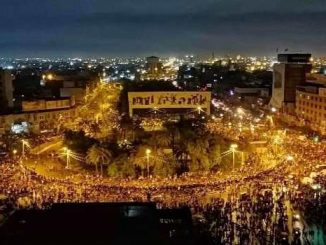
Huge crowds in Tahrir Square mark revolution anniversary

26/01/2012: Masses in Cairo and other cities demand end to military rule

  Egypt

China
‘Long Hair’ to attend Stockholm hearing on state repression

26/01/2012: LSD legislator from Hong Kong to speak in support of young socialist Zhang Shujie, forced to flee China

  China

 CWI International Meeting
Illusion of stability in Latin America

25/01/2012: Contradictions and new struggles define situation in region

  CWI, Latin America

Brazil
In defence of Pinheirinho inhabitants!

25/01/2012: 3 year old child killed in fatal repression

  Brazil

Kazakhstan
New wave of arrests against opposition

25/01/2012: Release Vadim Kuramshin and all those arrested – End harassment of opposition activists!

  Kazakhstan

 Kazakhstan
After the Zhanaozen clampdown

25/01/2012: 16 December underlined the need for the workers’ movement to link economic demands to the struggle to bring down the regime

  Kazakhstan, Video

USA
Mobilize to Support Longshore Workers

24/01/2012: Key Battle for the Labour and Occupy Movements

  US

 CWI International Meeting
World capitalism in crisis

22/01/2012: As world economy worsens, inter-imperialist relations intensify

  CWI, CWI Comment And Analysis

Britain
Stephen Lawrence murder – The untold story

21/01/2012: How socialists and the local community fought back against racism and the BNP

  Britain

Scotland
ConDem government blunders independence referendum

20/01/2012: Scottish National Party’s version of indepdendence a nightmare for workers

  Scotland

Egypt
A year of revolution and counter-revolution

18/01/2012: As economic crisis worsens, new class conflicts loom

  Egypt

Nigeria
Widespread disapointment and anger as labour suspends strike

17/01/2012: Struggle forces Jonathan back a bit, but could have won far more with a more resolute leadership - We Condemn Repression by Police and Army

  Nigeria

World economy
The year of all risks

15/01/2012: On the brink of a new downturn

  World Economy

Britain
Pensions battle continues

15/01/2012: Public sector union left group organises open conference to keep up the fight

  Britain

Iran
New imperialist war clouds

13/01/2012: Tensions increase with sanctions and navy exercises

  Iran

 Ireland
Workers occupy against redundancies and abuses

12/01/2012: Socialist MPs support La Senza workers’ Dublin occupation

  Ireland Republic, Video

print


Hungary

Saying ‘NO’ to the IMF?

www.socialistworld.net, 26/08/2010
website of the committee for a workers' international, CWI

The Hungarian parliamentary elections in April 2010 secured a landslide victory for the conservative FIDESZ party, with their leader Victor Orbán retaking the Prime Ministerial position that he had held from 1998 to 2002.

Martin Powell-Davies, Socialist Party (CWI England & Wales)

With important local and mayoral elections due on 3 October 2010, Orbán hopes he can maintain his support through an apparent refusal to agree to European Union (EU) and International Monetary Fund (IMF) demands to further slash the government deficit through even harsher austerity measures.

Adam Le Bor, Budapest correspondent for The Times, cheered Orbán, saying, “The moneycrats went home muttering about collapsing currencies and fiscal irresponsibility. To which Budapest’s glorious answer was: God speed. The forint, Hungary’s currency, slid, recovered and slid again but the country is holding firm. Instead of cutting services and welfare, the Government will go for growth by slashing taxes, whitening the economy and simplifying Hungary’s Byzantine business environment.

“Of course, after the 2008 €20 billion bail-out package, the EU and IMF have a right to negotiate over Hungary’s financial plans. And after the IMF-induced privatisations of the early 1990s turned much of this region into an economic wasteland, Hungary has a right to stick to its guns. But there is a wider issue at stake here: national sovereignty, especially of smaller nations.”

Other financial commentators, such as the Centre for Economic and Policy Research, have also warned that the IMF’s demands put economic recovery in countries such as Hungary at risk, with repercussions for the rest of Eastern Europe and the EU as a whole.

So what will be the outcome of Hungary’s stand-off with the IMF?

Disillusionment in the ‘socialists’

FIDESZ’s success in winning a two-thirds majority was mainly down to the widespread disillusionment with the Hungarian Socialist Party (MSZP) administration that had been in power for the previous eight years. The MSZP may have been born out of the previous Stalinist ruling party but its leadership introduced severe austerity measures to cut the state deficit while enriching themselves at the expense of ordinary Hungarians.

Until finally being forced to resign in 2009, the previous Prime Minister, Ferenc Gyurcsany, personified the corrupt MSZP administration, becoming one of Hungary’s richest men while unemployment and poverty grew. Then, in September 2006, a tape was released of a private speech recording Gyurcsany admitting that he had lied to the electorate about the health of the economy: “We screwed up. Not a little, a lot. No European country has done something as boneheaded as we have. Evidently, we lied throughout the last year-and-a-half, two years. It was totally clear that what we are saying is not true.”

This admission triggered mass protests in Budapest and other cities which continued for six weeks. They culminated on 23 October, the 50th anniversary of the 1956 Hungarian uprising, when police attacked demonstrators with rubber bullets and tear gas. After that, the protests petered out, but, without any clear left-wing alternative, the deep discontent helped to build the far-right Jobbik party (see below). The MSZP government limped on until being routed in the 2010 elections, receiving just 19% of votes, compared to FIDESZ’s 53%.

As a Budapest resident explained to me, “It is not only the economic collapse and mismanagement but also the total lack of morals and credibility that shattered the confidence of voters towards them. The words ‘left wing’ has become completely twisted and our ruling party was anything and everything but the representative body of any left or leftish movement or the working population.

“One thing is more than certain and it is the huge and almost fatal tiredness and disappointment of our ordinary people. Every single day there is a new scandal, there is a new corruption or bribery case at state-run companies and the whole municipality is evidently involved in most of them. We can only be hopeful and optimistic about a better period in Hungary with less corruption and greediness. It has been repelling, indeed.”

The rise of Jobbik

The second major winner of the 2010 elections was Jobbik, ‘The Movement for a Better Hungary’, who became the third biggest party with 17% of the vote, building further on the 8% of the vote and three MEPs that they achieved in the 2009 European elections. Although Jobbik deny being fascist, describing themselves as being “a Christian conservative nationalist party”, they are a far-right racist party, with links to the BNP in Britain.

Jobbik has waged a populist attack on political corruption of both the MSZP and FIDESZ, and attacked the profiteering of international financiers, while basing itself on a strong tradition of Hungarian nationalism in its call to “defend Hungarian industry, Hungarian farmers, Hungarian businesses, Hungarian produce and Hungarian markets”.

After the defeat of Hungary in the First World War, a third of ethnic Hungarians saw their homes become part of Romania, Czechoslovakia and other neighbouring states under the Trianon treaty. Jobbik seeks to reopen this national question, saying that it “considers Hungarian populated territories beyond the border to be part of a unified protected Hungarian economic zone”.

Jobbik combines this Hungarian nationalism with anti-‘Gypsy’ rhetoric, seeking to blame the impoverished Roma minority for rising crime levels and warning about their higher birth-rate threatening a “demographic catastrophe”. It links attacks on ‘work-shy Gypsies’ with demands for ‘workfare’ policies where the unemployed would have to accept work created through public work schemes.

Opponents believe Jobbik also combines rhetoric with physical threats. The party’s ‘Hungarian Guard’ organisation is linked to increasing attacks on Roma communities.

Jobbik’s support is particularly strong in the poorest regions such as Miskolc in the North-East of Hungary. The platform of their candidate for Mayor of Miskolc, Marton Szeged, gives an idea of their brand of right-wing nationalism: “The city is now helpless - the main street deserted, people dare not go out after dark, unemployment is at unprecedented proportions, the roads are in a worse condition than in Romania, Miskolc is nearly 100 billion forints in debt.

“But look at the example of Singapore, for fifty years the poorest country in South-East Asia. Then came a leader who said that within 15 years we can be the world’s commercial centre. Nobody believed him, but, today, Singapore is South-East Asia’s richest country. It requires hard work, appropriate measures, and dedication.

“Currently, the city of Miskolc spends more than 6 billion forints on benefits. Can you imagine if these were tied to the provision of public works? How sparkling clean Miskolc would be! We would improve roads and public parks. We could prevent the current external outsourcing of firms and millions in ground-maintenance costs. All working-age people who would benefit from support must be put to work! He who does not work, does not eat.”

Hungary and the IMF

In 2008, to stave off default when the credit crunch hit worldwide, Hungary became the first member-state to be given a loan from the EU, €6.5 billion. This was in conjunction with a wider €12.5 billion rescue plan agreed with the IMF.

In July 2010, the IMF and EU representatives met with Hungarian officials to review these finance packages. This visit followed soon after international investors had been worried by FIDESZ’s deputy leader comparing Hungary’s finances to Greece’s and with the knowledge that Hungary’s government debt amounted to 80 per cent of its GDP. Hungary’s economy shrank 6.3% last year, and it is predicted to stagnate this year.

But, whether driven by fear of popular opposition to further austerity packages, concerned at their damaging economic effects on an already fragile economy, or just playing for time before October’s local elections, Prime Minister Viktor Orbán surprised international financiers by refusing to implement the cuts packages they were insisting upon.

It appears that Orbán has confirmed that Hungary will stick to the original budget deficit target of 3.8% of GDP but was not prepared to accept the 3% target demanded by the EU (and, of course, also broken by many other EU states). Another sticking point in the negotiations appears to be Orbán’s plan to raise €700m to plug deficits through imposing a bank tax of 0.5% of bank assets, a plan that led five international banks based in Hungary to immediately complain to the IMF, particularly Austria’s Raiffeisen bank.

The pro-capitalist MSZP warned Orbán “not to endanger Hungary’s financial stability” and said that Orbán’s refusal to comply with the IMF threatened serious consequences if the forint collapsed on international money markets. However, Orbán and FIDESZ seem set on trying to promote growth and create jobs through tax-cuts, with a plan to introduce a 16% personal income tax in January, rather than through cutting deficits.

Talks have been suspended but negotiations are due to continue in October. It may then become clear whether Orbán is serious in confronting the IMF or whether this is just a manoeuvre before the mayoral elections.

Workers’ opposition needed

Whatever happens, it is clear that Hungarian workers and the middle-class will continue to face insecurity, poverty and unemployment. Neither FIDESZ, MSZP nor Jobbik offers any alternative to capitalist policies that, in one way or another, will seek to make sure that profits are restored at the expense of working people’s livelihoods.

Unfortunately, there is, as yet, little sign of a left-wing opposition in Hungary. Years of Stalinism followed by the corruption of the sharply pro-market ‘Hungarian Socialist Party’ will have added further confusion amongst workers looking for an alternative. Trade unions themselves are having to learn the real traditions of trade union struggle after the years of sham trade unionism under Stalinist rule.

However, in the battles to come, trade union struggles will be fought and genuine socialist conclusions drawn again, with Hungarian workers showing the heroism displayed on the streets of Budapest in 1956, in a fight for a socialist Hungary as part of a socialist Europe.

As one Budapest resident explained to me, “We have to struggle, like they are in Greece.” When Hungarian workers recognise that they cannot rely on capitalist politicians to oppose international capitalism, and that they need to rely on their own strength and organisation, then they can find a path out of unemployment, poverty and racism.


print


Europe

 video

Ireland: Joe Higgins addresses packed anti-household tax meeting, 04/02/2012

 further videos

CWI - get involved

cwi comment & analysis

world economic crisis

analysis and commentary

iraq

afghanistan

featured links

Paul Murphy, MEP

cwi links

Marxist.net, CWI marxist archive

solidarity

tamil solidarity campaign kazakhstan

cwi publications

marxism in today's world che

Che Guevara: Símbolo de Lucha

Por Tony Saunois

A socialist world is possible, the history of the cwi with new introduction by Peter Planning green growth, a contribution to the debate on enviromental sustainability