

deutsch |  english |  español  |  français  |  italiano  |  nederlands  |  polski  |  português  |  svenska  |  türkçe  |  中文  |  عربي  |  русский

latest news

Greece
Euro crisis deepens

21/05/2012: Revolution and counter-revolution

  Greece

Algeria
Legislative elections give near-majority to the FLN

20/05/2012: Anger from below, manoeuvres from the top

  Algeria

Burma
Two elections, 90% support but no power

19/05/2012: Workers’ organisations must ensure real change

  Burma

 Russia
CWI supporters arrested during Moscow protests

18/05/2012: Police target socialists at protest camp – urgent protests needed!

  Russia, Solidarity

Lebanon
Union leaders call “a strike without credibility”

18/05/2012: Build fighting, democratic trade unions!

  Lebanon

Germany
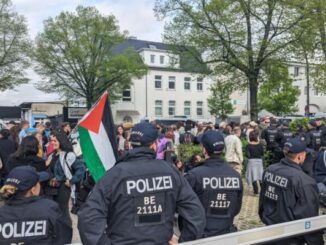
Massive state repression against “Blockupy” movement

18/05/2012: Thousands attempt to occupy squares and blockade the ECB in Frankfurt, Germany. Protests are banned.

  Germany

 Kazakhstan
Activists released

18/05/2012: Leader of the “Leave Peoples’ Homes Alone” campaign and member of the SMK, Larissa Boyar, and others have been released from prison

  Kazakhstan, Solidarity

Greece
New elections due as pro-austerity coalition talks fail

15/05/2012: For a Left government! For anti-austerity, pro-worker, socialist policies!

  Greece

Tunisia
General strikes, power struggles and an economic stalemate

15/05/2012: Republic’s president, Marzouki, afraid of ‘new revolution’

  Tunisia

 Kazakhstan
MEP speaks out against repression

15/05/2012: "Despite this ferocious oppression, the opposition and discontent of the working class cannot be silenced"

  Kazakhstan, Video

US
Socialist candidate challenges corporate politics in Washington state

13/05/2012: "During an election dominated by career politicians who are loyal to big business, I am running as a Socialist Alternative candidate to make sure there is at least one independent left-wing, pro-worker candidate in Washington State worth voting for."

  US

US
In calculated move, Obama supports gay marriage

12/05/2012: Step up the Struggle for Equality

  LGBT, US

Nigeria
Experiences of the explosion of class struggle

12/05/2012: Urgency of a working class alternative proven again

  Nigeria

Russia
Moscow left holds May Day Moscow demonstration

12/05/2012: Lively and political CWI contingent attracts variety of activists

  May Day, Russia

May Day
Demonstration in Uleåborg Finland

12/05/2012: Meeting discusses involvement in Afghanistan

  Finland, May Day

Kazakhstan
Miners’ strike ends in victory for workers

11/05/2012: Campaign Kazakhstan reports that newspapers in Kazakhstan said a strike by miners at KazakhMys ended on 7 May with a complete victory for the workers.

  Kazakhstan

 Irish referendum
No to the austerity treaty!

10/05/2012: On 31 May Irish voters are asked to vote on the European fiscal treaty. This video explains what the treaty is about.

  Ireland Republic, Video

May Day in Nigeria
Fanfare fails to mask workers’ anger

10/05/2012: May Day should have offered opportunity for workers to pose their demands and agitation before the government

  May Day, Nigeria

France
Weekend that shocked Europe

09/05/2012: Austerity rejected in Eurozone’s second biggest economy

  France

Sri Lanka
United left May Day in Colombo

09/05/2012: Socialist organisations march to joint rally

  May Day, Sri Lanka

Britain
Legitimacy of Cameron and Clegg further shattered

07/05/2012: The Con-Dem government suffered a crushing defeat in last Thursday’s elections for local authorities and in the mayoral contests apart from London.

  Britain

The capitalist “vampire squid” and the class struggle in Europe

06/05/2012: As economic crisis worsens and class struggles continue in Spain, Greece, Portugal and elsewhere in Europe, the need for working class fight-back and to build the influence of Marxism grows.

  CWI Comment And Analysis, Europe

Hong Kong
Thousands march on May Day

05/05/2012: Socialist Action (CWI) campaigning against the capitalist 1% and against racism

  Hong Kong, May Day

Sweden
May Day in Gothenburg

05/05/2012: Bobby Seale as guest speaker

  May Day, Sweden

 Kazakhstan
Trial of Vadim Kuramshim resumes

04/05/2012: Solidarity needed to free Vadim!

  Kazakhstan, Solidarity

Pakistan
May Day in Sindh

04/05/2012: Fotos of impressive march

  May Day, Pakistan

Lebanon
Build a mass workers’ movement to get rid of the corrupt ruling class

03/05/2012: For a workers’ programme that puts forward the socialist alternative

  Lebanon, May Day

Germany
Heading towards days of action against Troika austerity

03/05/2012: Days of action planned in Frankfurt/Main against European Central Bank and big finance

  Germany

Britain
"We’re striking back on 10 May"

02/05/2012: Pension cuts, job cuts, service cuts

  Britain

Ireland
Water charges are just paving the way for privatisation

02/05/2012: Irish government doesn’t seem to have learned anything from the massive opposition to its Household Tax

  Ireland Republic

France
Down with Sarkozy and austerity policies!

02/05/2012: Make the rich and the bankers pay for their crisis!

  France

Sweden
Chinese premier’s visit met by vociferous democracy protests

01/05/2012: CWI supporter Zhang Shujie and other activists took to the streets when Wen Jiabao visited Stockholm and Gothenburg

  China, Sweden

May Day 2012
Celebrate working class history and fight for new victories!

30/04/2012: International Workers’ Day and the socialist alternative to austerity and barbarism

  CWI Comment And Analysis, May Day

Indonesia

Showdown

www.socialistworld.net, 05/05/2001
website of the committee for a workers' international, CWI

A FIERCE struggle is consuming Indonesia’s national parliament, as various parties attempt to unseat the president, Abdurrahman Wahid.

Niall Muholland

The background to this open conflict between capitalist politicians is the worsening economic and social crisis. To add to Wahid’s woes, he faces bloody ethnic clashes across the entire archipelago. In recent months there has been vicious fighting between ethnic and religious groups in Kalimantan (South Borneo) and in the Moluccas (Spice Islands), that has left thousands dead and many more refugees. Separatist struggles have gathered pace in Aceh and West Papua.

Wahid was elected president 18 months ago, following the revolutionary movement in the late 1990s which overthrew the former ‘New Order’ dictatorship of Suharto. An uneasy compromise government was formed, with Wahid as president and Megawati Sukarnoputri becoming vice president. Megawati leads the biggest single political party in the parliament, the People’s Democratic Party of Struggle (PDI-P), while Wahid only commands around 10% of support amongst MPs. Important sections of the army (TNI) support Megawati, hoping she can restore some of the power and privileges they lost when Suharto departed.

The attempt to topple Wahid is spearheaded by the speaker of the People’s Consultative Assembly (MPR), Amien Rais. His Central Axis group of Islamic parties backed Wahid in the October 1999 elections, but has now changed horses and calls for Megawati to become president. Rais says that since Wahid has come to power, "all the social, political, economic, legal and security indicators point to a process of decline into a deep chasm" (TEMP magazine, March 26, 2001).

Wahid has made many grand promises since taking power, but has only presided over a worsening situation. Ever since the 1997-98 Asian financial crisis that saw a number of the region’s so-called ‘Tiger economies’ come crashing down, the Indonesian economy has been in deep crisis. The currency, the rupiah, remains feeble. Wahid and Megawati are united in looking to international capitalism to throw a lifeline, but loans from the International Monetary Fund (IMF) are on hold, as this tool of the big capitalist powers demands the further opening up of the economy to multinational companies and large scale privatisations. Wahid hesitates at the idea of imposing the IMF’s swingeing attacks because of the social upheavals that could follow.

Both Wahid and those politicians opposed to him have mobilised their own supporters onto the streets in recent months. Most large protests take place in Jakarta, the capital city, where pro- and anti-Wahid demonstrators surround the parliament buildings. Wahid has upped the stakes by claiming that more than 400,000 of his followers are on a ‘nation-wide rebellion’. In his home province of East Java, tens of thousands of men have formed ‘suicide squads’, vowing to fight to the death to stop the removal of the president. An offshoot of the mass Muslim organisation, Nahdlatul Ulama, which Wahid previously led, claims it is giving paramilitary-style training to 50,000 volunteers in villages. The leader of the new organisation, which is called the ‘Defenders of Truth Front’, boasts that 30,000 of its members are ‘spread out in the capital’ and ready to stage mass protests.

A serious showdown between the parliament and president could unleash violent scenes on the streets. This may also include a direct conflict between the army and the national police, Polri. During the New Order regime the police were under TNI control. Now they are ‘independent’. Wahid’s enemies claim the police are too close to him and the army is known to be furious that it was recently decided to supply the force with new arms. Over the last three years the TNI and police have frequently clashed, with each shooting at the other. These serious fault lines within the state apparatus underline the precarious nature of post-Suharto parliamentary democracy.

If Wahid is impeached and ‘constitutionally removed’ some time after July - and this is by no means inevitable - Megawati would probably attempt to rule with support from Golkar and also the dominant group within the TNI, led by the so-called ‘gradual reformer’ Lt Gen Agus Widojo. Her regime would be more chauvinist, which would mean increased state repression against national and ethnic minorities.

Wahid’s term of office lasts until 2004. If impeachment is unsuccessful, a long war of attrition between the ruling elite factions would lead to paralysis at the top, deepen the economic crisis, and threaten the ‘territorial integrity’ of Indonesia. In such circumstances, the army would try to act more independently, to ‘stop the mayhem’ and to restore ‘law and order’.

Wahid will face pressure to avoid this scenario and to make a deal with Megawati whereby he officially remains president but relinquishes day-to-day decision making powers to his vice president. However Megawati’s allies bitterly claim that Wahid reneged on such a deal in August last year.

Whatever the outcome of the infighting amongst the ruling elite, the capitalist politicians can provide no solution for the massive problems facing the working class and poor. The present volatile situation poses stark questions for the Left parties and pro-democracy activists on the way forward. It was these forces that played a key role in the anti-Suharto protests in the late 1990s, which led to the downfall of the dictatorship. One of the most important Left organisations, the Democratic People’s Party (PRD), argues that president Wahid has fought for democracy and resists the remnants of the New Order regime. The priority therefore, they argue, is for the Left to campaign against the forces of the old dictatorship.

It is true that the army tops and reactionary forces of the old regime pose a real threat to the democratic rights of workers and youth. But what is the best way to oppose them? A united front of Left parties, trade unions, and other workers’ organisations, plus genuine pro-democracy, student and youth organisations, must mobilise against these forces in order to defend and extend democratic rights. Moreover, the Left should put forward a clear socialist programme, based on the class interests of workers and the urban and rural poor. This entails clearly exposing the fact that Wahid is a pro-capitalist politician, however, and carries out neo-liberal policies that are a disaster for the masses.

To foster hopes in Wahid and other ‘progressive’ or ‘reformist’ sections of the ruling class can only cause confusion amongst students and workers and politically disarm them. Wahid likes to present himself as being on the side of ‘the people’ and standing for universal democratic rights. But in fundamentals he is no different from Megawati and all the other capitalist politicians, for whom the maintenance of the profit system, and the privileges it allows them, is sacrosanct.

Wahid manoeuvres between various political parties and even social classes to try and stay in power. He attempts to make concessions to the generals, Golkar and Megawati, with, for example, his half-hearted ‘clean-up’ of corruption and cronyism. Despite earlier promises to approach the national issues through negotiations, Wahid has now given consent to a so-called ‘limited military strategy’ in Aceh to end the Free Aceh Movement (GAM) rebellion.. The president hopes that this crackdown will convince the multinational company ExxonMobil to resume operations in its gas fields there (the giant corporation pulled out of Aceh earlier this year because of ‘security reasons’). Under this government, human rights and national rights come a long way behind the interests of big business.

Furthermore, for workers struggling for better pay and conditions, or involved in the heroic effort to build independent unions, ‘democratic rights’ under Wahid mean precious little. Five hundred company thugs, armed with home-made weapons and bombs, attacked a recent sit-in strike by workers at a car upholstery factory in Jakarta. One young striker was killed. The police were nowhere to be seen on that occasion of course. Several unions are planning strike action and days of protests around this year’s May Day in order to win better conditions, for basic workers’ rights to organise, and to make May Day an official workers’ holiday.

Workers and youth in Indonesia require an independent class programme and mass organisations to defend their interests and to transform society. The recent emergence of the Democratic Socialist Association (PDS), a split from the PRD, illustrates that sections of the Left are reaching these important conclusions. In a ‘Statement of split from the PRD’ (November 14, 2000), the PDS says it is necessary to expose Wahid’s ‘false reformism’ and to attack the class nature of his administration, as well as the remnants of the New Order. "We consider that Gus Dur (Wahid) has even given space and opportunity for the revival of the remnants of the New Order by not putting Suharto and his cronies to trial, (making) collaboration with (a) faction in the military, making (a) coalition with the Golkar, submission to the IMF and WB (World Bank)..."

The PDS correctly emphasises the leading role of the working class in changing society and the need for workers’ international solidarity. They argue that the Indonesian Left must protest against the brutal state oppression in Aceh and West Papua.

We would add that it is necessary to go further and for socialists in Indonesia to support the right of self-determination for oppressed nations, in order to cut across the reactionary chauvinism of Megawati and others and to win over national minorities to a united workers’ struggle. A voluntary socialist confederation of Indonesia, where each component state has equal rights, is the only lasting solution to the myriad national problems.

Similarly, only united action by workers and the urban and rural poor, as part of a struggle for socialism, can put an end to the endemic ethnic and religious violence. Sections of the TNI are reportedly helping to stoke up the flames of ethnic bitterness in order to destabilise Wahid’s administration. But the root causes of these conflicts are poverty, injustice and discrimination. In Kalimantan, the indigenous Dayaks were pushed off their land to allow large-scale exploitation of natural resources. With the collapse of the Indonesian economy their situation has worsened. Mobs of Dayaks blamed the minority Madurese immigrants for their plight and killed thousands during attacks earlier this year, in many cases carrying out beheadings of even young children. Such barely believable horrors will unfortunately be repeated until the sick system of capitalism in Indonesia is overturned.

At this stage the mass of workers, youth and urban poor are relatively passive. But the revolutionary process that began in the late 1990s is far from over. Many of the hopes and illusions that workers had in the post-Suharto administration have been dashed by harsh experience. Yet even so, they will fight tooth and nail against any attempt to return to the past. A military grab for power, or even the succession of Megawati to office, and with it the threat of increased army influence, could well act as the ‘whip of counter revolution’ that drives the revolution forward.

Big opportunities will be presented to the working class and youth. To succeed in fundamentally changing society they will need a mass revolutionary, socialist organisation. The current debate on the Left in Indonesia is an important step towards the creation of such a party.

This appeared in the May edition of Socialism Today, monthly magazine of the Socialist Party, British section of the CWI


Free Vadim! Europe

 video

Kazakhstan: MEP speaks out against repression, 15/05/2012

 further videos

CWI - get involved


solidarity

tamil solidarity campaign kazakhstan

featured links

Paul Murphy, MEP

cwi links

Marxist.net, CWI marxist archive

cwi comment & analysis

world economic crisis

analysis and commentary


cwi publications

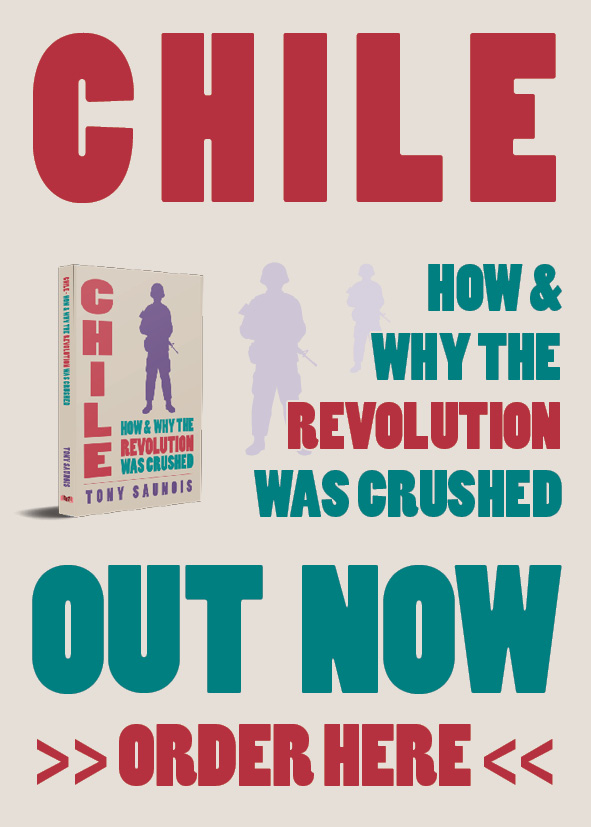
marxism in today's world che

Che Guevara: Símbolo de Lucha

Por Tony Saunois

A socialist world is possible, the history of the cwi with new introduction by Peter Planning green growth, a contribution to the debate on enviromental sustainability