
Last Sunday’s CWI online public meeting on the mass youth movements and workers’ struggles that have erupted in several European countries and in India and other parts of the world, was attended by nearly 200 people across the world.
The meeting moderator, Niall Mulholland, pointed out that, “the events in Europe have echoes of 1848 and the revolutions. Although, of course, we’re nowhere near that level of mass movements and revolutionary struggles at the present time, it would nevertheless be a mistake to underestimate what’s taking place and the process that is unfolding. There are many different issues that young people are protesting over, and workers are striking over, in different countries. But I think the most common themes are the cost-of-living crisis, the collapse of public services — particularly in education, welfare and health — and opposition to austerity, militarisation and wars. All the stars are aligning, if you like: these things are coming together in a mass upsurge of anger among working-class youth, middle-class youth and workers in a number of countries.”
Niall went on to point out that “the other key reason for having this meeting is not just to describe what’s going on and report from the streets, as important as that is, but also to put forward an alternative. Young people, in particular, are looking for an alternative to capitalism: a system that can’t give them a home. They can’t afford to buy a house or rent privately; there is no social housing, and they have precarious jobs. Many young people go to university, come out with enormous debts and still can’t find work. In other words, this is a system that can’t even deliver the basics for working-class youth, or middle-class youth in many cases. It can’t even deliver what it delivered, in some senses, for their parents’ generation”.
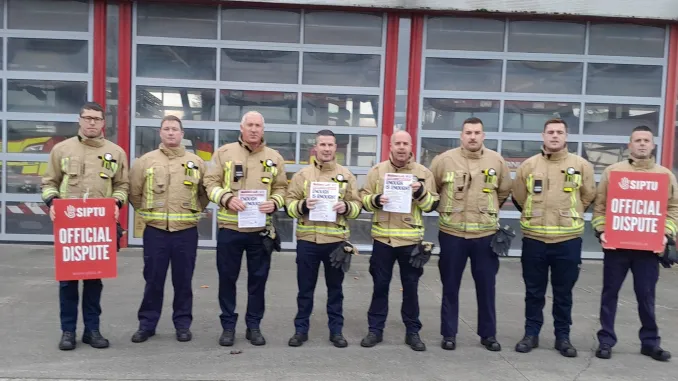
Over the next few days, socialistworld.net will publish lightly edited transcripts of the main contributions made by speakers from France, India and Ireland given during the CWI online meeting. We begin with the opening contribution from Ciaran McKenna, who is am a member of Militant Left (CWI Ireland), and who sits on the National Executive Council of SIPTU, the largest union in Ireland (speaking in a personal capacity).
Socialistworld.net
I’m just going to go through some of the events of the 14th of October – the huge one-day public sector strike in the south of Ireland – and the context of that development.
And to start off a few general points about the worsening of the capitalist crisis across the world, and I think, as Niall said, we’re seeing the walking class and youth moving into struggle. It’s nearly 40 years since the collapse of Stalinism, and it’s nearly 20 years, since the great financial crash, and we can see that, yet again, the capitalist system has no answers to the various crises, that face the working-class across the globe.
And we also are living in a context of intensifying climate change; the world’s weather is changing, with catastrophic weather events and temperatures are now part of our day-to-day lives. And we can see this in this instance an example of how capitalism prioritizes profit over all else, just at the point when we should be trying to restructure the economy, to deal with climate change.
The capitalist class are putting everything into AI data centres, all of which require colossal use of fossil fuels, and which almost guarantee a worsening of climate change. But which, to the capitalist class, offers the promise of untold profits.
We can see that there’s growing militarization, particularly across the European Union. Growing racism, division, poverty, and attacks on the working-class. But I think it’s important to stress that the working class possesses power, and socialists, we understand this, and we must try and organize, to stop the capitalist attempt to push us into destruction.
This is our world, ultimately, and we should mobilize our forces to take control and stamp our control over the world. So, workers’ resistance, as I said, is growing across the world, and it’s taking different forms, and different quantities.
I’m going to report on industrial battles in Ireland over the past period. And the developments that culminated on the 14th of October strike, was a massive public sector strike, of huge significance for the Irish working-class and labour movement.
It was the largest strike since 2009, and one of the largest ever strikes to take place in the Republic of Ireland. Some people say it almost matched the 1918 strike against military conscription, which was huge. Over 300,000 workers, in every town, city, and village in Ireland took to picket lines on 14 October, outside schools, hospitals, clinics. Council depots, universities, government buildings and many other places. It was a huge display of workers’ power on the streets, and it also was a huge display of workers’ unity.
And what was clear to everyone on the picket lines was the determination of workers to strike, and the fact that they were fed up with what they’d been fed over the past number of years. But also, there was overwhelming public support for the strike, and I think this is what spooked the government. And really, unsettled them, because they weren’t expecting the levels of overwhelming.
So, the issue that provoked the strike was the government’s failure to renew a pay agreement that ended in June of this year. Over the summer and into September, the 19 trade unions. In the public sector in the south of Ireland members balloted for strike action, and in every single result returned almost 90% in favour. It was a huge, overwhelming mandate, and these results stunned everyone; the level of support for strike action and for industrial action.
Decisive shift in consciousness of public sector workers
But it was clear that there was a decisive shift that had taken place in the consciousness of public sector workers in the South to bring about those mandates. I’ll touch on a few points about the Southern economy. So, the Irish economy in the South is supposed to be doing well over the past number of years, particularly since the end of COVID there have been a mini economic boom. But workers have experienced almost none of this, and workers, I would say, have been locked out of the economic benefits of this boom.
That’s no surprise to us as socialists. That’s the way the system operates. But for workers, I think, who are not necessarily socialists, are now thinking along those lines. It’s certainly becoming more apparent that they have been locked out. Of course, if you’re a capitalist, the Irish economy is probably as close to paradise as it’s possible to imagine. Every year, on year, over 300 billion Euro is cleared in profits by the capitalist class in Ireland.
And all the tech and pharmaceutical joints reap colossal profits, and they book these profits in Ireland. But if you think about it, that’s a trillion euros in profits every three years from one small country of 5.3 million people. It’s a colossal example of the imbalances in the capitalist system. And that figure may well be an underestimate, and the true figure could be closer to two trillion euros every three years. So colossal wealth is being generated.
And at the other end workers are not seeing anything. In fact, workers are experiencing a regression of living standards. Multinational companies can use Ireland as a tax haven to book their profits made elsewhere in other jurisdictions and then return them to the US, or to France or Germany, or whatever. But if you look at wage growth over the past six years, it has been concentrated in the top 10% of the workforce. But 90% of workers, over 2.5 million workers, are either being excluded, or their living standards are starting to regress. Or they are just standing still. They’re not actually making any improvements to their living standards. Around 15% of the workforce are officially low paid, earning the minimum wage or a little bit above, and many on poverty rates. And child poverty is rising sharply in recent years in the South. I think that’s a stark illustration of how capitalism operates.
And driving much of this regression and living standards is a 15-year long housing crisis. But we must, as Marxists say, that this is not really a crisis. If that’s the kind of shorthand term for an endemic crisis that’s organic to capitalism. Public housing for the walking class has ended, replaced with a lifetime renting. The Irish government have no plans to regulate rents or to have any kind of a regulated sector. They want free-for-all for landlords.
Housing is being commodified, yet it is a basic human necessity. It means maximum rent for the rentier class. And we’ll see how far this goes. Personally, I can’t see this continuing on for years without creating folder social explosions in the years ahead. Many young workers see that they will probably never have access to secure affordable housing. And this was noted time and again on the 14th of October picket lines.
And they face a lifetime of renting in an unregulated free market, where rents can jump by €500 per month, depending on how greedy the landlord is. And then there is the ongoing cost of living crisis which we’ve all experienced over the past number of years, and which impacts on every aspect of life. It is now rapidly eroding the value of wages. And this is one of the catalysts for the huge votes for industrial action and for strike action on the 14th of October. The value of our wages is being eroded, and the capitalist class are basically rolling in billions of profits. That is a graphic illustration of capitalism as it exists. Inflation in Ireland in September was 4.1%. The Irish Central Statistics office, which collects the data on inflation, noted an increase since July, across the board, and this has never happened before.
Are surging ahead every month, and this again has been felt across the economy. So, every necessity for the working class – food, energy, clothing, transport, education, recreation, housing – sees costs surging. Month after month, wages are stagnating. Soaring profits for capitalists and the cost-of-living crisis is a cover in the way to justify massive profiteering and exploitation. And we see, for instance, Tesco, the grocery superstore, is recording record profits in Ireland. This represents a transfer of wealth, from the working-class to the capitalist class in Ireland.
So, this has led to a massive buildup of anger in Irish society, and that anger came to a head on the 14th of October. Petit bourgeois small contractors in agriculture and transport sectors blockaded roads, streets, and communities last April and they succeeded in getting a tax cut that had no effect on the working-class. But workers learnt from this and it led to many workers, when they got a chance, to strike back using ballots for industrial action that took place over summer.
So, I think we are in a longer struggle now. There was supposed to be another day of strike action on the 21st of October, that was suspended while talks were taking place. These talks, as Militant Left put in our literature, need to protect wages, to put workers ahead, and they need to deliver a good outcome for the working-class. Otherwise, it will be rejected by the public sector workforce, and the Irish establishment will face not just the winter of discontent, but a spring, summer and autumn of discontent.
The final point I’ll make, comrades, is that what’s happening in the South of Ireland with this public sector dispute, is part of a wider capital offensive; the attempt to suppress the economy in both public sector and private sectors. We need, as trade unionists, socialists and Marxists, to organise, to resist this happening in the south of Ireland.
Militant Left members are part of the trade unions in Ireland, south and north. We were on strike on 14th, we were on the picket lines, supported by our CWI Comrades. And we may well be back on the picket line soon. We know that any concessions we win under capitalism are always temporary, as the bosses will try to claw back all our gains. So, we need to see the socialist transformation of society.