
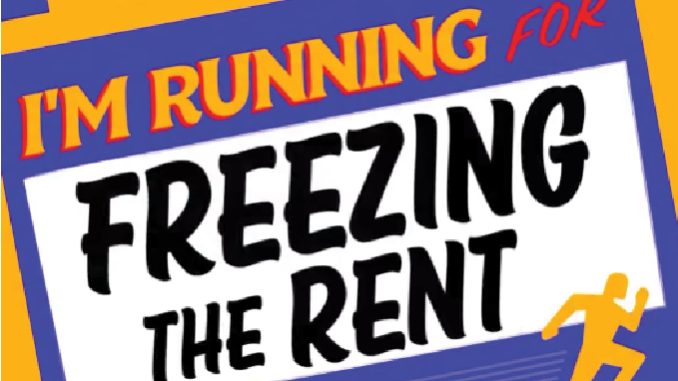
Zohran Mamdani, a self-described socialist, running as the official Democratic Party candidate, has won the New York Mayoral election. He is the first candidate since 1969 to win over one million votes in the city, often seen as the epitome of capitalism. Reflecting the scale of interest and polarisation in the contest, the overall turnout was the highest since the mid-twentieth century. The result has caused seismic attention internationally, particularly on the left.
The support for Mamdani’s program represented a positive hunger for change. It is to be welcomed that workers and youth in capitalism’s flagship city came out to vote for and campaign for policies such as rent control, a raised minimum wage, opposition to the Gaza genocide, more public housing, and municipal grocery stores.
Millions will now ask the question as to whether “socialism” can be implemented in New York and whether Mamdani will be an example to be followed across the US and internationally.
A Polarising Result
In Britain, Mamdani’s victory has been celebrated by the leading figures in the new “Your Party”. Jeremy Corbyn phone-banked for Mamdani in the week leading up to the election. Zarah Sultana’s social media on the day of the win said, “this is what Socialist representation looks like”.
Leaders of France Insoumise and Die Linke in Germany also celebrated, while the far right German populist AfD raged. Mamdani’s win, in the words of the liberal New York Times, also belongs to that of his “broad coalition”, which saw endorsements from corporate Democrats like Kamala Harris, and also welcomed by centrist pro-capitalist political forces, including Labour London mayor Sadiq Khan.
The New York Post, Murdoch’s tabloid, that still has a wide circulation in New York, emblazoned its front page with the headline, “On your Marx, get set Zo”. This echoes the attacks of the right-wing capitalist media and President Trump, who term Mamdani and his reform programme for New York as “Communist”. Mamdani ran and gained support on the issue of “affordability” in one of the world’s most unequal cities during a historic cost of living crisis in the US, promising social and progressive reform, through taxation of the wealthy.
Trump, on the eve of in-person voting, fanned the flames in the polarised atmosphere, saying, if Mamdani won, “It’s gonna be hard for me as the president to give a lot of money to New York. Because if you have a communist running New York, all you’re doing is wasting the money you’re sending there”. After the result his confrontational Truth Social post stated: “AND SO IT BEGINS”.
Mamdani, who had spent the latter stage of his campaign moderating his message to appease Democratic Party leaders and big business, then returned to playing to his base and activists in his victory speech addressing Trump directly saying “turn the volume up!!!!! to get to any of us, you will have to get through all of us”.
Mamdani’s words will influence layers of youth and workers in the city and across the US looking for a lead in the fight against Trump. He said, “If any city could show the nation how to defeat Trump, it was the ‘city that gave rise to him’”. This is a reference to Trump’s rise as a “god of New York” in the words of New York journalist Jonathan Mahler’s recent book. Through his inherited business and property empire from the 1980s onwards, which expanded under Democrat Mayor Koch, Trump played a part in allowing neoliberalism and Wall Street to dominate the city. A legacy of this is the working class being pushed out of the city, which has double the average rent in the rest of the US.
Mamdani said:
“The sun may have set over our city this evening, but as Eugene Debs once said: “I can see the dawn of a better day for humanity.
“For as long as we can remember, the working people of New York have been told by the wealthy and the well-connected that power does not belong in their hands.
“Fingers bruised from lifting boxes on the warehouse floor, palms calloused from delivery bike handlebars, knuckles scarred with kitchen burns: these are not hands that have been allowed to hold power. And yet, over the last 12 months, you have dared to reach for something greater.
“So, if there is any way to terrify a despot, it is by dismantling the very conditions that allowed him to accumulate power. This is not only how we stop Trump, it’s how we stop the next one”.
Dangers
This combative rhetoric, which is a continuation of the sharp election debates, has generated understandable excitement, particularly from left-wing youth in the US and beyond. Socialists must take account of this, while having an all-sided analysis, including highlighting potential and real dangers rooted in the limitations of Mamdani and his campaign. These limits were seen in a matter of hours with the appointment of Mamdani’s transition team which, while including someone who works for a non-profit that campaigns for the poor, also includes President Biden’s Federal Trade Commission chair.
Mamdani is a member of the Democratic Socialists of America (DSA) an organisation which has grown among youth in the last decade around the campaigns of figures like Bernie Sanders, but also because of the general interest in socialist ideas, including in the more educated college layer.
When the DSA was formed in 1982 included ex-members of the defunct Socialist Party of America. They successfully argued against continuing to try and build a workers’ party and argued instead that the DSA should be active around and within the Democrats, despite it being a corporate, pro capitalist formation. In recent years this has been debated in DSA but still the majority reject the idea of clearly separating from the Democratic Party. This was the political course Mamdani followed, which will now be tested on the national stage by his win. Democratic Party leaders will push “compromise” in an attempt to prevent him challenging capitalism.
The US ruling class is also absorbing this result and debating how to respond to it. The Financial Times, in an article titled “Wall Street offers cautious support to NY mayor-elect Zohran Mamdani” (5 November 2025), highlights how, “in the final weeks before the election, Mamdani intensified his courtship of New York’s business class, attending a series of meetings with chief executives as he sprinted towards what appeared to be an inevitable victory. Ralph Schlosstein, chair emeritus of investment bank Evercore and one of the most influential Democrats on Wall Street, said it was time for New York to come together after a bitter electoral race … A massive credit to him for enthusing the electorate … He offered hope and opportunity … it’s time for everybody to pull together and help him be as successful as possible.”
Mamdani is working with aides who previously worked with Obama and other corporate Democrats. He made an intensified pitch after his primary win to reassure corporate New York, rather than preparing the ground to build mass movement that could really win socialist change.
A section of corporate America is willing to make concessions on issues like taxation, no doubt to avoid an escalation of polarisation feeding class struggle and radicalisation. The FT article goes on,
“One Wall Street heavyweight even expressed his support for higher taxes.
“He has been effective at reaching out and expanding his coalition, which should build confidence in how he will govern,” said Antonio Weiss, the veteran Wall Street financier and former US Treasury adviser who has been active in advising on New York City fiscal matters. There should be no argument with a small tax increase that’s paired with a real effort to make government more efficient and then invested in a programme like childcare that allows more young families to stay in the city.”
These appeals come not just from representatives of the financial and wider capitalist elite, but are also a response to Mamdani himself, who, in a series of public statements in the last stages of the campaign has said he is open to working with corporate elites on “how to get his reform program funded”.
The New York Times in their post-election editorial are also attempting to guide the Mamdani “coalition”, by playing to the reality behind Mamdani’s rise in the first place while seeking to neutralise his campaign.
They say “this board did not support his primary campaign, owing to our concerns about his policy proposals and his inexperience. But we are rooting for his success. New York — the world’s most dynamic city, but one where many residents feel priced out of a good life — needs him to succeed”.
Genuine youth and workers enthused by the campaign and wanting fundamental change will be betrayed if Mamdani heeds the NYT editorial board’s appeal that, “Mr. Mamdani cannot solve economic inequality, the problem that fuelled his campaign”.
Mamdani’s policy of income and corporation tax rises to raise $9 billion on the wealthy may well be opposed by the New York state governor Hochul. But it is possible Mamdani’s taxation policy and even some of the more far-reaching elements will be accepted, initially by the elite in New York, and nationally, to avoid a social explosion.
However, as we pointed out during the election campaign the majority of Mamdani’s reform program, let alone “socialism”, will not be implemented by the “broad coalition” the New York Times editors want. Youth and workers seeking progressive change and even “socialism” would be ensnared by the corporate Democrats and behind them Wall Street and the wider liberal section of the capitalist class if they follow Mamdani’s approach after the primary of trying to appease the capitalist elites.
As the FT pointed out, “Robert Steel, the longtime Wall Street executive who had served in the mayoral administration of corporate Mike Bloomberg, said what mattered most now was the few dozen agency heads at city hall selected by Mamdani – “There are 30 to 50 people who really run the city…”.
Implementing the Program
A real Socialist administration would enable working class mass power in New York, not a handful of appointed officials, which would then attempt to build a national movement not just against Trump but for socialist change. Such a movement would face vociferous opposition from the Democrat Party establishment and would require building a new mass workers party with socialist policies. Workers and youth must, independently from the Democrats, organise now, to not just defend the radical parts of Mamdani’s programme, but to build support for their extension, while arguing that socialist change is necessary.
Mamdani’s reforms on wages and housing are limited to being phased in over a period of years when there is no reason that they could not be implemented with New York’s considerable mayoral and municipal budgetary powers, immediately after he takes office. Mamdani says he will implement a rent freeze on the two million rent controlled apartments and homes that exist in the city. These are a legacy of struggles of working-class New Yorkers for over a century, a bastion against the neo liberal era, so this has chimed with many. However, socialists call for rent freezes on all rental properties.
Clearly this would open immediate conflict with the Trump administration. Trump is already trying to cut federal grants to Democrat run cities. New York City received $7.4bn in federal funding this fiscal year.
Mamdani will not be able to fight cuts and attacks on the city’s democracy effectively if he chooses to follow the road of Gavin Newsom and other Democrats in cities and states, attempting to use the judiciary and rely on the legal system to block Trump.
Rather than a coalition with the liberals in the Democratic Party and trying to find friends on Wall St, a fighting coalition that struggles independently for the working class and youth should be assembled. A glimpse of which has been seen in the mass protests around the ‘No Kings’ slogan, and most importantly the upturn in labor strikes across the country in the last few years.
Part of building such a force could mean calling mass neighbourhood, workplace and college assemblies to draw-up an emergency socialist budget for New York demanding the funding the city needs. Mass organisation of workers, labor unions, tenants’ organisations, students and all who want to fight is now urgent, preparing a programme for struggle not just with the Trump administration but the pro-capitalist Democratic Party at city and state level, and crucially to hold Mamdani to account.
Storm Clouds
The possible onset of a new global economic crisis, with warnings from many US based commentators that this could be on the scale of 2008, can also have a dramatic impact on the course of a Mamdani administration and how the US capitalist class react to it. Not least as parts of the private credit and financial markets are based around Wall St and New York.
Tech firms like Amazon, that could be affected by a burst AI bubble, also have a large workforce in the city. Of course, an economic crisis can bankrupt firms but would not necessarily cut across the scale of long-term investment in AI, quantum computing and other technological areas by US capitalism. It will be instructive to see what relationship develops between Mamdani and the tech capitalists.
A new major crisis can influence whether the US capitalist class are willing to grant fiscal space or concessions to a Mamdani administration for a temporary period. It can also have a radicalising impact on the anti-capitalist consciousness of his base.
Trump was so opposed to Mamdani that he endorsed Andrew Cuomo, a product of a long running Corporate Democrat political dynasty, tainted with sexual harassment allegations that in 2021 forced him to resign as New York State governor, over the official Republican candidate Curtis Silwa. Mamdani caused a sensation by winning the Democratic primary in June, against Cuomo, backed by the national corporate party establishment, who then ran on the ballot as “Fight and Deliver”.
Cuomo’s campaign was funded by hedge fund managers such as Bill Ackman and former mayor Bloomberg and 26 billionaires with tens of millions of dollars in Political Action Committee (PAC) funds. While Mamdani’s campaign attracted the support of many low income and small donors, two billionaires did donate to his campaign (Forbes, 1 November 2025).
Votes
Early breakdowns analysing Mamdani’s vote of 50.4% show he increased his support since the primary, particularly in black and Hispanic neighbourhoods. He was also able to flip the Bronx. However, he was behind Cuomo amongst non-high school graduates and also older voters.
Cuomo and Silwa attacked Mamdani for being “divisive” on election night, but Mamdani pointed out the toxic nature of their attacks saying, “No more will New York be a city where you can traffic in Islamophobia and win an election.”
Both Cuomo, Silwa and ex-Mayor Adams, who dropped out in the autumn, plus the right-wing capitalist media, attempted to weaponize anti-semitism in a city with a significant Jewish population, getting Rabbis to make statements against Mamdani, and trying to turn Mamdani’s strident support for the cause of the Palestinians against him. Much right-wing media comment has also focused on Mamdani being a practicing Muslim, raising the legacy of 9/11.
These attacks did have an impact as did media sensationalism around the potential economic impact of Mamdani’s programme. The Post and other tabloids amplified a J.L Partners poll saying 25% of the city would consider leaving NYC if Mamdani won.
Cuomo, despite his reactionary record and inability to offer a positive alternative to Mamdani in terms of the cost-of-living crisis, still won over 40% of the vote. Cuomo found support not just in the affluent Upper East Side of Manhattan, and more historically conservative Staten Island, but across the city, the margin for Mamdani was thinner and there were enclaves of majorities for Cuomo such as the south of Brooklyn. This shows a large section of New Yorkers were not convinced by Mamdani’s policies, or were even fearful and in some cases provoked to vote for Cuomo by the reactionary attacks. This extended into sections of the working class including older workers, including amongst some who are unionised. This base can be used in future as support for right-wing opposition campaigns to undermine Mamdani if he does not deliver quickly, and in the US the election cycle is fast.
“We will deliver” – but how?
As Mamdani said himself “expectations are high”. He also said “we will deliver”. But how to deliver is the question. The NYT editorial points to previous “progressive” mayors like De Blasio (who endorsed Mamdani) who while trying to get funding on a state level for childcare did not take on the wealthy, retreated even from a more limited programme than Mamdani’s and oversaw social decline in New York. Dinkins a DSA member, was mayor in the early 1990s and failed to deliver.
This is why workers, and youth cannot just rely on Mamdani. The city’s labor unions should convene mass meetings now and begin to make demands over wages, the democratic right to strike and working conditions, along with plans for action, campaigns and strikes to win such demands. This should be linked to the fight for a $30 minimum wage, and the struggle of tenants’ unions and for the mass building of public housing using union labour.
Renters must organise quickly on a mass basis with occupations of empty properties, rent strikes and protests to force the issue of rent freezes and more public housing immediately. The impact if Mamdani does implement a rent freeze could be significant in New York resulting in him consolidating and extending his support. It would also be seen internationally as a major departure from the norm with political administrations.
The idea of a mayor or city council fighting will seem new to the layers enthused by Mamdani. Socialists have raised the example of the socialist-led Liverpool city council who in the mid-1980s led a campaign with 50,000 strong mass protests and citywide strikes that fought against the Thatcher government in Britain. Those fighting councillors did not operate as individuals but were subject to the accountability and direction of a “workers parliament” in the form of the district Labour Party, a delegate body of hundreds.
Unlike the struggle in Liverpool, or even the campaigning record of Kshama Sawant a decade ago in Seattle, a consistent struggle on an issue like wages or rent has not been fought by Mamdani. In his victory speech, although he made clear this was a victory for all his supporters, he did not spell-out clearly how they and the wider working class could play a role in a campaigning administration.
Such a fighting approach must also appeal to the wider working class across the US to join the struggle to prevent a Mamdani administration being isolated. This would include encouraging the building of movements across the country to force city councils to fight and, if the councils don’t, work to replace those councillors with labor backed councillors who will, independent of both Democrats and Republicans.
As well as the city’s economy, Cuomo and Silwa focused on crime. Mamdani has vacillated and appears weak on this issue. In the past he attacked the NYPD for its record of racism and authoritarianism, but during the campaign he apologised and committed to keeping the current police commissioner in post. This can be one issue where opposition to his office could be built. Mamdani has not raised a socialist policy, which would link mass public investment to improve social conditions in the city to working class democratic control of the police.
This can however be a issue which youth, including those involved in the Gaza and anti-ICE protests, can organise independently around, demanding that Mamdani, with his powers over the NYPD, refuse to attack and dismantle their protests and defend democratic rights.
National Developments
While the New York election dominated the headlines, there were “off” electoral contests across the US on November 4, including state governors. The results wounded the Trump administration. The context to the results is the continuing federal shutdown, with workers and their families, including SNAP (food) benefit claimant’s, facing financial crisis, the cost-of-living crisis and high prices, as well as the discontent over the administration’s authoritarianism, including its use of ICE to terrorise immigrants.
The Democrats were able to win gubernatorial state-governor contests in New Jersey and Virginia. They, in response to the gerrymandering of federal House of Representatives constituencies by Republicans in Texas, won a ballot initiative in California to do likewise, and got their State Supreme Court candidates re-elected in Pennsylvania. Trumps approval ratings are down, including among sizable sections of voters like Latinos, but his opponents in the Republican party struggle to get support also. Earl Sears who was defeated in Virginia has clashed with Trump, and he only reluctantly endorsed her. Trump may utilise more aggression on the issue of the cartels and on Venezuela to try and shore-up support after these results.
Divisions in MAGA and the Republicans over Gaza and the Epstein scandal are widening and are interacting with the main drag on the Trump administrations support, the inability to lower prices.
But this election was not on the same scale as the coming 2026 mid-terms which will present a far wider national picture and dynamic and may be an opportunity for Trump to recover. Chuck Schumer the Democrat minority leader in the Senate refused to endorse Mamdani but still is trying to claim these results are a clear positive verdict on the Trump administration for the Democrats. But even other commentators in the Democratic Party are urging caution in response to these results.
This is a product of the divisions in the party about how to contain the younger support base and its expectations for Mamdani and figures like AOC while also running corporate candidates like Spanberger in Virginia who is a former CIA employee. Overall support for the Democrats is historically low.
In reality, the Democratic Party corporate leadership will be preparing to try to trap, neutralise and electorally exploit the “Mamdani effect” in the run-up to the mid-terms and especially if it turns into attempts at a presidential challenge in 2028 by AOC or another left Democrat. Mamdani’s victory will be a boost for the section of the Democrats around him, Sanders and AOC, it could also lead to another burst of growth for DSA.
However, while figures like Sanders and AOC have attracted considerable support for their “fight oligarchy” campaign, they have also exposed themselves again as not being willing to launch a major confrontation with the corporate Democrats that would really challenge their grip on the machine. AOC fundraised with the Virginia Democrat candidate and made it clear that she thought that there is space for both her and the left in the Democratic Party. They oppose the formation of a new party and Sanders has advised any left-winger elected on an independent ticket to follow his example of joining the Democratic caucus in the body they are elected to.
The convulsive societal anger and polarisation in US society is partly reflected in the New York election but not totally, there is also massive disillusionment with two party corporate politics and the system in general. Turnout was high in New York, where the possibility of change is present, but in Virginia the federal shutdown caused difficulties for voters to even travel to cast a ballot. This is seen in the rise of political violence and protests including of a reactionary character but also in resistance to ICE raids.
Mamdani’s mayoralty is not the first “socialist” one in the US. There were socialists elected as mayors before World War Two in some US cities independent of the Democrats and Republicans. That was a different historical period with the socialist and labor movement and militant class consciousness in a stronger position, but it is a period worth studying for the new generation as class polarisation and the need for the US working class to organise industrially and politically is raised ever more sharply.
Mamdani and the DSA have played up Mayor La Guardia, elected as a Republican, who also termed himself a “socialist” to win support from labor unions and who implemented long lasting reforms in New York in the 1930s and 40s. Mamdani also references Roosevelt and the New Deal. Of course, while these figures are viewed positively by sections of those looking to the left, socialists must skilfully point out that they managed capitalism through a time of crisis and polarisation, at time moving against oligarchic elites, but also attacking labor and the working class when the system was threatened.
Democrats
In the short term Mamdani’s victory will boost the idea that running on the Democratic party ballot line is a viable option for socialists in the electoral field. However, if Mamdani does not meet, or betrays expectations, there can be a sharp reaction against this with a militant layer emerging that looks for independent working class politics. And if Mamdani was to use his position to launch a serious struggle, the brutal opposition of the Democrat establishment would also raise the need for a new party.
Mamdani does not have a record of mobilising that kind of struggle either since he was elected to the New York state assembly. Typically, many DSA members in elected positions tend to provide a left cover for the Democrats and at best act as a pressure group raising progressive issues. As well as colossal pressures from the corporate elites, Mamdani will also come under pressure from his radicalised base and the scale of the cost-of-living crisis and the polarisation around him.
This pressure, for a period, can mean he veers back and fore. The Trump administration, if Mamdani does attempt to radically force through his programme, or if his administration enters into crisis, will attempt to tie him to the Democrats as a whole. Any attempt by Mamdani to radically reform the city in a real socialist direction will inevitably bring him up against a vicious corrupt Democratic Party machine. If Mamdani seriously wants to oppose the corporate Democrats then he needs to prepare for confrontation and a break with them. This is what Cuomo did with the backing of many Democratic tops until they realised that Mamdani could win and shifted to trying to tame him.
Mamdani’s campaign has set up a “run for something” initiative to find candidates to run for offices locally and campaign that 10,000 people have signed-up to. We say this should mean running independent socialist candidates against the Democratic Party machine at city council and state levels to stop radical reform being blocked and strengthen the opposition to capitalist rule.
The Independent Socialist Group have raised in the “No Kings” protests and in wider struggles that independent candidates be run widely as part of organising a workers’ party independent of the billionaires and the two corporate parties.
Mamdani’s victory positively raises awareness of the term “socialism” and discussion of it as an idea, not just in New York and the US, but globally. Mamdani currently expresses “socialism” as being “a better distribution of wealth for all of God’s children”, referencing Martin Luther King. This is more of a “critique” of capitalism today, than advocating an end to the economic system.
Given current conditions in the US, a section of his supporters, or at least those whom he has caught the attention of, can be won over to a real position of fighting for socialism, with the working class decisively removing capitalism and taking over the key and major parts of the economy and democratically running and planning for society’s needs.