
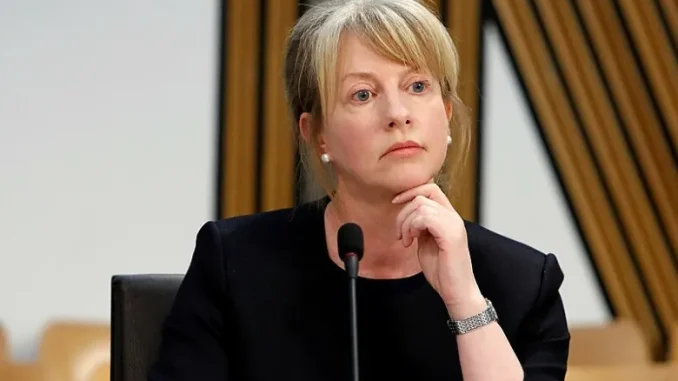
The Scottish government’s pre-election budget – the 19th since the Scottish National Party (SNP) won power at Holyrood in 2007 – did nothing to alter the crisis of underfunded public services and deep-rooted poverty in Scotland.
Amid projections of a £4.5 billion shortfall in spending by 2030, finance secretary Shona Robison continued with the SNP’s tried-and-tested approach of pass-the-parcel with Westminster austerity. Despite the headlines of over £60 billion in day-to-day spending, the reality is that austerity remains a permanent feature.
Because of a shortfall in expected tax income compared to that budgeted for, spending is being cut by £480 million compared to assumptions made last year. This half-a-billion reduction means cuts to planned investment for 2026/27.
Shona Robison is also aiming for £1.5 billion in efficiency savings at the cost of at least 11,000 jobs. Trade unions will be forced onto the offensive on pay and threats to jobs and services as a result.
Local government asked for £16 billion for its revenue budget; it got half a billion less. UNISON Scotland responded: “This budget fails local government. Scotland’s councils have already borne the brunt of many years of cuts, and this budget fails to give them the investment they urgently need to deliver the essential services our communities rely on.”
“Social care staff will continue to be paid pennies above the minimum wage despite doing skilled, demanding and emotionally tough work. This lets down those receiving care and does nothing to improve recruitment in a sector on its knees.”
The demand for further cuts to budgets at local government level in February/March must be resisted by councillors with a fighting no cuts policy.
NHS crisis
Scotland’s NHS has more than 600,000 people on waiting lists. This budget does little to tackle the ongoing crisis. Plans for “walk-in GP clinics” to lessen the impact of a chronic lack of GP services in Scotland were dismissed by BMA Scotland, which said: “We know walk-in centres used elsewhere in the UK have not demonstrated good value for money, and we remain unconvinced that this model will have a significant impact on reducing demand on other services, including GP workloads.”
The Royal College of Emergency Medicine stated: “Time after time, the reality in our A&Es has got worse, not better, despite claims from the government that the NHS has been on ‘the path to recovery’ in recent years. We are seeing more and more patients waiting alone on trolleys in hospital corridors for hours on end, getting sicker and being put at risk of harm.”
Scotland’s declared housing emergency will remain just that — an emergency. With a paltry target of 36,000 “affordable homes” by 2031, barely half of what is required according to a recent report into housing provision, the housing scandal will continue.
It’s the same with higher and further education, both of which have been through years of cuts, job losses and the axing of courses. The limited extra money going into colleges and universities will not stem the flow of cuts.
With an eye to making headline-grabbing announcements, Robison announced an increase in the Scottish Child Payment to £40 per week for families with children under one year old from 2027. That falls to £27.15 on their second birthday, because, as every parent knows, the cost of bringing up children falls dramatically when they reach the age of two.
With 24% of Scottish children living in poverty, the self-described “game changer” of the SCP has had a limited effect because of its low level and the overall state of the Scottish economy, where low pay and paltry benefits are widespread.
Tanking economy
The budget was delivered amid a tanking capitalist economic performance. Scotland’s economy grew around 1.0–1.2% in 2024, but growth slowed in late 2024 and early 2025, with forecasts for 2025 generally around 1.0–1.1%. Economic performance has fallen off a cliff since the Great Recession of 2008. Over the period 2000–2007, growth was 2.4%, falling to 0.7% over the period 2008–2019.
Those paltry growth figures underline that there is no solution for the working-class majority under the capitalist profit system. A typical household in Scotland from the wealthiest 10% has £1.3 million in total wealth, compared to just £7,600 for the poorest 10%, while the richest 2% of households own more wealth than the bottom 50% combined.
Delivering a so-called mansion tax for higher-value council tax homes and taxing private jets in 2028 won’t shift the dial on record inequality.
With neither Labour nor the Scottish Greens opposing the budget, it’s essential that a socialist solution to this capitalist crisis is made available. The Scottish Parliament elections in May offer a platform for socialists and trade unionists to make the case for public ownership, no-cuts budgets, full funding of public services, wealth redistribution and socialist planning.
Socialist Party Scotland calls on Your Party to mount as wide a socialist challenge as possible for Holyrood. The YP conference on February 7–8 is a vital step in that preparation, and we’ll be attending to help argue for such an election stand.