
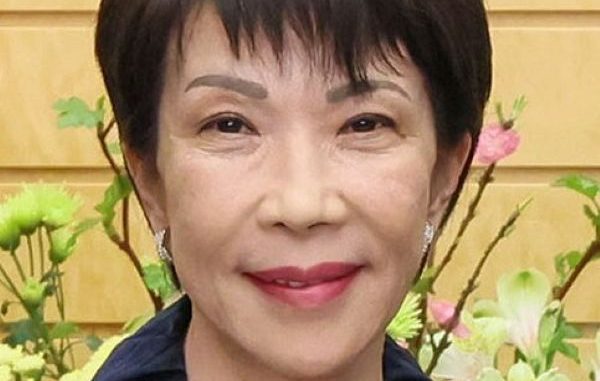
When she called a snap general election for the lower house parliament, Japan’s prime minister Takaichi Sanae said the voters had a choice, “a prime minister Takaichi, a prime minister Noda or even a prime minister Saito”, the leaders of the opposition. For the Japanese working class none of them was a real choice.
The February 8th vote for the House of Representatives, the lower house of parliament, came in decisively for the Liberal Democratic Party (LDP), with the biggest landslide in the post-war period. The LDP, Japanese capitalism’s preferred party, which has ruled the country for all but four years since 1955, won 316 out of 465 lower house seats, giving it a super-majority of 68%. With only 27.8 million votes in single‑seat constituencies (49.2% of those cast) and 21 million votes (36.7%) in the proportional‑representation section, and with turnout at just 56%, the LDP ultimately secured support from only about 28% of the total electorate.
Takaichi was seen as something new, as Japan’s first female prime minister, and presented as a candidate who could connect directly with voters and was not just another ‘old man in a grey suit’. She is seen to be a forceful character, standing her ground in the face of recent Chinese government / Communist Party vitriol, which included the Chinese consul-general in Osaka calling for Takaichi’s head to be chopped off.
Takaichi made an impression on the world stage, holding her own with world leaders, and had much higher personal approval ratings than her party,
Not being a ‘hereditary politician’ probably worked in Takaichi’s favour, and perhaps being seen as someone from a lower middle-class background who had to work her way up appealed to many people at a time of stagnant wages and rising inflation.
Takaichi’s personal favorability ratings were the best for any politician in over a decade. They were even higher among younger voters; an 86% support rate amongst 18–19-year-olds, and 85% with the under 30s. Takaichi came across as more social-media savvy than her predecessors. Apparently, her YouTube video was seen 128m times, compared to 24m for then prime minister Ishiba’s during the 2024 election. There were just one million views for the biggest opposition party.
Before the election, the biggest opposition party, the Constitutional Democratic Party (CDP), mostly made up of former members of the Democratic Party of Japan (DPJ), and the right-wing of the former social democratic Socialist Party, mostly looked out of kilter with the public mood. They were seen as mostly opposing but rarely having any fully worked out programme to deal with the issues facing the working and middle classes. Abandoning any remaining political principle, the CDP—now branding itself as vaguely “centrist” without being able to explain what that meant or why voters should support it—opportunistically launched a new party just days before the campaign began.
The “merger” with Komeito, a religious-orientated party backed by the lay Buddhist sect, Soka Gakkai, was for the lower house elections only. This union did not include the CDPs upper house members or elected councillors throughout the country and was not discussed by any representative meetings of their party rank and file. It was doomed from day one.
Centrist Reform Alliance
The two parties had been electoral opponents of each other in various guises for decades and there is very little love lost between their rank-and-file members. The new “party”, the Centrist Reform Alliance (CRA), put forward 236 candidates, meaning all but three of them would have had to win a seat to get a bare parliamentary majority of one, an impossibility in Japan’s electoral system.
The CRA co-leader, Noda Yoshihiko, a former CDP leader, who was the last DPJ prime minister before losing in a landslide to Abe Shinzo’s LDP in 2012, called himself a conservative, though advocating a ‘centrist’ approach.
The new “party” was basically unknown and had no platform that could appeal to voters. They signed a political suicide pact, though Komeito may limp on a bit longer when the CRA eventually splits into their original component parts, probably sooner rather than later.
The ex-CDP members only retained 21 of their original 148 seats, whereas the ex-Komeito party members saw an increase from 24 to 28 seats. Many of the veteran leaders of the CDP were turfed out of parliament.
This is the price paid by the former CDP wing for dropping most of their prior positions on nuclear power and self-defense, to match Komeito’s. The CRA co-leaders, Noda and Saito, have resigned, and ex-CDP MPs are a minority of 21 to ex-Komeito’s 28.
This election gives the LDP 316 seats, and its coalition partner, Nippon Ishin no Kai (Ishin, the Japan Innovation Party) 36 – a total of 352 (76%) out of 465 seats overall.
The CRA was reduced massively from 172 seats to just 49; just over one quarter of what they had, with just 10.5% of the seats. Those numbers, however, don’t reflect the actual votes cast for the CRA; 12.2m in the single seat portion (21.6%), and 10.4m in the PR portion (8.2%). No doubt the Rengo, Japan Trade Union Confederation, and Komeito electoral machines could get out their core supporters, but the LDP sucked up most of the unaffiliated voters that had voted for the CDP in previous elections.
The parties that could be considered left were obliterated in this election, in terms of seats won. The Japanese Communist Party (JCP), which in elections gone by would pretty much contest almost every single seat, this time only put forward 158 single-seat candidates, with 18 in the PR portion. They lost their only single seat in Okinawa and were reduced to four from eight seats held previously. They received 2.28m votes (4%) in the single-seat portion and 2.5m (4.5%) in PR portion.
Reiwa Shinsengumi, a newish left populist party that tends towards welfarism and identity politics, rather than basing itself on the working class, had an even more disastrous election, going from nine to just one seat, in the PR portion, getting 255,000 single-seat votes and 1.67m PR votes (2.9%).
Therefore the “left” parties polled a maximum of 4.2m votes, though no doubt many CRA ex-CDP voters would consider themselves leftist, or progressive, certainly more so than the politicians, and many of them are trade union members. But the party they voted for most certainly wasn’t, isn’t and won’t ever be a genuine left party.
On the right, The Democratic Party of the People (DPP), mostly from the right-wing of the former DPJ, went from 28 to 27 seats. The Sanseito, (the ‘Do-It-Yourself Party’, another new party, but very much xenophobic, reactionary and right-wing populist) went from three to fifteen, all in the PR portion. Whilst their vote was high for a new party, conservative voters, who form the overwhelming bulk of the voting electorate at this juncture, went with the party they know.
The DPP and Sanseito have talked since the election of the possibility of joining the ruling coalition with the LDP and Ishin. They’re fooling themselves. Why would Takaichi take them on board? She has a super-majority, and governing her own party with its varied political strands spanning hard nationalist right to centrist will be hard enough, and no doubt will throw up plenty of scandal, corruption and gaffes, as per the course for the LDP.
Also, Takaichi has basically co-opted their policies regarding changes to the income-tax threshold, possible changes (reductions) to the consumption tax, and taking a harder stance on “managing” foreign workers and residents.
Corruption and “money politics”
Conservative commentator, Miyake Kunihiko, no friend of the working class, writing in the Japan Times on February 14th, said that questions remain on whether Takaichi can deliver any meaningful reform, and that her parliamentary majority could complicate that due to lawmakers with narrow entrenched interests. “Investors” are supposedly worried that any major missteps could lead to economic meltdown.
The LDP is a party rotten to its core, with many of its current Diet members tainted by corruption and “money politics”. Whilst a fair few of them, especially many of those who were in the former Abe faction, were denied LDP endorsement in the 2024 general election, they were mostly welcomed back en-masse by Takaichi, a so-called protege of Abe.
How long before the first scandal arises? Takaichi rode to victory on the basis of her personal popularity and follows a tradition whereby charismatic or resolute leaders of the right win big majorities, like Nakasone Yasuhiro in 1986 (300 seats), Koizumi Junichiro in 2005 (296) and Abe Shinzo in 2012 and 2014 (294, 291). But all these were wins were later followed by massive seat losses or outright defeat. In 2009, the then Democratic Party of Japan (DPJ), led by Hatoyama Yukio, won a landslide of 308. In each case, the LDP was seen as corrupt, incompetent and lacking in vision for growing the economy. No doubt Takaichi will face the same in February 2030, or whenever the next lower house election is called.
Takaichi, seen as a breath of fresh air by many on the right, is only as strong as the support she can maintain in the LDP. No doubt, many Diet members are satisfied with being elected on her coattails, but as she doesn’t have a strong support group in the party itself, any major mistakes on the domestic or international stage could see her being deposed, just like many of her predecessors.
It is doubtful that many of these new LDP members will be in a rush to reduce the number of Diet seats, which is a core Ishin policy. Loyalty in Japanese bourgeois politics is fleeting. Takaichi now faces having to come up with fiscal policies that will ease the tax burden on ordinary people, as well as curb rising social insurance premiums. However, the LDP is a party that orientates to the financial needs of big business first, then small and medium sizes enterprises, not the person in the street. Many of the nearly 28 million people who voted for Takaichi may come to regret their choice within a year or two and could punish her in the July 2028 upper house election.
Already Takaichi is talking of constitutional changes, but this was not an issue on the campaign trail, and whilst the pro-constitutional change forces in the upper house are far from the two thirds needed to add to a two-thirds vote in the lower house, no proposals can be put to a referendum for final acceptance.
If she prioritises issues like constitutional amendments, a new National Intelligence Bureau Law, and boosting so-called national security over bread-and-butter issues, there will be a major electoral push-back. Most Japanese people are more socially liberal than the political class, and whilst issues like keeping pre-marriage surnames, minority rights and inclusivity are not the top of everyone’s agenda, people will expect some progressive social change, all-be-it incrementally, and will not want to be taken backwards like was outlined under Abe in an LDP draft Constitution towards the end of his premiership.
One reason why Sanseito did not do as well as it expected may be because it wanted to pay Y100,000 a month in child support for every child, but few working women want to be sent back into the kitchen to cook, or to be forced into the bedroom to boost the population.
Consumption tax
One of the biggest issues in the election was what to do with the consumption tax (a kind of sales tax and VAT) and may well lead to a backlash. Before the election, Takaichi talked about possibly cutting it to zero on food for two years, which would be very welcome to most people. She barely raised this topic during the election campaign. Just two days after the election, she was talking about setting up a national council with the opposition parties to discuss what to do, with its report not expected until the summer. In the meantime, people are suffering from stagnant wages and rising prices, neither of which she has offered any concrete proposals to solve.
On the day after the election, the Labour Ministry reported that real wages fell in 2025 for the fourth consecutive year. Average wages were supposedly up by 2.4% but bonuses didn’t increase as much, for those who receive them, and for every worker who got a 5% or more pay rise there were plenty who got less and in many cases nothing. At the same time, the average household is now spending 28% of its income on food alone, the highest on the Engel (food) coefficient since 1981.
The LDP is planning to raise out-of-pocket costs for health care for elderly people, as pushed by coalition partner, Ishin (which it kept very quiet about during the election campaign). Ishin is also on record saying it wants to cut government medical expenditure by four trillion yen (GBP19.3 billion). Few people would argue against cutting waste or unnecessary procedures, overbilling etc., but at the end of the day, it is ordinary people who will see premiums rise, possibly with reduced services and higher fees. In the meantime, the big companies that the LDP and Ishin represent will boost their profits at our expense.
At the same time, these parties are supporting increasing defence spending from what was under 1% of GDP just a few years ago, to over 2% now, and are pushing to raise it steadily over the next period to 3%-5% of GDP, as they are planning to cut health, welfare and social care spending to pay for it. At the same time, their talk of introducing refund tax credits for low and middle-income earners is just that, talk. They could simply raise the tax threshold to give an immediate home-pay boost to all workers rather than set up another bureaucratic system that will waste money not direct it to those who need it.
China
Takaichi will have her work cut out for her navigating relationships with China and the USA. She angered the CCP by saying any attack on or blockade of Taiwan by China could see Japan deploy the Self-Defence Forces under “the right of collective self-defence”.
China is militarising faster and bigger than any other in the world and this is leading to tensions with Japan. Beijing accused Takaichi of returning to militarism. Takaichi refused to retract her statement, and China imposed economic penalties on Japan. This included blocking exports and imports, reducing the number of tourists going to Japan, and further threatening withholding supplies of rare earths.
Trump, for all his “liking” Japan, has waded in with increased tariffs, and the Japanese ruling class is afraid that they can’t rely on the US for its protection and the ‘nuclear umbrella’, but they are impotent when it comes to challenging Trump. Like the mafia Don, Trump likes to portray himself as, he squeezed promises out of the Ishiba led LDP government in 2025 to spend US$550 billion dollars on investment into America. It is unclear how much, if any, control or say Japan would have in this fund and how much, if anything, it would receive in investment returns, and even if it could ever get its money back. This US$550 bn, Y800,000 (GBP4,000) for everyone in Japan is money that will not be spent on investment in the Japanese economy, healthcare, social care and education, etc.
What none of the parties in the election did was take an anti-imperialist and anti-militaristic stance that appealed for co-operation between countries and peoples, instead taking imperialist competition as a given. Under capitalism this is a given, but the 120m people of Japan, 1.4 billion of China, the 330m Americans, and peoples of all countries, need a system that works for the many, that provides for the many, that protects the environment and does not allow a minority to misrule our countries. Tamura Tomoko, the leader of the Japanese Communist Party (JCP), was reduced to bleating about “the LDP abandoning its responsibility to debate in the Diet”, as if parliamentary debate ever achieved anything. The JCP is basically a politically and ideologically bankrupt force.
Takaichi could make international relations worse by visiting Yasukuni Shrine, a private religious corporation that enshrines Japan’s 1868-1945 war-dead, including Class A war criminals executed after World War II. In doing so, she keeps alive the jingoistic militaristic stance of her predecessors.
National security issues played more of a role in this election than in past ones because of the rhetoric coming out of Takaichi’s and the LDP’s mouths, but also the bellicosity of China since Takaichi became prime minister. It was hardly a good look for the CRA—largely composed of former DPJ members—given that its first prime minister, Hatoyama, was seen applauding China’s military display at last September’s CCP parade, standing on the same viewing platform as Putin and Kim Jong‑un.
Then, when Komeito left the coalition with the LDP, it didn’t earn any support by meeting with the Chinese ambassador.
Komeito fools itself that it has influence with China, but it was only ever a tool in the Chinese regime’s strategy of winning influence overseas. At the time, the CCP regime has good relations with this religious based party, Beijing was clamping down on religious freedom within China. Most Japanese people oppose militarism and genuinely want to live in a world of peace, so they will not support any moves by Takaichi that could lead to war.
While this election was a wipe-out for the supposed centrists and the left, at the end of the day, 16.3m voters supported none-conservative parties. The task we, as socialists, now set ourselves is to continue putting forward socialist demands, to never give up on the working class but to do what we can to support any and all pro working class progressive forces that will return to do battle in the near future. Elections have been disappointing for the working class, this one is no different. The history of Japanese elections is that landslides are overturned eventually, and the forces of reaction are not always dominant. This election saw an amazing opinion poll support rate from the youth for the LDP, but experience will show the youth, and thus future workers, that they were misled. Trade union and community activists, while disappointed at the election result, should not be too despondent. Instead, it is incumbent on all of us to continue our activity to fight for fundamental change in society. Electoral politics is just one method we use, but each day we need to be active in our workplaces and communities building the real opposition to the forces of reaction.