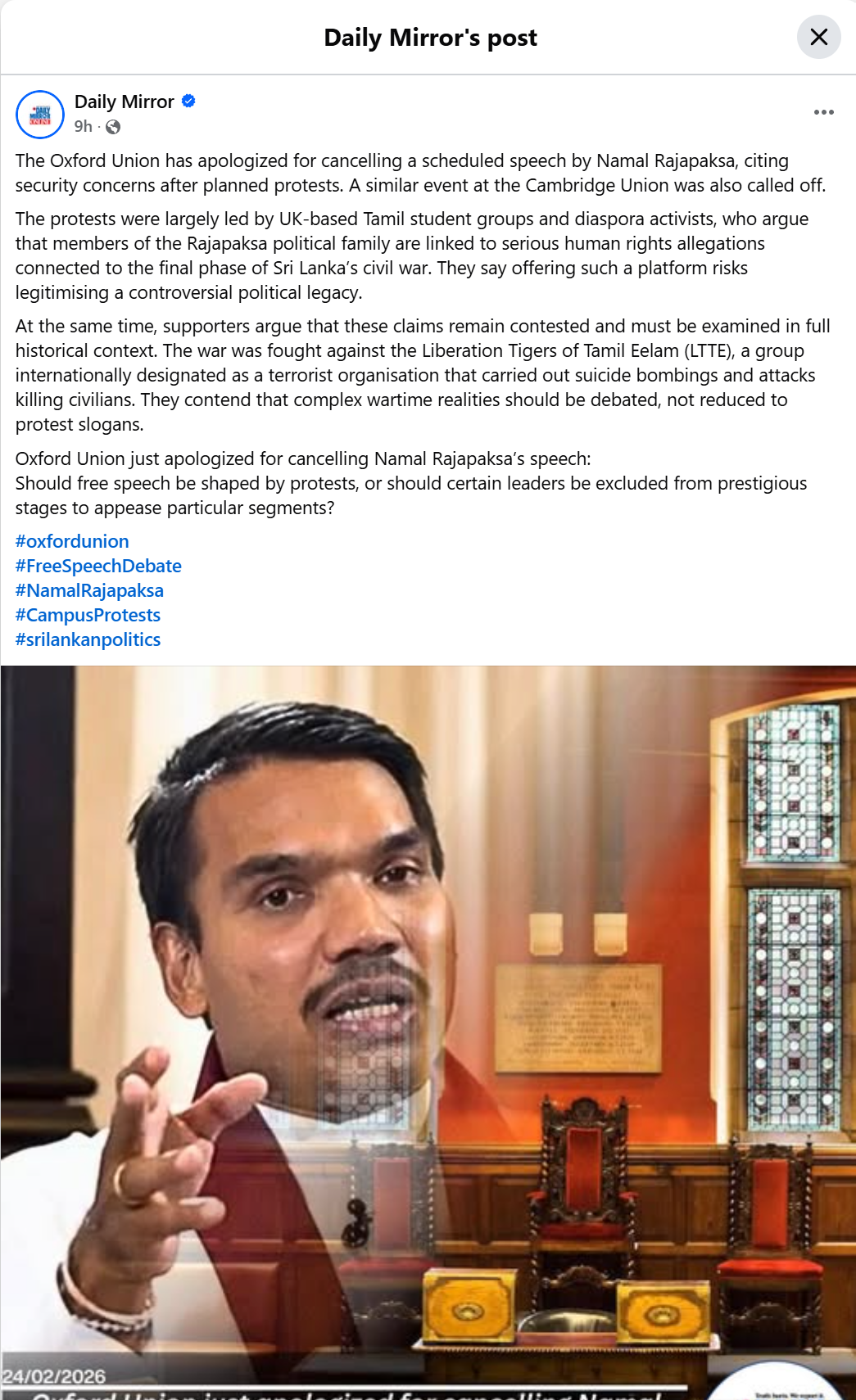
Cambridge and Oxford university unions cancelled debates scheduled for the end of March involving Namal Rajapaksa, the son of former Sri Lankan president Mahinda Rajapaksa. Tamil Solidarity and various youth and student groups organised opposition to the Oxbridge events, arguing they would provide a platform for Namal Rajapaksa, in an attempt to rebuild the family’s image. The historic mass movement of 2022 drove the Rajapaksas from effective control of state power. Gotabaya Rajapaksa, then president, went into hiding and was later rehabilitated and protected by Ranil Wickremesinghe, who is a former President of Sri Lanka.
Before that, the family controlled over 70% of the Sri Lankan budget and held five ministries and numerous senior government positions under Rajapaksa brothers and relatives. The Rajapaksas are widely seen as looters, corrupt, and responsible for wartime crimes, by a large majority across ethnic groups in Sri Lanka. The family is now plotting a comeback by promoting Namal Rajapaksa as a leader of the disgraced party, the SLPP, and attempting to rebrand his image (the Sri Lanka Podujana Peramuna (SLPP)—also known as the Sri Lanka People’s Front—was founded in 2016 by Basil Rajapaksa).
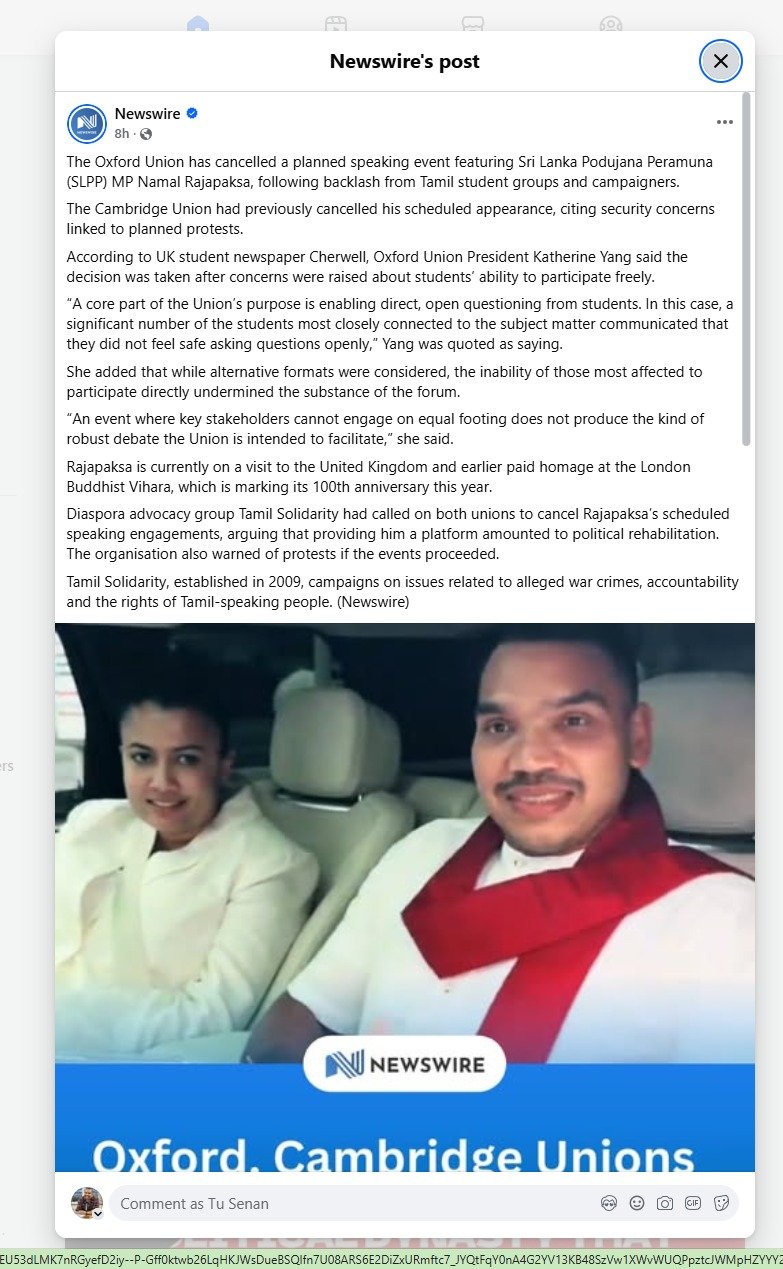
Following a humiliating defeat in the last election and facing potential legal consequences in corruption scandals, Namal Rajapaksa is seeking to rehabilitate his reputation. It is common for the offspring of ousted leaders and dictators to try to reestablish themselves through overseas connections and using the wealth smuggled out of their home country. The Rajapaksas’ stand accused of moving tens of millions of dollars abroad through various scandals.
Oxbridge unions are known for strong links to the right, frequently giving platforms to right‑wing and far‑right figures under the banner of “free speech.” This defence of free speech is not always extended to the left, except on rare occasions—such as when they once invited Peter Taaffe, former general secretary of the Socialist Party.
The unions often act as a training ground for so‑called “future leaders,”- dubbed as “nursery of the commons”- teaching rhetorical manoeuvres rather than debating real matters or demanding straight answers on serious issues. The Oxford Union, especially, has faced heavy criticism in the past. However its former president, George Abaraonye, has faced attacks from the right for his debate with the well known right wing US public figure, Charlie Kirk, and for social media comments after Kirk’s killing, last year.
Inviting Namal to speak sparked immediate anger among Tamil students and youth. In a statement, Tamil Solidarity argued, “To grant such a figure a platform within the Oxford Union and the Cambridge Union is not academic engagement; it is political rehabilitation.”
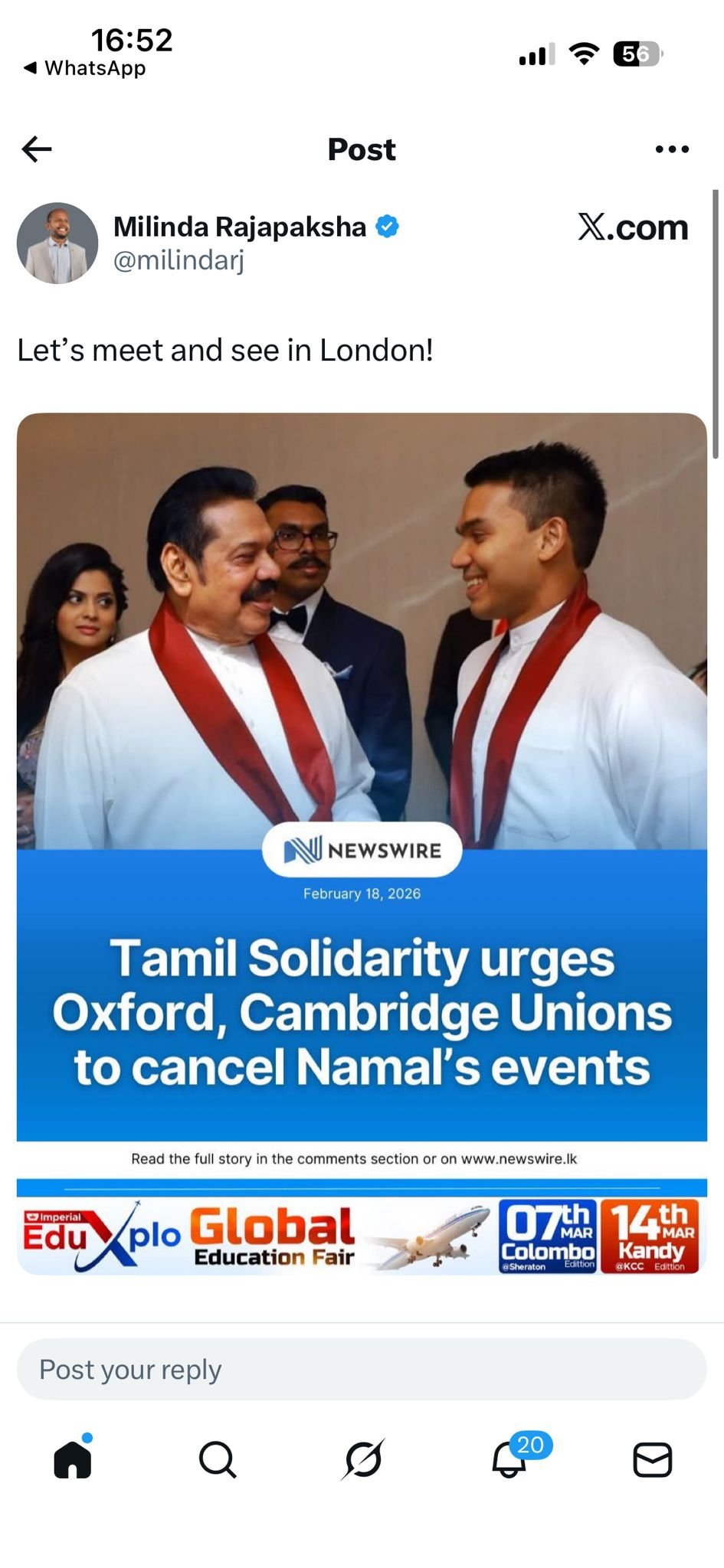
When Tamil Solidarity’s statement was covered in Sri Lankan media, the initial reaction from Namal’s team was sarcasm and dismissal, as they expected the event to proceed. Milinda Rajapaksa even tweeted in response, saying “let’s meet and see in London.” But over twenty Tamil youth groups, along with Indian, Palestinian and Ambedkar student societies at Oxford, Cambridge and other universities, united in opposition and warned they would mobilise protests if the events went ahead. Eventually both unions withdrew the invitations, agreeing the forum would not produce a fair debate.
“The antithesis of free speech,”
In a further statement, Tamil Solidarity said the Rajapaksa family are “the antithesis of free speech,” while reiterating that Tamil Solidarity “respect and defend the right to free speech.” And it “has consistently argued for discussion and debate to clarify truth and develop political understanding. We oppose “cancel culture” and out‑platforming people for political differences. One of our key demands has been free speech and the right to assembly. Many Eelam Tamils know the value of free speech well: the Rajapaksas have historically denied them even the right to remember the dead. Journalists have been threatened, killed, and prosecuted for speaking out.
This is not an equal debate. Allowing Namal a high‑profile platform creates hype and gives him an opportunity to boast and propagandise. He is unlikely to say anything meaningful, either in his remarks or when answering questions. It is beside the point: an unequal platform creates a false equivalence between a defender of war crimes and his victims.”
The cancellation was widely covered in Sri Lankan media. Sections of the local press have been used by the Rajapaksas in the past to whip up chauvinist sentiment against diaspora activities, often denouncing the diaspora as a “threat” to the nation. On this occasion, only a few outlets—such as Sri Lanka Mirror—defended Namal.
Many Sinhala, Tamil and Muslim youths in Sri Lanka mocked Namal’s “tour” of London. Namal arrived with a large entourage and what appeared to be grand plans to present himself as a statesman. Instead he toured Westminster streets around the parliament and met a handful of “supporters” in pubs who came to console him about the embarrassment of the cancellation of the Oxbridge events. Humiliated and frustrated, Namal’s team later attacked the diaspora in their usual rhetoric—framing protesters as LTTE sympathisers and fuelling chauvinism against them (the Liberation Tigers of Tamil Eelam (LTTE) were Tamil organisation that fought a decades‑long armed struggle to establish an independent Tamil state, Tamil Eelam, in Sri Lanka’s north and east).
The cancellations mark a clear rebuke to the Rajapaksa family’s attempt at political rehabilitation and a victory for organised student and diaspora resistance. They also expose the limits of liberal “free speech” defences when a platform would serve as propaganda. The struggle for accountability, justice and genuine democratic debate must continue — on campuses, and beyond to prevent the return of those responsible for corruption, repression and wartime crimes.