
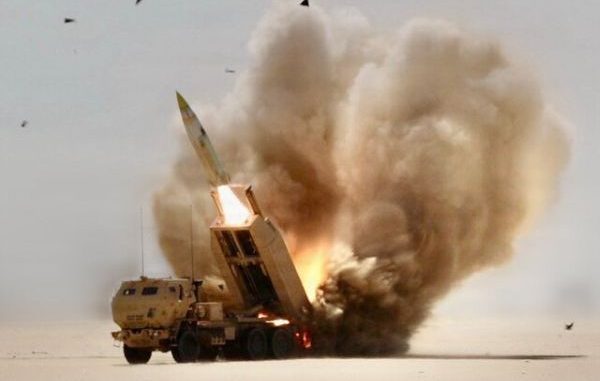
At the beginning of this year, the world economy seemed to develop in a promising direction, according to some analysists. The IMF revised its forecast from October 2025 upwards and cited a “resilient growth”. However, the latest developments resulting from the new wars in the Middle East prove that this optimism proved to be more a dream than based on solid ground. Just days after the start of the latest US-Israeli bombardment on Iran, in a war that involves more than 10 countries, IMF head, Kristalina Georgieva, warned, “This conflict, if proven to be more prolonged, has obvious potential to affect global energy prices, market sentiment, growth and inflation…”
However, the truth is that the world economy has been stumbling from one crisis into the next for quite some time now as shown in the ongoing debate amongst capitalist strategists and economists over how and when will the next emergency break. But given the deep and overall crisis of capitalism, its defenders and representatives are clinging to every straw and overstate each little flickering hope, as the light at the end of the tunnel.
The consequences of the war in the Middle East on the world economy are highly dependent on the impact of military events (such as attacks on oil facilities in the region and closing of oil shipping routes) and the duration of the conflict. The Trump administration is still promising a short war, but the White House might be pushed further than originally planned by the actions of the Israeli government and the dynamic of the conflict they kicked off. And even if this war should soon be over, the underlying weaknesses of world capitalism remain and with this increased competition, tensions, conflicts, and wars.
Oil, Trade, Inflation
If you drive a car that needs petrol or need to have oil heating and cooking, running generators, as for example in Nigeria, a visit to the garage with available affordable fuel turns out to be luxury. Within hours after the start of the war, the prices for petrol increased and will once again have to be paid by ordinary consumers. In Europe, wholesale gas prices jumped within days and now fluctuate in response to military developments. Leave aside the fact that companies aim to quickly make extra money, the effects of the rise in energy prices will be huge.
Half the world’s oil reserves are in the Middle East. They are now threatened by the impact on production and even more on trading oil. Last year around a quarter of the world’s crude oil and gas supplies went through the now blocked Strait of Hormuz. Hundreds of oil tankers with millions of barrels of crude oil are stuck. Most of this oil normally goes to Asia. Europe is more affected by the problems in gas supply and for the US it will not be as significant a problem of supply but of price. But Asia could be affected more directly and harder.
Asia, at the same time, is still the most dynamic part of a low growing world economy. Asian stock markets reacted immediately to the war with a major drop, then stabilised and now, like oil and gas prices, moved in response to military events. However, the possibility of a further, longer, and harder collapse is very real.
The US-administration of Trump is not only that of a lunatic egomaniac: the MAGA-idea also includes the economic concepts of protectionism, of re- and near-shoring, of decoupling, all aimed at defending the US’s world position from competition, especially from China.
In the light of recent events, it becomes clear that Trump’s attack on Venezuela to gain control of the country’s oil and to try to impose a more compliant regime seems to have been at least partly in preparation, and inspiration, for the attack on Iran.
Venezuela’s oil exports nearly doubled between the end of 2025 and the beginning of 2026 after Maduro was kidnapped by the US. And the exports shifted from China, the main buyer, to the USA, regaining its position as the main consumer of oil from Venezuela. So, in January, the USA received 300,000 barrels per day, around the amount that China bought before, which is now only getting around half of that.
The US is aware of the economic dangers for Asia and has therefore been giving special permission to India to use Russian oil. While just some months ago Trump punished India with extra tariffs for doing this, he is now giving India a thirty days’ time window to import Russian oil. This must be understood in the attempt to draw India to be a stronger ally of the US in the region, especially against China.
Trump, differently from former US-presidents, is more honest about his agenda, which represents the economic interests of a part of US big capital. In other wars we were – falsely – told they would be about human rights, about women’s rights, about democracy etc. Trump is blunter in his attempt to make “deals.”
China has in the last decades developed into the most dynamic and competitive part of the world economy. It is a major rival for the interests of US capitalism in all parts of the world, increasingly at Trump’s ‘doorstep’, in Latin America. China has also increased its military spending by over 7% per year for several years. Beijing states: “As China continues to play an increasingly important role on the global stage, its military has taken on greater responsibility in providing the international community with more public security goods.”
A direct attack on China – militarily, politically, and economically – is too dangerous for the US. But after Venezuela, one of the reasons for the attack on Iran is an attempt to pull another country out of China’s sphere of influence. The Israeli and the US-government might have some different interests regarding Iran but for the moment they fit together and led to the attack. For the US it is much more than just “oil”; the attacks have elements of a proxy war against China influence.
While, for political and strategic reasons, the US ruling class might be interested in weakening China, but economically this could turn out to be a disaster. Although the process of de-coupling has been speeding up since the Covid crisis, the world economy is still highly interconnected. Three of the four countries producing most of the world’s semiconductors are in Asia.
Trump’s tariff-war with China in 2025 reduced Chinese exports to the US by 20% in dollar terms, while US exports to China fell by 14.6%. But the totals are enormous – $106,000 million US exports to China and $308,000 million imports from China – leaving China as the third largest trading partner of the US.
China is still the second biggest creditor for the US, so a serious downturn of the Chinese economy will have serious negative effects for the US, as well (if, for example, China starts to sell off US bonds).So, the idea to harm the Chinese economy for US benefit might turn out to be a bit too simple. No region will stay unaffected by downturns in other regions because the connections of trade, of supply-chains, of credits, FDI and much more, are still strong. Asia is the most dynamic part of the world economy now, so a downturn there would have even more effects for the rest of the world economy.
Moreover, a longer hike of energy prices could unleash the nightmare of inflation that had appeared to have been squeezed in many countries. While inflation is not the result of decent wage deals but due to speculation, profiteering, shortages and government debt, working class people will have to pay the price for a hike in inflation again. This will affect workers and the poor in the developed capitalist countries, including in the US and Europe but even more in the developing and neo-colonial countries. Increasing energy prices, rising costs in transportation and in other products like fertilisers which will lead to higher prices for basic goods and other economic sectors. Additionally capital will flow from the weaker to the stronger (and therefore generally “safer”) economies. This will have dramatic effects on the poor masses in Africa, Asia, and Latin America.
The war on top of an already unstable balancing act
The world economy was in an unstable situation already before the war started.
After the end of the post-Second World War economic upswing in the early 1970s it has gone from crisis to crisis for decades. This saw the end of capitalism’s seemingly ‘golden age’ of growth and prosperity, at least in the advanced capitalist countries, when the system needed, and was able, to present itself as social given the existence of alternative, although undemocratic, non-capitalist economies like the former Soviet Union.
But since the end of the 1960s the economy, notwithstanding huge developments in science and technology, has been on a generally downward trend. There were periods of growth, like that after the collapse of the Soviet Union and when China’s rapid growth opened up a whole new world of cheap labour, cheap resources and consumers. However, in general, the booms became weaker and shorter, debts and financial speculation increased, and crises occurred more often and were deeper.
More recently, capitalism has never really recovered from the deep crisis of 2007/08. Since then, the global debt (which was at dangerous record levels back then), the debt of states, and on the stock markets, have further increased to over 300% of global GDP (compared to over 200% in 2007). The covid crisis followed by the crisis in supply chains further increased the debts and led to record inflation and the “cost of living/affordability” crisis.
The number of zombie companies that just survive but are economically dead are estimated to be around 10% in advanced capitalist countries and even more in weaker economies – and the number of zombie firms are growing by a rate of up to 10% per year. After the 2007 crises, there were many promises made to reduce the risk of financial bubbles. But today we have new bubbles, and the “promise” of new markets that can be a source of profit. After crypto currencies started to sag, the new salvation is hoped to be found in AI. AI companies are highly rated and rich but their share values are bubbles, as 95% of companies investing in this field have not made any financial gains yet. The risk in the financial markets is enormous although it has been shifted from traditional banks to the “shadow banking” world of non-bank financial institutions (NBFIs) and family run financial entities.
The recent attack on Iran follows the specific interests of Netanyahu, Trump and the political wings they lead but will have deep political and economic effects on the region, and if it continues, the world.
Multi-polarisation will deepen
The lack of oil and gas can lead to Russia filling the space. The example of India already shows others might follow. The government of Erdogan in Türkiye is frightened that the rise in energy prices could kill the country’s soft economic recovery and again increase inflation. Now Türkiye tries to present itself as a mediator but it might be pushed further towards Russia and China if the Israeli ruling class is able to further increase its regional power.
Sections of the populist and far right in Europe openly use the energy question as a justification for their leaning on Russian support to challenge their own countries’ rivals. Now, generally hand in hand with the “liberal” bourgeois parties, the right populists turn to increasingly hysterical propaganda against refugees and immigrants and talk about how to erect a wall against a new “wave” of refugees fleeing the latest wars inflicted by imperialism.
Europe, for some time, has been in a poor economic situation with hardly any growth and increasingly left behind. The EU’s very fragile post-Covid recovery could end before it really started. The EU has been in a crisis for some time; its political crisis is a result of its economic crisis. The latter is rooted in the fact that the EU cannot overcome the different national interests of each respective national capitalist class, and can do so all the less while the economic crisis hits. With the EU increasingly left behind, different international strategies by its member states are demanded and pushed for.
Sections of British capital and the populist right tried to go its own way with Brexit but quickly found out that this is also no solution to the general crisis of capitalism. Germany, which has a leading economic position, tries some sort of “independent” position, leaning more towards the US but also flirting economically with China and pushing for European militarisation, with the aim they would have the largest army in Europe. France is attempting to use its own nuclear weapons as a way to draw other nations closer towards it. But weaker economies like Hungary and others, especially in eastern Europe, tend in some cases to tilt towards China. All this will not only increase the tensions within the EU but might also lead to a hectic and desperate policy, jumping from one side and partner to another in the hope of finding some space between the increasingly dominant USA and China powers and balancing between the major powers to advance their own interests.
Despite the release of oil from the reserves of different states the war on Iran has started a global search by countries for oil, gas and other materials like fertiliser. This can give the Russian regime time to sell and profit, and have extra resources for the Ukraine war. That might, in turn, increase the costs for those western governments backing Ukraine’s war, something which could add further to their state debts and pressure for spending cuts resulting in governments coming under pressure from their respective working classes. The already prohibitive costs of increased military spending will rise further. That will increase debts and with this interest rates, which could lead to a further drop in the already low rate of investment, further slowing down the economic “growth.” All together this is becoming a lose-lose situation for the capitalist system!
How deep the effects on the world economy will be depends on the length of the current war and its repercussions. If the Iran war goes on for longer, the price for oil could go up to 120 or even 150 dollars per barrel (close to the highest ever) – some analysts even worry about a price of up to 200. Especially in the neo-colonial countries, the burden of rising prices and a slowing economy might lead to deepening relationships with China and, to a lesser extent, Russia, thereby further deepening global political tensions. An even higher oil price in the case of a long war could lead to stagflation, inflation and weak growth or stagnation. So, the economic crisis will further deepen the already existing political crisis, and this can see governments resorting to ever more dictatorial measures and repression.
Unsolvable – political and economically – under capitalism
The war is far more than an attempt to divert attention from both Trump’s low approval figures and the Epstein files scandal, and it is more than mere electioneering for Trump and Netanyahu who both face elections this year. It follows from the attempt to maintain US imperialism’s hegemony. Trump and co.’s idea is of an US economy dominating the world, including China, while being somehow independent from it. Both are not possible. It reflects the weakness of capitalism and its desperate search for a way out of this protracted economic crisis. Despite all its brutality and violence, the war conducted by US imperialism is also a reflection of the weakness not only of the economy but also of its political representatives.
Yet the hope for peace, and all that could mean, is one of the central wishes of ordinary people around the world. In a number of countries the fear of war, internal and external, is amongst the highest worries of young people, leading to ‘doomerism’ and depression. It is increasingly obvious that the international institutions – from the UN and the EU to the Vatican – cannot solve the situation. Even if they speak clearly out against the war, this is ignored at best.
Increasing tensions and the threat and actual happening of wars are the natural result of capitalism being in a long-protracted crisis. Rivalry and war is part of and inseparable from capitalism. As there cannot be capitalism without competition, economic crises and, at certain times, class struggle there cannot be a permanently peaceful capitalism. That is the reason socialists always combine the fight against militarisation and war with the fight against social cuts and against capitalism.
And yes, at first sight the situation can look bad, with right wingers in some countries winning elections, with crisis and war. But looking deeper the situation is much more positive. Support for this rotten system is falling everywhere. Even if people, often out of a lack of serious socialist alternatives, vote for right wing candidates or parties, this represents the wish (misguided as it is) for something completely new.
The last period saw an increase in protests and struggles, repeated examples of opposition, especially young people, Gen Z, standing up for their rights. Recent years have seen governments felled in countries like in Sri Lanka, Myanmar, Nepal, although the capitalist system survived as there was no socialist force that could build a movement for socialist change. Despite Trump being president, the US has seen widespread opposition to the ICE raids in the US and a clear lack of support for Trump again joining Isreal in launching a war against Iran. We see protests for women’s and democratic rights around the world and widespread solidarity with the people in Palestine and also in Kurdish-inhabited areas. We see workers coming back on the stage, with a wave of organising themselves and using the powerful weapon of strike, including general strikes.
All this shows the potential not only to stand up against the wars but also to once and for ever overthrow the modern source of war: capitalism. The challenge is to build the socialist movement that has both an alternative to capitalism and a clear concept of how to concretely implement that transformation.