
The Tories cynically posed as being on the side of North Sea oil workers in their attempt to beat the Scottish National Party (SNP) in this by-election, but shed no crocodile tears for the tens of thousands of jobs lost under their watch due to a decade and a half of austerity. Nor did they take action when they were in power to prevent plant closures like that of Honda in Swindon which led to the loss of 3,500 jobs.
Working-class people have already started to feel the pinch from the disruption to the world economy in the aftermath of Trump’s war on Iran. At the time of writing, a peace deal has been agreed between the US and Iran, with oil tankers being officially allowed through the Strait of Hormuz for the first time in over three months. While the full inflationary impact has yet to filter through global supply chains, food and fuel prices have already risen. Ofgem, the government’s energy regulator, has increased the energy price cap, which limits what energy companies can charge to consumers per unit of electricity, by 13% from the 1 July.
This will have knock-on effects for the prices of goods and services generally, as increased costs are passed onto consumers to maintain bosses’ profits. At the same time, UK wage growth is 3.4%, above the 3% current rate of RPI inflation. But the rate of inflation for different goods and services is uneven, food inflation has been higher in the recent period – hitting those on lower incomes harder than the increase in price of say, a yacht.
To answer the looming threat of an increase in the cost of living, the Tories, right wing populist Reform and others are calling for expanded drilling in the North Sea ‘to bring down our bills’. Tory leader Kemi Badenoch has said that if she was in charge, she would reverse Labour’s moratorium on granting new licences to extract oil and gas from the North Sea, which she says would bring down bills by £200 on average.
The sums behind these figures are dodgy to say the least. The Tories claim the increased tax revenues and boost to the economy would enable them to remove VAT from energy bills. However, a recent report by the Oxford Smith School, a department of Oxford university focused on climate change and big business shows otherwise. Maximising oil and gas extraction from the North Sea, i.e. drinking the wells dry, would save households between £16 and £82 a year. And that would only be if all the additional tax raised were put towards lowering bills. The Tories already want to remove levies on oil and gas companies – lowering their tax burden.
The focus on tax revenues shows that the amount of oil and gas extracted in areas controlled by the UK would not hugely impact the price of fuel bought by the big energy companies. When new licenses are granted, it is not the government or publicly owned companies that start drilling. It is the big oil and gas companies that do so if they think they can make a profit by selling the oil and gas extracted.
Capitalist nation states
Capitalism is based on nation states, but production and the market companies sell their goods in is global. The price of oil and gas is not set within one country, but is based on production across the world. How could oil and gas companies granted new licenses to drill be forced to sell what is extracted at a price below the global market rate, when those companies could invest in extraction and sell at the real price elsewhere? Since Trump’s war on Iran started, all 32 countries that are members of the International Energy Agency agreed to release 400 million barrels of oil from their stockpiles to prevent the price of oil skyrocketing.
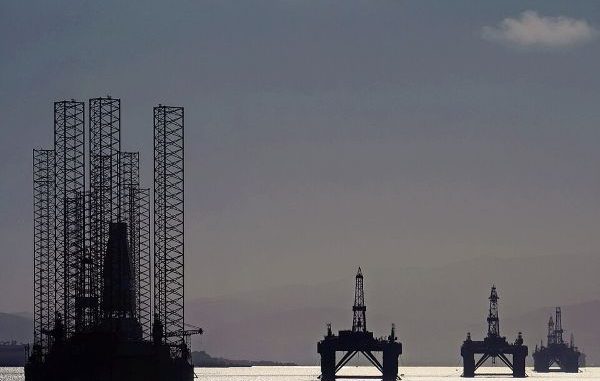
The small amounts raised point to the reality of the North Sea oilfields, more than 90% of which has already been extracted. Those that remain are harder to get at – driving up the costs to extract it. The amount of oil and gas taken from the North Sea will inevitably decline, running out by 2050 regardless of whether new licenses to drill are granted now. The Energy and Climate Intelligence Unit found that four billion tonnes of oil have been extracted since 1975 and just 218 million tonnes remain under the sea. New drilling could yield up to 74 million tonnes – about 1.1% of the total extracted over its lifetime.
In contrast to sucking up the last drops of North Sea fossil fuels, the Smith School found that switching the UK to a purely renewable energy would save all households £441 on their energy bills. At the moment, electricity generated by offshore wind in the UK is about two to three times cheaper than that produced by gas. But the pricing system in the UK means that electricity producers all get paid based on the costs of the most expensive form of electricity during each half hour block. When renewable capacity drops or demand peaks, the difference is made up by gas power stations.
In the last year, gas power stations generated 27% of the UK’s electricity, compared to 44% generated from renewable sources like wind and solar. Ed Miliband, the current secretary for energy security and net zero, is attempting to end this link between gas and electricity prices. But as he, and the rest of the Labour government, are unwilling to take the infrastructure out of the hands of big business, his solution – increased taxes to try and coerce energy producers to accept modified contracts in which they will be paid a fixed price – is unlikely to succeed.
To try and bring down sky-high energy costs within the capitalist system is akin to squaring the circle. Massive companies make huge profits from selling oil and gas extracted by workers, or producing electricity – often with huge government subsidies to pay for construction costs.
Moves to bring down prices require taking the power out of the hands of big business, or transferring massive amounts of wealth to them. After the inflationary shock from the Ukraine war and the disruption to gas supplies across western Europe, soaring energy costs stoked anger at the, then in power, Tories. They were forced to take action to try and (unsuccessfully) avoid mass working-class action. The short-lived Tory Liz Truss government of a few years ago limited the cost of energy, keeping the energy price cap at below the market rate. Utility companies still had to purchase fuel and electricity on the markets, with prices determined by the global markets. By leaving these companies in private hands and subsidising their costs, the Tories handed over £70 billion to the big energy companies.
While the polluting fossil fuel companies, energy companies and suppliers remain in the hands of the capitalist class, workers will be made to pay the price for all aspects of the crisis. By taking into workers’ control and management these companies, alongside the banks and big business in general, production could be democratically planned. It would mean we could transition away from fossil fuels, without workers in places like Aberdeen losing out on pay and conditions. The expertise of offshore oil workers could be used, if they wanted to, in the decommissioning of current rigs and the expansion of offshore wind. Or a guaranteed job and retraining in the area they are from if not. The public ownership of the wealth of society would enable us to invest in the national grid, expanded renewable energy, and improving the energy efficiency of millions of homes. A socialist plan of production could rapidly bring down our energy bills.