
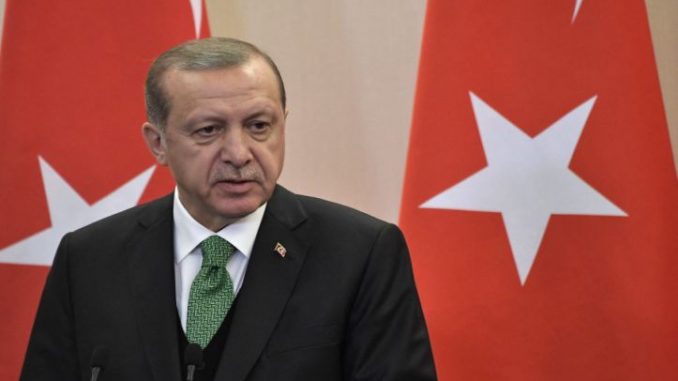
After the arrest of Istanbul’s popular mayor Ekrem Imamoglu, authoritarian President Recep Tayyip Erdogan’s main political rival, Turkey was shaken by a courageous mass movement that lasted for weeks.
Heroic mass movements of workers and youth, confronting the governments of the super-rich in an era of greater capitalist instability, is on the order of the day.
A new generation of young people – students, workers, the unemployed etc – are beginning to move into mass struggle and desperately looking for ideas about how they can fight for a decent future free from exploitation and oppression.
In Turkey, the existence of a relatively large socialist party, the Workers Party of Turkey (TIP), which according to the party programme explicitly calls for the overthrow of capitalism, shows the potential that exists to build a mass socialist party in this era.
Launched in 2018 after a split with the Communist Party of Turkey (TKP) following the magnificent Gezi Park protests in 2013, the TIP was able to build its forces in a short period of time.
From being a newly formed small organisation, it is now reported that their membership has surpassed 50,000 members. This is also reflected in their electoral success.
In the last parliamentary election in 2023, where they stood as part of an alliance with the pro-Kurdish Dem Party, the TIP managed to get almost 1 million votes (1.73%) even though they didn’t stand everywhere. As a result, four TIP members, including the general secretary, were elected to the parliament.
They fared less well in the last local elections in 2024. Nevertheless, they are now in control of a district council in Hatay – a city that was affected by the devastating earthquake in 2023 – and they have dozens of councillors.
Alongside these achievements on the electoral field, the TIP have been mobilising thousands of their members around the country after the arrest of Imamoglu to defend democratic rights. They have relatively big groups on university campuses too.
These achievements, especially on the electoral field, are important to popularise socialist ideas once again for a new generation of workers and young people who are now moving into struggle.
Elections
Programatically, the TIP is to the left of the likes of Podemos in Spain, Corbyn in Britain, and Syriza in Greece. But similar to these formations, the TIP was able to grow on the basis of attracting young people and radicalised middle class young professionals who have seen a sharp drop in their living standards and see no future for themselves under Erdogan’s rule.
Given the absence of any mass party for the working class and the right-wing shift of the main opposition party, CHP (Republican People’s Party), the TIP was able to grow very quickly. It became a pole of attraction for those who want to fight back against Erdogan’s regime on a left programme.
Standing in elections to offer a voice to the struggles of working-class and young people, on a left programme, is an important step in broadening the issues confronting the working-class.
The electoral success of the TIP in this field provides opportunities to present socialism as an alternative to the crisis-ridden capitalism.
Some on the left have dismissed the electoral success of the TIP simply as ‘electoralism’.
Critiques can be made about how the election campaign was handled and the programme the TIP puts forward in elections. For example, the TIP could have used the election campaign to more boldly put forward concrete demands rather than vague slogans.
But socialists cannot ignore the electoral field or take a neutral stance, let alone in Turkey where elections are increasingly being seen as the only opportunity for working-class people to have a say on anything. The turnout was 87.04% in the 2023 parliamentary elections.
The question today is not whether to stand in elections, but in what manner. Although it is not the only arena, elections are nevertheless a means for socialists to put forward its own independent class programme, to build amongst the working class and to raise the need for workers and young people to get organised.
Backdrop to the growth of the TIP
TIP’s rapid growth is even more notable when put in the context of the period following the collapse of Stalinism.
As the Committee for a Workers International (CWI) recognised in the 1990’s, the collapse of Stalinism was an ideological setback for the working class, causing political confusion and disorientation, even though Stalinist states were not models of socialism but a grotesque caricature.
The dismantling of the nationalised planned economy, combined with the ideological disarming of the working class, led to a collapse of support for socialism as an alternative to capitalism.
In Turkey this process was beginning to be played out in the 1980’s after the military-police dictatorship of Kenan Evren. Large numbers of working-class and socialist activists were imprisoned, tortured and in some cases killed. The regime outlawed strike actions, banning political parties and left-leaning trade unions.
Those years formed the political, economical, social and ideological basis of Turkish capitalism in the period since. The political consciousness of the working class was thrown back, as many of the gains of the working class in the past period were being snatched away.
These policies continued under Erdogan’s rule, with reports suggesting that almost 90% of all privatisations took place under his rule. As he attacked the jobs, pay and rights of workers, the gap between the rich and the poor widened.
According to the 2025 Forbes billionaires list, just 35 Turkish individuals now own three times more wealth than the poorest 50%—or 42.5 million people. Wealth polarisation is unprecedented.
This was allowed, in the main, by the low levels of working-class organisation and combativity. Before the 1980 military coup, unionisation levels were around 40%. In 2020, it was just under 14%.
Of course, this does not mean that the working-class cannot fight back. We have seen many struggles in the past period involving workers ignoring legal routes and spontaneously walking out or occupying their workplaces.
Sharp drop in living standards and sky-high inflation and unemployment levels has resulted in growing anger against Erdogan’s government.
Since the pandemic, reports suggest that there has been an uptick in workers’ struggles. There are many examples over many different sectors of workers taking localised action.
There is also growing pressure on right-wing trade union confederations such as TURK-IS. Amidst the pay talks with the government, the union leadership was recently compelled to organise a protest outside government offices and they called a national strike (which was later cancelled).
Certainly, there is a correlation between the recent mass protests and the increased confidence and willingness of workers to take action recently.
The mass movement in Turkey, involving millions of workers and young people, is an expression of the deep seated anger against Erdogan’s government and the system that prioritises profits over needs.
Prior to this widespread movement, various groups had already been contending with the regime, including women protesting sexism and violence, Kurds resisting the attacks on democratic rights and oppression, LGBT people in Pride marches, environmental activists, and anti-war campaigners.
TİP’s growth reflects this shifting mood, especially among the radicalised youth.
Despite the growth of the TIP, however, a key issue confronting the TIP is still the low levels of political consciousness and working-class organisations.
The TIP recognises these limitations of the period and correctly argues that the movement on the streets and workplaces need a political arm in the form of a mass socialist party. But how this can be achieved is a more complicated question.
Discussions amongst TIP members and wider activists on the role of the TIP in forging this political arm and how the TIP can go beyond being seen as a ‘left party’ to a serious governmental alternative based on the working-class and with a programme to break with capitalism, therefore, is vital.
We hope that this article can contribute to the discussions amongst TIP members on how best to strengthen the movements of workers and young people in the struggle for socialism.
United front approach
In our view, a crucial step is uniting working-class forces around a fighting programme.
A united front of workers’ and socialist organisations – rooted in today’s struggles and independent of capitalist parties – could bring workers and youth together in a joint struggle against Erdogan’s attacks on democratic rights and living standards.
That task stems from the existing levels of consciousness and organisation of the working class. There would be many workers and young people at this stage who will not join a party that regards itself as ‘revolutionary’ but would be willing to join a broader formation if they see it in their interests.
This is not simply an amalgamation of small organisations on the left. There have been several failed attempts in the past like the United June Movement, which was formed after the Gezi Park movement.
The front should be rooted in today’s struggles – bringing together striking workers, trade unionists, student bodies, socialists, environmentalists and so on – in defence of democratic demands, in defence of jobs, pay and working conditions, and against Erdogan’s attacks.
Such a front would maintain the political independence of its participating organisations while offering them a platform to promote their own programme and demands.
A special conference can be convened – perhaps called by the TIP – with delegations from trade unions, students groups and other socialist groups, discussing the form of the united front and the core demands.
It should also appeal to the ranks of the Kurdish movement, or sections of the pro-Kurdish Dem Party, on the basis of a common struggle against Erdogan’s attacks on democratic rights and living standards. The joint struggle of Turkish and Kurdish workers against Erdogan’s increasingly authoritarian rule is essential.
If successful, such a formation can act as a ‘workers’ parliament’, bringing together workers and young people and allowing discussions and debates on how best to fight for working-class interests.
So, the programme of such a front would not be a secondary question. It would need to clearly put forward a fighting programme. The TIP should explain that only a socialist programme and mass united working-class action can offer an alternative to the poverty, oppression and crises offered by capitalism.
By remaining an independent revolutionary force within such a front, the TIP can continue to grow and win support for its methods and programme, and expose the limitations of other organisations.
The programme of the TIP
The party correctly talks about the rottenness of the capitalist system, the need for a socialist revolution and the revolutionary role of the working class.
If the TIP can get this across in their public campaigns and interventions, by linking the day-to-day struggles of workers and young people to the need for socialist transformation of the society – and campaign for these ideas amongst the working class – it can begin to build a stronger base. This is essential for the TIP to sink deeper roots in the working-class.
Writing in the Communist Manifesto, Marx and Engels talked about how socialist should fight for “the attainment of the immediate aims, for the enforcement of the momentary interests of the working class; but in the movement of the present, they also represent and take care of the future of that movement.”
But unfortunately, this is usually not the approach of the TIP when it comes to their public campaigns and materials.
The ‘Economic Package for People’ (HEP), which can be found on the party website lays out the key economic policies of the TIP. It includes policies which socialists would absolutely support, such as the ‘re-nationalization of all enterprises transferred to capital through privatization and Public-Private Partnership (PPP) projects’. There are also other policies – albeit debatable – that are generally in the interests of working-class people.
The question is does it go far enough. As it stands, it could be viewed that the HEP aims to achieve all of these policies within the confines of capitalism. We know that the TIP, as a party that commits itself to overthrowing capitalism, does not think this.
But in our view, as a campaign launched by the TIP, the HEP would need to make it very clear how these demands can be met and put forward the need for socialism.
This could be done, for example, by linking the demands in the HEP to the need for taking the finance industry, energy, textile, steel, healthcare, food and other major industries and big businesses into public ownership under workers’ control and management, with compensation paid only on the basis of proven need.
That would essentially mean taking the power and wealth out of the hands of the super-rich and laying the basis for a democratically planned socialist economy.
This would also specify that when we talk about nationalisation, we don’t mean we want these industries to be renationalised and run bureaucratically like it was before. It specifies the need for socialist nationalisation.
Crucially, the HEP does not talk about the role of the working class in winning these demands. Without the mass struggle of workers and the poor, the capitalist class will not make these concessions unless their rule is under threat. It would require the mass mobilisation of the working class in defence of these demands.
The CHP: a left party or a pro-capitalist party?
These points link to the crucial question of working-class political independence.
When the working-class is confronted with a Bonapartist leader like Erdogan, class lines can be more blurred. Some sections of the capitalist class, as we can see with the statement of the bosses’ association TUSIAD critiquing Erdogan in February, can come across as more ‘progressive’.
This is also true for the main opposition party, the CHP, which represents different sections of the capitalist class in Turkey. In the last local elections in 2024, voters punished Erdogan by casting their votes for the parties that they thought would stop the AKP winning in their area. In most cases, the CHP was the main beneficiary of this.
Some of the policies advocated by the CHP, such as the city canteens (kent lokantalari) for people on low-incomes, were also popular.
After the arrest of the Istanbul mayor, Ekrem Imamoglu, the leadership of the CHP was also compelled to take a more activist stance against Erdogan. But they were compelled to do this because they saw the mass anger developing into a powerful force and they wanted to keep it under their own control.
Because ultimately, the CHP sees the potential of this movement to defeat Erdogan but at the same time they don’t want any mass action that can confront the very foundations of capitalism.
In our view, the CHP cannot be viewed as a party that stands up for workers and young people. They predominantly defend the interests of the capitalist class. They too, if they come to power, would implement a programme of austerity and attacks on the working class.
After the mass protests in Turkey, bin workers employed by the CHP-controlled council in Izmir, Turkey’s third biggest city, went on strike demanding equal pay. The vilification of Izmir bin workers, the scab operations of the CHP to break the dispute, and now the sacking of some of these workers is a perfect illustration of the class character of the CHP.
Why should any bin worker in Izmir who is accused of being an Erdogan supporter for going on strike should vote for the CHP?
But it would be a grave mistake for the TIP leadership to enter into a popular front with the leadership of the CHP, a pro-capitalist party. Otherwise the TIP would be taking the responsibility of the CHP’s attacks on workers, which would damage the authority of the TIP amongst workers.
Socialists should absolutely oppose repression of CHP mayors and politicians. This could involve participating in rallies called by the CHP and appealing to the ranks of the CHP. But we must maintain political independence.
TIP could have called its own protests and mass meetings – coordinated with trade unions and student groups – linking democratic rights to economic demands around the cost-of-living crisis. This would have shown that the working class can take the lead against Erdogan’s undemocratic attacks.
The big contingents organised by the Workers Party for the rallies called by the CHP are impressive. It is vital that socialists and the trade union movement in Turkey mobilise its forces against Erdogan’s attacks on democratic rights.
The rallies called by the CHP were an important opportunity for the TIP to raise the importance of socialist ideas and the need for the mass united action of workers and young people in the fight against Erdogan’s regime.
Having thousands of socialists distributing material with an analysis of what is happening and what is needed would have meant the TIP actually has a plan to defeat Erdogan and expose the limitations of the CHP leadership.
Imagine if the popular leader of the TIP, Erkan Bas, asked to speak at these mass rallies and addressed the millions on these protests about what needs to be done. Not only this would have raised the party’s profile, Erkan Bas could have won the ears of both millions of people who vote for the CHP but also millions of workers who, despite everything, hold their noses but continue supporting Erdogan.
2023 Presidential elections
In the Presidential election in 2023, after 20 years of Erdogan rule, many people wanted Erdogan to go. There was also a popular mood to achieve that in the first round of the Presidential elections.
TIP’s strategy in the 2023 elections were, therefore, based on not criticising other groups but directing all attacks to Erdogan. It is correct that the centre of gravity of these attacks should be Erdogan and his party AKP.
But this did not stop other organisations, including the CHP and the Dem party, from criticising the TIP. Fearmongering about splitting votes in the parliamentary elections was one of the reasons why the TIP lost some parliamentary seats.
As we explained in our previous material at that time, even if it means being in a minority, socialists should have campaigned for a workers’ candidate in the first rounds of the presidential elections.
A campaign to get 100,000 signatures to have a workers’ candidate on the ballot paper for the Presidential elections, especially by going to workplaces and working-class communities, with the argument that the working-class needs its own voice independently from the pro-capitalist parties, could have gained traction. It would have laid a marker for the future.
If there was a workers’ candidate in the first round but they failed to make it to the second round, then a call could have been made to vote against Erdogan in a tactical vote.
The TIP leadership did not take this approach. They argued that if they are going to vote against Erdogan anyway, why don’t they do that in the first round as long as the candidate of the main opposition party is not ‘unacceptable’. The leadership of the TIP said that if that happens then ‘we won’t leave our people without a choice’.
But in our view, a candidate of a right-wing alliance that defends the interests of big businesses and talks about deporting migrants in large numbers was an ‘unacceptable’ candidate.
Had the TIP fought for class independence around a fighting programme, the TIP could have been strengthened both politically and organisationally after the 2023 elections.
Mass struggles ahead
In an article published a week before İmamoğlu’s arrest, socialistworld.net wrote:
“Struggling to maintain his social base amid the economic crisis, Erdoğan has resorted to even more authoritarian measures… Like other leaders in the Middle East, Erdoğan is afraid of mass unrest challenging his rule… his government has no solution to the problems facing the working class.”
A week later, mass protests erupted.
Although the movement has quieted for now, the anger remains. Erdoğan will once again face mass opposition – of Turkish and Kurdish workers and youth.
Political preparations to intervene in these mass movements and to put forward an effective strategy that can guide the working class in taking power out of the hands of the capitalist class, is crucial. But linked to this, organisational preparation is needed.
TİP must aim not to become a broad, vague coalition, but a mass revolutionary party, rooted in the working class, with cadres capable of leading the struggle for socialism.
Even without parties like the TIP, workers and young people will begin to draw their own conclusions about the need for a socialist alternative.
But building mass revolutionary parties rooted in struggle is a crucial instrument for the successful socialist transformation of the society. And that is the kind of organisation that the CWI members will be fighting to build in Turkey and internationally.
If you agree or would like to discuss the points in this article, then get in touch with the Committee for a Workers International (CWI)