
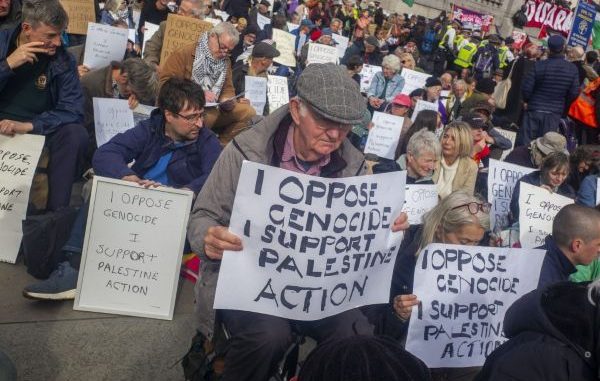
In another humiliating setback for dKeir Starmer’s Labour in Britain, High Court judges have ruled that the proscription of Palestine Action last year was ‘unlawful’. The proscription of Palestine Action as a terrorist organisation made membership punishable by a potential prison sentence of 14 years. Over 2,500 people have been arrested since then simply for opposing the ban and showing support for Palestine Action, although none have so far gone to trial for any offence. These trials have been paused as home secretary Shabana Mahmood is appealing the judgement, meaning membership of the groups is still banned.
This judgement follows another rebuff to the government’s attacks on the right to protest when six members of the ‘Filton 24’ were found to be not guilty on charges of aggravated burglary and the jury refused to convict them of other charges after they allegedly broke into and sabotaged a weapons factory (see ‘Filton 24 verdict: mass workers’ action can defend the right to protest’).
Capitalist state
This ruling is not simply the result of courts acting as ‘neutral’ arbiters of justice or defenders of democracy, but is in reality a reflection of the huge anti-war sentiment that exists in society and the anger against the attempts of this increasingly unpopular government to attack our democratic right to protest. The courts and judges – the majority of whom are drawn from privileged backgrounds – have a long history of ruling in favour of the ruling class and the status quo against working-class, anti-war, and socialist activists.
The courts’ role is ultimately to defend the interests of the bosses’ system. They have been forced to recognise the Labour government has gone too far in attempting to ban Palestine Action at this stage, given the balance of forces in society. Even a number of Labour MPs and other senior political figures were forced to come out in opposition at the time of the ban – in truth, not because of their support for the anti-war movement, but because of their fear of the backlash that the ban could generate.
The protests against the proscription of the group, as well as the huge anti-war demonstrations that have continued regularly in London and around the country, have no doubt exerted considerable pressure leading to the court’s outcome. This should be celebrated as a victory by anti-war activists but, with the appeal ongoing, the fight is not over. It is clear that the unchallenged proscription of Palestine Action would have set a precedent that could have been used in the future against other anti-war groups and workers’ or socialist organisations as well. Overturning the ban will make it harder for the government to easily implement further authoritarian measures as they attempt to cut across the growing opposition to their pro-war, anti-working class policies.
Workers’ action
But we cannot rely on the capitalist courts and legal procedures to defend our democratic rights. Only continuing to build mass pressure from the working class can hold back future attacks by this government. Birmingham City Council is currently seeking an injunction to ban the picketing of bin depots by anyone in support of the heroic bin strike that is taking place.
If the TUC (Trades Union Congress) organised a national demonstration against Labour’s austerity, as was agreed at its conference last year, this would signal to the government that attempts to attack and oppress the working class will not be tolerated. A broad stand of socialist candidates in this May’s elections, backed up by the trade union movement, would also pose the idea of a concrete alternative to Starmer’s Labour and would build confidence that it is possible to fight back against their austerity onslaught and undemocratic policies.