
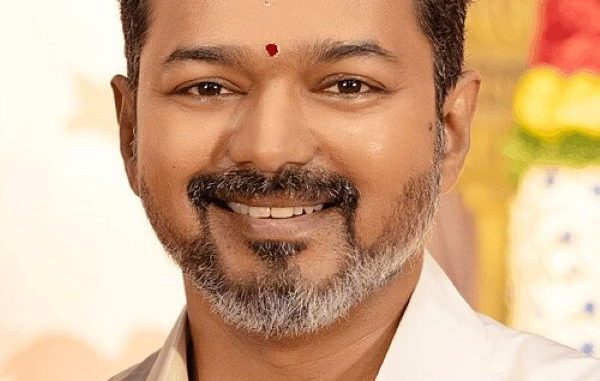
The Tamil Nadu state election, held on 23rd April, shocked the entire state political establishment. The newly formed TVK (Tamiḻaga Vettri Kazhagam — Tamil Nadu Victory Party), led by Kollywood film star, Joseph Vijay, won 108 seats (35%). This was an unexpected big win but still short of 10 seats for majority. The scale of TVK’s victory — a party formed only in February 2024 — smashing through the Dravidian [ethnolinguistic groups] stronghold that no one thought possible to break, sent shockwaves across India. No one predicted these results. Even exit polls failed to anticipate the outcome. The two parties that dominated Tamil Nadu for six decades suffered humiliating defeats: the incumbent DMK (Dravida Munnetra Kazhagam) won just 59 seats (24%) and the main Dravidian opposition, AIADMK (All India Anna Dravida Munnetra Kazhagam) won 47 seats (21%). The communist parties and VCK (Viduthalai Chiruthaigal Katchi — Liberation Panthers), in alliance with the DMK, managed to win two seats each. The Congress party took 5 seats (3.3%), and the right-wing Bharatiya Janata Party (BJP) scraped through with one seat (2.9%) by a very narrow margin.
Electoral allies of the DMK — the communist parties and the VCK, along with Congress — gave unconditional support to TVK. This filled in the 10-seat gap to form the government, and allegedly to avoid a constitutional crisis and the imposition of the president’s rule. It was also to prevent what they called the “entry of BJP through the back door.”
The hypocrisy and electoral opportunism of the communist parties are well known in this state and elsewhere. Their failures are one key reason behind their spectacular demise in West Bengal. The BJP has now won significant victories in West Bengal and is in control of the state.
There were reports that the DMK considered making a deal with the opposition AIADMK to keep Vijay out — a proposal that reveals the opportunism and the lengths to which the DMK was prepared to go to retain power. AIADMK had stood in the election in alliance with BJP. But supporting the BJP was a step too far for the VCK and the communist parties. Despite this, both communist parties reassured their continued support to M.K. Stalin, the incumbent chief minister. The Congress, however, switched fully and joined an alliance with TVK. Rahul Gandhi arrived to take part in a ceremony to capitalise on Vijay’s victory.
It is this very manoeuvring and scheming that was rejected by tens of thousands of young people. Most of the 21% of voting youth were first-time voters. There were reports that young people, including children, pressured their parents and elders to vote for TVK. Dravidian party politicians dismissed these reports as “nonpolitical,” “childish,” and so on. Bashing and vilification of the young voters continued. Such attacks on Vijay and TVK before and during the campaign further mobilized voters, leading to a record turnout in the State’s history — 84.69%.
These “new” young voters may not have been “politically savvy” in the eyes of the establishment, but they had had enough. They wanted change. In their view, the impasse between the two Dravidian parties had held back development, creation of better conditions, in Tamil Nadu despite strong economic growth. State GDP growth registered between 11% and 13% — one of the highest growth rates in the world. The state is also an industrial hub of India, mainly due to an influx of FDI and the creation of numerous factories that exploit the large number of graduates produced in the state. Tamil Nadu produces a high number of graduates, doctors, and researchers; many have worked in the US, UK, and Europe and travelled widely. Social media also brought closer to them what is possible with such growth. They want a stake in it.
Voter turnout was also affected by the removal of nearly 10 million names from the voter rolls in the run‑up to the election, part of measures supposedly to prevent fraud. This meant relatively fewer eligible voters compared with the previous election. Many saw this as an attack by the BJP‑led Centre to reduce the influence of the Dravidian parties. However, it did not stop the usual election scams, such as vote‑buying. While such practices were not as widespread as in past elections, they continued to play a role across all Indian elections.
However, Vijay’s victory cannot be fully understood through electoral mathematics or conventional analysis alone. Traditional ruling parties support is fast vanishing across the world, and populist phenomena have been rising. Increased polarization and exploitative, antidemocratic capitalist policies have marginalized large sections of the new generation, leaving them without hope for a meaningful future. In many developing nations there is massive anger against nepotism and corruption; a lack of trust in establishment parties is a common phenomenon worldwide.
Influence of film stars
Add to this the influence of cinema in Tamil Nadu politics. At times, traditional parties have lost influence on well-known, high‑profile figures who can convert fame into political capital. Balendra Shah (Balen), a rapper‑turned‑politician in Nepal, saw a rapid rise and became prime minister at 35 years old, with a landslide victory. This is not new in South Asia, particularly in India: film actor M. G. Ramachandran formed the AIADMK after splitting from the DMK and became chief minister in 1977 and started his long-lasting domination. After his death, his associate and co‑star J. Jayalalithaa dominated Tamil Nadu politics until her death. Both Dravidian parties have continued to use various cultural media to maintain their grip on power. Another comparison can be made to film actor N. T. Rama Rao’s landslide victory in 1983 in Andhra Pradesh, just nine months after he founded the Telugu Desam Party (TDP -Telugu Nation Party).
In the past, the rise of cinema stars often accompanied populist or sometimes progressive, even left leaning, policies. Vijay’s rise, however, appears different. As one voter put it, “Voting was treated like visiting a concert hall or going to the cinema.” The fact that so‑called social‑media “influencers” command more authority among the new generation than mainstream media has been denounced by the establishment as “digital rowdyism.” The more the establishment attacked young voters and women, the stronger the mobilisation of this section became. The banning of Vijay’s last film (titled ‘Democrat’), scheduled for release during the election, did not help.
“All of them are attacking me. Why do you think that is?” Vijay asked. “Because they are all in the same party,” he added. “I stand for no corruption — is that a crime?”
It is no secret that many candidates from both Dravidian parties were involved in scandals in the past. Over 90% of the DMK/AIADMK candidates who won the election were millionaires, and around 70% had declared criminal cases against them. The median age of these candidates was between 57 and 59 years old.
The DMK has been led by the Karunanidhi family: M. K. Stalin is his son, and his son, Udhayanidhi, has emerged as a prominent figure and opposition leader in the assembly. Udhayanidhi was previously appointed by his father to serve as deputy chief minister. Such nepotism exists across leading parties — including Congress — and is another reason for widespread resentment by voters. This family is said to be one of the wealthiest political families in the country.
The DMK has also carefully cultivated “family loyalty”; anyone outside the family’s circle of supporters has faced criticism, intimidation, and even arrests. Repression of cleaning workers highlighted the party’s attitude toward those demanding better conditions and wages.
Nepotism and corruption are not new. What is new is voters beginning to reject them. This rejection, however, is not a consolidation of support for TVK. The TVK was formed only two years ago. Nothing backed it except Vijay’s fan base, which—of course—is a substantial one that spreads across Tamil Nadu, Sri Lanka and the diaspora. Converting fan clubs into party organs and holding “popular” rallies was their focus. There were no clear policies, no sustained populist platform, not even press briefings or traditional fiery speeches. Of course, all the hype was maintained via social media among youth and even children, who urged parents to vote for him. The vision of a TVK‑led government was largely presented through his films.
Manifesto promises
The election manifesto — promising a proportional electoral system, opposing Modi’s one‑country‑one‑election policy, providing Rs 3,000 (≈ £30) assistance for the elderly, Rs 2,500 (≈ £25) for women in every family, funding to train half a million AI experts, and creating a specialised AI city — can be highlighted. However, these policies are not entirely new: the ruling DMK itself had promised many of them. Arguably, the DMK had more populist policies than any other party, which the communist parties used to justify their coalition with it. Other parties, like NTK (Naam Tamilar Kadchi – We Tamils party), which was reduced to 3.9% in the election, offered a long list of populist policies combined with ultra‑Tamil nationalism. The main opposition, AIADMK, which stood in alliance with the BJP, also campaigned on populist promises.
But the TVK did not stand in clear opposition to DMK policies. Most of its supporters expressed “emotional” support during the election. Tens of thousands of young people who gathered to see Vijay at rallies could not clearly articulate what they were supporting; they simply wanted Vijay to be the next chief minister, as a fresh start, through which they hoped to assert their existence and influence. The TVK had no leaders who articulated a clear political position. These criticisms are valid, but the same can be said of other party leaders and their supporters. “It’s a non‑political, political expression,” it was said. But it was not entirely non‑political, as some pundits portray.
According to government statistics, Tamil Nadu has the lowest poverty rate in India (between 1.5% and 4.5%). However, this does not translate into improved living conditions or better wages for most workers, particularly government employees. While prices of essentials and the general cost of living are rising, workers in key sectors have been left behind. Average wages for those in service industries remain between £40 and £250 per month, and cleaners and many others are often paid very little, particularly in rural areas (at the most £250/month). Manual scavenging continues to be practiced. Sanitation workers have held several protests and strikes, over the years; the government’s response was to privatise these sectors, which was vehemently opposed by the workers. M. K. Stalin’s government made mass arrests of workers and pushed through the privatisation.
TVK’s Vijay promised during the election campaign to support the workers, which attracted a significant section of these workers. Teachers have led a militant struggle for a long time for better wages and conditions and for the reinstatement of the old pension scheme; TVK also promised to support their demands. Similar promises were made to other groups that had struggled against the DMK government.
Will these policies be implemented by Vijay’s government? In his first speech, Vijay asked for time to deliver his promises, and said he was not sure what remained in the treasury; they would publish a white paper detailing what is available and what is not. Will they be able to carry out a significant increase in investment to develop public services, raise wages, and stop privatisation? The newly elected assembly members and ministers have shown no clear intention of doing so. According to one report, over 30% of those elected under TVK have criminal charges against them.
Communist parties
But the so-called left forces, dominated by the CPI and CPI(M), do not intend to build independent political representation for the working class. “It is imperative that the DMK‑led alliance in Tamil Nadu be re‑elected to office,” they argued before the election, supposedly to isolate and defeat BJP and Hindutva forces. After the DMK’s defeat, they supported TVK, allegedly to keep the BJP from entering through the back door. Regarding West Bengal, they blamed a “strong anti‑incumbency against the corrupt TMC government.” Now they claim their parties’ Politburo and Central Committee will undertake a comprehensive analysis and formulate a plan of action. But everyone knows the new “plan” will be to support the Congress party, supposedly to “stop fascism”. Their “analysis” will not include why workers should not continue to support corrupt regional bourgeois representatives. They continue to mislead their cadres with one aim — electoral gain. Mobilising the class, building a fight back, and creating an independent alternative, have not been part of their agenda.
Despite the large turnout, many workers are seeking alternatives. NOTA (None of the Above) polled 0.4% in the last election — nearly as much as the votes for the CPI and CPI(M), which received 0.6% each.
Vijay’s victory also dismantled the long‑held propaganda of the communist parties that elections in India must be contested through coalitions. While taking part in the ruling coalition the communist parties did not oppose government attacks on workers’ conditions; at times, they pleaded with the chief minister and pretended to side with protesters, but they did not build support or join forces with workers demanding their rights. Despite claiming control of large unions and mass support, the CPI and CPI(M) never used this strength to mount a class fight back. They have become a pale imitation of the old social‑democratic parties, reducing their perspective and policies to mere electoral aims.
It is true that the BJP uses divisive methods to strengthen its forces. The fascist core of the Hindu nationalist Rashtriya Swayamsevak Sangh (RSS) still has roots in Tamil Nadu.
All the mainstream parties, including TVK, declare themselves secular and oppose Sanātana (the eternal laws of Hinduism). This tradition has kept religious fundamentalist ideas at bay, for now. However, Hindu fundamentalism will not expand only through the BJP; it will also take root where poverty, corruption, nepotism, and attacks on the poor by regional capitalist representatives provoke anger and protest. The absence of a broad, workers led fighting force — an organisation that consistently provides a platform for struggle against all forms of oppression and for democratic rights — makes it harder to defeat the BJP and its religious and capitalist backers.
Some small left and ex‑Maoist forces supported TVK in the election, claiming it to be a new force that attracts the younger generation, but not on any policy basis. We must end the coalitionist trap long practised by Stalinist and Maoist organisations. “Lesser‑evilism” is what provides a backdoor for reactionary forces to emerge.
Communist parties that practice lesser-evilism cannot successfully defeat reactionary forces or dismantle capitalism, from which those forces arise. Marxists should build an independent working-class alternative that unites all those in struggle to fight oppression, defend democratic rights, and create a better future — a socialist society where wealth is planned for the benefit of all.
Vijay will not be able to deliver the aspirations of the new generation of workers and youth who want a better world. The so‑called “Dravidian economics” of the previous government was largely propaganda; in practice it was a profit‑driven, exploitative capitalist model. The economic policies of a Vijay‑led government are unlikely to be different. Marxists and other left activists must organise and fight to change this. All on the left who recognise the urgency — activists and socialists, alike — should come forward to build a democratically organised, independent platform for struggle.
Notes on electoral parties in Tamil Nadu (not all are listed):
- Key parties of the ‘Secular Progressive Alliance’
- DMK — Dravida Munnetra Kazhagam — incumbent party,
- led by M. K. Stalin
- VCK — Viduthalai Chiruthaigal Katchi (Liberation Panthers) — formed to oppose caste oppression against Dalits
- INC — Indian National Congress
- CPI — Communist Party of India
- CPI(M) — Communist Party of India (Marxist)
- AIADMK-led alliance
- AIADMK — All India Anna Dravida Munnetra Kazhagam — main opposition party historically
- BJP — Bharatiya Janata Party
- 2. Others
- NTK — Naam Tamilar Katchi (We Tamils Party) — combines ultra-Tamil nationalism with populism