
Once again slim hopes have risen that the death toll in West Asia’s current wars will, at least, lessen with the announcement of a 60-day extension of the shaky truce between the US and Iran.
As Gaza, and now Lebanon, has shown, a truce can lessen the numbers of dead and injured but not completely stop the killing and destruction that has gripped West Asia repeatedly over the past decades. While a longer-lasting deal between the US and Iran cannot be ruled out, it will be harder to agree and implement one in Lebanon. But such agreements will not resolve the basic issues, at best they will be ceasefires with perhaps trade deals attached, and subject to collapse.
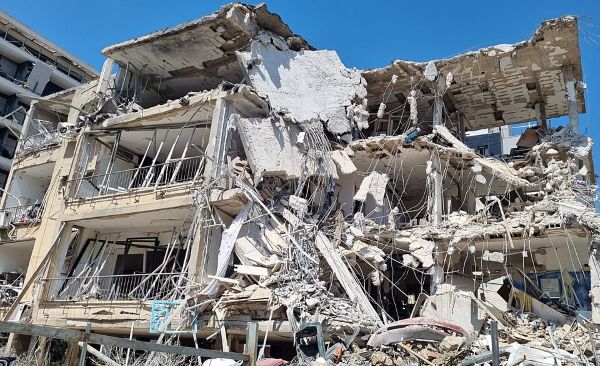
The US and Israel’s latest round of war has killed at least 7,000, with 3,000 dead in Iran and 4,000 in Lebanon. The current cycle of wars began with the October 2023 attack on Israel by Hamas, which killed nearly 1,200 people, including 828 civilians, and saw about 250 abducted. Israel’s bloody war of revenge in Gaza has, so far, killed more than 73,000 people and the latest wars have, especially in Lebanon, seen high rates of casualties and destruction.
This latest round of fighting against Iran was the result of Netanyahu’s desperation to score a victory over Iran before this coming October’s Israeli elections, and Trump wanting a quick success against the Iranian regime.
But this war had the unexpected, but very significant, result of the US for the third time in its history not emerging victorious in a war, despite having the world’s mightiest military machine.
Soon after the announcement of the MoU (Memorandum of Understanding) for a 60-day truce between the US and Iran, the New York Times published an editorial, ‘President Trump Lost This War’, that gave a short balance sheet of the war that the US and Israel launched on 28 February:
“Iran closed the strait in retaliation, to damage the global economy and increase political pressure on the United States. The move worked, and Iran’s leaders now understand that they hold a powerful economic weapon.
“On balance, Iran emerges the strategic winner of the four-month war. It did suffer substantial losses, including much of its navy, air force, military-industrial capacity and political leadership, including Ayatollah Ali Khamenei, the supreme leader, who was killed on the war’s first day. With the war ending, however, Iran’s leadership can begin rebuilding.
“The United States, for its part, looks weaker in the eyes of the world. The American military has shown itself unable to quash a much smaller opponent even as it burned through many of its long-range precision missiles and interceptors. The outcome damages this country’s ability to deter other potential adversaries.”
An Economist (London) editorial added that for Netanyahu’s government “the war was a strategic failure, because Iran remains a threat.”
War’s causes
But the war’s causes have not gone away. Despite regular ceasefire announcements, Israel is continuing its latest war of ethnic cleansing and conquest in Lebanon which includes, in the words of Israel defense minister Katz, the destruction of “all houses” in border villages “in accordance with the model used in Rafah and Beit Hanoun in Gaza”. It has been reported that the Israeli military has destroyed 90% of homes in Rafah (Guardian, London, 12 April 2026). Such calls for ethnic cleansing have been echoed by the Israeli national security minister Itamar Ben-Gvir declaring that “for every tear of an Israeli mother, a thousand Lebanese mothers must weep. All of Lebanon must burn!”
The Israeli government has made clear that it will not retreat from its military occupation of over 60% of Gaza, plus the south of Lebanon and western areas of Syria, all areas which have been seized since 2023.
Trump rejected doubts about starting this war against Iran from elements within his own circle, the US military, plus Saudi Arabia and the Gulf states. Instead he followed Netanyahu’s calls for war against Iran in the belief that a quick victory was possible by killing the Iranian leadership and an aerial offensive destroying the Iranian military.
However, the ideologically based Iranian Islamic regime did not simply collapse and it soon became clear it had prepared for the sort of attack that the US and Israel launched. It also moved to close the Strait of Hormuz to shipping, something Trump had discounted, thereby beginning to plunge the world into an inflationary and economic crisis by cutting off 20% of the world’s oil supply and other critical goods like fertilizer. At the same time, the toxic mixture of the bombing raids hitting civilian targets, Trump’s threats to destroy civilisation in Iran, while showing a willingness to do a deal with elements of the dictatorial regime, combined to cut across gaining substantial popular support. Indeed, the US-Israeli attack was soon seen as not offering liberation from oppression and seems to have strengthened Iranian nationalist sentiment, but not significantly increased support for the regime itself.
Now the Iranian regime, facing internal divisions over whether or not to agree a deal with Trump, is using a policy of minor concessions and repression. Thus it is turning a blind eye to music events that have mixed dancing etc., but has apparently sentenced the well-known singer Parastoo Ahmadi to 74 lashes for singing without a hijab on YouTube.
The country is in deep economic crisis both because of sanctions and the war. Reportedly large numbers of workers have lost their jobs as the economy contracts, in May general inflation was running at 84% year on year, while annual food-price inflation was 131%. The regime fears new struggles breaking out, particularly by the working class, which in recent years has shown its capacity to struggle on economic issues.
If Trump lifts some of the sanctions on Iran it could both improve the economic situation and give confidence that struggle can win improvements. Sooner or later the question of regime change will be posed in Iran and other countries, a situation where the fundamental choice will be between keeping capitalism or a genuine workers and poor peoples’ government breaking with capitalism.
Trump, like other right populists, won support by a combination of appealing to reactionary element and nationalism, and to the widespread dissatisfaction with the ‘old order’ which has presided over a long period of stagnant real wages. He promised ‘Good Jobs with good wages’ and no new wars, but now the war with Iran undermined these promises and his support.
Trump has strengthened the Bonapartist character of the US president’s powers – bypassing Congressional oversight, purging both US federal departments and, to a certain extent, the military officials and leaders. In Trump’s attempt at an ‘imperial’ presidency, the US cabinet is a collection of lapdogs who, in televised Cabinet meetings, strive to outbid each other in outlandish praise for Trump the ‘genius’.
‘War of choice’
One result was this ‘war of choice’ that was, from strategic point of view, not necessary for US imperialism at this stage. The fact that, from the start, this war on Iran was supported by only a minority within the US, and that Trump’s approval rating continued falling, led to Trump giving up on a quick victory and looking for an off-ramp, an escape route.
Rapidly Trump downgraded his Israeli ally, referring to Netanyahu as a ‘’very junior partner’’, who was not involved in talks with Iran. Vice-President JD Vance was given the go-ahead to warn the Israeli government that “over the last three months, two-thirds of the defensive weapons that have protected your homeland have been built by American hands and paid for by American tax dollars… anybody in Israel who thinks their biggest problem is the president of the United States needs to wake up and smell the reality.”
Within Israel this development has had a striking impact. For a country which was founded in war, and which has either fought wars or faced uprisings in every decade of its existence, this is powerful shock which poses the question of yet more wars, and even that defeat is not impossible. Trust in Trump has dramatically fallen – according to one poll it now stands at just 13%, while only 11% think that Israel has won this war. Another poll reported that just over 92% felt that Iran had gained more than Israel from the war, and that 48.2% backed renewed major military action against Hezbollah in Lebanon, even if it risked confrontation with Washington, while only 21% opposed that.
Sharper polarisation is inevitable. As the CWI has pointed out, the events of Israel’s history have proved in practice Trotsky’s warning that the establishment of a Jewish state in Palestine, with the driving out and oppression of the existing population, would create a trap for the Jews who went there and inevitably faced opposition. There will be those Israelis who reject the illusion of some ‘final’ military victory and who begin to see that the road to peace involves breaking with the policies of repression, the Zionist project and capitalism.
The capitalist powers offer no long-term solution. The helplessness of most of the so-called world powers was extremely noticeable as these bloody and potentially game-changing events took place in West Asia, while China and Russia stayed quiet waiting to see how to exploit the divisions with the G7.
The ‘horror without end’ of capitalism with its inequalities, frequent crises and wars inevitably prepares the way for struggles, revolts and revolutions from below. Western Asia is not immune from such developments. In recent weeks, the first strikes in Syria since the collapse of the Assad dictatorship have taken place, a sign of the beginning of a rebirth of the workers’ movement in that country. Such events can be the motive forces of history. The challenge is to help build a revolutionary movement that can carry through socialist change that can secure the democratic and national rights of all, break the cycle of economic and social crises, oppression and wars by establishing a socialist confederation of the region.