
Following the recent news regarding the death of the Norwegian monarch, King Harald V, the bourgeois media in the country has once again been working overtime to portray the late King as a benevolent figure. The mass media endlessly tell us that he publicly supported Pride initiatives, stood against racial prejudice, and was frequently seen on the front pages offering reassurance during times of national crisis. He was often presented as a monarch possessing genuine empathy for his subjects.
The Norwegian monarchy is relatively modern, and the 1905 transition of power from Swedish rule to Norwegian parliamentary democracy is surrounded by urban myths.
Following Denmark’s support for the Emperor throughout the Napoleonic Wars, the country was pressured into handing over Norway to Sweden in 1814. This arrangement placed the Swedish monarch at the head of two separate nations, providing an opening for budding Norwegian capitalists to construct their own state, police force, and judicial bureaucracy.
In Norway at the turn of the 20th century there was little or no industry, there were a few copper mines south of Trondheim and a few herring canneries near Stavanger, whale fishing for whale oil employed a few more but not many. Previously the water wheels of the big rivers in the south were often dammed for saw mills and the oak forests cut down to supply oak for the British navy. The very sparse population was mainly crofters, people who maybe had a sheep or a cow and a few chickens, and fished in the fjords near the coast and/or did some paid work for a big landowner. The old Danish Lutheran church still had its religious hold on society. The old Viking religions were not allowed to be taught, and the Sami peoples in the north were very oppressed by the church and state.
The newfound flexibility to foster a local bourgeois democracy sparked a cultural renaissance, bringing figures like Ibsen and Grieg to international fame by the late 19th century. While growing national pride played a role, the primary driving force behind the push for independence in 1905 was the bourgeoisie—composed chiefly of major landowners and a developing merchant navy.
There were some military maneuvers on both sides, and the Norwegians seized power from the Swedes in a bloodless coup. Norway made its way into the 20th century. After a plebiscite (no women or men under 30 were allowed to vote) the bourgeoisie decided that a monarch was necessary and a prince, a son of the old Danish king, was anointed. He went on to marry a daughter of Queen Victoria. In an effort to pull the wool over the workers’ eyes in Norway, the first Kings adopted the names of old Viking kings (Håkon and Harald etc).
‘People’s king’?
Today those who remember the oil crisis of the 1960s and 1970s may recall the iconic image of King Olav and his pet dog taking a public tram to go skiing. It was on a Sunday when driving a motorcar was prohibited, as part of efforts to save fuel during the oil crisis. This image spread worldwide through the media and earned him the title of the ‘People’s King’, even though he owned half of Oxford Street in London. The Norwegian monarchy remains in the class that is still the most powerful block in the state, and we need to create our own powerful working class party to replace it.
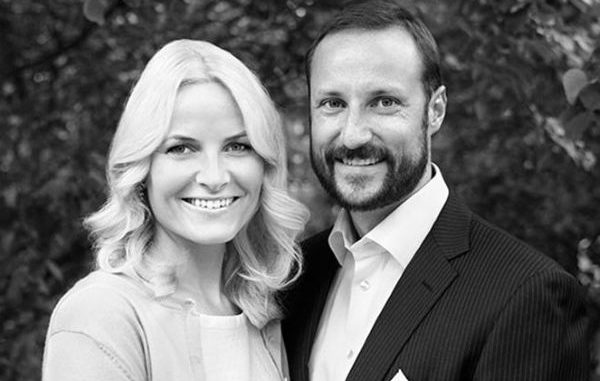
In recent years, the monarchy has been involved in a series of scandals. For pious, polite and hypocritical bourgeois society, it was an embarrassment that the crown prince (now King Haakon VIII) married a woman, Mette‑Marit Tjessem Høiby (now Queen Mette‑Marit), who he met at a pop concert, who had a son from a previous relationship. Neverthless, the marriage ceremony was carried out with great pomp and circumstance at Trondheim cathedral. Later on King Haakon’s stepson, Marius Borg Høiby, was often pictured in scandal magazines at nightclubs. He was last year arrested and charged with raping a woman in her sleep, and made to wear an electronic ancle bracelet and live in house arrest in a minor palace. Anyone else would have been imprisoned.
It also emerged that Queen Mette‑Marit, King Haakon’s wife, had been a friend of Jeffrey Epstein in the early 2010s and had visited Epstein’s island; this was hushed up for a while but came out when the ex Labour Prime minister Thorbjorn Jagland (1996-1997) was found in the same search of the Epstein papers.
All this illustrates that the Norwegian royal family is firmly tied to the privileges of the oligarchs and billionaires. Opinion polling in Norway shows a decline in confidence in the monarchy, with one in three Norwegians favouring abolition after King Harald’s death
After finishing her private education as the older sister of the new king, paid for by taxpayers’ money, the Princess of Norway married an American, a self-proclaimed “shaman”, Durek Verrett, on August 31, 2024, in a much-publicised and controversial event.
The eldest daughter of the old King and Queen celebrated the wedding in a three-day ceremony in Geiranger, Norway, with royals, celebrities, and media personalities in attendance. Coverage rights were sold to Netflix.
It has been tradition of the socialists that we are always anti-monarchy, but this time we see in Norway the leaders of the so called socialist parties and some trade unions are falling over themselves to praise the old King. To be so fawning is either false or being populist.
The main reason we socialists are always anti-monarchy is not that we are jealous of their privileged life. It is a question of class. We sell our labour to make a living, they live off our unpaid wages.
When the monarchists want more money (and they will) we should say no. They can always sell some of their properties, or Rolls Royces, and yachts etc. Marxists understand that the power of the monarchy will be used against the working class during periods of heightened class conflict. We call for the abolishing of the monarchy, which represents the privileges of the greedy elites, hereditary privilege, and class oppression, and is an arm of the capitalist state to be used against the masses in time of emergency for the ruling class, as part of our struggle for a socialist society.