
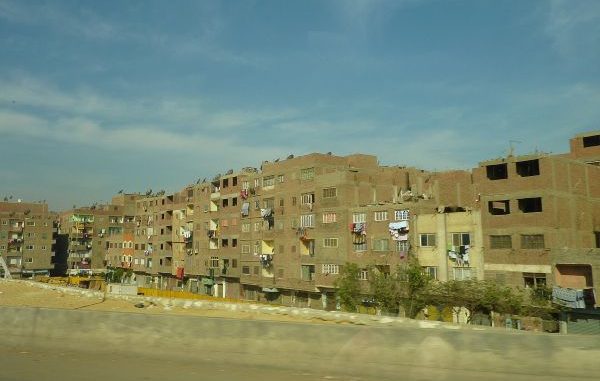
Three recent events show life’s harsh conditions for the working class and poor people in Egypt under President Sisi’s dictatorial regime – and show resistance to his regime will grow.
Horrific crash exposes widespread child labour
Two pick-up trucks smashed into each other early on the morning of 11th August in Ismailia, north eastern Egypt. 19 were killed and 28 injured, almost all of them children from two villages. Many were aged 13-14 – two were just 10 years old. A fortnight later another pick-up truck crashed with a car on the same stretch of road, leaving 24 injured. All three trucks were crammed full, travelling to farms for a day’s work.
Poverty forces children out of school into work to help support their families. Farming is particularly notorious with children enduring precarious hours, dangerous transport, hot temperatures and pesticide exposure.
Child labour below the age of 15 was prohibited by government regulation in March 2026, but this has made little difference. The victims of these crashes were among 1.3 million Egyptian child labourers with 900,000 exposed to hazardous conditions (UNICEF 2021). Official statistics almost certainly understate the scale of child labour, with some estimates up to 3 million.
Egyptian capitalism depends on super-exploitation and poverty pay to compete with more developed economies in the global market. While children miss education, are killed and injured the ruling class lives the same extravagant lifestyle as its fellow capitalists, bankers, landowners and senior armed forces officers the world over.
Residents resist eviction
For nine years 100,000 residents have been resisting their eviction from Warraq Island in the River Nile, central Cairo to make way for luxury development. As with many big construction projects under Sisi, an Armed Forces-owned company is involved, making money for senior and retired officers.
The government wants to turn the island into a “global commercial hub… rivalling the world’s leading trade centres.” Many residents make their living fishing and farming, as they have done for generations. There would be no place for them between luxury hotels, prestige apartment towers and gleaming offices.
Weeks after a speech by President Sisi in 2017 (the first time the government’s Warraq Island policy had been mentioned) residents were woken by hundreds of security forces demanding they leave their homes. They stood their ground, one being killed and others injured. Over the years since, there have been government blockades, suspension of vital public services, multiple protests and arrests on charges of ‘terrorism’.
“Our children have grown used to tear gas,” a resident said. “Security raids are common. We live under endless terror. Life here has become hell.” But still the residents are heroically resisting, defending their homes, demanding the removal of security checkpoints and restoration of basic services cut by the government including healthcare, sewage pumping and street lighting.
In early August more clashes between residents and security forces lasted several days. Residents began a sit-in on the 10th, blocking materials to a government building site. Despite fearsome security services, rather than attack the sit-in the authorities offered negotiations. Perhaps the government senses a shifting mood and does not want to provoke a wider sympathy movement. A temporary partial agreement was reached, but demonstrations soon broke out again after this was broken by the authorities.
The Warraq Island residents’ long struggle shows Sisi’s regime has been unable to completely crush resistance that grew under Mubarak’s regime, eventually erupting in the 2011 movement that ousted him.
Textile workers’ strikes and lockout
Hundreds of workers at Misr El Amria Spinning and Weaving Company in Alexandria went on strike on July 28th after management refused a promised pay rise. With prices rising steeply, workers also demanded an increase in the monthly cost-of-living allowance from LE600 to LE1300 to match other textile companies. The company is owned by Banque Misr, a majority state-owned bank.
Management responded on August 9th by closing the factory indefinitely, supposedly for “routine maintenance, inventory, and reviews”. Workers should be entitled to pay during this shutdown, which management is refusing because of the strike. A heavy police presence surrounded the factory, reinforced by state security forces.
This is the fourth time Misr El Amria workers have struck in the past twelve months demanding payment of the minimum wage, hazard pay and bonuses. Growing workers’ militancy and confidence has led to management making agreements with union leaders, which management later break. The union, part of the Egyptian Trade Union Federation, is state-controlled and mostly acts as an arm of management. If unable to prevent strikes taking place, its appointed leaders repeatedly try to end them by making deals with employers, who fail to implement them once workers have returned to work.
Workers need unions completely independent of the state, with democratically elected leaders accountable to members. At present, leaders of independent unions could be at risk of arrest, torture and imprisonment. Nevertheless, strikes at a number of textile companies in the past year show the potential to start laying the basis for an independent union, linking activists together while taking necessary security precautions. In the final years of former president Mubarak’s regime workers began organising some independent unions.
Wars threaten Egypt’s weak economy
As the world’s largest importer of wheat, Egypt has been hit particularly hard by the Russia/ Ukraine war. In the first half of 2026, these two countries supplied 82% of Egypt’s wheat. Attacks on each other’s terminals and ships in the Black Sea have cut their wheat exports to the lowest level since 2010. With higher shipping costs, Egyptian wheat prices shot up 21% in the third week of August.
Meanwhile the ongoing blockage of the Strait of Hormuz is leading to higher fertiliser costs meaning further food price rises. The cost of oil and natural gas is high for the same reason. Although inflation has fallen from 38% in September 2023 it is still around 15%, with the trend rising in recent months. Cuts in government subsidies of fuel and electricity, a condition of the last loan from the IMF, hits poor people hardest.
The Gaza war and threat of Houthi missiles to shipping in the Red Sea saw government income from Suez Canal plummet. However, in recent months there has been some recovery – the second quarter of 2026 up 13% on the first quarter.
Tourism also increased 4% in the first half of 2026, possibly benefiting from the steep fall in visits to Dubai. Continuing instability in the region could quickly threaten this growth and jobs in the tourism sector, which accounts for 15% of GDP. As always, the working and middle classes are expected to sacrifice their living standards to maintain the wealth and profits of the super-rich.
Armed Forces’ economic interests grow
President Abdel Fattah al-Sisi, a former Field Marshal now in power for 13 years, is running a regime increasingly entwined with key sections of the economy. Companies owned by the armed forces have senior officers and retired officers on their boards, boosting their service pensions. The Armed Forces is estimated to control 20-60% of the economy – the wide range of estimates due to the lack of public transparency and financial figures.
One example is the Future of Egypt authority, run by an Air Force colonel. In the past ten years it has grown from a small desert land reclamation project to controlling all wheat imports, major lakes and fisheries, the largest stake in the Egyptian Commodities Exchange and it has moved into luxury housing and construction, renewable energy and infant formula manufacture. Alongside its growth in agriculture, it has related industrial projects, including crop drying and storage, sugar production, molasses and animal feed manufacture as well as building large-scale potato refrigeration units and grain silos. At the end of August it took control away from farm cooperatives over subsidised fertiliser distribution. An Agriculture Ministry official told independent newspaper Mada Masr the co-ops “will largely disappear from the scene in the coming years.”
Like other military-owned companies, Future of Egypt is tax-exempt, does not publish financial returns and its employees are subject to military tribunals. Sections of the capitalist class outside Sisi’s ‘magic circle’ will be disgruntled at their exclusion from these profitable areas of the economy, although still grateful that workers’ action is heavily repressed. Opposition to Sisi from within different layers of the ruling class could grow in future if working class opposition is getting stronger.
The Armed Forces’ control over society has increased in other ways. Since February, 14 of Egypt’s 27 governors are drawn from the ranks of retired major-generals.
Judges now have to complete a six-month training course at the Egyptian Military Academy. The programme includes lectures on national security and military affairs, as well as weapons training and military drill! Those who fail the course are unable to take up their judicial role, removing any vestiges of independence judges might have exercised in the past.
Kayan University opens to its first students next month – a civilian university run by the armed forces in competition with the rest of the university sector.
Sisi hopes to prevent future opposition on the scale that ousted Mubarak by concentrating economic and political power in military hands, alongside armed forces control of the state, other public institutions and most of the media. However, almost every issue angering working class people now points back to the regime and the Armed Forces. While senior officers enjoy good lives before and after retirement, the same can’t be said for conscripted lower ranks.
Mass protests against poverty, repression and lack of democratic rights will break out again in the future directed against Sisi’s regime. Appealing to the ranks of the armed and security forces could break them from their senior officers, if linked to a clear programme and determination to end the rule of Sisi and the capitalist class he represents. It would leave the regime without support and open the way for a democratic workers’ state and socialist planning to end child labour, lack of housing, low pay and every other inequality the regime defends.