
There is No Solution Without a Struggle for Fundamental, Socialist Change, Including Ending the Occupation, Reconstruction, and Social Justice
Below is a guest article by Shahar Ben-Horin, posted on the website of Socialist Struggle Movement, Israel–Palestine, socialiststruggle.org, on Friday 10 October 2025
More than half a year since Netanyahu’s ultra-right government collapsed the previous ceasefire, a new ceasefire came into effect on Friday 10 October. It sparked a wave of relief and cautious hope that the two-year-long war of extermination may be nearing its end, accompanied by an agreement for the release of hostages and prisoners. Tens of thousands of surviving residents in Gaza began marching northwards from the makeshift displacement camps in the south, with cries of joy.
Socialist Struggle Movement stands in solidarity with the Palestinian community that has been enduring an inferno of crimes against humanity in the Gaza Strip, with families from all communities anxiously awaiting the return of their loved ones, and with the masses who have fought globally to halt the war machine. The struggle is not over.
The Israeli government has finally approved the agreement signed early Thursday morning in Sharm el-Sheikh regarding “Phase A” of the current ceasefire framework—for the release of hostages and prisoners, and the end of the war of extermination—despite opposition from far-right ministers of the two parties Religious Zionism and Otzma Yehudit, who don’t want any disruptions to the ethnic cleansing plan for Gaza promoted by the government with Trump’s backing, as they seek renewed colonisation of the Strip.
Between the announcement of the agreement and its implementation, bombings continued. Gaza’s Health Ministry reported 17 more deaths, bringing the official, conservative death toll past 67,000.
Will the Ceasefire Hold?
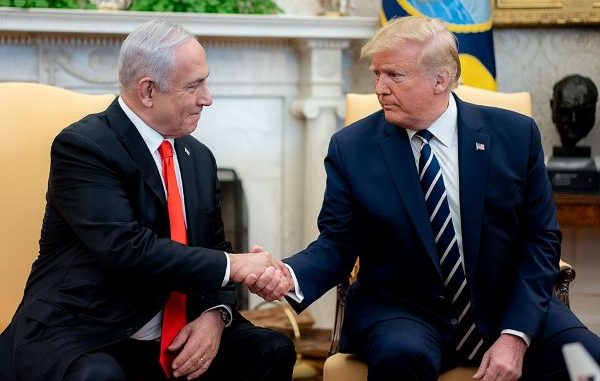
The previous ceasefire collapsed within two months, when the occupation government refused to proceed to “Phase B.” The Trump administration now offers “guarantees” that this ceasefire will lead to an end to the war, which Trump typically hails as progress toward “regional peace” and the “end of a 3,000-year catastrophe.” He is expected to deliver messages in this spirit during his upcoming ceremonial visits to Jerusalem and then Sharm el-Sheikh around Monday. Simultaneously, the same administration threatens to back a renewed Israeli offensive in Gaza should Hamas allegedly violate the framework’s terms.
According to the framework, within three days of the ceasefire’s commencement on Friday at 12:00 noon, living hostages and the bodies of Israelis and others held by militias in Gaza will be released. Simultaneously, around 2,000 Palestinian prisoners will be freed from the occupation regime’s prisons and detention camps. This includes approximately 1,700 residents abducted from Gaza after 7 October 2023, who, as the Israeli regime admits, were not involved in Hamas’s surprise attack. Additionally, around 200 of the 270 Palestinian life-time prisoners classified as “security” inmates are expected to be released. However, Netanyahu has stated that prominent Palestinian leaders such as Marwan Barghouti—the most popular Palestinian leader today—will not be freed.
In line with the framework, Israeli occupation forces have withdrawn to the “Yellow Line”—the deployment line as of 14 August, the date of the assault on Gaza City. Occupation forces continue to directly control over 50% of the Strip and will maintain the siege policy. The Rafah crossing to Egypt will partially reopen, though it remains unclear when and under what conditions residents who left (or will leave) the Strip will be allowed to return.
Although the ceasefire is expected to increase the entry of “aid” in the form of essential goods and basic equipment, including materials needed for infrastructure rebuilding, the Israeli military can easily obstruct the transfer of supplies, especially in the vast areas under its direct control.
At an undefined date, the Israeli army is supposed to withdraw to the “Red Line.” This is conditional on replacing the Hamas administration with a “technocratic” government under Trump’s direct control—a “temporary” colonial administration backed by an “International Stabilisation Force” (ISF), a policing and occupation force directed by US imperialism and regional regimes. Further withdrawal is supposedly contingent on “demilitarisation of the Strip,” with full withdrawal expected after an undefined number of years. The Hamas leadership has already clarified that its movement will not disarm.
This ceasefire is built on a very unstable ground, creating high uncertainty about the coming months. Similar to the relative ceasefire conditions in Lebanon, which include a routine of “low-intensity” Israeli military strikes—even in recent days—occupation forces remaining in the Strip will continue a degree of military aggression both by their presence and through potential violations and targeted attacks deemed worthwhile by the Israeli government and military command. There is concrete potential for collapse scenarios, as well as, as occurred with the previous ceasefire, military escalation in other arenas—including an attack on Iran that could ignite another war cycle. The Houthi administration in Sana’a also threatens to resume missile launches toward Israel in response to strikes in Lebanon.
Netanyahu’s government has been forced to cooperate with “Phase A” of the framework due to mounting pressure from Washington, which in turn reflected increased pressure from Arab and Muslim regimes in the region, and from governments within the Western imperialist bloc. Israel’s arrogant bombing of Qatar’s capital on 9 September, a US ally, prompted an unprecedented US declaration of commitment to defend Qatar and likely triggered the new attempt at a stabilising exit strategy from the Gaza crisis.
Mass protest strikes in Italy against the genocidal war marked a new level of international working-class intervention and highlighted the radicalisation potential of the prolonged historical crisis, which has shaken mass consciousness worldwide. The mass movements, although not sufficiently developed to directly compel the halting of the war machine, are undoubtedly a significant background factor in the dynamic. This includes the highly contradictory protest movement within Israeli society, where dominant forces have been establishment-aligned and only belatedly adopted a clear demand to end the war, yet objectively exerted pressure that somewhat constrained Netanyahu’s government — albeit to a much too limited degree.
Western governments were pushed to pay lip service to recognising a Palestinian state—contrary to the demands of the U.S. and Israeli governments—and even took limited steps toward arms embargoes, including Germany, Israel’s second-largest arms supplier, due to concerns over the destabilising consequences of the ongoing crisis and in an attempt to distance themselves from responsibility for the horrors of ethnic cleansing and genocide in Gaza.
In response, Netanyahu offered Israel the vision of a “Super-Sparta”—deepening the subjugation of Israeli society to the needs of the occupation machine, including further austerity policies, regardless of international isolation. This vision is unpopular among Israelis and even troubles Israeli capitalists, who depend on exports, technology, and foreign investment, and currently prefer a ceasefire. Simultaneously, ruling classes in the West and the region await an opportunity to return to a state that allows “business as usual” with Israeli capitalism, and reports have already emerged that Germany’s arms embargo will be lifted following the ceasefire announcement.
Yet even if the phase of releasing all living hostages and a layer of Palestinian prisoners is completed, there remains a clear threat that Netanyahu’s government will seek an opportunity to collapse the agreement under the guise of security demagoguery. Even after two years of shedding rivers of blood, it lacks a “victory image”—it has failed to engineer mass transfer from the Strip and so erase the Palestinian people in Gaza, and has not decisively dismantled Hamas, despite a shift in the regional balance of power with the clear weakening of the “Axis of Resistance” led by Tehran. Within months, it will face elections to the Knesset [Israel’s parliament], and there is significant potential for mass punitive voting against it.
In a scenario of ceasefire collapse in Gaza, counter-pressure would arise both from broad segments of Israeli society and from Washington, but the pressure would need to be heavy to deter attempts to resume the ethnic cleansing plan for the Strip. The fact that the far-right parties of Ben Gvir and Smotrich have not yet decided to leave Netanyahu’s coalition suggests they are still banking on the possibility of the ceasefire collapsing, or a green light for increased aggression in other arenas.
The Struggle Is Not Over
The concentrated aspirations of Netanyahu’s government to erase the existence of the Palestinian people—currently pursued primarily through efforts to continue the Nakba [the killing and displacement of Palestinians around the creation of the State of Israel in 1948] via more mass displacement from the territories of historic Palestine—are not going away. In particular, the West Bank, which during the previous ceasefire became a focal point for escalation in destruction, killings, and mass displacement on a scale not seen since 1967, remains in the crosshairs of Netanyahu’s government, which seeks to deepen the colonial settlement enterprise and advance annexation measures.
Netanyahu has not even paid lip service to hypothetical recognition of a Palestinian state, and Trump’s framework will not reach the implementation of “Point 19,” which suggests that at some unknown future time, conditions might ripen for realising the Palestinian people’s national aspiration for statehood. Trump’s framework is not intended to pave the way for a solution based on freedom and equality for the Palestinian people and all peoples of the region, but rather to re-advance the normalisation of the occupation in the service of US, Arab, and Israeli capital. Such a plan will inevitably lead to further bloodshed and even more extreme deterioration.
In August, influenced in part by the refusal of the Histadrut trade union federation leadership under Arnon Bar-David to heed calls to lead a general strike to “shut down the state,” the government openly rejected—even in the face of hundreds of thousands in the streets—a ceasefire proposal that the Hamas leadership had agreed to. The strategic failure of the dominant organising forces in the Israeli protest movement, combined with an establishment, pro-capitalist approach and nationalist chauvinism, translated into a distorted campaign of nurturing dangerous illusions in Trump, as if he were the decisive force to end the war crisis.
The “Hostages and Missing Families Forum,” which did not represent the more militant families’ line but rather a conservative right-wing one, was even among the voices calling to award Trump the Nobel Peace Prize. While the “Forum,” alongside Bar-David and other pro-capitalist forces, promoted contradictory messages regarding the government and the war on Gaza throughout, it played into the government’s hands and blunted the pressure exerted by the mass protests. Instead of advancing a horizon for intensifying the struggle and “shutting down the state” in the spirit of the Italian working class, leading to victory over the government by forcing an end to the military campaign, these forces turned to promoting the dangerous idea that only the grace of the right-wing populist emperor from Washington could resolve the crisis. Based on political despair, this notion has found resonance among parts of the Israeli protest movement.
That same Trump, whose previous plan included the mass expulsion of Palestinians from Gaza—a “second Nakba”—has provided tailwinds to Netanyahu’s government in recent months, including for the escalation of the assault on the Gaza Strip, and shares responsibility for the mass killing of Palestinians, as well as for the deaths of hostages. His current plan is not a peace plan.
Now is the time to continue building the cross-community struggle for the complete end of the war of extermination in Gaza and the West Bank, and of the accompanying imperialist aggression in the regional sphere, and for massive investment in rebuilding infrastructure and communities in Gaza and beyond—at the expense of Israeli and other capitalists who supported the war. In this context, further demonstrations and strikes are needed, both locally and internationally—as well as intensified organised refusal actions among Israelis [i.e. refusal to participate in military aggression]. But there is also a need for a struggle for an alternative.
Netanyahu’s death government remains the most dangerous force in the regional arena today, and it is urgent to fight for its overthrow. But also to pose an alternative to the political parties of occupation and the rule of capital. Without a fundamental, socialist solution that includes ending the occupation and achieving freedom, equality, personal security, and social justice for Palestinians, as well as for Israelis and all peoples of the region, the path is paved for even more catastrophic bloodshed.
Yes to ending the war of extermination. No to the plans of Trump and Netanyahu. Overthrow the death government. There is no solution without a struggle to end the occupation and for social justice.