
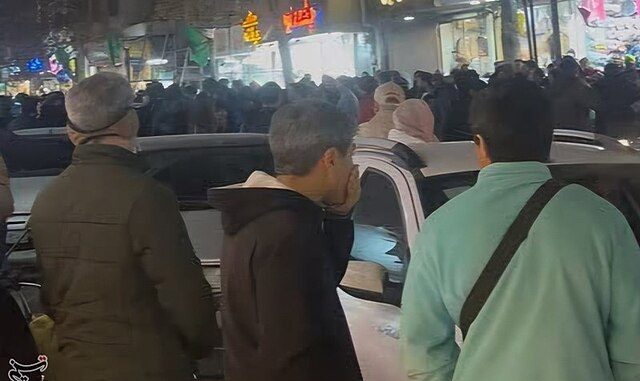
Iran has been rocked by a new series of nationwide protests which have now entered a second week.
Demonstrations began on 29 December as market traders and small business owners in Tehran closed down their shops in protest over inflation – which is currently around 50% – and the free-falling value of the rial. These actions have since become a lightning rod for accumulated anger against the Islamic Republic regime – a deeply reactionary theocracy – and the dire state of Iranian capitalism which it is attempting to manage. The protests have now spread to 78 cities, with students, civil rights groups and sections of workers taking part.
This is the latest in a series of protest waves in recent years, including the ‘Women, Life, Freedom’ movement in 2022 and a nationwide truckers’ strike in 2025, that began with protests against fuel price hikes at the end of 2017. This time, the government will no doubt remember the role played by the bazaaris – Iran’s market traders – in sparking the demonstrations and strikes that ultimately culminated in the overthrow of the Shah and the Iranian Revolution of 1979, as well as the role played by market traders in the more recent Arab Spring revolutions. Already, before these protests started, a number of strikes took place while pensioners were holding regular weekly protests.
Dissatisfaction with the regime has grown markedly in recent years. Turnout in the 2024 presidential elections was only 49% in the second round, compared to 73% in 2017. The present demonstrations all come off the back of a contradictory and unpopular budget presented to parliament in the week before the outbreak of protests. The budget proposes a 20% increase in wages while increasing taxes by 62%. President Pezeshkian himself summed up the impossible position of trying to manage an Iranian capitalism in deep crisis in a speech to parliament: “They tell me you’re taxing too much, and they’re saying you must increase wages. Well, somebody tell me, where do I get the money from?”
Whether the regime can weather this current round of unrest, it is certain that the theocracy will fall sooner or later. The question is always: what will replace it? The Western imperialist powers would no doubt like to see a ‘colour change’ – preserving capitalism while adopting a more pro-Western government. These illusions may also exist among certain layers in Iran, and there are reports of pro-monarchy slogans on some of the demonstrations – although it is difficult to judge how popular they are.
Fundamentally, there is no prospect of a sustained rise in living conditions under capitalism in Iran regardless of the specific character of the government. Any illusions in the restoration of the monarchy or Western-style liberal democracy will be shattered by reality, giving socialists the opportunity to argue for socialist policies and a workers’ government to implement them.
However, it need not even come to that: the potential is there right now for the Iranian working class to lead the way in the overthrow of both the theocracy and dead-end Iranian capitalism. Previous waves of demonstrations have seen the formation of struggle coordination committees; these could be revived and expanded to draw in broad layers of workers, providing a forum to discuss strategy, tactics, and draw up a common programme of demands and concrete actions. The working class, especially those sections organised in the semi-legal trade unions, must enter the movement en masse and take the lead.