
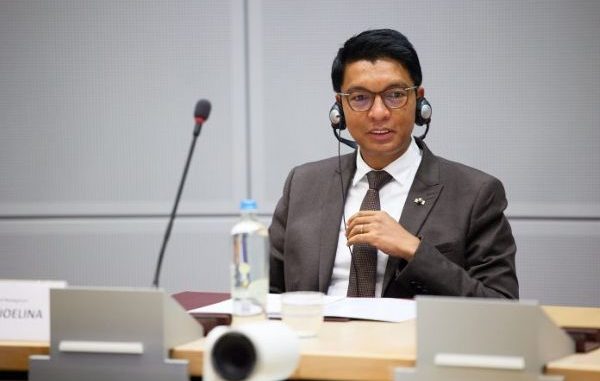
Madagascar has been rocked by waves of protests, the largest of their kind on the island in over 15 years.
Demonstrations began on 25 September, following the arrest on 19 September of two local politicians in the capital Antananarivo who had planned a protest over chronic power and water supply outages. Beyond the initial demands, the movement is now calling for the resignation of President Andry Rajoelina and action against corrupt judges and government officials. The movement has already forced Rajoelina to dissolve his government, but the demonstrations have continued with the demand for the president himself to resign.
Following similar recent movements in Nepal and Morocco, the demonstrations in Madagascar also have a youthful character. They have been coordinated through a group called Gen Z Mada, primarily on Facebook and TikTok. Gen Z Mada has now formed a steering committee to organise further protests. The makeup of this committee is not yet clear, complicated by the need for protesters to hide their identities in the face of increased state repression.
Several trade unions, including the country’s largest, Malagasy Trade Union Solidarity, have also come out in support of the movement. At the same time, capitalist figures such as former President Marc Ravalomanana and opposition leader Siteny Randrianasoloniaiko have also supported the demonstrators.
Madagascar is one of the poorest countries in the world, with 75% of people living below the poverty line (according to the World Bank) and only one third having access to electricity. Clearly, the youth of Madagascar are unwilling to accept these conditions any longer and are showing their willingness to struggle for a better future despite state repression. Already, 22 have been killed and over 100 more seriously injured.
If and when Rajoelina resigns, young people and workers will have to decide what kind of society they want to build and confront the question of how to get there. So far, the demands of the movement have focused on the resignation of Rajoelina and ‘cleaning up the system’. That system is capitalism! And it cannot be cleaned up; it must be put in the bin.
This is the urgent question confronting workers and youth in Madagascar, and all over the world. The trade unions should not just support the youth movement but came out alongside them and play a leading role in fighting for system change. Workers’ action – up to and including a general strike – would not only bring the Rajoelina government to its knees but also demonstrate with spectacular force who really runs society.
Also posed is moving from an ad hoc online movement to building a truly democratic mass party of workers and youth where tactics, strategy and programme can be discussed. Such a party must say no to the involvement of the capitalists and yes to a government of representatives of workers, the poor and oppressed! Only the workers and youth can build a socialist Madagascar and a socialist world, linking up with the working class of the region, Africa, and globally.