
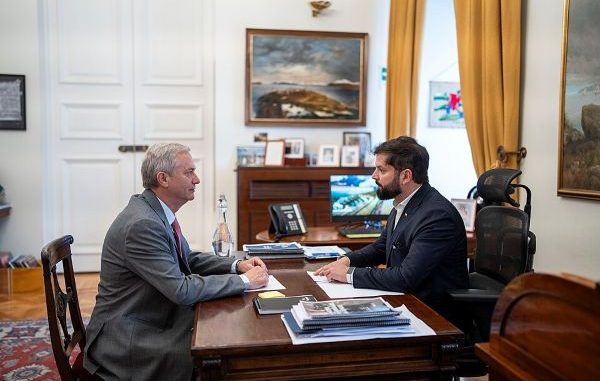
On Sunday, December 14, 2025, the second round of presidential elections was held in Chile. The government candidate, Jeannette Jara, suffered a crushing defeat at the hands of the far-right candidate, José Antonio Kast. Jara obtained 41.8% (5,192,708 votes) and the winning candidate, Kast, obtained 58.18% (7,225,021 votes). The far-right candidate almost beat the defeated candidate by almost 20 percentage points.
This was a defeat that could have been foretold months ago. What does this mean? Does it mean that Chile has a deeply right-wing population? There is a layer who support the right but the truth is, we must say, that the vote for Kast was not ideological at all. Much of that vote was a rejection of the current Boric government. This is a government which basically failed to fulfil any of its campaign promises. It failed to end the hated private pension funds (AFPs); allowed the country to continue bailing out the private health system (Isapres); failed to end the abuses of the private education system; and it has carried out brutal repression against the Mapuche people in a territory that has been militarily occupied throughout the current administration. These are just to mention a few of the most emblematic issues that the current government failed to address.
It is difficult to characterize Gabriel Boric’s government as “left-wing” in the social reformist sense, and much less anti-neoliberal or anti-capitalist. Boric’s government has been quite conservative, a neoliberal capitalist government, backed by a broad coalition ranging from the former Concertación coalition (Christian Democrat, Socialist Party, Party for Democracy, etc.) and the Broad Front (Frente Amplio) and the Communist Party. The most important ministries and undersecretariats within Boric’s administration are held by experienced politicians from the former Concertación. The progressive promises of Boric’s presidential campaign evaporated into thin air and were not fulfilled.
Austerity policies and cuts to social spending
Finance Minister Mario Marcel was the principal architect of fiscal policy during the current administration. A neoliberal economist with extensive experience, he has worked as a senior economist at the OECD, a consultant for the World Bank, the Inter-American Development Bank (IDB), and the IMF. He served as President of the Central Bank of Chile from 2007 to 2021. He is a figure who provides guarantees to the bourgeoisie and multinational corporations and is considered a “Fiscal Hawk,” meaning a staunch supporter of social spending cuts and austerity policies.
When Gabriel Boric assumed the presidency, the public deficit reached 7.7%; by the end of 2025, it is estimated to be at 2.3%. These figures demonstrate the magnitude of the cuts. This reflects a significant contraction in public spending, although it is also partly explained by favourable copper prices, Chile’s main economic activity, and increased tax revenue due to improved growth following the COVID-19 pandemic.
Although the austerity and adjustment policies were paramount, let’s look at other examples: Budgets were frozen and cuts in several ministries and public services were implemented. In practice, this meant a reduction in the State’s operational capacity.
Investment projects were also postponed: A number of public infrastructure projects not considered short-term priorities were delayed or re-evaluated to free up resources. Some subsidy and transfer programmes were reviewed and adjusted under the pretext of ensuring they reached the most vulnerable populations, which resulted in reduced coverage.
Emergency COVID-19 financing ended: Many of the massive subsidies and economic support implemented during the pandemic (such as IFE Bonds and pension fund withdrawals) were all terminated.
Conflict with the Mapuche nation
Under the current government, we have had the longest State of Emergency since the end of the Pinochet dictatorship. For virtually the entire duration of Boric’s administration, there has been a police and military occupation of Mapuche territory. The exception has become the rule, along with police abuses, repression, violent raids on communities, and arbitrary arrests, even of minors.
A Mapuche leader, Héctor Llaitul, leader of the Coordinadora Arauco Malleco (CAM), was sentenced to 23 years in prison for crimes under the State Security Law- a law dating back to the Chilean civil-military dictatorship. A Mapuche leader, Julia Chuñil, has been missing for over a year. She was president of her Mapuche community, a defender of her land, and an environmental activist. Miguel Angel Toledo, a former Carabineros captain, was found dead in his home on November 20th. He denounced organized timber theft, police frame-ups against the Mapuche people, and the participation of high-ranking officials in criminal networks.
Public safety
Although the victimization and actual crime rates are among the lowest in South America, the perception of insecurity is among the highest in the region and the world. All major media outlets are controlled by the right wing and the upper bourgeoisie, and especially the press and television news programmes, which provide extensive and repetitive coverage of violent crimes. This “over-exposure” creates the impression that crimes are much more frequent than they actually are. The Pinochet-era right wing encouraged and then exploited the population’s fear to stir up trouble and portray themselves as the only ones capable of ending this scourge.
Following countless human rights violations against protesters and detainees during the social uprising in 2019, and serious corruption cases that came to light among high-ranking officers—the so-called “Paco Gate” scandal that led to the dismissal of more than 30 high-ranking officials—the government had promised to reform the police. However, instead, a series of laws were passed that expanded impunity for the police and increased penalties for various crimes. As several international institutions have warned, under the new legislation passed during the Boric administration, it is highly likely that human rights violations will continue to occur, similar to those committed during the 2019 social uprising.
The housing shortage is getting worse every day.
Among other problems we have in Chile, housing prices have skyrocketed in recent decades, and young families cannot afford bank loans for housing or afford them. There is a housing shortage ranging from 400,000 to 1,800,000 units, depending on the criteria used. This primarily affects young people.
Traditionally, poor workers have resorted to occupying vacant land to establish their makeshift camps. The government has promoted new laws that allow for the faster removal of people from these camps through the use of force.
The government’s response to the proliferation of camps has been the approval of legislation from November 2023 onwards with the aim of combating illegal land seizures and protecting the “right to property”; these are laws that criminalize poverty and violate human rights.
International Relations of the “progressive” government
Gabriel Boric’s government has aligned itself with US foreign policy, especially in its condemnations of Cuba and Venezuela. On issues such as the TPP 11, the Trans-Pacific Partnership, which hands over national sovereignty to large multinational corporations, Boric allowed this to be approved in the Senate. This was despite the fact that he had personally opposed it in Congress. He could have prevented it’s approval by the Senate simply by not sending it to the Senate for approval.
These points are the focus of much of the discontent of the working population and partly explain the “protest vote” in favour of the far-right candidate.
Kast is not a ghost
Kast is clearly not an outsider as some suggest; he was one of the faces that supported the YES and NO plebiscite (of 1988), which backed the dictatorship, and then he was a deputy for 16 years in Parliament, where he opposed all laws that sought to improve the living conditions of the working class.
Kast is the son of a Nazi who fled to Chile to escape the trials being held in Germany after the end of World War II. This same individual played a role in the repression under the right-wing dictatorship and the armed forces in Chile (1973-1990). Kast’s father is mentioned as one of those who participated in the crimes and massacre of peasants in Paine, a well-known case in Chile. Kast, the current candidate, supported the dictatorship in Chile from a very young age and is a staunch Pinochet supporter. Although he was originally a member of the UDI (Independent Democratic Union), he later distanced himself from the party formed in 1983, under the dictatorship to support Pinochet, and founded his own party, the Republican Party, in 2019. This positioned itself even further to the right than the UDI itself. The Republicans are an ultra-right-wing party.
Workers voting for the far right
As in many countries around the world, sectors of the working class are voting for far-right parties, but this is not because they identify ideologically with the right wing; rather, it is a protest vote, a vote of anger against the current government, which has greatly disappointed them with the policies it has implemented against workers. And by the abandonment of all the radical promises made during the previous presidential campaign, when Boric was elected.
Jara has been a member of the Communist Party since she was 15, according to her own statements. Yet she also has openly stated said that she considers herself a “social democrat”. Officially, she is a member of the Communist Party, but she clearly defends neoliberal policies, as she did during her time as Minister of Labor under the current Boric government.
What’s happening with the unions?
Regarding the CUT (Central Unitaria de Trabajadores, the main Chilean trade union confederation), its top leaders are affiliated with the Communist Party and the Socialist Party. The current president of the CUT, José Manuel Díaz, is a member of the Socialist Party. The CUT is essentially an apparatus that answers to the political parties rather than to the workers themselves. In reality, the CUT doesn’t carry much real power. Many of the workers who are officially part of the CUT are likely voting for far-right candidates today, given their frustration with the union leadership and the government.
According to what is known within the Communist Party today there is a growing unease and some of its members did not feel very represented by the candidate Jeannette Jara; many of them do not share Jara’s position on Cuba or Venezuela, for example.
The rise of the far right
Clearly, the scales have tipped in favour of the far-right candidate, but this isn’t a vote of ideological support for Kast; rather, it’s a protest vote against the government of the “progressives and social democrats” and the Communist Party itself, which is also part of the government. What is certain, however, is that the next government will be unstable and prone to crisis.
What should be the main task of the revolutionary left?
Kast’s plan to make further cuts to social spending, shrink the state by eliminating some ministries, and lay off thousands of public sector workers will be met with a response from the working class in the coming period; we will inevitably see new struggles, and a new social explosion like the one we saw in October 2019 cannot be ruled out.
The main problem we revolutionary socialists have, the same one that exists practically all over the world, is the lack of a political alternative for the working class. Building such a party is the main task we have for the next period.
Under capitalism there is no possibility of improving the living conditions of the working class and the popular sectors; to achieve this, a simulation of democracy that we are invited to participate in every four years, only for everything to remain the same as before, is not enough.
We must put an end to the current system of injustices that is the capitalist system. To do this, it is necessary to build a political alternative of the working class, one that is capable of leading the workers towards the seizure of power, to build a workers’ democracy, a socialist democracy for the vast majority. This is diametrically opposed to the current democracy of the bosses, which is only designed for a small minority. We need to prepare for the battles and struggles that will eventually erupt under Kast’s new government.