
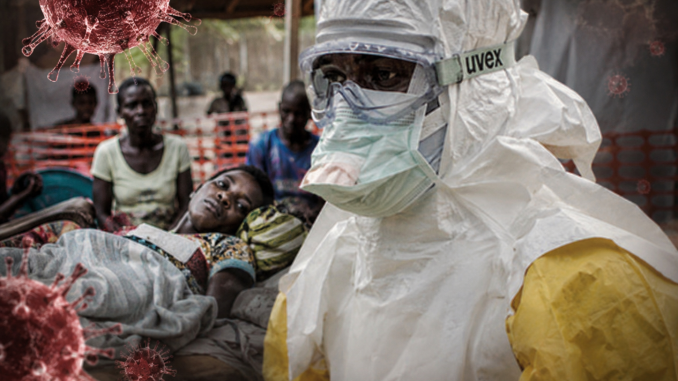
The latest outbreak of Ebola virus in the Democratic Republic of Congo (DRC) threatens poor miners, their families and health workers. Its consequences could spread far beyond DRC borders.
There have been 40 outbreaks since the virus was first identified 50 years ago, 17 of them in DRC. The most devastating started in West Africa. Between 2014 and 2016, 28,600 people were infected in ten countries and 11,325 died.
Yet DRC, Africa and the rest of the world remain woefully unprepared to prevent and treat Ebola. Instead, conditions are ripe for this outbreak to spread, causing more deaths and suffering.
The virus did not suddenly appear in 1976. It had long lived in bats, deep in the jungle where few people were exposed. For each 1% increase in deforestation in central Africa, malaria and Ebola cases rose by 20%-40% as mosquitoes, bats and humans came closer together.
A record 1.5 million acres of Congo basin rainforest were destroyed in 2024. Mineral mining is the major cause, to meet rising global demand for electronic components in tech products. DRC has an estimated $25 trillion of minerals underground, with China leading the race to corner the market and the US trying to catch up.
This outbreak emerged in Mongbwalu, a gold-mining town, doubled in population in twenty years. Many unregulated mines are sunk in the surrounding forest. Sanitation and health facilities are desperately undeveloped.
Ongoing war is aggravating the situation, with its roots stretching back to colonial exploitation. Rival elites are challenging for control of trade and smuggling routes, as the precious minerals move from mines into the global market. Fighting escalated in early 2025. A quarter of million people in the region have been forced from their homes, fleeing across borders into neighbouring countries. Some health workers have been killed by local militias.
Controlling Ebola outbreaks needs rapid identification of those infected, contact tracing and isolation with proper medical and nursing support. Despite fifty years’ experience, none of this was ready for a new outbreak. Preparations made in the past have been cut.
Stocks of gloves, masks and hospital gowns to protect health workers should have been held for just such an emergency. Health centres with electricity, clean water, sanitation and laboratory facilities should have been built and maintained. The nearest laboratory able to identify the virus is 1,000 miles away in Kinshasa.
“Weakened disease surveillance systems following severe health funding cuts in eastern DRC are contributing to the rapid escalation of the latest Ebola outbreak,” the International Rescue Committee said. “Years of underinvestment and recent funding cuts have left many health facilities without adequate protective equipment, surveillance capacity, or front-line support needed to respond quickly and safely.”
When Trump became US president in January 2025, he appointed Elon Musk to the ‘Department of Government Efficiency’. Wielding his chainsaw, Musk shut down USAID while Trump stopped paying into the World Health Organisation, a combined US aid cut of 57%. Ebola-preparation funding in DRC ended in March 2025.
US government funds were also cut from health programmes tackling malaria, tuberculosis, maternal and child health, nutrition, global health security, HIV/AIDS and more.
The US is not alone. Keir Stamer’s Labour cut overseas aid from 0.5% to 0.3% of GDP. Germany, France, Japan and other wealthy economies also made big cuts amounting to 23% in real terms of the world’s 2025 aid budget.
While much overseas aid is aimed at boosting big business in donor countries with profitable contracts, the current Ebola outbreak could have been prevented with investment in local facilities and staff, under democratic control of local communities.
The money is instead going into increased ‘defence’ spending as the US attempts to maintain its position as the global military super-power, while its economic dominance is threatened by China. Other major economies, including the UK, are also boosting their military spending, seeking to defend their own big business interests in an increasingly fractured world.
Viruses can’t be contained by national borders and they can’t be destroyed with missiles and drones. Defending people across the planet from disease, hunger and climate breakdown can’t be done by profit-hungry capitalism and governments that serve it.
Socialist governments that nationalised arms manufacturers could use the workers’ skills and machinery to supply clinics and laboratories, transport planes instead of fighter jets, air strips in remote areas instead of landmines. Democratically planning the world’s resources to meet everyone’s needs would end the threat of future mass Ebola outbreaks.
Infections would still occur, but publicly owned pharmaceutical industries could research and develop drugs to treat them. Pharmaceutical companies prioritising profits will never invest in treatments for tropical diseases whose victims are too poor to buy them.