
Paul Heron is a CWI supporter and lawyer, and a founder of the Public Interest Law Centre, in Britain. He has written on important case law and the workers’ movement, and the role of law under capitalism, for Socialist Party (CWI England & Wales) publications, and has spoken on Marxism and the law, including at the ‘Socialism 2025’ event in London.
In this article, Paul expands on these contributions.
socialistworld.net
Marxists have long rejected the liberal claim that law stands above society as a neutral system of rules. Instead, we understand that law is deeply embedded within the structures of class power that define capitalist society. It forms part of the wider machinery of the capitalist state. Yet Marxism has never treated law simply as irrelevant. Rather, Marxists approach law and the courts as a terrain of struggle.
Marxist Theories of Law: Marx, Lenin and the State
Marx did not produce a systematic theory of law, but his broader analysis of the capitalist state provides the framework for later Marxist interpretations. For Marx, law belongs to the superstructure of society, a set of institutions and ideas that arise from the underlying economic relations of production. Legal systems in capitalist societies thus protect private property, regulate labour relations and maintain social order in ways that protects the capitalist system.
Later Marxists extended this analysis to the capitalist state. Vladimir Lenin emphasised the coercive nature of state power, arguing that courts, police and bureaucracy form part of an apparatus that defends existing property relations, meaning legal institutions cannot be relied upon to deliver social transformation.
Lenin did not advocate abstention from legal struggle. Indeed, Lenin was trained and practiced as a lawyer for a short time. During the revolutionary movement in Russia, the Bolsheviks used courts, trials and legal proceedings as platforms to expose the nature of the oppressive Czarist regime and to mobilise support. Legal struggle, in this sense, was understood as subordinate to wider political struggle rather than a substitute for it. Yet Lenin cautioned the Bolsheviks from over-reliance of lawyers, in no uncertain terms:
“Lawyers should be kept well in hand and made to toe the line, for there is no telling what dirty tricks this intellectualist scum will be up to. They should be warned in advance…if you permit yourself the slightest impropriety or political opportunism…then I will pull you up publicly, right then and there, [and] call you a scoundrel.”
A Marxist Theory of Law
For Marxists when engaging in the legal process we must avoid rejecting it as just a reflection of ruling class interests. Legal systems do have a degree of autonomy.
Law does perform key ideological and institutional functions. Law legitimises social relations, manages conflict and provides frameworks through which capitalist economies operate.
Law has a central role in organising and stabilising capitalist societies. Legal rules regulate property, labour markets, political rights and administrative authority. They create the formal framework within which capitalism takes place.
However, law can also reflect concessions won by working class movements. Labour rights, welfare provisions and civil liberties often arise from periods in which social movements successfully shift the balance of political power, and within that context can succeed when using the law and legal processes.
We need a careful approach as Marxists when we engage with the law, legal process and the Courts. First, we reject the liberal idea that law is neutral and above politics. Second, we reject a crude approach that treats law as nothing more than the direct command of the ruling class. Instead, law and the courts must be seen as a contradictory terrain, it is shaped by both domination and struggle.
A transitional approach to law
The implications of this approach are significant. If the legal process can reflect the balance of class forces, then engaging with the law can form part of wider political struggle. Victories in courts or public inquiries may not fundamentally transform society, but they can expose injustices, win concessions and help movements organise.
Thus, using the courts can be understood as a transitional tactic in the precise Marxist sense. It is not a path to socialism, nor as a substitute for mass struggle, but for Marxists it can be a means of helping the working class overcome the gap that Trotsky identified between the ripeness of objective conditions and the political immaturity or disorganisation of the class. Court interventions, whether through criminal defence, public inquiries, judicial reviews, or strategic litigation, can expose the brutality of the state, the failures of capitalism, and the limits of bourgeois legality in ways that resonate with the immediate experiences and consciousness of wide layers of workers and oppressed communities.
Marxism and law – in practice – John Maclean and the First World War
John Maclean was arrested and prosecuted under wartime legislation for opposing the First World War. He had no illusions that the court represented a neutral arbiter; he explicitly denounced it as an instrument of class rule, declaring himself accountable not to the judiciary but to the working class. He firmly rejected the liberal conception of law as standing above politics. Yet, crucially, he did not treat the courtroom as irrelevant or withdraw from it. Instead, he used the formal space of the trial, its publicity, its ritual authority, its enforced attention, to articulate a revolutionary critique of capitalism, imperialist war, and the British state, declaring “I am not here, then, as the accused; I am here as the accuser of capitalism dripping with blood from head to foot.”
Socialism on Trial
In Socialism on Trial, James P. Cannon exemplifies a Marxist approach to the law. Cannon was prosecuted under the Smith Act following the Minneapolis Teamsters Trial. However, he used the courtroom, which sought to criminalise revolutionary politics, as a platform by using his cross-examination into political exposition, calmly explaining Marxism, class struggle, and the necessity of socialism to a broader audience beyond the judge and jury.
This approach reflected a strategic understanding of law as a site of struggle. Cannon did not appeal to the court and the judge; he explicitly rejected its legitimacy as a neutral forum. Instead, he used the platform to expose the political nature of the prosecution itself. For Marxists, Cannon’s approach illustrates that the courtroom becomes a stage on which the contradictions of bourgeois legality are made visible: a system claiming universal rights while prosecuting dissent. Cannon’s intervention shows that even repressive trials can be used to clarify political lines, build solidarity, and reach the wider working class, provided they are approached as moments of struggle rather than sites of justice.
The Dewey Commission
The Dewey Commission (officially the “Commission of Inquiry into the Charges Made Against Leon Trotsky in the Moscow Trials”) was convened in 1937 by American supporters of Trotsky to counter the show trials then sweeping the Soviet Union. Chaired by philosopher John Dewey, the commission systematically examined the charges against Leon Trotsky and functioned as a quasi-legal counter-tribunal. After reviewing evidence, the commission issued a finding that the Moscow Trials were prefabricated confessions extracted under torture. From a Marxist legal standpoint, the commission served as a political platform to expose the degeneration of Stalinism into arbitrary state terror.
Liverpool: A City that dared to Fight
A concrete example of a Marxist engagement with law can be found in the events described in Liverpool: A City That Dared to Fight by Peter Taaffe and Tony Mulhearn. During the 1980s, Liverpool City Council, led by socialists many of whom were supporters of Militant (forerunner of the Socialist Party, CWI England & Wales), confronted the austerity policies of the Thatcher government.
The council refused to implement severe cuts to public services and instead pursued a programme that included house building, job creation, protection and expansion of services. This confrontation quickly moved into the legal arena. The Thatcher Tory government used legal mechanisms, particularly the powers of the district auditor, to challenge the council’s actions.
Eventually dozens of councillors were surcharged and disqualified from office for delaying the setting of a ‘legal budget.’ The courts became a key instrument through which the state attempted to discipline the council and enforce fiscal control. From a Marxist perspective, this episode demonstrates how legal institutions can be mobilised to defend the priorities of the capitalist state.
However, the Liverpool struggle also illustrates another aspect of Marxist practice. The Court became a platform that Liverpool socialist councillors used to defend their political programme. This legal battle did not occur in isolation. They were accompanied by mass demonstrations, workplace mobilisation and community campaigns. Legal proceedings became platforms through which the political nature of austerity policies were exposed. The courts became a platform to explain the wider conflict and the limits of capitalism to provide housing, jobs and services.
The Poll Tax Campaign and Legal Resistance
Another example of Marxists engaging with law in practice occurred during the mass campaign against poll tax, in the late 1980s and early 1990s.
The poll tax represented a regressive taxation system that shifted the burden of local government funding onto individuals rather than property. Opposition quickly developed into one of the largest mass campaigns in modern British political history. Millions of people organised through Anti-Poll tax Unions refused to pay the tax, creating a situation in which the state could not effectively enforce compliance.
Legal proceedings played an important role in the conflict. Local authorities attempted to pursue non-payers through magistrates’ courts. In this situation Marxists did not stand back. We organised collective defence strategies. One notable feature was the use of ‘McKenzie Friends’ (McKenzie Friends are people who support individuals who represent themselves in court in England and Wales (known as litigants in person). Many comrades stood in the dock with those accused of non-payment and acted as a lay representative. Our comrades not only helped individuals navigate legal procedures, they challenged enforcement actions and delayed proceedings. The Court system became unworkable
This approach reflected a strategic understanding of law consistent with Marxist theory. The campaign did not rely on legal arguments alone. Its strength came from mass non-payment, demonstrations and community organisation. Yet legal tactics were used to compliment the movement. Courtrooms became arenas in which the legitimacy of the tax could be challenged and the scale of opposition made visible.
Ultimately, the mass campaign of non-payment made the poll tax the sole reason for not only its scrapping but forcing the resignation of Margaret Thatcher as Prime Minister. The episode demonstrates, alongside mass action, how legal engagement can complement broader social mobilisation.
Shrewsbury 24
The work of the Public Interest Law Centre in the ‘Shrewsbury 24’ case provides a contemporary example of the contradictory terrain shaped by both domination and struggle. The Shrewsbury 24 were 24 building workers and trade unionists, mainly from North Wales, who took part in lawful picketing during the first-ever national builders’ strike in September 1972. They were charged months later and prosecuted in a series of trials held at Shrewsbury Crown Court between 1973 and 1974.
On one level, the case of the Shrewsbury 24 starkly exposes the law’s function in class domination: the original prosecutions of Ricky Tomlinson, Des Warren Arthur Murray and other building workers emerged from a politically charged context in which the state sought to discipline militant trade unionism.
The eventual Court of Appeal decision, securing the quashing of convictions nearly 50 years later, rested on evidence of deliberate destruction of witness statements and non-disclosure. This rendered the trials fundamentally unfair. This confirms that the legal process were not neutral adjudications but were materially shaped by state and class interests. These, included policing practices and prosecutorial conduct aligned with a broader political objective to fire a warning short in the mid 1970’s against a rising worker militancy across Britain.
Our submission did concentrate solely on the destruction of evidence. Our appeal arguments also centred on the “Red Under the Bed”; a TV documentary shown on national TV in Britain. The documentary was produced with the assistance of the “secret state,” including the Information Research Department, and possibly wider government involvement, and was broadcast during the trial in a way that risked prejudicing the jury. Although the Court ultimately declined to quash the convictions on this ground, the argument itself exposed the permeability between state propaganda and criminal justice, reinforcing the political character of the original prosecution in the 1970’s.
From a Marxist perspective, the case of the Shrewsbury 24 miscarriage of justice case captures the dual character of law. The original trial can be read as part of a broader “Reds Under the Bed” moment, where anti-communist ideology and the state joined to suppress trade union militancy. This is what Ricky Tomlinson described as a “political trial… of the trade union movement.” Yet the later legal struggle shows how those same legal institutions can challenge, where new evidence, shifting standards of fairness, and sustained political pressure can produce reversals. The innocence of Tomlinson, Warren, Murray and others was not simply recognised by law; it was won through struggle within and against it, exemplifying the fact that law is neither neutral nor uniform, but a terrain where class power is exercised and, at times, successfully challenged.
Marxists and the Undercover Policing Inquiry
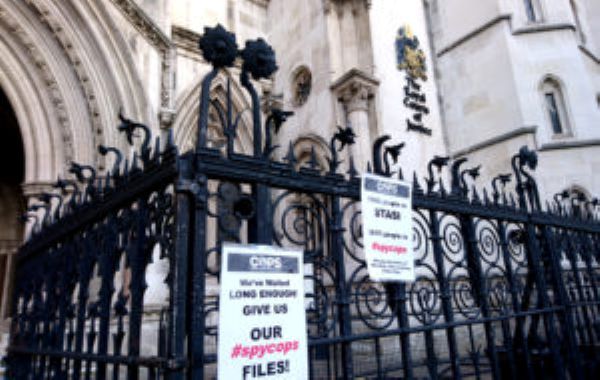
A more recent example of Marxists engaging with legal processes can be found in the work of our comrades involved in the Undercover Policing Inquiry. This public inquiry examines decades of covert undercover political policing operations in Britain
targeting political groups, trade unions and campaign organisations.
Statutory inquiries possess significant investigative powers. They can compel witnesses, demand disclosure of documents and take evidence under oath. It can reveal information that would otherwise remain hidden from public scrutiny. At the same time, inquiries also have significant limitations. They cannot impose criminal penalties or determine civil liability, and their recommendations are not binding.
From a Marxist perspective, public inquiries can therefore function both as mechanisms of exposure and as instruments through which the state manages political crises. They can generate public records of wrongdoing, but they can also limit accountability and delay justice.
Socialist activists participating in the inquiry, through campaign organisations and groups such as Youth Against Racism in Europe, have approached the process with this dual understanding. We have used legal representation and cross-examination to challenge police narratives, obtain disclosure and amplify the voices of those targeted by undercover policing. At the same time, the inquiry is treated as one element within a broader political campaign demanding accountability for state surveillance and repression.
This approach reflects a key principle of Marxist legal practice: engagement with law is part of the wider struggle, not instead of it.
Law as a Terrain of Struggle
Across these examples a consistent pattern emerges. Marxists recognise that law operates within structures designed to stabilise capitalist power. Courts, inquiries and legal procedures frequently function to contain political challenges and maintain existing social relations.
Yet Marxism does advocate withdrawing from legal arenas. Instead, it emphasises critical engagement. Legal struggles can expose injustices, create public records of wrongdoing and provide platforms for political argument. They can delay repressive measures, win partial victories and contribute to broader movements for social change.
Legal processes may help expose the failures of capitalism and reveal the limits of bourgeois legality to wider layers of society. The decisive factor, however, always remains the strength of movements outside the courtroom.
Conclusion
Marxist approaches to law combine theoretical critique with practical engagement.
The key lesson is not that law delivers justice, but that it is one terrain within a broader movement over power in society. Legal victories are often fragile and limited. They can expose injustice, win concessions and create space for movements to grow. But fundamentally the socialist transformation of society depends not on courts or inquiries, but on the collective organisation and revolutionary ambitions of the working class.