
The cynical attempt to manipulate the liberation aspirations of the masses in Iran in order to impose a new regime of repression, subservient to Washington’s dictates, has failed. The offensive has produced a catastrophe on a global scale. The showcase bombing in Beirut was intended to reinforce Netanyahu’s message of eternal war. Lacking the ability to dictate terms in Islamabad, Trump is threatening to renew the offensive and is imposing a blockade on Iran
The ceasefire in Iran, which came into effect on Wednesday (8 April), the 40th day of the offensive, was defined in advance as temporary — two weeks — for the purpose of direct negotiations in Pakistan between US and Iranian delegations. Trump has, so far, failed to secure a written framework agreement, and the regime in Tehran has not complied with Washington’s dictates to dismantle strategic assets. While the US administration threatens to renew the military assault and has begun taking steps toward imposing a naval blockade on Iran, Netanyahu’s government has simultaneously turned to a barbaric show-of-force attack in Lebanon.
Immediately after the ceasefire was announced, the Israeli Air Force attacked 100 targets across Lebanon within 10 minutes. More than 350 people were reported killed in one of the heaviest bombardments Beirut has experienced, particularly since the 1982 Lebanon War. The Pakistani government’s assurance that the ceasefire would also apply to Lebanon collapsed. The negotiations set to open on Tuesday in Washington between Israel and Lebanon, at a low diplomatic level, will not prevent the continuation of the assault at this point of time — let alone result in a full withdrawal of the Israeli army from Lebanon.
The show-of-force bombing in Beirut, which was one link in an incessant chain of massacres carried out by Netanyahu’s “government of death” as part of the military campaign since 7 October 2023, was clearly intended to reinforce Netanyahu’s statement: “This is not the end of the war, but a station on the way to achieving all the objectives”. The Chief of Staff of the Israeli military, Eyal Zamir, later echoed a similar message: “The Israeli army is in a state of war; we are not in a ceasefire. We continue to fight here [in Lebanon] in this arena — it is our main theatre of operations. In Iran we are in a ceasefire, and we can at any moment return to fighting there as well, and in a very powerful way”. After the conclusion of the round of talks in Islamabad, Zamir instructed the army to shift to a “heightened state of readiness”.
In the offensive on Iran, over 3,600 have been reportedly kille, so far, including at least 1,700 civilians, among them around 250 children. In Lebanon, the death toll since 2 March is estimated at over 2,000. Meanwhile, in Gaza and the West Bank, occupation forces continue their relentless murderous aggression against Palestinians. At the same time, because of the actions of Trump and Netanyahu, dozens of civilians have been killed in the Gulf and in Israel in the counter-offensive.
A strategic failure of the strongest imperialist power globally
The US–Israel’s offensive has shaken the fossil-fuel-dependent global economy, with a surge in energy prices and other commodities, and with restrictions in some countries on energy consumption. Trump dismissed claims about inflation, even as the pressure lever of closing the Strait of Hormuz pushed him toward a ceasefire. The International Monetary Fund (IMF) now estimates that in any scenario — even if the ceasefire stabilizes — the damage to living conditions globally resulting from the latest round of war will be long-term.
Trump claimed that the US military had supposedly achieved all the objectives set for it in Iran, and even beyond that, and boasted of ‘a total and complete victory, 100%, without any question at all’. But the typical Trumpian babble does not change facts. In reality, the offensive that was intended to serve as a display of power for the ability to impose political dictates through massive firepower was exposed as a dramatic strategic blow for the strongest imperialist power in the world. This is further testimony to the failure of Trumpism in its efforts to halt the weakening of US imperialism in the global balance of forces through assertive moves of military and economic bullying. The offensive on Iran — a global turning point, with an impact on the energy market, on supply chains, on geopolitical relations, and on mass consciousness — has provided yet another push to the process of weakening.
Washington’s weakness is being noted in Moscow and Beijing. According to US intelligence, the regime in Iran was assisted in the latest round with a new level of military supply from China. More assertive actions by Russia and China to strengthen the regime in Iran economically and militarily are attempts to exploit the limits of US power in a long-term drive to shift the regional balance of forces. More fundamentally, for Beijing the results of the offensive are also being factored into the construction of the balance of forces around Taiwan and in the South China Sea. Russian imperialism, meanwhile, benefits from the surge in energy prices, but also from Washington’s weakness in its ability to enforce its will in the war in Ukraine.
The US–Israel’s offensive on Iran did not achieve a single geo-strategic objective, despite degrading the military capabilities of the regime in Tehran in the short and medium term in a highly asymmetrical war. It was launched with hubris-laden fanfare, with blunt declarations of an intention to bring about regime change through military intervention. The regime survived. The cynical attempt to manoeuvre the Iranian masses’ aspirations for liberation from the oppressive theocratic regime in Tehran, and to subordinate them to imperialist ambitions to impose a new regime of exploitation and repression subservient to dictates from Washington, has failed.
“The Strait of Hormuz entanglement”
The turmoil in the ruling power structure triggered by the assassinations at the top, most likely strengthened the hardline wing of the regime in Iran, which is necessarily trying to improve its systemic preparedness for future rounds of confrontation by studying points of weakness, including in the military and economic infrastructure that was attacked. Even during the assault, reports said that the “Revolutionary Guards” (Pasdaran) had stepped into the power vacuum as an emergency measure, concentrated more control in their hands over the decision-making apparatus, and isolated the formal heir ruler, Mojtaba Khamenei, from security-related considerations. The regime is also exploiting the emergency conditions created by the external attack to stir up a mood of national unity, and to continue advancing murderous persecution against regime opponents, including executions.
The Iranian counter-offensive, with quiet support from Chinese and Russian imperialism, was at a military inferiority and could not beat its adversaries. But despite the strategic stalemate, which signals the potential for further rounds of confrontation, it is precisely the gaps in the military balance that turn Washington’s inability to impose its will into a picture of political defeat. In the US, Trump’s popularity is at its lowest point across his two presidential terms, social polarization is severe, and millions took part in protests at the end of last month, including expressions of opposition to the war.
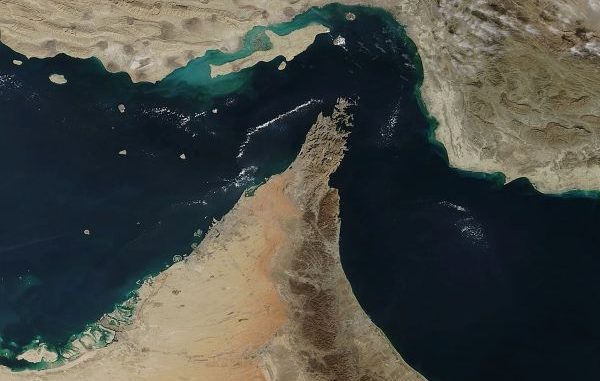
Though the strategists of the war machines in the US and Israel did assess in advance that the Strait of Hormuz — a major global chokepoint for the passage of oil and liquefied gas — might be blocked, they were light minded about the consequences and were stunned. They did not anticipate that the blockade, including the mining of the strait, would be carried out so quickly despite the assassinations of senior regime figures. After the ceasefire, it was revealed — after being authorized by the military censorship authority controlling the Israeli press — that the “Strait of Hormuz entanglement” had forced a retreat from objectives marked as strategic, such as seizing the stockpiles of uranium enriched to military grade, which remained in the hands of the regime in Tehran. The goal of stopping the ballistic missile project was also not achieved. The claim made in the previous round, in June 2025, that half of Iran’s launchers had been destroyed and the current war propaganda about the extensive destruction of launch capabilities, didn’t change the fact that up until the moment the ceasefire was announced — and even shortly after — launches toward the Arab Gulf states and toward the State of Israel did not stop.
Likewise, the “Axis of Resistance” alliance in the region, despite a decline in military capabilities, continued to operate in the latest round, especially with missile launches by Hezbollah and by the Houthi regime in Yemen, which remains in a position to block shipping routes in the Red Sea.
Stability of the ceasefire
Even if the ceasefire stabilizes relatively in the coming months, there is no certainty as to what a new arrangement regarding passage through the Strait of Hormuz will look like. Just as the “victory for generations” that Netanyahu swore to in June 2025 lasted only eight months, there is a concrete potential for another round of military confrontation — at a time when the regime in Tehran is preparing, with Chinese and Russian assistance, to rebuild its strength, including the restoration of its nuclear programme. It will aim for the improvement of its resilience under fire, and when not only Netanyahu, but broad circles within the ruling class in Israel, aspire over the long term to advance an imperialist regime change in Iran.
At this stage, the US–Israel offensive has resulted in the regime in Tehran gaining increased effective control over the strait, and it is now even promoting, in cooperation with Oman, the imposition of an unprecedented transit fee on vessels. Thus, ironically, because of the offensive, the regime in Tehran is counting on increasing its revenues to rebuild its power — thanks to rising oil prices, control over the stair, and the Trump administration’s temporary move to lift sanctions on the purchase of Iranian oil.
Trump was driven into near hysteria in the final days of the assault, lashing out at the European powers — especially Britain — for not joining the military adventure and not helping extricate him from the “Hormuz quagmire”: “You’ll have to start learning how to fight for yourself, the USA won’t be there to help you anymore, just like you weren’t there for us. Iran has been, essentially, decimated. The hard part is done. Go get your own oil!”. This bitterness has since been accompanied by renewed threats to dismantle NATO and to take over Greenland.
Since, in reality, the political regime in Iran continued, in essence, to function and to control the strait even under the bombing campaign, Trump escalated his rhetoric to exert pressure in the negotiations ahead of the ceasefire announcement, issuing an ultimatum — again rejected — to bomb power stations, risking even a radioactive leak for generations, and brandishing a genocidal threat: “A whole civilization will die tonight, never to be brought back again”. Is there a clearer statement than this illustrating that the Trump administration, and its partners in the Israeli government, are enemies of the Iranian masses and hostile to their aspirations for freedom?
Netanyahu in a weakened position
Netanyahu reportedly once again played with the idea of snap elections at the start of the offensive, only to find that despite the political backing he received from the Israeli establishment for his military actions, he is now in an even more weakened public position. The Netanyahu bloc is stagnating at around 51 seats (potentially equivalent to about 40% of the vote); only about 25% of the general public (Jews and Arab-Palestinians) believe that the US and Israel won the war; and according to 50%, Netanyahu performed “not well” in the war (Kan News, 9 April). In the northern districts, around 70% of the general public (Jews and Arab-Palestinians) gave the government a “poor” rating, and support for the governing parties has dropped from 34% in the 2022 elections (actual results) to 26% now (Channel 12 News, 10 April).
The establishment opposition and the establishment media in Israel, which mobilized to provide full backing for the imperialist offensive and helped Netanyahu build mass public support around the lies of security demagoguery — as if just a bit more slaughter and destruction in Iran would bring regional peace — have quickly flipped. They now criticize Netanyahu over the conduct of the war, its outcomes, and its consequences — of course without categorical opposition to the military aggression itself, while some are also trying to outflank him from the right. They are coming to terms with a geo-strategic failure for Israeli capitalism in the attack on Iran, as part of an ongoing geo-strategic entanglement in the war of annihilation in Gaza and the regional military campaign over the past two and a half years. They are also influenced by the renewed rise of mass frustration and anger at government policy that they themselves promoted.
The leader of the nationalist capitalist “opposition” in the Knesset, Yair Lapid, who on 1 March declared that his party was “giving full backing to the government”, decried a “strategic debacle”, “lies sold to the Americans”, and a “diplomatic disaster” stemming from the fact that Trump did not bother to include Israel in the negotiations. He concluded that “Netanyahu has turned us into a client state”.
Similarly, former general Yair Golan, chair of “The Democrats”, who on 24 February declared that “there is an opportunity that will not return to strike Iran”, expressed firm support for the attack and tweeted on 28 February that “the elimination of Khamenei is a dramatic and significant step”, describing it as proof of “intelligence superiority and impressive operational capability”, and promising the Iranian people that “a real opportunity for freedom has opened” — has sensed the shifting winds. On 8 April he declared ceremonially: “Eliminating Khamenei was a mistake and did not contribute to Israel’s security — not everything is solved by military force”.
The same Golan who, during the assault, praised raids by Israeli occupation forces in southern Lebanon with the chauvinistic and misleading claim that the move allows Israeli residents “to live in safety during wartime”, now warns against a long-term occupation in southern Lebanon: “To occupy Lebanon and sink into a Lebanese quagmire? To get entangled in guerrilla and terror fighting against a hostile population? We did that mistake for 18 years [1982–2000] — do we want to repeat it again? … The definition of disarming Hezbollah is unrealistic”. Golan’s party presents itself as a political alternative to the government, but in essence it is complicit in advancing an agenda of occupation and imperialist wars under the guise of security demagoguery.
Thousands took to the streets in protests last Saturday in several locations. There is now potential for a renewed expansion of the movement against Netanyahu’s government of death, against the imperialist offensive — including in Lebanon — and against the eternal war and all occupations. Translating this potential into the building of a force capable of halting the catastrophe led by Netanyahu and Trump, including a renewed attack on Iran, requires not only the continued development of determined protest and struggle, but also the advancement of a political alternative: a cross-community class-based, socialist left that promotes socialist change, as an answer to the entire agenda of the parties of war, occupation, and the rule of capital.