deutsch |  english |  español  |  français  |  italiano  |  nederlands  |  polski  |  português  |  svenska  |  türkçe  |  中文  |  عربي  |  русский

latest news

Taiwan
Sea shooting sees Filipino migrants become target of racist backlash

21/05/2013: Anti-racist campaign needed against corrupt ruling elites and capitalism

  Taiwan

Nigeria
President Jonathan declares state of emergency

21/05/2013: An expressway to attacks on democratic rights! For democratic mass working peoples’ defence committees!

  Nigeria

G8 Summit, Northern Ireland
’Why YOU should oppose the G8’

20/05/2013: This year’s G8 summit will be held in County Fermanagh, Northern Ireland, on 17th – 18th June. This gathering brings together the heads of government of eight of the world’s largest capitalist economies to discuss how they can further the interests of those they represent – the super-rich, big business and the bankers.

  Anti-globalisation, Ireland North

World economy
"Central banks are flying blind"

19/05/2013: Increasing concerns and contradictions

  World Economy

South Africa
Mass retrenchment threat in mining industry demands mass action

18/05/2013: Workers and Socialist Party calls for one-day-general strike

  South Africa

Iran
What would a Rafsanjani presidency mean?

18/05/2013: Iran’s June 14 presidential election takes place against the background of deep divisions in society and the regime.

  Iran

Australia
Labour approves WA’s first uranium mine

17/05/2013: Australia’s federal environment minister Tony Burke gave the go ahead to Toro’s $270 million uranium mining project in the Wiluna region of Western Australia.

  Australia, Environment

New Zealand
Racism and recession in New Zealand

15/05/2013: Working class unity needed to defend rights and living standards

  New Zealand

Australian budget
Say ‘NO’ to the cuts agenda of the major parties

14/05/2013: We shouldn’t let either of the major parties tell us that ‘tough decisions’ or ‘hard cuts’ are required.

  Australia

Ireland
‘Bus Eireann workers in front line of class war - We should all support them!’

13/05/2013: Bus workers take strike action over savage wage cuts and attacks on conditions

  Ireland Republic

Italy
The economic crisis becomes a political and institutional crisis

11/05/2013: The latest events that have happened in Italian politics mark a new phase of development in the crisis in the third European industrial power.

  Italy

Turkey / Kurdistan
PKK announces ceasefire

11/05/2013: On 8 May the PKK has begun to withdraw from Turkey. Millions are hoping now for an end to oppression and for democratic rights.

  Kurdistan, Turkey

Malaysia
Election ’victory’ based on fraud

10/05/2013: Ruling Barisan Nasional’s widespread fraud enrages opposition supporters and young people

  Malaysia

Greece
Challenging the Golden Dawn

10/05/2013: On 2 May the neo-fascist Golden Dawn attempted to distribute food in Syntagma square in Athens to people holding proof of Greek nationality.

  Greece

British county elections
Capitalist parties rejected

10/05/2013: Time for a new mass workers’ party

  Britain

Tunisia
The calm before the storm

09/05/2013: New clashes on the horizon

  Tunisia

Pakistan
General elections held amid political turmoil

08/05/2013: Big landlords, capitalists and influential families are calling the shots

  Pakistan

Sri Lanka
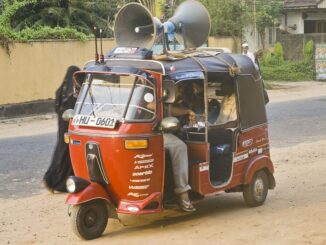
Successful May Day

08/05/2013: The United Socialist Party’s May Day demonstration passed successfully through a number of populous areas of Colombo, ending at Grand Pass Junction.

  May Day, Sri Lanka

Hong Kong
Dockworkers’ strike ends after 40 days

07/05/2013: Union representatives declare a “half success” with a pay rise of 9.8 percent – but important issues are unresolved

  Hong Kong

Britain’s ’precariat’
Fighting for real jobs

06/05/2013: ’Get a job!’ is the constant refrain of privileged Tory ministers and vicious right-wing tabloids. A million unemployed young people are the subject of a relentless campaign of smears and lies.

  Britain, Youth

Liverpool
Rally marks 30 year anniversary of election of socialist council

05/05/2013: Great event remembers the ’47’ struggle

  Britain, History

 Women and the struggle for socialism
It doesn’t have to be like this

05/05/2013: Christine Thomas’ book outlines how inequalities and discrimination against women have not disappeared and women’s struggles must be bound up with wider class struggle to be successful. Read the complete book online here.

  Women

Australian budget
Say ‘NO’ to the cuts agenda of the major parties

04/05/2013: Those who created the crisis should be forced to pay.

  Australia

 Nigerian May Day arrests
All DSM members released [updated]

03/05/2013: The last set of DSM members still in the detention of the state security service (SSS) in Kaduna, Northwest Nigeria, and Ibadan Oyo state, Southwest Nigeria, as of yesterday, has been released.

  May Day, Nigeria, Solidarity

 Pakistan
May Day 2013

03/05/2013: Progressive Workers Federation (PWF), TURCP and SMP organised and intervened in the May Day activities across the country

  May Day, Video

Bangladesh building collapse
Casualties of a rotten profit system

03/05/2013: It is said that where labour is cheap, life is cheap. This is never more so than in the recent horrific deaths of over 400 garment workers crushed in a collapsed building in Dhaka, the capital of Bangladesh.

  Bangladesh

Hong Kong
Dockers’ strike shines a spotlight on Li Ka-shing’s business empire

03/05/2013: Li Ka-shing owns 13 percent of the world’s port capacity and much more besides…

  Hong Kong

Taiwan
Over 20,000 march on May Day

02/05/2013: ‘Defend pensions! Stop corruption!’

  May Day, Taiwan

Pakistan
May Day demonstration in Sindh

02/05/2013: Photos of May Day demonstration in Sindh

  May Day, Pakistan

 Nigeria
Militarisation of May Day rallies

02/05/2013: DSM comrades arrested and detained

  May Day, Nigeria, Solidarity

Portugal
Constitutional court ruling sends government into disarray

01/05/2013: CC rules budget illegal for second time, government declares war against it

  Portugal

May Day Greetings

01/05/2013: The CWI sends revolutionary greetings and solidarity to workers, young people and all those exploited by capitalism.

  May Day

Europe
EU austerity budget – cuts, cuts, cuts

30/04/2013: Irish Presidency brought unprecedented levels of cuts to the EU budget.

  Europe

Cuba

50 years since the Revolution

www.socialistworld.net, 21/01/2009
website of the committee for a workers' international, CWI

End the sanctions! For workers’ democracy to defend and extend social gains!

Marcus Kollbrunner, Socialismo Revolucionário (CWI Brazil)

This month’s celebrations of the 50th anniversary of Cuba’s revolution take place against the background of a deep crisis of the world economy, which poses the question of an alternative to capitalism.

The conquests of Cuba’s revolution, like free, world class health and education systems, still stand out like a beacon in a continent where the havoc created by the neo-liberal onslaught has left the majority of the population in misery. But the future is still uncertain. Many are speculating on the possibility of Cuba following the ‘Chinese path’ and opening up for a restoration of capitalism, especially now that Fidel Castro is not playing the same central role.

The specific character of the Cuban Revolution

On New Years Day 1959, the hated dictator, Batista, fled from Cuba, two years after a small group headed by Fidel Castro and Che Guevara landed on the island and started a guerrilla war in the countryside. Their guerrilla force never had more than 3,000 fighters in its ranks, but the dictatorship was so rotten that this was enough to topple it.

The Cuban revolution is an example showing that capitalism can be overthrown even in a poor country, but also of the limitations imposed by isolation and the influence by Stalinism. Fidel Castro and others in the leadership of the ‘26th July Movement’ came from the Orthodox Party, a radical nationalistic movement, but there were also communists in this movement, like Fidel’s brother Raul, and Che Guevara. The program of the 26th July Movement did not go beyond demanding the end of the dictatorship and the implementation of democracy and social reforms, and did not call for the abolition of capitalism.

Fidel Castro’s plans for social reforms met immediate resistance from the US companies, which, at the time, totally dominated Cuba’s economy, and which refused to pay any taxes or share their wealth. The new government responded by nationalising US assets, which gave the government almost total control over the economy. The reply from the US government was to try to and topple the young regime and later to implement an embargo. To avoid isolation, Cuba sought support from the Soviet Union.

Soon the capitalist system was abolished in Cuba and the economy was being run under a plan. But, in contrast to the Russian Revolution, in 1917, the working class in Cuba did not play an independent and conscious role in the 1959 revolution. Instead, the new regime was moulded in the shape of the Stalinist system of bureaucratic control, sponsored by Moscow. Nevertheless, the Cuban regime always enjoyed popular support, thanks to the improvements implemented, in the teeth of the US blockade, under a planned economy, which gave a glimpse of what would be possible under socialism. Castro’s regime never took on the same level of repression as Stalin’s or Mao’s regime. Notwithstanding this, it is a top-down system, where only one party is allowed.

For a planned economy to function effectively, worker’s democratic control and management is required, but also the spread of the revolution to other countries, so an international division of labour can be established, that is not based on exploitation. The dead hand of bureaucracy upon the planned economy leads to mismanagement, waste and corruption.

Collapse of Stalinism

The collapse of Stalinism in the Soviet Union and Eastern Europe had a devastating effect on Cuba’s economy. The Eastern block stood for 80% of Cuba’s foreign trade and the aid from the Soviet Union was very important for its economy. Between 1990 and 1993, Cuba’s GDP fell by 34%. This imposed enormous sacrifices upon the population, with shortages of almost all consumer goods. Cuba was forced to shift its industrial base from sugar to tourism, with some opening to foreign investments.

Another measure was to introduce the use of the dollar, which was linked to the development of the tourist industry. This led to a big gap between those who had access to dollars, and thereby could go to the special dollar shops that stocked plenty of goods, and those who only had the state-regulated wages paid in pesos. Since then the private sector has grown. In 2006, 78% of the labour force was employed by the public sector, compared to 22% in the private sector. In 1981, the share of the employment in the public sector was 91.8 %, and just 8.2 % in the private sector.

Private companies were allowed mainly in the tourist industry, where 13 international companies are currently administrating 62 hotels on the island. But there has also been foreign investment in other sectors, like telecommunication and mining.

However, the capitalist system has not been restored, as in the Eastern Europe and Soviet Union. The state-owned planned economy still dominates. This has meant that the important social conquests in the education and health sectors could be maintained. It is not difficult to see the effects of this for the population. In Russia, after the break-up of the Soviet Union and the restoration of capitalism in the 1990s, life expectancy dropped to 56 years, 20 years lower than in Cuba.

The Cuban economy partially recovered in recent years. The supply of cheap oil from Venezuela, in exchange for thousands of Cuban doctors that operate in Venezuela, the growth of tourism and a growth in trade with the rest of the world, have played an important role. The income from Cuban doctors abroad, not only in Venezuela, is the most important source of foreign currency, and the country also has a growing bio-tech industry. The pace of market reforms has slowed down and, in some cases, has been reversed. In 2004, the dollar was banned from the internal market, but it was replaced by the "convertible peso". Fidel Castro’s role in this period has been to hold back pro-market reforms, while Raúl Castro is widely regarded as more open to the market. Fidel Castro’s serious illness, in 2006, when Raúl took over the helm, triggered a lot of speculation about what will happen when Castro dies.

Clearly, there is a layer within the ruling bureaucracy that is attracted to the so-called ‘Chinese path’, where pro-market reforms are combined with a continued grip on power by the communist party.

When Raúl Castro formally took charge of the presidency in February, last year, he talked of the need to abolish unnecessary regulations, to more ‘private initiatives’ in agriculture, and to implement wage differentials. In March 2008, the sale of DVD-players, mobile phones, and computers were ‘liberalised’.

Low productivity

A problem for the Cuban economy is the low productivity within the agricultural sector. Half of arable land, all owned by the state, is idle. So, an island that could be self-sufficient in food is forced to import 60-80% of the food it consumes. Raúl has said that private farmers will be given the right to use plots of state land, to stimulate food production.

Raúl also announced that he will cut the huge bureaucratic apparatus, even its privileges. Official international travel will be cut by half and holiday benefits to party officials will be cut. But social benefits for the population will also be cut. On 27 December 2008, the Cuban parliament approved a pension reform that raises the retirement age by five years, to 60 years for women and 65 years for men. In the same session of the parliament, Raúl announced that in January 2009 the proposed new wage system will be presented. Wage differentials will be increased, by connecting wages to productivity.

The 6th congress of the Communist Party is planned to be held this year. Raúl wants the congress to discuss "structural changes". The sum of all these changes will be a growing economic divide within Cuban society, which risks tearing apart the current social cohesion. There is pressure, especially within the younger generation, to abolish bureaucratic rules and open up society. 73% of Cuba’s population was born after the revolution and do not have the same emotional attachment to the revolution and the regime.

Raúl Castro has encouraged more open debates, even if he is not considering abandoning one-party rule. In the beginning of 2008 there was a debate in one of Cuba’s universities between the speaker of the parliament, Ricardo Alarcón, and students. A video of the debate was spread on the internet. One of the students asked:

"Why do the retail trade in the whole country use the convertible peso, when our workers and peasants are paid in the ordinary peso that is worth 25 times less? You need three days to earn enough to buy a toothbrush."

The student also questioned why travels are restricted, as he would like to be able to visit the place where Che Guevara was killed. The question is whether this sort of criticism will be used by a pro-capitalist wing of the bureaucracy for its own ends or if a coherent socialist left can be built in Cuba.

New economic problems

Last year, Cuba suffered the devastation of three hurricanes. The damage totalled almost US$10 billion, equivalent to 20% of GDP. More than half a million homes were destroyed or damaged, and many crops were destroyed. According to Raúl Castro, it will take 3-6 years for the country to overcome this.

The whole economy grew considerably slower during 2008, with a GDP growth of 4.3 %, compared to the targeted 8%, and with growth of 7.5 % during 2007. Besides the effects from the hurricanes, the country suffered from an increase in food prices, at the same time as the price of its main export commodity, nickel, dropped sharply. This led to an increase of 70% in its trade deficit.

The international economic crisis has also led to lower investments by foreign companies. The Canadian mining company, Sherritt International, decided to postpone investments on increased capacity in the extraction of nickel. Telecom Italia has announced it will sell its stake in Cuba’s telecom company, Etecsa. Only the tourist sector managed to remain strong, breaking a new record in 2008, with 2.35 million visitors. Cuba has got cheap oil from Venezuela, but the sharp fall in oil prices will make it harder for Venezuela to be as generous in the coming period.

New hope with Obama?

Pressure is growing on the new US president to drop the embargo against Cuba that has been in place since 1962. In June, last year, the EU lifted its political sanctions against Cuba, implemented in 2003, in spite of US protests. Cuba has also been more integrated into the different Latin American governmental institutions. During the summit of Latin American presidents in Brazil in the middle of December, there were new demands that the US must end the blockade. Evo Morales, president of Bolivia, even proposed that all countries should threaten to cut diplomatic relations with the US if Obama does not end the sanctions before the summit of the OAS (Organization of American States) in April. Cuba was also let into the Rio Group (organisation of Latin American and Caribbean states created in 1986 as an alternative body to the Organization of American States dominated by the United States).

The UN General Assembly voted in October for the 17th year in a row for a resolution urging the US to drop the sanctions. Only Israel and Palau voted against, together with US, while 185 countries voted in favour.

The support for the sanctions in the US is also diminishing, especially amongst the second generation of Cuban-Americans. According to a recent opinion poll by the Institute for Public Opinion Research of Florida International University, 55% of Cuban-Americans are now against the embargo. 66% are in favour of lifting the restrictions on travel to Cuba, and 65% are against the limit on remittances to families in Cuba. 23% believe the embargo is functioning poorly, while 56% thinks its not functioning at all.

The BBC spoke to Carlos Saladrigas, a 60-year-old Cuban-Amercian from Miami. He voted Republican all his life but at the last US presidential election opted for Obama.

"You don’t have to be very smart to figure out that after 50 years of trying something that hasn’t worked, maybe it’s time to try something new", he says.

He thinks that a better way to change Cuba is by allowing Cuban-Americans to visit the island acting as "agents of change".

Obama said during the election campaign that he will abolish the tougher restrictions implemented by Bush in 2004, when the number of visits to Cuba was limited to once every three years (compared to once a year before this). Bush also reduced the amount of remittances visitors could take with them to Cuba from $3,000 to $300. Many US companies would like to establish themselves in Cuba and follow the example of Canada, which has become Cuba’s main trading partner. Many pro-capitalist strategists also understand that a more effective way to get Cuba on the capitalist road is to flood the country with cheap goods, while the sanctions, if anything, helped sustain support for the Cuban regime.

Socialists call for an immediate end to the sanctions, without any conditions attached. The future of the Cuban revolution is closely linked to the struggle for socialism in the whole of Latin America. A restoration of capitalism in Cuba would be a catastrophe for the population of the island and also for the left and the working class and land poor across Latin America. At the same time, the coming to power of a socialist regime in other countries on the continent would open the way for a socialist federation of Latin America that would be decisive for safeguarding the conquests of the Cuban Revolution.

Two choices

There are two choices facing Cuba; a return back to capitalism, with all the horrific consequences that would mean or to real and genuine workers’ democracy. The reality of what capitalism would mean for Cuba is seen in the social collapse of the former Stalinist regimes of Eastern Europe and the Soviet Union in the 1990s. Now, after some brief years of economic respite, these countries are in recession tailspin, with growing unemployment, poverty and social degradation. Mass protests against pro-capitalist governments are taking place throughout the Baltic States and Eastern Europe. For the former Stalinist states, capitalist restoration has failed terribly and spectacularly.

Workers� democracy in Cuba would see a regeneration of the revolution which would become a beacon for the oppressed masses, everywhere. This would mean the ending of the one-party monopoly, fair elections to genuine workers� councils, including the right of Trotskyists to stand in elections, strict control over incomes, and with the right of recall over all elected officials. If such measures were introduced, this would mark a turning point, not just for Cuba, but for revolutionary struggle everywhere.


Europe

 video

Pakistan: May Day 2013, 03/05/2013

 further videos

CWI - get involved


solidarity

tamil solidarity campaign kazakhstan

featured links

Paul Murphy, MEP

cwi links

Marxist.net, CWI marxist archive

cwi comment & analysis

world economic crisis

analysis and commentary


cwi publications

marxism in today's world che

Che Guevara: Símbolo de Lucha

Por Tony Saunois

A socialist world is possible, the history of the cwi with new introduction by Peter Planning green growth, a contribution to the debate on enviromental sustainability

NEWS

Taiwan: Sea shooting sees Filipino migrants become target of racist backlash
21/05/2013, Chris Dite and CWI Taiwan reporters, article from Chinaworker.info:
Anti-racist campaign needed against corrupt ruling elites and capitalism

G8 Summit, Northern Ireland:’Why YOU should oppose the G8’
20/05/2013, Socialist Party, Northern Ireland (CWI Ireland):
This year’s G8 summit will be held in County Fermanagh, Northern Ireland, on 17th – 18th June. This gathering brings together the heads of government of eight of the world’s largest capitalist economies to discuss how they can further the interests of those they represent – the super-rich, big business and the bankers.

South Africa: Mass retrenchment threat in mining industry demands mass action
18/05/2013, DSM (CWI South Africa) reporters:
Workers and Socialist Party calls for one-day-general strike

Iran: What would a Rafsanjani presidency mean?
18/05/2013, Kave Heydari, Iranian CWI supporter in Britain:
Iran’s June 14 presidential election takes place against the background of deep divisions in society and the regime.

Australia: Labour approves WA’s first uranium mine
17/05/2013, Socialist Party (CWI Australia) reporters Perth:
Australia’s federal environment minister Tony Burke gave the go ahead to Toro’s $270 million uranium mining project in the Wiluna region of Western Australia.

New Zealand: Racism and recession in New Zealand
15/05/2013, Jared Phillips, CWI New Zealand:
Working class unity needed to defend rights and living standards

Australian budget: Say ‘NO’ to the cuts agenda of the major parties
14/05/2013, Editorial comment from ‘The Socialist’, paper of the Socialist Party (CWI Australia):
We shouldn’t let either of the major parties tell us that ‘tough decisions’ or ‘hard cuts’ are required.

Ireland: ‘Bus Eireann workers in front line of class war - We should all support them!’
13/05/2013, Socialist Party (CWI Ireland) Reporters:
Bus workers take strike action over savage wage cuts and attacks on conditions

May Day in Nigeria: Jonathan government intensifies attacks on democratic rights
12/05/2013, Ebike Iseru, DSM (CWI Nigeria):
15 DSM members arrested at May Day rallies

Italy: The economic crisis becomes a political and institutional crisis
11/05/2013, Marco Veruggio, ControCorrente (CWI Italy):
The latest events that have happened in Italian politics mark a new phase of development in the crisis in the third European industrial power.

Malaysia: Election ’victory’ based on fraud
10/05/2013, Ravichandren, CWI Malaysia:
Ruling Barisan Nasional’s widespread fraud enrages opposition supporters and young people

Greece: Challenging the Golden Dawn
10/05/2013, Katerina Kleitsa , Xekinima (CWI Greece):
On 2 May the neo-fascist Golden Dawn attempted to distribute food in Syntagma square in Athens to people holding proof of Greek nationality.

British county elections: Capitalist parties rejected
10/05/2013, Editorial of the Socialist, paper of the Socialist Party (CWI England & Wales):
Time for a new mass workers’ party

Tunisia: The calm before the storm
09/05/2013, CWI reporter in Tunis:
New clashes on the horizon

Pakistan: General elections held amid political turmoil
08/05/2013, Khalid Bhatti, SMP (CWI Pakistan), Lahore:
Big landlords, capitalists and influential families are calling the shots

Sri Lanka: Successful May Day
08/05/2013, USP(CWI, Sri Lanka):
The United Socialist Party’s May Day demonstration passed successfully through a number of populous areas of Colombo, ending at Grand Pass Junction.

Hong Kong: Dockworkers’ strike ends after 40 days
07/05/2013, Vincent Kolo, chinaworker.info:
Union representatives declare a “half success” with a pay rise of 9.8 percent – but important issues are unresolved

Britain’s ’precariat’: Fighting for real jobs
06/05/2013, Claire Laker-Mansfield, Socialist Party (CWI England & Wales), first published in The Socialist:
’Get a job!’ is the constant refrain of privileged Tory ministers and vicious right-wing tabloids. A million unemployed young people are the subject of a relentless campaign of smears and lies.

Liverpool: Rally marks 30 year anniversary of election of socialist council
05/05/2013, Dave Walsh, Unite Convener for Liverpool City Council, from The Socialist, paper of the Socialist Party (CWI England & Wales):
Great event remembers the ’47’ struggle

Australian budget: Say ‘NO’ to the cuts agenda of the major parties
04/05/2013, Editorial comment from the May 2013 edition of ‘The Socialist’, paper of the Socialist Party (CWI Australia):
Those who created the crisis should be forced to pay.

Nigerian May Day arrests: All DSM members released [updated]
03/05/2013, Press statement by Segun Sango, general secretary DSM (CWI Nigeria):
The last set of DSM members still in the detention of the state security service (SSS) in Kaduna, Northwest Nigeria, and Ibadan Oyo state, Southwest Nigeria, as of yesterday, has been released.

Pakistan: May Day 2013
03/05/2013, Syed Fazal Abass Shah, secretary general PWF, Pakistan:
Progressive Workers Federation (PWF), TURCP and SMP organised and intervened in the May Day activities across the country

Bangladesh building collapse: Casualties of a rotten profit system
03/05/2013, The Socialist, paper of the Socialist Party (CWI England & Wales):
It is said that where labour is cheap, life is cheap. This is never more so than in the recent horrific deaths of over 400 garment workers crushed in a collapsed building in Dhaka, the capital of Bangladesh.

Hong Kong: Dockers’ strike shines a spotlight on Li Ka-shing’s business empire
03/05/2013, Dikang, Socialist Action (CWI supporters in Hong Kong):
Li Ka-shing owns 13 percent of the world’s port capacity and much more besides…

Taiwan: Over 20,000 march on May Day
02/05/2013, Chris Dite in Taipei, chinaworker.info:
‘Defend pensions! Stop corruption!’

Pakistan: May Day demonstration in Sindh
02/05/2013, SMP (CWI Pakistan), Sindh:
Photos of May Day demonstration in Sindh

CWI Comment and Analysis

ANALYSIS

Nigeria: President Jonathan declares state of emergency
21/05/2013, Segun Sango, Protem National Chairperson, Socialist Party of Nigeria:
An expressway to attacks on democratic rights! For democratic mass working peoples’ defence committees!

World economy: "Central banks are flying blind"
19/05/2013, Per-Åke Westerlund, from Offensiv, newspaper of Rättvisepartiet Socialisterna (CWI Sweden):
Increasing concerns and contradictions

Turkey / Kurdistan: PKK announces ceasefire
11/05/2013, Festus Okay, Sosyalist Alternatif (CWI Turkey):
On 8 May the PKK has begun to withdraw from Turkey. Millions are hoping now for an end to oppression and for democratic rights.

Women and the struggle for socialism: It doesn’t have to be like this
05/05/2013, Christine Thomas, Controcorrente (CWI Italy):
Christine Thomas’ book outlines how inequalities and discrimination against women have not disappeared and women’s struggles must be bound up with wider class struggle to be successful. Read the complete book online here.

Cyprus: On the edge of a catastrophic slump
25/04/2013, Niall Mulholland, CWI:
Socialist polices needed to resolve crisis in the interests of majority

US: After the Boston Tragedy
23/04/2013, Bryan Koulouris, Boston, Socialist Alternative (CWI supporters in the US):
NO to Racism and Repression

Britain: Combating violence against women
14/04/2013, Hannah Sell, on behalf of the Socialist Party (CWI England & Wales) Executive Committee:
A socialist perspective on fighting women’s oppression

Thatcher: A class warrior for capitalism
12/04/2013, Alistair Tice, Socialist Party regional secretary, Yorkshire:
Millions have been waiting for this day, 8 April 2013. Margaret Thatcher will never be forgiven for the devastation that her Tory governments’ policies wrought on working class communities in the 1980s - and is still being felt today.

Britain: Margaret Thatcher dies
08/04/2013, Peter Taaffe, Socialist Party (CWI England & Wales) general secretary:
Thatcher’s bitter legacy

Britain: A further round of savage austerity
08/04/2013, Peter Taaffe, Socialist Party (CWI England & Wales) general secretary:
We must stop them!

Israel: “There is a future” – of cuts, racism and resistance
05/04/2013, Socialist Struggle Movement (CWI Israel/Palestine):
Weak Israeli government will try to implement austerity budget, and would try to maintain the occupation, possibly under a new cover of "negotiations" with Palestinians. Resistance likely on all fronts.

Cyprus: “Working people pay high price for crisis of euro and capitalism”
31/03/2013, Niall Mulholland spoke with Athina Kariati from New Internationalist Left (CWI in Cyprus) about Cyprus’s deal with the Troika, what it will mean for working people and what is the socialist solution to the crisis:
Interview with a Cypriot socialist

China: New leadership rejects democratisation
28/03/2013, Vincent Kolo, chinaworker.info:
At annual NPC-CPPCC meetings Xi Jinping and Li Keqiang talk of ‘tough reforms’ for economy, but rule out ‘Western models’

Venezuela: After the death of Hugo Chávez
24/03/2013, Tony Saunois, CWI, a shorter version of this article was first published in Socialism Today, magazine of the Socialist Party (CWI England & Wales:
Radical, populist policies and anti-imperialism helped transform the political situation

Italy’s clowns: No joke for establishment parties
23/03/2013, Christine Thomas, ControCorrente (CWI in Italy), first published in Socialism Today, magazine of the Socialist Party (CWI England & Wales):
In his ‘tsunami’ election tour Grillo began to give voice to the deep discontent at economic crisis and austerity

Cyprus/EU: Eurozone back in turmoil
22/03/2013, Tony Saunois, CWI:
No trust in capitalist government! No austerity for the Euro! Kick out the Troika! For a socialist alternative!
[Updated article, 25 March]

South Africa: Workers & Socialist Party launched in Pretoria
21/03/2013, CWI reporters, South Africa:
Launch surpassed all expectations

Iraq: Ten years since ‘shock and awe’
20/03/2013, Niall Mulholland, from The Socialist, weekly newspaper of the Socialist Party (CWI England and Wales):
Imperialism’s harvest of death and destruction

March 8th: The day of international working women’s solidarity
07/03/2013, Clare Doyle, CWI:
Beware the anger of women against the bosses’ system!

Hugo Chavez dies: The struggle continues
06/03/2013, Tony Saunois, CWI Secretary:
Millions of Venezuelan workers, the poor and youth will mourn the death of Venezuelan president, Hugo Chavez

Lebanon: Public sector workers on indefinite strike over wages
04/03/2013, Tamer Mahdi, CWI:
Workers’ unity against big business shows potential for anti-sectarian, socialist alternative

Portugal: New explosion against austerity and the government
03/03/2013, socialistworld.net:
“Screw the Troika – the people are the best rulers”

Tunisia: ‘Buckshot’ Ali Larayedh appointed prime minister
27/02/2013, CWI supporters in Tunisia:
Down with the Ennahdha regime! Down with the system!

Italy: Voters reject austerity in ‘tsunami’ election
27/02/2013, Chris Thomas, Controcorrente (CWI in Italy):
Political instability, crisis and new opportunities ahead