
deutsch |  english |  español  |  français  |  italiano  |  nederlands  |  polski  |  português  |  svenska  |  türkçe  |  中文  |  عربي  |  русский

latest news

 Ireland
Joe Higgins addresses packed anti-household tax meeting

04/02/2012: Joe Higgins argues in Cork, 26 January, to resist the household tax: "Yes, we have a choice!"

  Ireland North, Video

Belgium
January 30 General Strike

03/02/2012: A strike corresponding to the level of anger over austerity programme

  Belgium

EU summit
No capitalist solutions to the spiralling eurozone crisis

03/02/2012: The capitalist classes of Europe are all adopting the same policy of attempting to make the working class pay for the capitalist economic crisis.

  Europe

 Nigeria
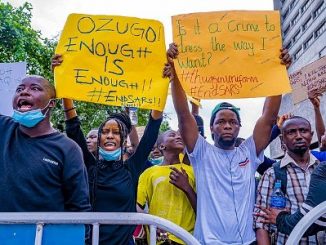
Story of the great general strike

02/02/2012: A socialist view on recent showdown between government and people

  Nigeria, Video

Italy
Dozens of No TAV activists arrested

01/02/2012: The repression will not stop the movement!

  Italy

Socialism
Answering Common Questions

31/01/2012: Frequently asked questions

Kazakhstan
Free Vadim Kuramshin!

31/01/2012: Urgent solidarity needed

  Kazakhstan

Kazakhstan
‘Labour Start’ editor makes outrageous claims against oil workers and CWI

31/01/2012: Worldwide solidarity campaign means the Kazakhstan regime can no longer deny 16 December massacre

  Kazakhstan

Tunisia
“The mass of people continue to struggle”

31/01/2012: Interview with two Tunisian socialists, one year after the fall of Ben Ali

  Tunisia

US
For an independent Left challenge in Presidential elections

30/01/2012: Fight Against Corporate Politics

  US

 US
Capitalist crisis and the occupy movement

30/01/2012: Bryan Koulouris explains how the USA is being transformed by the occupy movements which have arisen in anger at the growing inequality between the 1% and the 99% in the United States

  US, Video

Climate change
Dithering in Durban

30/01/2012: Once again, a United Nations-sponsored climate change conference has completely failed to address the issue of global warming.

  Environment

Cyprus
Partial general strike paralyses public sector

29/01/2012: December’s industrial action against austerity just the beginning of the fight-back!

  Cyprus

Asia
Feeling the coming storm

29/01/2012: Whole continent on the verge of major social convulsions and political shocks

  Asia, CWI Comment And Analysis

Latin America
No escape from world crisis

28/01/2012: The illusory appearance of a peculiar isolation from the international picture of stagnation, recession and economic crisis is fragile - a new period of turbulent class conflict lays ahead

  CWI Comment And Analysis, Latin America

China
“I was arrested by China’s Secret Police”.

27/01/2012: CWI’s Zhang Shujie speaks out at hearing in Sweden’s parliament

  China

Egypt
Huge crowds in Tahrir Square mark revolution anniversary

26/01/2012: Masses in Cairo and other cities demand end to military rule

  Egypt

China
‘Long Hair’ to attend Stockholm hearing on state repression

26/01/2012: LSD legislator from Hong Kong to speak in support of young socialist Zhang Shujie, forced to flee China

  China

 CWI International Meeting
Illusion of stability in Latin America

25/01/2012: Contradictions and new struggles define situation in region

  CWI, Latin America

Brazil
In defence of Pinheirinho inhabitants!

25/01/2012: 3 year old child killed in fatal repression

  Brazil

Kazakhstan
New wave of arrests against opposition

25/01/2012: Release Vadim Kuramshin and all those arrested – End harassment of opposition activists!

  Kazakhstan

 Kazakhstan
After the Zhanaozen clampdown

25/01/2012: 16 December underlined the need for the workers’ movement to link economic demands to the struggle to bring down the regime

  Kazakhstan, Video

USA
Mobilize to Support Longshore Workers

24/01/2012: Key Battle for the Labour and Occupy Movements

  US

 CWI International Meeting
World capitalism in crisis

22/01/2012: As world economy worsens, inter-imperialist relations intensify

  CWI, CWI Comment And Analysis

Britain
Stephen Lawrence murder – The untold story

21/01/2012: How socialists and the local community fought back against racism and the BNP

  Britain

Scotland
ConDem government blunders independence referendum

20/01/2012: Scottish National Party’s version of indepdendence a nightmare for workers

  Scotland

Egypt
A year of revolution and counter-revolution

18/01/2012: As economic crisis worsens, new class conflicts loom

  Egypt

Nigeria
Widespread disapointment and anger as labour suspends strike

17/01/2012: Struggle forces Jonathan back a bit, but could have won far more with a more resolute leadership - We Condemn Repression by Police and Army

  Nigeria

World economy
The year of all risks

15/01/2012: On the brink of a new downturn

  World Economy

Britain
Pensions battle continues

15/01/2012: Public sector union left group organises open conference to keep up the fight

  Britain

Iran
New imperialist war clouds

13/01/2012: Tensions increase with sanctions and navy exercises

  Iran

 Ireland
Workers occupy against redundancies and abuses

12/01/2012: Socialist MPs support La Senza workers’ Dublin occupation

  Ireland Republic, Video

print


Portugal

public-sector strike paralyses the country

www.socialistworld.net, 10/03/2010
website of the committee for a workers' international, CWI

Workers demonstrate their desire to resist, but what to do next?

Cedric Gerome, CWI

On Thursday 4 March, more than 300,000 public servants went on a 24-hour national strike. It was called, initially, by the ‘Common Front’, a coalition of CGTP unions, later backed by the FESAP-UGT and all other public-sector unions, in opposition to the harsh austerity budget which will be voted on in parliament this week. According to the unions’ figures, an estimated 80% of the public workforce participated in the strike, with most services completely closed or operating on a very low level. Schools, hospitals and health centres, courts, municipal services, garbage collectors, transport, etc, were all brought to a standstill, with a significant layer of workers on strike for the first time. For example, in Lisbon city hall, the customer services centre was completely closed, as was the central library – which have not participated in the previous strikes. Over 80% of fire fighters struck, and over 70% of street cleaners/urban sanitation workers.

The media reported a reduction in car traffic in large cities throughout the day, revealing the impact of the strike all over the country. As usual, they tried to denigrate the strike, interviewing service users and asking them if they had been harmed. The novelty was the significant number of people who, even though they claimed to have been adversely affected, understood the reasons for the strike.

Some leading public administrators tried to break the impact of the strike, in some cases by using external casual or unemployed workers, those less able to strike, as scabs to run some services. In the same vein, the so-called Partido Socialista (PS) government of José Socrates, is speaking ridiculously of a 14% turnout, as he tries to undermine the massive participation and the broad sympathy among the population!

The UGT, Portugal’s second-largest union, is close to the PS and is usually more reluctant to take action. Yet, even its leadership called its members out to join the strike movement. This is just one reflection of the increasing pressure on the unions to end their class-collaboration policy and to move to an uncompromising struggle against this new offensive, and against the government, which represents the interests of the capitalist class and speculators, not the sufferings of ordinary people.

The government is about to announce to the EU Commission the details of its mid-term ‘stability’ plan to tackle the country’s budget deficit. This will involve huge cuts in public spending, indirect tax rises, the replacement of only half of any public-sector jobs lost, a four-year public-sector wage freeze, cuts in pensions, and a new wave of privatisations. These measures are aimed at cutting the record deficit of 9.3% of GDP to below 3% in 2013.

However, far from bringing any from of ‘stability’, this plan is only laying the basis for a new plunge in economic activity, which has been hardly gone out of recession. Paulo Taborda, from the Common Front, summed it up: “If there is no wage rise then people won’t have money to spend and the economy can’t start growing again.”

The Portuguese working class, already living on the lowest wages in the eurozone, is supposed to accept new sacrifices. But the banking sector, which is responsible for the crisis, has recovered its profit levels to those of the ‘good old days’, with the help and financial rescue from the ‘socialist’ government. The capitalists are now being rewarded again by a new avalanche of privatisations - €6bn worth – announced by finance minister, Teixeira dos Santos. This includes the airline, TAP, the postal service, CTT, and the state-owned insurance company, CGD.

The government’s record of cuts and austerity won’t save it

The EU is putting huge pressure on the Portuguese government to implement savage cuts. In recent months, government representatives have done everything to avoid comparison with the Greek situation, in order to appease financial investors, buyers of Portuguese bonds and rating agencies. But, at the same time, they are more and more using the example of the harsh measures being implemented against the working class in Greece as a threat to Portuguese workers if they continue to resist. This is despite the fact that, according to dos Santos, the Portuguese austerity plan is “no less ambitious” than its Greek counterpart.

The government is clearly preparing for a head-on confrontation with the workers, with the conscious purpose of making them pay for the bosses’ and bankers’ crisis. Socrates consistently points to the government’s record in pushing through this kind of plan. And, when faced with the scepticism of the financial markets in whether the government can actually deliver, dos Santos boasted: “We did it in the past and we will do it again…We are the same guys.”

It is true that the previous PS government was the main architect of historical attacks against the public sector in recent years, and has an important legacy of anti-working class policy. In 2005, the year Socrates first came to power, the deficit was at 6.1%, which he slashed to 2.6% within two years. The situation today, however, is very different. Forcing the working class to accept such a new massive assault is a different type of challenge. Workers have already suffered a 7% pay cut in real terms over the past decade, according to the Financial Times (5 March). And the PS was elected on the basis of neo-Keynesian rhetoric, promising big increases in public spending. On top of that, it has lost its majority in parliament. Anger against the government, and militant action and strikes have been on the rise in the recent period. So, the government, despite all its ‘experience’, will find it very difficult to avoid a mass social revolt from below.

The capitalists should tighten their belts

In a populist move, the new budget proposals also include a 50% tax on bankers’ bonuses. But this is a cosmetic measure to promote the idea that, ‘we are all on the same boat, everybody must make sacrifices’. An official source in the financial department openly stated that this measure was a manoeuvre which aimed, “at best, to calm down the Left Bloc”!

While this tax will hardly hit the gigantic revenues of the big bankers, more and more of the poorest sections have to rely on food aid or the black market to survive. According to a recent study by Worldpanel, almost three million Portuguese people are experiencing serious difficulties in making ends meet at the end of each month, and 72% of those participating in the study said that they were ‘tightening their belts’.

Some commentators talk of the ‘Latin-Americanisation’ of Portugal. About 20% of Portuguese are living below the poverty line. And the Sunday Times wrote that the “contrast between the weed-choked immigrant slum on the edge of Lisbon, known as Cova da Moura, and the poolside villas, gated communities and luxury hotels on the coast at Cascais reflects the greatest gap between rich and poor in any European country.” (14 February)

At the same time, in spite of the government’s efforts to convince people that the country is ‘on the road of recovery’, the number of people joining dole queues continues rising by hundreds every day. The official level has hit figures not seen since 1986, and more than a third of the unemployed have no access to government aid. While 108,000 jobs were destroyed in 2009, a further 75,000 people will lose their jobs in 2010 according to the most optimistic projections.

Even for those in work, the situation has becoming increasingly difficult. Recent figures from Eurostat show that young men and women live at home with their parents for longer, and are forced into casual work and temporary contracts. In fact, 54.2% of those aged 15-24 are in temporary work, significantly higher than the European average.

Fight for mass struggle and a socialist future

The recent strike has been a success and has shown that workers are prepared to fight back. Unfortunately, the leadership did not call any mass rallies or demonstrations, and this allowed the government and the capitalist press to play down the scale of the workers’ resistance, despite the overwhelming evidence to the contrary.

Another problem expressed by some activists was the lack of coordination between the civil and public service trade unions with some of the other unions with a strong presence in the public sector, such as those in Carris (Lisbon buses), TAP, or EDP (electricity). Coordinated, united action will be essential in the fight over the coming months. The new attacks on wages and social rights mean that the unions will have to draw up a programme to build the most effective mass resistance.

The 4 March one-day strike was the second nationwide day of action by public-sector workers this year, and followed the 50,000 demo in Lisbon in February. The militant mood has also been sparked by the offensive strikes in other sectors, the recent, successful three-day strike by nursing staff being one of the most inspiring examples.

But more will be needed if the attacks are to be defeated. The unions must move from scattered defensive action to a thought-out offensive plan of well-prepared strikes. These should aim, not only to defeat the government’s present austerity plan, but also to re-conquer past gains. The private sector, suffering redundancies and factory closures, must be involved to counter the divide-and-rule strategy of the political establishment, which tries to portray civil servants as a ‘privileged strata’. In reality, of course, the attacks on the public sector will be used to undermine the wages and working conditions of those in the private sector. That is why a united response, in the form of a 24-hour general strike of all workers must be the next stage in the mobilisations.

Since April 2005, the public-sector unions have called eight nationwide strike movements. Fair enough, but the question of the efficiency of such a strategy must be posed. Generally speaking, these strikes have not succeeded in reversing the spiral of declining living standards or the destruction of public services and jobs.

The CGTP has called for further action, and new strikes will probably follow in April and May. But the purpose of such strikes must not be just to let off steam or as an instrument of pressure on the negotiating table. They must serve as the start of a consistent fight back with the objective to defeat each and every attack from the bosses and their government. Teixeira dos Santos said that the government was “ready to resist strikes and union protests”. The workers’ side has to be ready for this inevitable confrontation as well. A clear programme of action must be drawn up, fully discussed and organised in every workplace, in order to prepare the wider working class for a long-term strategy of action and counter-offensive.

Fundamentally, inside the capitalist framework, there is no way out of this crisis. All that is on offer are consistent attacks against workers, young people and the poor in general. Only a genuine socialist policy, based on pursuing democratic public ownership of the key sectors of the economy, could guarantee a viable way out by offering to the majority the means of controlling its own future. This can only be achieved by a mass and independent struggle of the working class. This would need to link the fate of the Portuguese workers to the struggles which are erupting in other countries of Europe, where working people are facing similar attacks and a similarly gloomy future.


print


Europe

 video

Ireland: Joe Higgins addresses packed anti-household tax meeting, 04/02/2012

 further videos

CWI - get involved

cwi comment & analysis

world economic crisis

analysis and commentary

iraq

afghanistan

featured links

Paul Murphy, MEP

cwi links

Marxist.net, CWI marxist archive

solidarity

tamil solidarity campaign kazakhstan

cwi publications

marxism in today's world che

Che Guevara: Símbolo de Lucha

Por Tony Saunois

A socialist world is possible, the history of the cwi with new introduction by Peter Planning green growth, a contribution to the debate on enviromental sustainability