deutsch |  english |  español  |  français  |  italiano  |  nederlands  |  polski  |  português  |  svenska  |  türkçe  |  中文  |  عربي  |  русский

latest news

Greece
Euro crisis deepens

21/05/2012: Revolution and counter-revolution

  Greece

Algeria
Legislative elections give near-majority to the FLN

20/05/2012: Anger from below, manoeuvres from the top

  Algeria

Burma
Two elections, 90% support but no power

19/05/2012: Workers’ organisations must ensure real change

  Burma

 Russia
CWI supporters arrested during Moscow protests

18/05/2012: Police target socialists at protest camp – urgent protests needed!

  Russia, Solidarity

Lebanon
Union leaders call “a strike without credibility”

18/05/2012: Build fighting, democratic trade unions!

  Lebanon

Germany
Massive state repression against “Blockupy” movement

18/05/2012: Thousands attempt to occupy squares and blockade the ECB in Frankfurt, Germany. Protests are banned.

  Germany

 Kazakhstan
Activists released

18/05/2012: Leader of the “Leave Peoples’ Homes Alone” campaign and member of the SMK, Larissa Boyar, and others have been released from prison

  Kazakhstan, Solidarity

Greece
New elections due as pro-austerity coalition talks fail

15/05/2012: For a Left government! For anti-austerity, pro-worker, socialist policies!

  Greece

Tunisia
General strikes, power struggles and an economic stalemate

15/05/2012: Republic’s president, Marzouki, afraid of ‘new revolution’

  Tunisia

 Kazakhstan
MEP speaks out against repression

15/05/2012: "Despite this ferocious oppression, the opposition and discontent of the working class cannot be silenced"

  Kazakhstan, Video

US
Socialist candidate challenges corporate politics in Washington state

13/05/2012: "During an election dominated by career politicians who are loyal to big business, I am running as a Socialist Alternative candidate to make sure there is at least one independent left-wing, pro-worker candidate in Washington State worth voting for."

  US

US
In calculated move, Obama supports gay marriage

12/05/2012: Step up the Struggle for Equality

  LGBT, US

Nigeria
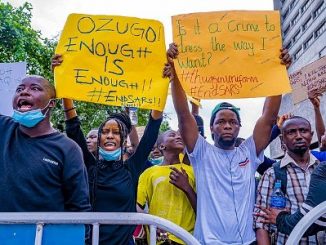
Experiences of the explosion of class struggle

12/05/2012: Urgency of a working class alternative proven again

  Nigeria

Russia
Moscow left holds May Day Moscow demonstration

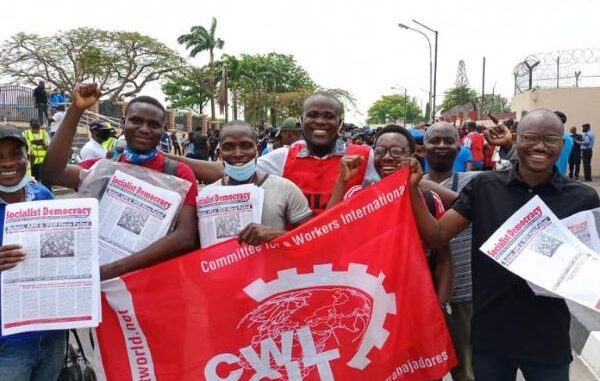
12/05/2012: Lively and political CWI contingent attracts variety of activists

  May Day, Russia

May Day
Demonstration in Uleåborg Finland

12/05/2012: Meeting discusses involvement in Afghanistan

  Finland, May Day

Kazakhstan
Miners’ strike ends in victory for workers

11/05/2012: Campaign Kazakhstan reports that newspapers in Kazakhstan said a strike by miners at KazakhMys ended on 7 May with a complete victory for the workers.

  Kazakhstan

 Irish referendum
No to the austerity treaty!

10/05/2012: On 31 May Irish voters are asked to vote on the European fiscal treaty. This video explains what the treaty is about.

  Ireland Republic, Video

May Day in Nigeria
Fanfare fails to mask workers’ anger

10/05/2012: May Day should have offered opportunity for workers to pose their demands and agitation before the government

  May Day, Nigeria

France
Weekend that shocked Europe

09/05/2012: Austerity rejected in Eurozone’s second biggest economy

  France

Sri Lanka
United left May Day in Colombo

09/05/2012: Socialist organisations march to joint rally

  May Day, Sri Lanka

Britain
Legitimacy of Cameron and Clegg further shattered

07/05/2012: The Con-Dem government suffered a crushing defeat in last Thursday’s elections for local authorities and in the mayoral contests apart from London.

  Britain

The capitalist “vampire squid” and the class struggle in Europe

06/05/2012: As economic crisis worsens and class struggles continue in Spain, Greece, Portugal and elsewhere in Europe, the need for working class fight-back and to build the influence of Marxism grows.

  CWI Comment And Analysis, Europe

Hong Kong
Thousands march on May Day

05/05/2012: Socialist Action (CWI) campaigning against the capitalist 1% and against racism

  Hong Kong, May Day

Sweden
May Day in Gothenburg

05/05/2012: Bobby Seale as guest speaker

  May Day, Sweden

 Kazakhstan
Trial of Vadim Kuramshim resumes

04/05/2012: Solidarity needed to free Vadim!

  Kazakhstan, Solidarity

Pakistan
May Day in Sindh

04/05/2012: Fotos of impressive march

  May Day, Pakistan

Lebanon
Build a mass workers’ movement to get rid of the corrupt ruling class

03/05/2012: For a workers’ programme that puts forward the socialist alternative

  Lebanon, May Day

Germany
Heading towards days of action against Troika austerity

03/05/2012: Days of action planned in Frankfurt/Main against European Central Bank and big finance

  Germany

Britain
"We’re striking back on 10 May"

02/05/2012: Pension cuts, job cuts, service cuts

  Britain

Ireland
Water charges are just paving the way for privatisation

02/05/2012: Irish government doesn’t seem to have learned anything from the massive opposition to its Household Tax

  Ireland Republic

France
Down with Sarkozy and austerity policies!

02/05/2012: Make the rich and the bankers pay for their crisis!

  France

Sweden
Chinese premier’s visit met by vociferous democracy protests

01/05/2012: CWI supporter Zhang Shujie and other activists took to the streets when Wen Jiabao visited Stockholm and Gothenburg

  China, Sweden

May Day 2012
Celebrate working class history and fight for new victories!

30/04/2012: International Workers’ Day and the socialist alternative to austerity and barbarism

  CWI Comment And Analysis, May Day

Cuba

Threat of capitalist restoration

www.socialistworld.net, 02/11/2010
website of the committee for a workers' international, CWI

New pro-capitalist measures introduced by Raul Castro

Tony Saunois, CWI

In September 2010 the Cuban government announced a series of economic “modernisations”. Among the most significant of these was the proposal to slash 500,000 jobs in the state sector by March 2011 as a first step to reducing employment by 1 million. Licenses are to be issued by the state to allow the creation of self-employed persons (“cuentapropistas”) with the legal right to employ other employees, not just family members.

These measures are the governments’ response to a worsening economic situation which has gripped the country, resulting in worsening living standards, food shortages and a deteriorating quality of life for the mass of the population. The “reforms” have opened a discussion within Cuba and amongst socialists internationally about the future of Cuba and the planned economy – which although weakened by bureaucratic measures at the moment remains largely intact - and the prospect of capitalist restoration. Such a development, should it take place, would represent a set back for workers and the labour movement world wide. It would undoubtedly be used by the capitalist class internationally, and especially in Latin America, to discredit the idea of “socialism” and propagate the idea that capitalism is the only viable social system.

The fate of Cuba is therefore of crucial importance not only to the Cuban people but for all workers and socialists internationally. Throughout the 1990’s and first decade of this millennium Cuba and later, Venezuela under Hugo Chavez, have been perceived by significant layers of workers and young people internationally as the only countries on the “left” which were prepared to stand up to George Bush and US imperialism and show that an alternative was possible.

Fidel Castro with Chavez

Capitalism has not been overthrown in Venezuela, despite some progressive reforms introduced under Chavez, but on the other hand, with Cuba, the government defends the idea of “socialism”. Unlike Venezuela, Cuba, has a centralised planned economy, universally heralded health care system and free education. Its willingness to deploy thousands of doctors and medical teams around the world to crisis torn countries after catastrophes, such as the earth quake in Pakistan and Kashmir, has ensured massive sympathy from the oppressed in Asia, Africa and Latin America and especially young people in Europe and the USA.

The restoration of capitalism in Cuba would undoubtedly be seen as another setback, although not of the same magnitude and with the same consequences as the restoration of capitalism in the former USSR and eastern Europe had in 1989/92. The situation facing world capitalism is entirely different today than it was then. Yet, while Cuba its obviously far smaller than the former USSR and Eastern Europe, capitalist restoration would undoubtedly have serious consequences as on a world scale more illusions exist in Cuba than existed in the former USSR at the time of its collapse.

Worst economic crisis since the “Special Period”

The fate of Cuba is important and has crucial lessons for workers and socialists internationally. Cuba is certainly confronted with its most serious economic crisis since the “special period” following the collapse of the former Soviet Union. This had devastating consequences in Cuba. GDP dropped by a staggering 34%! Food rationing was introduced but on occasions, only one-fifth of UN minimum nutrition levels were reached. According to some reports, calories intake fell from 3,052 per day in 1989 to 2,099 in 1993. It was a testimony to the social base and support for the revolution that the Cuban regime survived this period. This is especially true following the introduction of the Helms-Burton Act in 1996, which strengthened the US embargo in an orchestrated attempt to strangle the regime resulting in its implosion.

The Cuban regime in this period was compelled to take some emergency measures to open up sectors of the economy, such as tourism, to the private market and international investment. This together with the development of other initiatives and then the securing of oil agreements with Chavez in Venezuela was followed by a stabilisation and a certain economic recovery.

However, some measures introduced by the regime, especially the introduction of a parallel dollar economy in the tourist sector widened growing inequalities between those with access to the dollar economy and those left outside it. While stores selling goods to the dollar economy were stocked with an array of the most modern consumer items, the state stores selling in the Cuban peso are sparcely stocked.

The economy grew steadily between 2003-7 - reaching a peak of 12.1% in 2006. However, since then it has sharply contracted. By 2008, it recorded a fiscal deficit of 6.7% of GDP - an increase of 70% compared to 2007 and a current account balance of payments deficit of US$1,500 million. This compared with a surplus of US$500 million in 2007. Cuba’s foreign debt had spiralled to US$17,820 million in 2007 - 45% of GDP! It defaulted on its international debt repayments in 2008. Cuba has also been hit by a fall in the price of Nickel, which accounts for approximately 25% of Cuban exports.

It is in response to this worsening economic crisis that these new measures must be seen, as well as the sharply worsening social conditions of the masses that has flowed from them. The adjustment package announced by the government included a large reduction in its food imports. Prior to the revolution in 1959/60, 80% of food consumption in Cuba was largely provided from within Cuba. Today, 80% of food consumed in Cuba is imported which demonstrates the depth of the crisis.

These recent developments are in stark contrast to the massive social and economic gains which took place following the revolution. The advantages and gains made possible by the overthrow of landlordism and capitalism and the introduction of centralised planning of the economy were evident then.

Fidel Castro with Che Guevara in 1959

Gains of the revolution and capitalist restoration

Fidel Castro justifiably defended the gains of the revolution in 2008 when he pointed out that since the revolution life expectancy has been raised by nearly 19 years. Average life expectancy in Cuba today is 77.5. Infant mortality stands at 6 per 1,000 in the first year of birth - slightly worse than Canada. 30,000 doctors are working in more than 40 different countries. A highly effective free health system and free education were introduced. Illiteracy was abolished within the first few years of the revolution. These conquests were maintained even during the “special period”.

Many of these gains would be reversed with the counter revolution and restoration of capitalism. In Russia under Putin following the capitalist counter revolution male life expectancy fell to 56! Capitalist restoration in Cuba could drag it down to the economic and social conditions which currently exist in Nicaragua or El Salvador. Yet this is now developing as a serious threat because of the economic decline which is taking place.

The reason for this emerging threat lies in the character of the Cuban regime and its inability to develop further the Cuban economy. Cuba reveals it is dependent on and integrated into the world market. The globalisation of the world economy means that all countries are linked to it and cannot escape from developments within it. This was partly masked in Cuba in the past when it was tied to subsidies and dependency on the former USSR. Since its collapse, Cuba’s growing trade with Venezuela, Canada, China and Spain (its largest trading partners) have not allowed it to be immune from world economic developments. The Cuban crisis is demonstrating in practice the impossibility of building socialism in one country and the need to spread the revolution and establish a democratic Socialist Federation of Latin American and Caribbean states in order to democratically plan the development of these economies. This could begin with the establishment of a federation of Cuba, Bolivia and Venezuela to give a practical example of what is possible.

Character of the Cuban Revolution

The revolution in Cuba in 1959/60 eventually resulted in capitalism and landlordism being snuffed out and a centralised planned economy being established. However, despite enjoying overwhelming support from the workers and peasants this did not result in a regime of genuine workers’ democracy being established. Instead, a bureaucratic state apparatus was constructed. This was in contrast to the workers’ and peasants democracy which took power in Russia in 1917 under the leadership of Lenin, Trotsky and the Bolsheviks.

A bureaucratic state apparatus was established which Fidel Castro rested on. Despite enjoying overwhelming support this regime ruled in a top down administrative manner. It did not rule in the same brutally repressive manner as the Stalinist regime which eventually emerged in Russia following the isolation of the revolution and Lenin’s death in 1924. The mass purges, and cult of the personality of Stalin’s Russia have not been a feature of Castro’s Cuba. However, repression of minorities and dissidents did take place. Apart from some political opponents there was repression of gays and lesbians, something which Fidel Castro has now admitted was a “mistake”.

The lack of a genuine democratic check, control and management of the economy by the working class, essential to develop the economy and society, meant that the economy although planned, was run in a bureaucratic, administrative manner, with increasing inefficiencies, corruption and wastage emerging as a result.

Bureaucracy in crisis

In the initial stages of the revolution these deficiencies were partly masked by the general development of society and the economy made possible by the planning of the economy and the favourable trading status Cuba enjoyed with the then USSR. Even then it resulted in economic zig-zags, waste, corruption and inefficiencies. Since the loss of economic support from the former USSR and deepening economic stagnation and crisis, these have deepened along with the re-emergence of other social issues such as prostitution something which the regime bosted it had eradicated in the aftermath of the revolution.

A planned economy needs democratic control and checks at each stage and level if it is to fully function and develop. Without this, bureaucratic privileges, and top down administrative methods, which result in waste, inefficiency and corruption flourish which eventually leads to stagnation and regression. These features were present from the beginning of the Cuban regime following the revolution in 1959 however they have now assumed ever increasing proportions, as the crisis has intensified. Leon Trotsky warned of this danger in relation to the former Soviet Union when he posed the question - “Will the bureaucrat devour the workers’ state, or will the working class clean up the bureaucrat”.

A section of the bureaucracy in Cuba has concluded that steps towards capitalist restoration offer the way out of the crisis. Esteban Morales, director of the ‘US Studies Centre’ at Havana University, and left-wing socialist critic of the regime, warned in an article: “Corruption: the true-counter-revolution” (21/10/2010): “Without a doubt, it is becoming evident that there are people in positions of government and state who are girding themselves financially for when the Revolution falls, and others may have everything almost ready to transfer state-owned assets to private hands, as happened in the old USSR.” (see afrocubaweb.com/estebanmorales.htm)

He cites the case of the removal of General Acevedo as director of IACC (Institute of Civil Aeronautics of Cuba) without a full public explanation. Morales concludes that was because it would embarrass the regime to have to explain why “the people created and formed by the revolution” have squandered the money and resources of the people. He concludes with a hypothesis that “..the chiefs are receiving commissions and opening bank accounts in other countries.” Morales, a respected writer on the racial question in Cuba, was expelled from the Cuban Communist Party following publication of this article. This reflects the struggle and debate unfolding within the Cuban Communist Party and the regime in general about which road to take. There are certainly different wings within the bureaucracy. The most pro-capitalist has its strength in the armed forces, with its own enterprises in different section of the economy, from which Raul Castro – Fidel’s brother comes.

Raul Castro with Chinese president Hu Jintao - "Chinese path" for Cuba?

Since coming to power, Raul Castro, when he officially replaced his brother Fidel as the head of state, has replaced an estimated 60% of government ministers, in the process bringing in people closer to him. He has taken tentative steps to follow the “Chinese path”. A series of meetings and ecahnges with the Chinese regime have taken place. He drew on the experiences of eastern Europe during a visit by the last leader of East Germany (DDR), Hans Modrow.

“Cuentapropistas” and the planned economy

Recently, he announced the granting of licenses for people to become self employed. There have also been some changes in land ownership and the opening of some limited farmers markets outside state control.

However, while these steps are significant, and represent the introduction of some capitalist elements into the economy, they are also limited at this stage and remain precarious. They remain state monitored and have not yet touched the main and decisive features of the planned economy.

These “cuentapropistas” will allow people to become self employed and for the enterprises to employ a limited number of workers. It will be applied to plumbers, electricians, hairdressers, and some other sectors. This “reform” was also introduced during the Special Period in the 1990s. At its it peak there were 200,000 “cuentapropistas”. These were then reduced as Fidel Castro re-centralised the economy.

The establishment of “Cuentapropistas” will still require state permission. Last year, the total number employed in this category numbered 143,000, out of a work force of an estimated 5.7 million. Added to this however, is a large number of state employed workers who undertake “jobs on the side” in order to make ends meet.

A tax system has been introduced for such small enterprises for the first time. Taxes are not paid in Cuba. For the first time since 1968, small enterprises in 83 job classifications will be able to employ staff other than family members. In 1968, Castro nationalised all small businesses and enterprises on the island. Militant, the forerunner of the Socialist Party (CWI in England & Wales) and CWI opposed this measure at the time.

The nationalisation of all small businesses, shops etc undoubtedly increased the bureaucratisation and inefficiency in many sectors. The introduction of a democratically planned centralised economy needs to be based on state ownership of the decisive companies and banks which dominate the economy. However, it is not necessary to nationalise every hairdresser or minor enterprise. Rather, the establishment of local co-operatives that can trade with and be linked to the relevant state sector is a more efficient functioning of these economic sectors.

These measures taken in 1968 were partly in response to the upheavals that had shaken Eastern Europe – especially the movement in Czechoslovakia - under pressure from the bureaucracy in the former USSR. Castro admitted in 2005: “among all the errors we may have committed, the greatest of them all was that we believed that someone really knew something about socialism” – referring to the Soviet Union. “Whenever they said, ‘that’s the formula’, we thought they knew. Just as if someone is a physician”.

It is significant that Fidel Castro recognised this mistake but the problem lay in not understanding what alternative was needed – the introduction of a genuine system of real workers control and management and the spreading of the revolution to the other countries of Latin America and the Caribbean. This reflected the character of the state formed following the revolution, which arose from the working class not being consciously at the head of the revolution.

The dilemma facing Fidel Castro, and Raul today, is that while they recognise there is a major crisis and the problem of bureaucratization, with no alternative they are compelled to zig-zag in policy in search for a way out of the crisis.

The problems the current reforms may yet encounter have already been experienced in the agricultural “reforms” that were introduced in 2008. This is one of the most important “reforms” announced so far, turning over idle land to private farmers and co-operatives. By the end of 2009, 100,000 beneficiaries had received a total of 920,000 hectares, equivalent to 54% of the country’s unused agricultural land.

Yet while ownership has changed, no market system has been permitted for purchasing inputs, equipment or technology, for credit, buying hard currency and final sales. Acopio, the notoriously inefficient and corrupt state purchasing and distribution agency, still requires farm producers to sell 70% of crops to the state at low prices.

However, while the pressure towards a capitalist restoration is increasing, it is not at all certain it will be completed. One obstacle is the fear of the Cuban bureaucracy is that an opening up of the economy would see an influx of Cuban exiles reclaiming property, land and factories and the sweeping out of the Cuban regime. The bureaucracy would not simply be able to seize state assets as the bureaucracy did in the former Soviet Union. They are fearful their fate could be more comparable with the former Stalinist regime in East Germany which was simply swept aside by the capitalist west Germany and its state machine.

The Cuban regime is thus proceeding extremely cautiously and hesitantly. In announcing recent economic reforms Raul Castro also insisted “the socialist system was irrevocable”. Economy Minister, Marino Murillo, stated that while the role of the state would be reduced in small businesses it would, “continue to direct a centralised economy”. The international press gave a large amount of publicity to the statement by Fidel Castro to the US journalist Jeffry Goldberg when he declared: “the Cuban model doesn’t even work for us anymore”.

This statement reverberated around the world interpreted as Castro repudiating “socialism”. Less attention was given to his comments following this interview at the launch of the second volume of his memoirs when he argued; “My idea as the whole world knows, is that the capitalist system now doesn’t work either for the United States or the world, driving it from crisis to crisis, which each time are more serious.”

Fear of social crisis and possible hybrid regime

The regime itself is extremely cautious about how it deals with this crisis and fears triggering a social crisis which could spin out of control and provoke a split within the bureaucracy and state apparatus.

The 4th Cuban Communist Party Congress in 1991 was preceded by the organization of large consultations and mass meetings involving up to three million people. These were relatively open and reflected the attempts of the leadership under Fidel to act in a bonapartist manner and try and rest on the masses as it faced up to the effects of the crisis.

Significantly, following Raul Castro’s speech in 2007 in Camaguey, the results of the “consultations” which took place throughout the country were kept secret and the decisions were taken relating to economic reform were kept in the hands of a small group. This reflects the lack of confidence and hesitancy of the regime at this stage.

It is entirely possible that while further steps are taken towards the introduction of capitalist measures, the state will retain a central or powerful role in the economy. A hybrid regime – where significant inroads towards capitalist restoration have been made but where the state and the bureaucratic regime maintain a powerful controlling influence – could emerge. In some respects this already has developed.

The prospect of a deepening crisis in the world economy can re-enforce this or even result in the a re-intervention by the state into those sectors of the economy in which its grip was loosened – as in fact happened in Cuba following the Special Period. The difference this time is that the economic crisis is again becoming sharper in Cuba and is accompanied with other threats.

In particular, there is the growing gulf between the older generation who identify with the revolution and its tremendous social gains, and the experience of the younger generation which has grown up under the current regime. 73% of the Cuban population were born after the revolution in 1959. The alienation of the youth to the stifling effects of the bureaucracy, travel restrictions, denial of access to the internet, suppression of music etc risks a revolution without any renewal. The replacement of Fidel by his brother Raul has only compounded the problem.

The youth have grown up under a regime which has managed shortages, a weakening of the health care system, inadequate housing, etc, whose measure therefore is not a comparison with life prior to 1959 and the gains made in the 1960s and 1970s. The norm for them has been that which has existed since Special Period. Their commitment to the revolution is less given the absence of a clear democratic socialist alternative to the existing regime or a perspective for the international socialist revolution.

International Democratic Socialism

The Cuban regime is clearly entering a new stage where the threat of capitalist restoration is emerging as an extremely serious threat. Some significant steps along this road have been taken but have not, as yet, been completed. The debates that are beginning to open up in Cuba, at all levels of society concern the direction society is to take. The way out of the current impasse lies not in the direction of capitalist restoration but by defending the centralised planned economy and the introduction of a system of genuine democratic workers control and management. It is vital that all work places should freely elect committees to oversee the day to day running of the factory or office. These bodies need to linked up nationally and establish a system of democratic workers’ management to plan the economy and work out production targets and an emergency plan for the economy. All officials should be elected and subject to immediate recall and receive no more than the average wage of a skilled worker. A lifting on travel restrictions, and free access to the internet, along with the right of all workers and young people to form discussion groups, tendencies and political parties which do not collaborate with imperialism and its efforts to restore capitalism, and free trade unions independent of the state, are amongst the democratic changes urgently needed, along with and opening up of the press and media to democratic control by workers and young people.

These measures, together with an appeal to spread the revolution and form a democratic socialist federation together with Venezuela and Bolivia as a first step towards a socialist federation of Latin America are now urgently necessary. The planning together of the economies of Cuba, Venezuela and Bolivia through the formation of a Democratic Socialist Federation could demonstrate in practice how a planned economy could begin to work. These are the urgent steps needed to prevent the tendency towards capitalist restoration, defend the gains of the revolution and begin to build a genuine democratic socialist society based on workers’ democracy and democratic control.


Free Vadim! Europe

 video

Kazakhstan: MEP speaks out against repression, 15/05/2012

 further videos

CWI - get involved


solidarity

tamil solidarity campaign kazakhstan

featured links

Paul Murphy, MEP

cwi links

Marxist.net, CWI marxist archive

cwi comment & analysis

world economic crisis

analysis and commentary


cwi publications

marxism in today's world che

Che Guevara: Símbolo de Lucha

Por Tony Saunois

A socialist world is possible, the history of the cwi with new introduction by Peter Planning green growth, a contribution to the debate on enviromental sustainability