

deutsch |  english |  español  |  français  |  italiano  |  nederlands  |  polski  |  português  |  svenska  |  türkçe  |  中文  |  عربي  |  русский

latest news

Sri Lanka
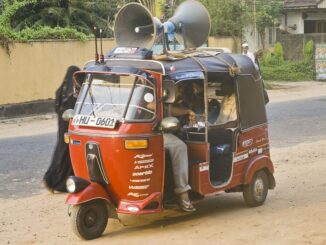
Working class beginning to move forward

25/05/2013: The one day protest general strike held on 21 May was a significant step forward for the working class in Sri Lanka.

  Sri Lanka

Sweden
Riots in Stockholm working-class suburbs

24/05/2013: Neo-liberalism and police violence have created social time-bomb

  Sweden

30 years ago
Liverpool - a city that dared to fight

24/05/2013: Interview on Militant, the Labour Party and the struggle of the socialist led council 1983-87 in Liverpool

  Britain, History

Britain
Tories in turmoil over Europe

24/05/2013: The Tories are thrashing around in ever-deeper water on the issue of Europe.

  Britain, Europe

 Kazakhstan
Campaign leader sentenced to ten days in prison

23/05/2013: MEP demands immediate release of Housing Campaigners - solidarity still needed

  Kazakhstan, Solidarity

Britain
No to terrorism! No to racism! No to war!

23/05/2013: Statement on Woolwich killing

  Britain

 Tunisia
the Ministry of Women excuses violations against women rights

23/05/2013: In the «most developped country for women in the Arab world», the struggle for women rights remains more relevant than ever

  Tunisia, Women

Germany
DIE LINKE and the Euro

23/05/2013: After Lafontaine’s proposal to get rid of the Euro – what should the left say?

  Germany, New workers' parties

 Ireland
Tax haven for multinational corporations

22/05/2013: How Ireland is used as a tax haven by multinational corporations while the government is preparing to steal the property tax from people’s wages, social welfare and pensions

  Ireland Republic, Video

Germany
Strike at Amazon

22/05/2013: Union-agreed rates could bring Amazon workers 9000 euros more a year

  Germany

Taiwan
Sea shooting sees Filipino migrants become target of racist backlash

21/05/2013: Anti-racist campaign needed against corrupt ruling elites and capitalism

  Taiwan

Nigeria
President Jonathan declares state of emergency

21/05/2013: An expressway to attacks on democratic rights! For democratic mass working peoples’ defence committees!

  Nigeria

G8 Summit, Northern Ireland
’Why YOU should oppose the G8’

20/05/2013: This year’s G8 summit will be held in County Fermanagh, Northern Ireland, on 17th – 18th June. This gathering brings together the heads of government of eight of the world’s largest capitalist economies to discuss how they can further the interests of those they represent – the super-rich, big business and the bankers.

  Anti-globalisation, Ireland North

World economy
"Central banks are flying blind"

19/05/2013: Increasing concerns and contradictions

  World Economy

South Africa
Mass retrenchment threat in mining industry demands mass action

18/05/2013: Workers and Socialist Party calls for one-day-general strike

  South Africa

Iran
What would a Rafsanjani presidency mean?

18/05/2013: Iran’s June 14 presidential election takes place against the background of deep divisions in society and the regime.

  Iran

Australia
Labour approves WA’s first uranium mine

17/05/2013: Australia’s federal environment minister Tony Burke gave the go ahead to Toro’s $270 million uranium mining project in the Wiluna region of Western Australia.

  Australia, Environment

New Zealand
Racism and recession in New Zealand

15/05/2013: Working class unity needed to defend rights and living standards

  New Zealand

Australian budget
Say ‘NO’ to the cuts agenda of the major parties

14/05/2013: We shouldn’t let either of the major parties tell us that ‘tough decisions’ or ‘hard cuts’ are required.

  Australia

Ireland
‘Bus Eireann workers in front line of class war - We should all support them!’

13/05/2013: Bus workers take strike action over savage wage cuts and attacks on conditions

  Ireland Republic

Italy
The economic crisis becomes a political and institutional crisis

11/05/2013: The latest events that have happened in Italian politics mark a new phase of development in the crisis in the third European industrial power.

  Italy

Turkey / Kurdistan
PKK announces ceasefire

11/05/2013: On 8 May the PKK has begun to withdraw from Turkey. Millions are hoping now for an end to oppression and for democratic rights.

  Kurdistan, Turkey

Malaysia
Election ’victory’ based on fraud

10/05/2013: Ruling Barisan Nasional’s widespread fraud enrages opposition supporters and young people

  Malaysia

Greece
Challenging the Golden Dawn

10/05/2013: On 2 May the neo-fascist Golden Dawn attempted to distribute food in Syntagma square in Athens to people holding proof of Greek nationality.

  Greece

British county elections
Capitalist parties rejected

10/05/2013: Time for a new mass workers’ party

  Britain

Tunisia
The calm before the storm

09/05/2013: New clashes on the horizon

  Tunisia

Pakistan
General elections held amid political turmoil

08/05/2013: Big landlords, capitalists and influential families are calling the shots

  Pakistan

Sri Lanka
Successful May Day

08/05/2013: The United Socialist Party’s May Day demonstration passed successfully through a number of populous areas of Colombo, ending at Grand Pass Junction.

  May Day, Sri Lanka

Hong Kong
Dockworkers’ strike ends after 40 days

07/05/2013: Union representatives declare a “half success” with a pay rise of 9.8 percent – but important issues are unresolved

  Hong Kong

Britain’s ’precariat’
Fighting for real jobs

06/05/2013: ’Get a job!’ is the constant refrain of privileged Tory ministers and vicious right-wing tabloids. A million unemployed young people are the subject of a relentless campaign of smears and lies.

  Britain, Youth

Liverpool
Rally marks 30 year anniversary of election of socialist council

05/05/2013: Great event remembers the ’47’ struggle

  Britain, History

 Women and the struggle for socialism
It doesn’t have to be like this

05/05/2013: Christine Thomas’ book outlines how inequalities and discrimination against women have not disappeared and women’s struggles must be bound up with wider class struggle to be successful. Read the complete book online here.

  Women

Spain

15-M movement opens gates to new stage of struggle

www.socialistworld.net, 06/06/2011
website of the committee for a workers' international, CWI

What organisation, strategy and politics does the situation demand?

Danny Byrne, CWI

The impact of the revolutionary conflagration which is sweeping North Africa and the Middle East in Europe has been immense. But the youth revolt currently taking place across Spain, with demos and "campouts" across Europe and beyond, is one of the most direct and powerful reflection of this impact yet to be seen. The revolt of the Spanish youth, with wide support in society, does contain elements of revolution. Anyone attending the mass assemblies throughout the Spanish state will be struck by the depth of hatred for the current system in its entirety and the rejection of the old order of things. “Revolution” can be seen on placards and heard in chants taken up by hundreds and thousands. This movement comprises of thousands of people who identify with the idea of transforming society along revolutionary lines and that the present situation can not continue. Although a clear conception of what revolution is or involves is not yet present. For revolutionary socialists, the question is, how can this sentiment be translated into genuine revolutionary change?

Whatever the exact development of events in the short term, it is clear that this movement has opened the gates to a new period of struggle, with people determined to fight for a decent existence, which capitalism cannot provide. This movement is the first phase in a process of social and class battles and marks the end of the period of relative ’stability’ in Spain. In these titanic battles the question of: who runs society and in whose interests will continue to be posed. 

Inevitable explosion

Generally speaking, the explosion of the current movement has confirmed the perspective of the CWI. Throughout Europe, the working class found itself relatively unprepared to face the current onslaught of capitalism on the living standards and the gains of the past. The main trade union leaders have pursued a strategy of de-mobilisation and collaboration with capital, rather than acting upon the desire from below to fight. Generally workers and youth are without a political reference point to express their anger against the system and the anti-social, pro-rich policies being pursued by the government. These factors weighed heavily on the situation in the first years of the crisis in Spain.

However, despite all of this, capitalism was laying the basis for new and inevitable social earthquakes. The economic boom of the last 2 decades lifted Spain, and its young generation in particular, to new heights with living standards up and a “golden future” was promised to them. These expectations have now come crashing down. Almost 5 million people fill the ranks of those officially unemployed. Almost half the population under 25 years old are without work - most entitled to absolutely nothing in benefits. 11 million work in precarious jobs. A tidal wave of anger has been accumulating as a result of this devastating situation. The movement that developed in the recent period was able to overcome the obstacles placed in its path.  Spain will not return to what it was before this movement erupted. 

Where should the movement go from here?

Having said this, the 15-M movement, called after the starting point on 15 May, is at present passing through a crucial stage. A clear, united and offensive plan to develop the movement is now especially necessary to strengthen and develop it,  in order to avoid a temporary retreat or derailing of the movement. The “acampadas” plaza occupations have had an electrifying effect. They have become vibrant centres of debate and resistance in every major town. They have enjoyed overwhelming support, collecting hundreds of thousands of signatures, as well as attracting massive numbers of visitors - workers, the unemployed, pensioners and others. These visitors come not as passive observers but participate in the debates and assemblies, inspired by the movement’s energy and militant spirit. A form of protest inspired by the Egyptian revolution has taken Spain and now Greece by storm.

However, it is also clear that only the occupation of city squares and plazas throughout the country alone will not be enough to win real and lasting change change. Although in recent weeks, the plaza occupations have been decisive in pushing the protest into the public eye, must now move forward, to take effective action to achieve its aims. Mass participation in campouts on stone plazas in noisy town centres is not sustainable in the long term for obvious reasons. Tiredness and infrastructural problems have been impressively overcome by protestors thus far. The capitalist press is full of speculation as to how long the indignados can hold out.

The real significance of the camps, the threat they represent to capitalism and the political elite, of course does not stem from the act of camping itself! What the plaza protests really represent is potential; the potential for a mass movement which could set society alight, drawing the mass of people into a serious struggle which could shake capitalism to its foundations. They represent a mass politicisation not in the sense of joining political parties but in unleashing discussion and debate about how society should or could be run. The emphasis of the movement needs now to develop beyond the occupation of squares – to change society. It should take place on the basis of a democratically discussed and agreed programme of action, with a sustained plan of continued mobilisations based around agreed demands and objectives. And on the basis of the continued right to use the people’s plazas as gathering points for regular assemblies and other actions of the movement.

It should be a bold step forwards not backwards, to ensure that the movement is widened out. A layer of activists in the struggle argue that dismantling the camps should be avoided at all costs, that the movement’s perspective should be to dig in for the ’long haul’, “until the system changes”. Some even have illusions that a “new world” can be built within the plazas themselves, a parallel world which rejects capitalist society. In some areas, campers have even begun to build huts and houses in trees and on grass patches in preparation! But the tens of thousands of youths, with the working class behind them, have joined this struggle not to build a parallel world in town squares, but to change the world around the squares! The key to such a struggle lies not in the plaza, but in the workplace, the school, university, community, hospital and other centres were workers, the unemployed, students and all those exploited by capitalism are to be found.

The “decentralisation” of the movement, into the ’barrios’, (workers districts) with local assemblies and protests, is a positive step. If consolidated, coordinated and built upon, it could be a key element in the creation of a sustained, broad, democratic movement with real roots amongst workers and youth. The participation of a wide layer of community and anti-cuts activists and trade unionists in many local assemblies shows the potential for the movement to galvanise the resistance to austerity and capitalism. However, “decentralisation” alone will not lead to this. A mass movement needs to co-ordinate actions on a city-wide, regional and state-wide level, to maximise their impact, and to democratically agree its main demands and aims. We support the formation of assemblies of a united movement in every barrio, and for the extension of the assemblies into workplaces, schools and universities. We also call for a democratisation of the movement, with barrio assemblies electing delegates to city and region-wide assemblies, with the right to change or recall representatives, and for these in turn to elect representatives to regular state-wide assemblies to plan the next steps of the struggle.

Towards a general strike now!

The 15-M revolt is obviously the worst nightmare of Spanish capitalism at the present time as it is struggling to give an image of “stability” to the international markets. But it is a nightmare not only for them. In the offices and headquarters of the UGT and CCOO (Spain’s largest trade union federations), the movement is also causing headaches. After the general strike of 29 September, which saw over 10 million workers down tools, the leaders began to demobilise the resistance to the government’s programme of attacks. Pacts were agreed on the labour reform package (which since its passing has seen unemployment swell by hundreds of thousands!) and the raising of the retirement age. They have now set their sights on accepting an attack on the right to collective bargaining, a long-held ambition of Spanish bosses since the fall of Franco.

However, the revolt of the youth has put a spanner in the works. With its impact and the brutal cuts set to be implemented in the next months, whether the leaders will be able to continue with their policy of agreement with the bosses and the government without provoking a revolt from below remains to be seen. The consequences of 15-M will be to increase the confidence and pressure from the workers for a determined struggle. This may be reflected in more militant rhetoric from the union leaders. They may be compelled to call a general strike soon to try to regain their diminishing authority.

In the fight for a widening out of the current youth movement, the demand for a new general strike is crucially important. This importance primarily stems from the need for the movement to take effective and powerful action, using all of the potential power of those under the boot of austerity. It is crucial for the youth to link up in struggle with the workers in the workplaces. The working class, facing attack after attack, represents the most decisive power in Spain and in any capitalist society. It is the decisive force in production and with its collective consciousness as a class can lead the building of a new democratic socialist society. It has also the power to paralyse economic life, the workings of the state and society. The general strike is the most powerful expression of this potential power. As part of a sustained programme of struggle, and armed with an alternative to the austerity of capitalism, the general strike is a weapon which can break governments and shake the ruling classes. After all, the Egyptian revolution, which brought down Mubarak, reached its most intense point not through the occupation of Tahrir square alone, but when workers entered the struggle as a class, through a widespread strike movement. The coming Spanish revolution must learn this lesson (of the role of the working class) in the fight to topple the dictatorship of the markets.

The demand for a general strike has huge popularity within the movement. In Barcelona, organised delegations of young activists from the plaza protests, have visited factories and other workplaces in the area facing redundancies and wage-cuts, to show solidarity and raise the need for a general strike. But this instinctive solidarity and appeal to join forces in action needs to be given a concrete form, through democratic mechanisms of discussion and decision-making within the movement, as outlined in our proposals above. The 15-M revolt, as a movement, must come out in favour of a general strike as the next step in the struggle. This would have an enormous impact, with many workers and trade unionists already looking to the plazas for inspiration in the absence of the same from their so-called leaders.

However, the general strike which is necessary is not one like on 29 September, which from the point of view of the trade union leadership, was merely an exercise in letting off steam, a one-day parade before going back to business as usual. A new 24-hour general strike must be built from below, fought for by the movement and rank and file trade unionists, giving the leaders no choice but to follow. And it should be planned, controlled and followed up by workers themselves, through democratic assemblies, which draw up demands and plans for a sustained struggle. Moreover, one 24-hour strike will not be sufficient to resist the agenda of a ruthless and determined capitalist class. A plan for a series of 24 hour general strikes, escalating to 48 hours if necessary, with other co-ordinated mobilisations must be drawn up and acted upon. This has to be part of a strategy to enforce fundamental changes to alter society as a whole and end the dictatorship of the markets and profit.

Unity between the precarious and unemployed youth and students, and organised workers with powerful traditions of trade union militancy is essential. The CWI does not agree with idea that has emerged amongst from some during this movement that the “precariado” (precarious workers) represents a different, ’more revolutionary’ class to the ’more privileged’ unionised “proletariado” (proletariat). The worse, more desperate conditions of the precarious younger layer of the working class are a direct result an offensive over the last 20 years against the power of the trade union movement, pursued by successive neo-liberal governments, with easy and cheap sackings, short term contracts and poverty wages the norm. The improved conditions of organised workers are not proof that they are “less revolutionary” (!), but on the contrary, proof that class organisation and struggle can be effective in achieving better conditions.

That the trade union movement is currently mostly led by those who want to collaborate with the bosses and the government, does not negate the potential power of these organisations, built up during periods of revolutionary class battles. 29 September was a glimpse of this power. The hostility of some towards the trade union movement as a whole, fails to distinguish between the rank and file of the unions and its bureaucratic leadership. These wrong ideas can potentially split the movement and weaken it rather than unite the workers and the youth and unemployed. However, these are sentiments that can be quickly overcome when the real power of the workers is demonstrated in struggle. If the union organisations can be claimed back and transformed into democratic, fighting instruments of struggle, and together with workers forming committees or organisations of struggle, they can become to be seen by the majority of the youth as points of reference for militant action, instead of conservative relics of the old order. 

“Our dreams don’t fit in your ballot boxes“

Another feature of the movement has been its complete rejection of the political establishment. We saw how the movement almost pushed aside the electoral fiasco between the capitalist parties in the days leading up to the local and autonomous elections on 22 May. It seemed as if the two main parties, PSOE and the PP, along with right-wing nationalist formations like the Catalan CiU and Basque PNV, were living in a different country. They tried to turn the non-existent differences between them into the focus of public discussion and debate. But the tens of thousands of youth mobilized all around the state were the ones with their fingers on the real pulse of “public opinion”: massive opposition to the policies of all of these parties! PSOE was forced to move its main final election rally in Madrid, from close to the Puerta del Sol (epicentre of the acamapadas movement) to outside city boundaries and was  virtually thrown out of the capital by thousands of indignant youths.

“Our dreams don’t fit in your ballot boxes” is a widespread slogan, etched on placards in every plaza. It reflects very well both the antipathy towards the capitalist political establishment, and the audacious and radical ambitions of the youth for change, which are given no clear expression on the political plane by any important force. It also reflects the failure of the left, most importantly of Izquierda Unida, to put forward a consistent anti-capitalist alternative programme capable of channelling these dreams and ambitions. Like the trade unions, the “old” left, with its history of government pacts with capitalist parties, has come to be seen by many young people as simply “part of the furniture” of capitalist society.

Anti-political?

The movement is not “a-political” in the slightest. Despite not putting forward clear proposals or policies for change, the movement is definitely anti-capitalist in an undeveloped sense. In fact, in the first days of the movement, the assemblies at Puerta del Sol even agreed upon many demands of a socialistic type. These were not fully rounded out or part of a comprehensive programme. They included the nationalisation of empty property to tackle the housing crisis, the lowering of the retirement age to fight youth unemployment, the nationalisation of the bailed-out banks etc. Aside from some conscious and convinced “anti-political” elements, there is a general appetite in the movement to discuss political alternatives, although this is often found alongside a hostility to all political parties and organisations in general. Most plaza occupations have taken votes “forbidding” political interventions of any type in assemblies etc. In some areas, even the mention of “left” or “socialist” at an assembly will get a speaker’s microphone cut off! 

The CWI is opposed to the ‘traditional’ pro-capitalist policies and methods of the established political parties. We defend the idea of new political organisations of the youth and workers to democratically organise and channel the struggle for a new revolutionary democratic socialist society.  The history of capitalism, of struggles and movements, has demonstrated time and time again that a successful break with the old order cannot be achieved without a widely-understood political programme which expresses the concrete needs of the hour. Without a clear alternative to existing policies, capitalism’s attacks can be fought and stalled for sure, with a struggle powerful and determined enough. But in the long run, capitalism can only function on the basis of its own logic, the logic of profit and the dictatorship of the markets. And as long as this system remains intact, as long as it continues to be seen that “no alternative exists”, then policies dictated by this logic – i.e austerity, misery and declining living standards to pay for the crisis of the bankers and the rich – will continue to prevail. Thus arises the need for political proposals, which attack the problems facing workers and youth at their root, the dictatorship of capital, and can take society to a higher plane, through taking society’s wealth into the hands of the majority. This is the essence of the revolutionary socialist politics put forward by the CWI. 

On the other hand, we understand perfectly the roots of this mood of hostility to political organisations. In analysing, and intervening into the current movement it is necessary to remember that it represents the beginning, the entry of a new generation of fighters into battle, after a period of relative “social peace”, despite the constant class struggle from the ruling class on wages, living conditions and jobs. As such, it is inevitable that some complications, inherited from the past, will be present in the movement. The past decades of political betrayals and the corrupt, bureaucratic monstrosities which have dominated the political scene, from left to right, were bound to leave their impact on the consciousness of young people. But the experience of struggle and of counter-attacks by a united capitalist political elite will push this anti-capitalist generation en masse towards the recognition that a political alternative is necessary. 

Democracy or dictatorship?

’Real democracy now!’ was the main slogan around which the Spanish youth began their revolt on 15 May. And what better indictment of the rotten capitalist system, which values the tranquility of the all-powerful markets over the misery of millions. A system in which all the decisions affecting our lives the most, on jobs, housing, the economy etc, are taken by a small elite in the interests of maximising their profits can know no real democracy. “Democracy for an insignificant minority, democracy for the rich — that is the democracy of capitalist society.”, is how it was put by Lenin. Life under this sham democracy has pushed millions towards revolutionary conclusions, that in order to achieve a real democracy, the system must be changed.

The task now is how can these sentiments be given real revolutionary content. The axis of the dictatorship of the markets and the super-rich is their control over the means of survival, the economy, the banks, jobs etc. Therefore, the key to a revolutionary programme is measures that could be taken to break that control. Revolutionary socialist measures, the nationalisation under democratic control of the banks, finance sector, and main industries and services would turn economic life on its head, with the economy planned to meet the needs and ambitions of workers and youth. Widely supported measures such as the lowering of the retirement age to 60, the shortening of the working week with no loss of pay, public investment to create millions of jobs, could only be really and sustainably achieved with the wealth of society under democratic control.

This movement has opened the eyes of many. In a way, the mass participation in the movement, the democracy and discussions of the assemblies, the assertion of popular control over the country’s town squares etc, gives a glimpse of real democracy. It is not voting every few years for representatives who will represent your class enemies. It is active and genuine participation in the organisation of society and the economy, which is only possible on the basis of public ownership. Real democracy has no truck with corrupt, millionaire MPs, or royal families, or the denial of the right to national self-determination. The assemblies of the 15-M movement must be developed and extended, democratised and structured on local, city, regional and state-wide levels and ultimately, united in fighting for revolutionary socialist policies as outlined above. On such a basis, these bodies could form the basis for an alternative government and society, infinitely more democratic than the status quo. 

The rapid international spread of the “#spanishrevolution” also gives a glimpse of how such an example would be met around Europe and the world. With jubilation, and rapid action to emulate such a revolutionary change. Thus could a democratic socialist federation of Europe, as an alternative to the capitalist EU be built, as part of a new world of real revolutionary socialist democracy.


Europe

 video

Ireland: Tax haven for multinational corporations, 22/05/2013

 further videos

CWI - get involved


solidarity

tamil solidarity campaign kazakhstan

featured links

Paul Murphy, MEP

cwi links

Marxist.net, CWI marxist archive

cwi comment & analysis

world economic crisis

analysis and commentary


cwi publications

marxism in today's world che

Che Guevara: Símbolo de Lucha

Por Tony Saunois

A socialist world is possible, the history of the cwi with new introduction by Peter Planning green growth, a contribution to the debate on enviromental sustainability

NEWS

Sri Lanka: Working class beginning to move forward
25/05/2013, Srinath Perera, United Socialist Party (USP – CWI, Sri Lanka):
The one day protest general strike held on 21 May was a significant step forward for the working class in Sri Lanka.

Sweden: Riots in Stockholm working-class suburbs
24/05/2013, Reporters of Offensiv, paper of Rättvisepartiet Socialisterna (CWI Sweden):
Neo-liberalism and police violence have created social time-bomb

30 years ago: Liverpool - a city that dared to fight
24/05/2013, Peter Taaffe speaking to "Tony Snell in the Morning", BBC Radio Merseyside:
Interview on Militant, the Labour Party and the struggle of the socialist led council 1983-87 in Liverpool

Britain: Tories in turmoil over Europe
24/05/2013, Editorial of the Socialist, paper of the Socialist Party (CWI England & Wales):
The Tories are thrashing around in ever-deeper water on the issue of Europe.

Kazakhstan: Campaign leader sentenced to ten days in prison
23/05/2013, Campaign Kazakhstan:
MEP demands immediate release of Housing Campaigners - solidarity still needed

Britain: No to terrorism! No to racism! No to war!
23/05/2013, Greenwich Socialist Party (CWI England & Wales), London:
Statement on Woolwich killing

Tunisia: the Ministry of Women excuses violations against women rights
23/05/2013, Aïda, CWI sympathiser in Tunisia:
In the «most developped country for women in the Arab world», the struggle for women rights remains more relevant than ever

Germany: DIE LINKE and the Euro
23/05/2013, Sascha Stanicic and Lucy Redler, SAV (CWI Germany):
After Lafontaine’s proposal to get rid of the Euro – what should the left say?

Ireland: Tax haven for multinational corporations
22/05/2013, Paul Murphy, MEP, Socialist Party (CWI Ireland):
How Ireland is used as a tax haven by multinational corporations while the government is preparing to steal the property tax from people’s wages, social welfare and pensions

Germany: Strike at Amazon
22/05/2013, An Amazon activist reporting to SAV (CWI Germany):
Union-agreed rates could bring Amazon workers 9000 euros more a year

Taiwan: Sea shooting sees Filipino migrants become target of racist backlash
21/05/2013, Chris Dite and CWI Taiwan reporters, article from Chinaworker.info:
Anti-racist campaign needed against corrupt ruling elites and capitalism

G8 Summit, Northern Ireland:’Why YOU should oppose the G8’
20/05/2013, Socialist Party, Northern Ireland (CWI Ireland):
This year’s G8 summit will be held in County Fermanagh, Northern Ireland, on 17th – 18th June. This gathering brings together the heads of government of eight of the world’s largest capitalist economies to discuss how they can further the interests of those they represent – the super-rich, big business and the bankers.

South Africa: Mass retrenchment threat in mining industry demands mass action
18/05/2013, DSM (CWI South Africa) reporters:
Workers and Socialist Party calls for one-day-general strike

Iran: What would a Rafsanjani presidency mean?
18/05/2013, Kave Heydari, Iranian CWI supporter in Britain:
Iran’s June 14 presidential election takes place against the background of deep divisions in society and the regime.

Australia: Labour approves WA’s first uranium mine
17/05/2013, Socialist Party (CWI Australia) reporters Perth:
Australia’s federal environment minister Tony Burke gave the go ahead to Toro’s $270 million uranium mining project in the Wiluna region of Western Australia.

New Zealand: Racism and recession in New Zealand
15/05/2013, Jared Phillips, CWI New Zealand:
Working class unity needed to defend rights and living standards

Australian budget: Say ‘NO’ to the cuts agenda of the major parties
14/05/2013, Editorial comment from ‘The Socialist’, paper of the Socialist Party (CWI Australia):
We shouldn’t let either of the major parties tell us that ‘tough decisions’ or ‘hard cuts’ are required.

Ireland: ‘Bus Eireann workers in front line of class war - We should all support them!’
13/05/2013, Socialist Party (CWI Ireland) Reporters:
Bus workers take strike action over savage wage cuts and attacks on conditions

May Day in Nigeria: Jonathan government intensifies attacks on democratic rights
12/05/2013, Ebike Iseru, DSM (CWI Nigeria):
15 DSM members arrested at May Day rallies

Italy: The economic crisis becomes a political and institutional crisis
11/05/2013, Marco Veruggio, ControCorrente (CWI Italy):
The latest events that have happened in Italian politics mark a new phase of development in the crisis in the third European industrial power.

Malaysia: Election ’victory’ based on fraud
10/05/2013, Ravichandren, CWI Malaysia:
Ruling Barisan Nasional’s widespread fraud enrages opposition supporters and young people

Greece: Challenging the Golden Dawn
10/05/2013, Katerina Kleitsa , Xekinima (CWI Greece):
On 2 May the neo-fascist Golden Dawn attempted to distribute food in Syntagma square in Athens to people holding proof of Greek nationality.

British county elections: Capitalist parties rejected
10/05/2013, Editorial of the Socialist, paper of the Socialist Party (CWI England & Wales):
Time for a new mass workers’ party

Tunisia: The calm before the storm
09/05/2013, CWI reporter in Tunis:
New clashes on the horizon

Pakistan: General elections held amid political turmoil
08/05/2013, Khalid Bhatti, SMP (CWI Pakistan), Lahore:
Big landlords, capitalists and influential families are calling the shots

CWI Comment and Analysis

ANALYSIS

Nigeria: President Jonathan declares state of emergency
21/05/2013, Segun Sango, Protem National Chairperson, Socialist Party of Nigeria:
An expressway to attacks on democratic rights! For democratic mass working peoples’ defence committees!

World economy: "Central banks are flying blind"
19/05/2013, Per-Åke Westerlund, from Offensiv, newspaper of Rättvisepartiet Socialisterna (CWI Sweden):
Increasing concerns and contradictions

Turkey / Kurdistan: PKK announces ceasefire
11/05/2013, Festus Okay, Sosyalist Alternatif (CWI Turkey):
On 8 May the PKK has begun to withdraw from Turkey. Millions are hoping now for an end to oppression and for democratic rights.

Women and the struggle for socialism: It doesn’t have to be like this
05/05/2013, Christine Thomas, Controcorrente (CWI Italy):
Christine Thomas’ book outlines how inequalities and discrimination against women have not disappeared and women’s struggles must be bound up with wider class struggle to be successful. Read the complete book online here.

Cyprus: On the edge of a catastrophic slump
25/04/2013, Niall Mulholland, CWI:
Socialist polices needed to resolve crisis in the interests of majority

US: After the Boston Tragedy
23/04/2013, Bryan Koulouris, Boston, Socialist Alternative (CWI supporters in the US):
NO to Racism and Repression

Britain: Combating violence against women
14/04/2013, Hannah Sell, on behalf of the Socialist Party (CWI England & Wales) Executive Committee:
A socialist perspective on fighting women’s oppression

Thatcher: A class warrior for capitalism
12/04/2013, Alistair Tice, Socialist Party regional secretary, Yorkshire:
Millions have been waiting for this day, 8 April 2013. Margaret Thatcher will never be forgiven for the devastation that her Tory governments’ policies wrought on working class communities in the 1980s - and is still being felt today.

Britain: Margaret Thatcher dies
08/04/2013, Peter Taaffe, Socialist Party (CWI England & Wales) general secretary:
Thatcher’s bitter legacy

Britain: A further round of savage austerity
08/04/2013, Peter Taaffe, Socialist Party (CWI England & Wales) general secretary:
We must stop them!

Israel: “There is a future” – of cuts, racism and resistance
05/04/2013, Socialist Struggle Movement (CWI Israel/Palestine):
Weak Israeli government will try to implement austerity budget, and would try to maintain the occupation, possibly under a new cover of "negotiations" with Palestinians. Resistance likely on all fronts.

Cyprus: “Working people pay high price for crisis of euro and capitalism”
31/03/2013, Niall Mulholland spoke with Athina Kariati from New Internationalist Left (CWI in Cyprus) about Cyprus’s deal with the Troika, what it will mean for working people and what is the socialist solution to the crisis:
Interview with a Cypriot socialist

China: New leadership rejects democratisation
28/03/2013, Vincent Kolo, chinaworker.info:
At annual NPC-CPPCC meetings Xi Jinping and Li Keqiang talk of ‘tough reforms’ for economy, but rule out ‘Western models’

Venezuela: After the death of Hugo Chávez
24/03/2013, Tony Saunois, CWI, a shorter version of this article was first published in Socialism Today, magazine of the Socialist Party (CWI England & Wales:
Radical, populist policies and anti-imperialism helped transform the political situation

Italy’s clowns: No joke for establishment parties
23/03/2013, Christine Thomas, ControCorrente (CWI in Italy), first published in Socialism Today, magazine of the Socialist Party (CWI England & Wales):
In his ‘tsunami’ election tour Grillo began to give voice to the deep discontent at economic crisis and austerity

Cyprus/EU: Eurozone back in turmoil
22/03/2013, Tony Saunois, CWI:
No trust in capitalist government! No austerity for the Euro! Kick out the Troika! For a socialist alternative!
[Updated article, 25 March]
South Africa: Workers & Socialist Party launched in Pretoria
21/03/2013, CWI reporters, South Africa:
Launch surpassed all expectations

Iraq: Ten years since ‘shock and awe’
20/03/2013, Niall Mulholland, from The Socialist, weekly newspaper of the Socialist Party (CWI England and Wales):
Imperialism’s harvest of death and destruction

March 8th: The day of international working women’s solidarity
07/03/2013, Clare Doyle, CWI:
Beware the anger of women against the bosses’ system!

Hugo Chavez dies: The struggle continues
06/03/2013, Tony Saunois, CWI Secretary:
Millions of Venezuelan workers, the poor and youth will mourn the death of Venezuelan president, Hugo Chavez

Lebanon: Public sector workers on indefinite strike over wages
04/03/2013, Tamer Mahdi, CWI:
Workers’ unity against big business shows potential for anti-sectarian, socialist alternative

Portugal: New explosion against austerity and the government
03/03/2013, socialistworld.net:
“Screw the Troika – the people are the best rulers”

Tunisia: ‘Buckshot’ Ali Larayedh appointed prime minister
27/02/2013, CWI supporters in Tunisia:
Down with the Ennahdha regime! Down with the system!

Italy: Voters reject austerity in ‘tsunami’ election
27/02/2013, Chris Thomas, Controcorrente (CWI in Italy):
Political instability, crisis and new opportunities ahead