On the oil workers strike in West Kazakhstan – in answer to Mr Bobrov.
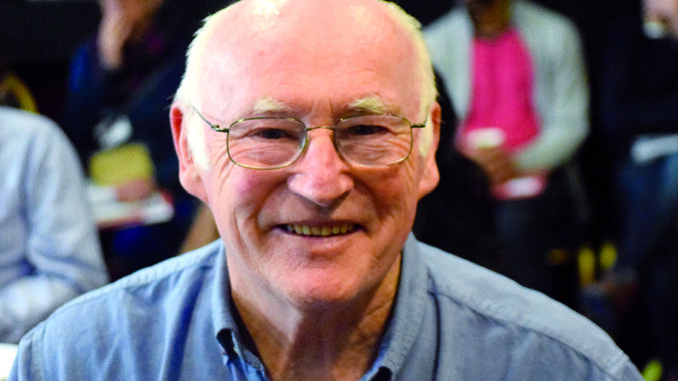
Paul Murphy, MEP, Socialist Party (CWI Ireland)
Dear colleagues,
For over 2 months, thousands of oil workers in West Kazakhstan have been on strike. They work for the Kazakhstan National Company “KazMunaiGaz” and its daughter companies, including “KarazhanbasMunai”, “TulparMunaiServis”, “ArgymakTransServis” and “OzenMunaiGaz”.
Much disinformation is being distributed about the strike with the aim of undermining support for the oil workers. The workers themselves have little access to the press, almost no access to the internet and they have had their lawyers imprisoned.
In a letter written to “His Excellency Paolo Bartalozzi” (Chairman of the Delegation to Kazakhstan of the European Parliamentary Cooperation Committee) by Vladimir Bobrov Co-Chairman of the same committee, and member of the Kazakhstan Parliament, responded to comments by me supporting the oil workers strike and claimed to present an “objective picture of this social conflict”. This objective picture is however based purely on “comprehensive information” obtained from the “KazMunaiGas Exploration and Production Company” with no attempt made to present the arguments of the workers involved in the strike and clearly contains a number of inaccuracies.
I have written this response on behalf of the GUE/NGL delegation which visited Kazakhstan from 15 to 21 July and consisted of my political advisor, Tanja Niemeier, and me.
Mr Bobrov and the government have demonstrated their commitment to “objectivity” by their attacks on my recent visit to Kazakhstan. At the end of the visit, a press release issued by the KazTAG press agency was widely published in the pro-government media. This press release claimed that my visit was purely a personal visit and was not an official visit being made on behalf of the European United Left Group and had an extensive quote from Paolo Bartolozzi MEP. According to KazTAG, Mr Bartolozzi said: “If Mr Murphy’s statement is aimed at interfering in the internal affairs of the state, by calling for disorder or breaches of the law, then an approach by the Kazakhstan side to the President of the European Parliament or the Head of the Delegation for Kazakhstan will be met with understanding and the appropriate measures taken”.
Both the European United Left Group and Paolo Bartolozzi issued press statements in replying to this, the first confirming that I was an official representative of the group, and the second denying that any statement to KazTAG had been made on this issue by Mr Bartolozzi. Notwithstanding this, Mr Bobrov continues to claim in the Kazakhstan press that I was just on holiday and that my”opinion is of a purely private character”. (Liter – 27-07-2011). Maybe Mr Bobrov has difficulty understanding the concept that political groups in the European Parliament also have rights because there are no opposition parties represented in the Kazakhstan Parliament.
In his letter to the European Parliamentary Cooperation Committee, Mr Bobrov states that “Protests demanding the immediate increase of workers’ wages by 1,8 times occurred in two of the Company’s enterprises in mid-May, 2011.”
This is a misinterpretation of the demands of the workers involved who formulated their demands in a written statement announcing the start of the hunger strike dated 12th May 2011. The decision to start the hunger strike followed a number of attempts to persuade the company to continue negotiations over how the previous agreements to pay workers the 1.7 coefficient for workers working in dangerous conditions and the 1,8 coefficient for working in a difficult region were implemented. In their statement, the protesters complained that the management, rather than negotiate, used crude insults and threats such as that allegedly made by the First Vice President of the TOO “Argymak TransServic” to “sack, if necessary, 3000 people”. This approach and the use of security guards and police to prevent the union’s elected representatives from attending the arbitration committee (21-01-2011) intended to resolve disagreements over the regional and dangerous work tariffs had led to the break down of the arbitration procedures.
The main demands of the protesters at this stage included the cessation of the sacking of employees and bandit attacks on members of the trade union and for the immediate start of negotiations on the implementation of the tariffs by a joint commission consisting of representatives of the workforce and trade unions and senior representatives of the company. The workers nominated 6 people as their representatives. They were Akzhanat Aminov, Natalia Azhigalieva, Roza Tuletaeva, Natalia Sokolova, Sultangali Esbaeva and Mukhtar Umbetov.
Given that the disputed coefficient – 1,8 for working in a difficult region – was decreed by the Government of Kazakhstan (Decree No 548 published on 9th June 2008) with the instruction that it should come into effect on the 1st of January 2009, the claim by Mr Bobrov that this represents a demand by the workers for the “the immediate increase of workers’ wages by 1,8 times” is entirely misleading. The workers were demanding negotiations on how the coefficient ordered by the government in 2009 was implemented.
The Company claims that the workers misunderstand how the coefficient should be applied. It should, they say, only be applied to the basic wage and not any further payments. The workers however insist that this approach leaves them with considerable losses in comparison to both what is required to fulfill the requirements of the country’s labour code and the collective agreement reached between the company and their union.
Clearly this is a complicated issue and the workers are insisting that there are proper negotiations conducted to hammer out these issues.
Mr Bobrov goes on to claim that from January 2008 to January 2011, the salaries of workers of those enterprises experiencing the strikes increased 6 times leaving an average salary in the company around 1500 euro, 3 times higher than the average salary in the country.
The “average” of course includes the salaries paid to senior management, who according to the information given to the 2010 shareholders meeting of KazMunaiGaz earned from 10000 to 35000 euros a month – in other words over 70 times the national average wage.
The comparison with the national average is also problematic. Given that Kazakhstan has such huge natural resources and a relatively small population, it is a disgrace that the average national wage is less than 500 euros a month. Many people we met with explained this as being due to the wealth of the country being concentrated into the hands of a few people or sent abroad. The sums being paid to the senior management and directors of this company appear to bear this out. To make a comparison with the national average, which is disgracefully low and say that therefore oil workers too should not get their fair wages is a false argument, intended only to try and divide one group of workers from another.
We were however given a breakdown of the actual wages being paid by the Financial Department of “OzenMunaiGaz” for nine categories of workers. These figures were presented in such a way as to indicate a huge growth over the past three years and a study of the data given showed a number of inconsistencies between the figures given in the powerpoint graphs used in an attempt to impress and those in the more detailed tables. Therefore to avoid accusations of bias, we have used the highest figures claimed by the finance department. The average wage for these 9 grades of staff varied between 2008 and 2011 from 575 euros to 1050 euros. Only one grade at one point gained a figure of over 1500 euros.
Table
|
|
01.01.2008 |
01.01.2009 |
01.01.2010 |
01.01.2011 |
||||
|
|
Tenge |
Euro |
Tenge |
Euro |
Tenge |
Euro |
Tenge |
Euro |
|
Operator for extraction of oil and gas 4th grade |
104205 |
615 |
134395 |
726 |
146488 |
747 |
204160 |
747 |
|
Operator for extraction of oil and gas 5th grade |
132425 |
781 |
170718 |
922 |
186079 |
949 |
269339 |
949 |
|
Operator - underground repair of pumps 4th grade |
157412 |
929 |
202931 |
1096 |
221191 |
1128 |
308273 |
1495 |
|
Operator - underground repair of pumps 5th grade |
199956 |
1180 |
257777 |
1392 |
280972 |
1433 |
391590 |
1899 |
|
Driver with no trailer 5th grade |
121482 |
717 |
194196 |
1049 |
211670 |
1080 |
286155 |
1388 |
|
Driver with trailer 5th grade |
131200 |
774 |
202288 |
1092 |
220490 |
1124 |
307617 |
1492 |
|
Electrician 5th grade |
89165 |
526 |
142585 |
770 |
155415 |
793 |
218855 |
1061 |
|
Transport driver 5th grade |
92062 |
543 |
147167 |
795 |
160409 |
818 |
226710 |
1100 |
|
KIP welder 5th grade |
85479 |
504 |
136644 |
738 |
148939 |
760 |
210101 |
1019 |
|
|
|
575 |
|
770 |
|
793 |
|
1050 |
It should be noted that this is the period in which the 1,8 coefficient was supposed to have been implemented, in which the cost of living for the whole of Kazakhstan grew by nearly 70% and the tenge was devalued by over 25%. Given that the cost of living is considerably higher in Zhenaosen because it is isolated in a near desert region and therefore has to import even the basics necessary for life, including drinking water, this increase over three years is clearly barely keeping pace with living costs.
We do not have enough information to analyse the claim that the Company pays and finances a social package worth 5000 euros for each worker. The figure was met with disbelief, however, when we raised it with the protesters. They raised the conditions in which many live in the city. In some homes, there is no hot water and cold water is restricted to the evening and night hours.
The fact is that there is a huge difference between the amount earned by the workforce for the company and the amount they are paid in wages. An analysis of the figures given to us by the finance department at OzenMunaiGaz give the following picture. (some approximations have been made).
Number of workforce: 9000
Number of barrels of oil produced a year: 46 million
Value of oil produced a year (assume 70 euros a barrel): 3220 million euros
Value of oil produced per month per worker: 29800 euros
Of which each month:
Average wage assuming (+50% for taxes etc): 1575
Social packet (see above): 420
Capital investment per head: 3600
Contribution to national budget per head: 5500
Even taking into account overheads and running costs this clearly demonstrates that the wages, just 5% of the values of oil extracted, are unfairly low.
There are now three issues preventing the resolution of this dispute.
The need for negotiations:
According to Mr Bobrov, the striking workers “ignore the proposals from the Company and the trade union to resolve this issue through negotiations”. The workers consistently repeated that they wanted negotiations to begin involving their elected representatives over the way in which the 1.8 coefficient is applied. This is confirmed in their original letter quoted above.
It is our opinion that it is the management who are not prepared to start negotiations in any realistic manner.
Although the management repeatedly told us they were prepared to start negotiations, they always complained that they did not know with whom to negotiate as the workers had not elected any representatives. This is completely untrue as the workers nominated their representatives as reported in their statement announcing the start of the hunger strike on 12th May 2011. Unfortunately, of the six elected representatives, two have been arrested at the request of the management of the company and a further has had his home subjected to an arson attack by persons unknown. These issues will be commented on later when the way in which the law is used during the dispute is commented on.
The management also made it clear on several occasions that they would only be prepared to start negotiations if the workers returned to work. This in itself is a strange position as according to the workers, they were not prepared to negotiate before the start of the hunger strike. But they have also created another barrier. They have sacked hundreds of those taking part in the protest, an act which is itself against the law during an industrial dispute. The management are presenting humiliating condition to the strikers before the start of negotiations, which in effect say that those who are still recognized by the company should return to work, abandoning those of their comrades who have been sacked. The elected representatives of the workers for the negotiations will not be able to participate, because two of them are in jail at the company’s request. No reasonable negotiator would accept these humiliating conditions.
Reinstatement of the sacked workers without pre-conditions:
According to Mr Bobrov, “the Company’s administration stresses that at the present moment it has not fired the majority of illegal strikers. It tries to raise public awareness, explaining its position to the strikers. It is worth mentioning that notwithstanding the significant losses, the Company is not hiring new workers for the positions of those who were fired, leaving the opportunity for their return to work”.
This is a clear attempt to whitewash the real approach of the management of the company. In our meetings with the management they readily admitted that they had sacked hundreds of workers and that in some cases, new workers had been taken on to replace the striking workers.
We saw several examples of letters sent out by the company threatening to sack the workers if they did not return to work immediately and the company is making efforts to “recruit back” strikers by visiting their homes and putting pressure on the strikers. This is being done not in the interests of finding a negotiated agreement to the end of the strike but by undermining the position of the union. We met with one women, for example, who was practically in tears, because she was determined not to go back to work without an agreement but whose parents had been pressurized so much by the company that they threatened to break off relations with her.
Those who have been pressurized into returning to work are not being taken back under the conditions of their previous contract but are being forced to sign a new “supplement” to the contract. The supplement requires that the worker accepts that the strike was illegal and does not support it, agrees to accept personal responsibility for the losses caused by his actions, agrees that the employer can dissolve his employment contract at any time and fully implement any demands which the employer as far as his contract is concerned. These are not the actions of an employer who wishes to find a negotiated settlement but those of an employer that is attempting to break the trade union.
We met with a further example of the way in which the management of the company is attempting to mislead people about their actions. Having stated quite openly that they had indeed fired workers and taken on other workers in their place, in reply to our protest that this was not a good way to handle the strike, the Director told us openly that a “moratorium” had been placed on any further sackings. This was repeated the following day by the Akim of the Region, who assured us that he was personally controlling the situation. However, just an hour later we met with workers who had that day received more threats of sacking. Within days several hundred more workers had been sacked.
The release of the trade union leaders from prison:
Mr Bobrov goes on to say that “I have received clear clarification that the Company and law-enforcement authorities made no hostile acts and are not planning them towards the strikers and their families”. This is clearly not true.
That the workers have faced significant harassment during the past months. Leaving aside the refusal of the company to conduct negotiations and the sacking of a large number of workers due to their participation in the strike, which in themselves are hostile actions, the workers complain of many more cases of harassment and intimidation.
The most serious of these follows the declaration of the start of the hunger strike in which the strikers announced who they wished to negotiate on their behalf. Of the six people nominated, two were subsequently imprisoned at the request of the company. During our meetings, the management clearly accepted that they had made the application to the city’s Prosecutors office to take action against Natalia Sokolova, the Union’s Lawyer and Akzhanatom Aminov. A third member of the negotiating panel had his house subjected to an arson attack by persons unknown.
Although the outcome of the Court hearing against Natalia Sokolova and Akzhanatom Aminov, which commenced on 1st August, is not yet known, there appear to be few grounds for considering her to be having a fair trial. The judge has refused Natalia Sokolova the right to call defense witnesses or judicial experts from Almata whilst the employer has presented a string of witnesses testifying to the “huge losses” caused by her actions. Excerpts from the tapes of illegal police listening devices are taken out of context and used by the prosecution and Natalia is refused permission to listen to the remainder of the tapes.
In addition there have been several occasions when peaceful protests have been broken up by the police or riot police. In particular the workers complain of:
The violent break up of the peaceful protest march by oil workers in Aktau on 6th June;
The attack on women workers and family members on 11th June in Aktau;
The forcible break up of the peaceful hunger strike and protest from 8th to 10th July in Zhanoezen.
It should be noted that the high level of discipline of the strikers, who have a position of passive resistance and avoid conflict when possible has undoubtedly helped to keep the number of casualties down.
Even more assiduous is the constant use of verbal, written and telephoned threats. So confident are those involved in making these threats that they even leave their phone numbers. One typical example is the SMS threat received by one of the strikers who was due to visit Moscow to take part in a press conference. The threat read: “If you fly to Moscow, your family will be blown in the sky with you or be burnt alive – do you understand” sent from a telephone number +7 705 4297239. It was reported to us that, on phoning this number a member of the city DVD (police) replied.
During our meetings with the management and local authorities we were consistently told that they were working within the law, and everyone had to respect the law. But the workers complain bitterly that the legal system is not neutral, it ignores their complaints and acts as soon as the management makes a request. They complain bitterly that when they turn to the law enforcement agencies (either the DVD (police), KNB or the Prosecutor’s Office) their complaints are ignored even when there is irrefutable evidence. This has happened not only with the SMS threats already mentioned but also with the notorious events that took place before the hunger strike, on the 30th January, when a group of armed men lead by the trade union chairman Kosarkhanov E went to the oil fields and severely beat up a number of opposition trade union activists.
These are not just empty threats. On the 2nd August 2011, 28 year old Zhaksylyk Turbayev, a trade union activist who had been instrumental in the campaign to deselect Yerbosyn Kosarkhanov as union President was murdered at his work place by three thugs.
We demand that this murder is fully and completely investigated and that those who carried out this brutal act, as well as those who ordered it are brought to justice.
The right to a trade union of their choice:
The history of the vote to remove Mr Kosarkhanov as president of the trade union demonstrates how, in breach of the ILO Freedom of Association and Protection of the Right to Organise Convention, 1948, to which the Republic of Kazakhstan is a signatory, workers organizations are denied the right to draw up their constitutions and rules or to elect their representatives in full freedom free from any interference by the public authorities.
The violent attack of the 30th January was the last straw, undermining completely the confidence of the members of the trade union in Mr Kosarkhov and they demanded a General Meeting to discuss his actions and elect a new President. In clear breach of the Republic’s Law of “Civic Organisations” and the Collective Agreement between the company and trade union which bans the interference of the company in trade union affairs, the Company refused to allow the Conference to be held on Company premises, making quite clear that it would only work with Mr Kosarkhov. When the members then organized a meeting away from the Company’s premises, it was attended not only by 3 senior managers but also by the City DVD (Police), who announced that the Conference was illegal. It was only possible to hold a recall conference on 12th April when the majority of participants voted to remove Mr Kosarkhov and replace him with an acting President Aidarbaev E. Three oil field conferences were then organized attended by over 4000 members, where the majority voted to ratify the decision. Just one week later, on the night of 19th-20th May, Mr Aiderbaev’s home was destroyed in an arson attack. To date, the company refuse to acknowledge the newly elected leadership of the trade union.
“Neutrality”
Mr Bobrov argues that “all external observers should remain unbiased and neutral in order not to heat up the situation and encourage civilized resolution of the conflict”.
The truth is there is no such thing as a “neutral position”. Mr Bobrov is quite happy to have international observers in the country, who shut their eyes to the situation in which the opposition parties are not allowed to participate in elections, in which torture is widespread in the prisons and trade union lawyers are arrested at the request of management just as long as the oil, gas and other natural resources continue flowing west.
While in Kazakhstan we met with leading figures of the Fund “Samruk-Kazyna”, the Company “KazMunaiGaz”, the regional authorities and the Parliament. But we turned down the offer to tour Kazakhstan accompanied by government representatives, because we did not want to be shown a “Potemkin village”, seeing only what the authorities wanted us to see. Instead, we met with ordinary Kazakhstan people and heard from them what life is really like in this beautiful and potentially very rich country.
We demand that Mr Bobrov withdraws his outrageous claim that Joe Higgins, who visited Kazakhstan when he was MEP presented misleading information to the Parliament “which in reality supported the interests of some criminal groups”. We assume that the “quasi human rights activist” that Mr Bobrov is complaining about is Vadim Kuramshin. Clearly we need to remind Mr Bobrov that Vadim was arrested in a police provocation on the day before his arrival to prevent Mr. Higgins from meeting him, a scandalous action by the Kazakhstan authorities to prevent the European Parliament from finding out the true situation in the country’s prisons.
We would ask Mr Bobrov that when he insists that international observers should remain “unbiased and neutral”, does he apply the same standard to all the international experts, consultants and diplomats who come to Kazakhstan propagating the need for privatization and outsourcing. Will he condemn the four American Directors of “KazMunaiGaz”, who between them were paid 500,000 euros in 2010 for participating in the work of a company that is refusing to negotiate with its workers. Will Mr Bobrov condemn Mr Yuan Mu, the Chinese Director of “KarazhanbasMunai” who wrote to the authorities demanding that action be taken against the trade union lawyer Natalia Sokolova. Or does the need to remain “unbiased and neutral” only apply to those who criticize the actions of the government and employers, or like us, who believe that the multinational companies should not have the right to exploit the natural resources of Kazakhstan, who believe that the natural resources should be nationalized, so they can be used for the benefit for all the peoples of Kazakhstan?
Conclusion:
Our visit confirmed our opinion that the strike currently being conducted by the oil workers is justified.
We listened carefully to the arguments of the employers and authorities, but their attempts to convince us that they wanted negotiations, have stopped firing strikers, are paying reasonable wages, do not interfere in the affairs of the trade unions or are not using harassment and threats against the workforce unfortunately were contradicted by the documents and other information that we received during our visit.
Like the workers who are striking, we want a speedy end to the strike. If the management and authorities also want to end the strike, they only have to take a few steps:
Recognise the right of the workers to elect their own representatives without interference;
Release Natalia Sokolova and Akzhanatom Aminov from jail;
Reinstate all the sacked strikers to work on their former contracts;
Drop all other criminal and administrative charges against the strikers;
Start proper negotiations with the elected representatives of the workers over the disputed coefficients.
Until the management take these decisions, I will continue to explain our point of view and argue for trade unions throughout the world to speak out in support of their comrades in Kazakhstan.
Yours faithfully,
Paul Murphy MEP

Home
mobile
About Us
Sri Lanka


Committee for a Workers' International