
deutsch |  english |  español  |  français  |  italiano  |  nederlands  |  polski  |  português  |  svenska  |  türkçe  |  中文  |  عربي  |  русский

latest news

 Ireland
Tax haven for multinational corporations

22/05/2013: How Ireland is used as a tax haven by multinational corporations while the government is preparing to steal the property tax from people’s wages, social welfare and pensions

  Ireland Republic, Video

Germany
Strike at Amazon

22/05/2013: Union-agreed rates could bring Amazon workers 9000 euros more a year

  Germany

Taiwan
Sea shooting sees Filipino migrants become target of racist backlash

21/05/2013: Anti-racist campaign needed against corrupt ruling elites and capitalism

  Taiwan

Nigeria
President Jonathan declares state of emergency

21/05/2013: An expressway to attacks on democratic rights! For democratic mass working peoples’ defence committees!

  Nigeria

G8 Summit, Northern Ireland
’Why YOU should oppose the G8’

20/05/2013: This year’s G8 summit will be held in County Fermanagh, Northern Ireland, on 17th – 18th June. This gathering brings together the heads of government of eight of the world’s largest capitalist economies to discuss how they can further the interests of those they represent – the super-rich, big business and the bankers.

  Anti-globalisation, Ireland North

World economy
"Central banks are flying blind"

19/05/2013: Increasing concerns and contradictions

  World Economy

South Africa
Mass retrenchment threat in mining industry demands mass action

18/05/2013: Workers and Socialist Party calls for one-day-general strike

  South Africa

Iran
What would a Rafsanjani presidency mean?

18/05/2013: Iran’s June 14 presidential election takes place against the background of deep divisions in society and the regime.

  Iran

Australia
Labour approves WA’s first uranium mine

17/05/2013: Australia’s federal environment minister Tony Burke gave the go ahead to Toro’s $270 million uranium mining project in the Wiluna region of Western Australia.

  Australia, Environment

New Zealand
Racism and recession in New Zealand

15/05/2013: Working class unity needed to defend rights and living standards

  New Zealand

Australian budget
Say ‘NO’ to the cuts agenda of the major parties

14/05/2013: We shouldn’t let either of the major parties tell us that ‘tough decisions’ or ‘hard cuts’ are required.

  Australia

Ireland
‘Bus Eireann workers in front line of class war - We should all support them!’

13/05/2013: Bus workers take strike action over savage wage cuts and attacks on conditions

  Ireland Republic

Italy
The economic crisis becomes a political and institutional crisis

11/05/2013: The latest events that have happened in Italian politics mark a new phase of development in the crisis in the third European industrial power.

  Italy

Turkey / Kurdistan
PKK announces ceasefire

11/05/2013: On 8 May the PKK has begun to withdraw from Turkey. Millions are hoping now for an end to oppression and for democratic rights.

  Kurdistan, Turkey

Malaysia
Election ’victory’ based on fraud

10/05/2013: Ruling Barisan Nasional’s widespread fraud enrages opposition supporters and young people

  Malaysia

Greece
Challenging the Golden Dawn

10/05/2013: On 2 May the neo-fascist Golden Dawn attempted to distribute food in Syntagma square in Athens to people holding proof of Greek nationality.

  Greece

British county elections
Capitalist parties rejected

10/05/2013: Time for a new mass workers’ party

  Britain

Tunisia
The calm before the storm

09/05/2013: New clashes on the horizon

  Tunisia

Pakistan
General elections held amid political turmoil

08/05/2013: Big landlords, capitalists and influential families are calling the shots

  Pakistan

Sri Lanka
Successful May Day

08/05/2013: The United Socialist Party’s May Day demonstration passed successfully through a number of populous areas of Colombo, ending at Grand Pass Junction.

  May Day, Sri Lanka

Hong Kong
Dockworkers’ strike ends after 40 days

07/05/2013: Union representatives declare a “half success” with a pay rise of 9.8 percent – but important issues are unresolved

  Hong Kong

Britain’s ’precariat’
Fighting for real jobs

06/05/2013: ’Get a job!’ is the constant refrain of privileged Tory ministers and vicious right-wing tabloids. A million unemployed young people are the subject of a relentless campaign of smears and lies.

  Britain, Youth

Liverpool
Rally marks 30 year anniversary of election of socialist council

05/05/2013: Great event remembers the ’47’ struggle

  Britain, History

 Women and the struggle for socialism
It doesn’t have to be like this

05/05/2013: Christine Thomas’ book outlines how inequalities and discrimination against women have not disappeared and women’s struggles must be bound up with wider class struggle to be successful. Read the complete book online here.

  Women

Australian budget
Say ‘NO’ to the cuts agenda of the major parties

04/05/2013: Those who created the crisis should be forced to pay.

  Australia

 Nigerian May Day arrests
All DSM members released [updated]
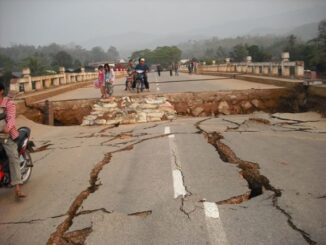
03/05/2013: The last set of DSM members still in the detention of the state security service (SSS) in Kaduna, Northwest Nigeria, and Ibadan Oyo state, Southwest Nigeria, as of yesterday, has been released.

  May Day, Nigeria, Solidarity

 Pakistan
May Day 2013

03/05/2013: Progressive Workers Federation (PWF), TURCP and SMP organised and intervened in the May Day activities across the country

  May Day, Video

Bangladesh building collapse
Casualties of a rotten profit system

03/05/2013: It is said that where labour is cheap, life is cheap. This is never more so than in the recent horrific deaths of over 400 garment workers crushed in a collapsed building in Dhaka, the capital of Bangladesh.

  Bangladesh

Hong Kong
Dockers’ strike shines a spotlight on Li Ka-shing’s business empire

03/05/2013: Li Ka-shing owns 13 percent of the world’s port capacity and much more besides…

  Hong Kong

Taiwan
Over 20,000 march on May Day

02/05/2013: ‘Defend pensions! Stop corruption!’

  May Day, Taiwan

Pakistan
May Day demonstration in Sindh

02/05/2013: Photos of May Day demonstration in Sindh

  May Day, Pakistan

 Nigeria
Militarisation of May Day rallies

02/05/2013: DSM comrades arrested and detained

  May Day, Nigeria, Solidarity

CWI 10th World Congress

Middle East

www.socialistworld.net, 28/12/2010
website of the committee for a workers' international, CWI

The crisis of capitalism and the naked role of imperialism are graphically manifested in the Middle East.

Document No. 3, CWI World Congress

This document on the Middle East is one of the resolutions from the CWI’s 10th World Congress. Documents were agreed on World Relations, Europe, Latin America, the Middle East, Asia, Russia and Eastern Europe, and on the situation in Africa.

Socialistworld.net

The region is blighted by imperialist military occupation, the national oppression of the Palestinians, Kurds and others, dictatorial regimes, endemic corruption, sectarian, religious, national and ethnic divisions, mass poverty and joblessness, and economic crisis and worsening living conditions. On the basis of the continuation of capitalism and imperialism, new wars and conflicts are bound to continue afflicting the region. A referendum in Sudan, due next January, regarding the mainly black African, Christian and animist South breaking away from the Arab and Muslim dominated North, is threatening to lead to renewed bloody conflict (2.5 million died in the country’s last civil war).

However mass resistance to authoritarianism and deteriorating living conditions is also an increasingly pronounced feature of the Middle East, as seen most spectacularly during the 2009 mass opposition movement in Iran. Most significantly from the point of view of the CWI, the recent period has also witnessed increasing workers’ struggles and efforts to build mass independent organisations of the working class in Egypt, Turkey, Lebanon, Algeria and elsewhere. In Egypt, the workers’ movement strengthened its forces in the last four years under conditions of martial law and oppression. In Turkey, 250,000 people took to the streets on May Day 2010 in Istanbul’s Taksim Square – the first time in 33 years – following the heroic struggle of the Tekel workers. These developments are indicative of future mass workers’ struggles throughout the region, which will pose building a strong, independent workers’ movement and formulating a class and socialist alternative to the current system.

Economy

The ongoing world economic crisis will have a devastating effect on the living conditions of millions of people in the Middle East. Even before the crisis around 23% of the population of the region lived on less than $2 a day and six million people on or under $1 a day. While the ramifications of the world financial crisis on the region’s major banks were profound, the more ‘conservative’ approach of the region’s financial institutions during the boom years meant the region was not as badly hit as in the West, at least in the first phases of the ensuing economic crisis. The 18 economies that make up the Middle East and North Africa (MENA) fared better than the US, which saw output fall by 2.4% in 2009, and compared to Europe, which contracted by 4.1% last year. However economic performance varied widely between the Middle East’s oil-producing and non-oil producing countries.

Some “resource-poor” countries have seen recent growth. Second only behind Qatar in the Middle East in terms of economic growth, Lebanon’s GDP improved by 9% in 2008 and 2009 and the country is forecast to expand by 8% in 2010. But these figures are deceptive. Lebanon is struggling to eradicate a debt mountain that stands at 148% of gross domestic product (GDP), the third-largest public debt in the world. Economists also warn of a possible collapse in the real estate sector bubble.

The steep fall in oil prices, from $145 a barrel in July 2008 to below $40 a barrel in early 2009 caused a slowdown in the economies of the six oil producing states in the region, known as the Gulf Cooperation Council (GCC). The total combined GDP of the GCC countries states (Bahrain, Kuwait, Oman, Qatar, Saudi Arabia and the United Arab Emirates), which includes several of the world’s leading oil producers, fell a staggering 80% from 2008 to 2009. The GCC states were forced to increase state spending to run up budget deficits.

While GCC countries economies are expected to pick up in 2010 due to rising oil prices, it is not a uniform picture and general growth is undermined by several factors. The United Arab Emirates is forecast to lag behind its Gulf neighbours due to Dubai’s stagnating economy, following the spectacular collapse of its real estate boom. Continuing “risk aversion” by the banking sector and caution among consumers is threatening economic recovery in the GCC.

The severe 2000 / 2002 economic crisis in countries like Israel and Turkey anticipated the current global economic crisis and led to a more cautious approach towards de-regulation of the financial and banking sectors in these countries. The effects of the world economic crisis since 2007 have been, so far, relatively limited in the Middle East (although for the mass of people there has been no improvement to their living conditions). The stimulus packages in the main capitalist countries had an effect in the region. The ‘recovery’ helped the oil exporting countries and some other regional economies. Israel, in particular, is aided by its links to the US and the EU. But the economy in the region, as a whole, remains anaemic and very vulnerable to the unfolding global crisis. A ‘double dip’ in the world economy or meagre growth, currency wars and growing protectionism will all prove disastrous for the economies of the Middle East. Saudi Arabia has already joined other countries in imposing new protectionist measures.

Mass unemployment

The economic crisis highlights the contradictions of over-reliance on hydrocarbon reserves in the Middle East. Many of the economies in the region are based almost completely on oil and have failed to diversify and to increase living standards. Resulting high unemployment is a constant feature throughout the region and a ticking social time-bomb. More than 30% of the region’s estimated 350 million population is aged 15-29 and unemployment among this age group averages at 28%. The Middle East has the highest levels of youth unemployment in the world and two-thirds of the population is under 24. The World Bank predicts that 100 million jobs will need to be created in the region over the next 20 years just to accommodate those seeking to enter the workforce for the first time.

Mass unemployment has fed into rising mass discontent and sectarian tensions across the region. In the Gulf States, in particular, Shia Muslims are a long-discriminated-against minority in Sunni-ruled states. This is compounded by the ruling elites’ concerns over the rise of Shia influence in Iraq, Iran’s bid to become the dominant regional power and the relative strength of Shia Hizbollah in Lebanon. Playing the ‘divide and rule’ card, Kuwaiti, Saudi and Bahrain authorities have all in recent months cracked down on their Shia populations, who are demanding more rights.

Iraq

Sectarian division also finds expression in the months-long failure to form a new government in Iraq following March 2010 elections. After 30 years of dictatorship, war, sanctions, imperialist invasion and occupation, and insurgency and sectarian civil war (with the US backing the majority Shias), Iraq today has reached a “grisly form of stability”, with persistently high levels of violence and a hugely corrupt “dysfunctional state”. The ‘security situation’ remains dire, with civilian casualties higher in Iraq than Afghanistan. This year has seen a new development to the violence, with over 700 people, mostly security personnel, killed in targeted assassinations. Political deadlock at the top, continued imperialist occupation and atrocious living conditions are fuelling mass anger, violent opposition and sectarianism. Baghdad is scarred by 1,500 checkpoints, as well as streets blocked off by miles of concrete blast walls. Sectarian outrages have returned, with scores of Christians and Shias in Baghdad massacred in the first weeks of November 2010. Since the 2003 US-led invasion, the Christian population fell from over 1 million to 500,000 and now a new exodus of this minority is likely. Unsurprisingly, few of the 2 million Iraqi refugees in Jordan and Syria are prepared to risk life by venturing home. Another 1.5 million, who fled their homes during the 2006/2007 sectarian pogroms, are “internally displaced persons”, many of whom are forced to live in squalid camps (and are now joined by a growing number of Iraq’s economic refugees, including impoverished small farmers).

Iraq is described as looking “increasingly like Lebanon”, where each ethnic or sectarian community vies for a share of power and resources. The country’s unexploited oil reserves are amongst the largest in the world and its oil exports are calculated to quadruple over the next decade. Oil money amounts to $60bn in annual oil reserves for the state machine to hand out, mostly on the salaries of security forces and the civilian bureaucracy. Sunni, Shia and Kurdish leaders all want a share of the oil money and scarce jobs. The ‘Sunni centre’ of Iraq fears a “Shia revival” - around 40% of the country’s oil surrounds the Shia city of Basra in the south.

Iran is attempting to broker a deal (also involving Syria and Lebanon’s Hezbollah) between Iraq’s Nouri al-Maliki, who aims to be a second term prime minister, and the Iraqi Shia leader, Moqtada al Sadar. The US has, so far, failed to put together an alternative government. An unnamed Western official stated that a second term Maliki government on Iran’s terms would be “nothing less than a strategic defeat” for US imperialism, following a seven year war that cost more than $600bn, over 4,425 US troops lives and more than 30,000 injured. There is not even an attempt by the occupying powers to keep accurate documented figures of civilian deaths as a direct result of the conflict. Estimates vary from anywhere between 100,000 to 600,000. Whatever the precise figures, it still amounts to mass slaughter of innocent Iraqis.

Despite Obama “pulling out” troops of Iraq, the US will retain at least 40,000 troops, building a string of US military bases and heavily arming the Iraqi state. But bolstering the Iraqi military in a situation of national, regional and sectarian divisions is fraught with dangers. A US military adviser, David Kilcullen, warned last year that Iraq was witnessing the "classic conditions for a military coup". As outlined already by the CWI, an outcome of the invasion and occupation is the possible creation of a number of Saddam-type dictators.

Regional balance of forces

The US-led invasion of Iraq hugely stoked up tensions in the Middle East and weakened the position of the most pro-US regimes. This was re-enforced by the popular anger over Israel’s military attacks against Lebanon in 2006 and Gaza in 2009, the Israeli commandos’ raid on a ship carrying aid to Gaza in 2010, and the ongoing oppression of the Palestinians. The ruling elites of pro-Western regimes, like Jordan, Egypt and Saudi Arabia, which are seen by the Arab masses as accomplices in this oppression, are increasingly hated by their own people. The ruling Hashemite family in Jordan have gerrymandered electoral constituencies ahead of November’s parliamentary elections, ensuring that greater representation is given to thinly populated rural constituencies than to dense urban ones, where Jordanians of Palestinian origin dominate.

The consequences of the occupation of Iraq changed the balance of forces in the region, with Iran and the so-called ‘Shia Arc’ bolstered. Furthermore, with a population of 72 million and the second largest armed forces in Nato after the US, Turkey is a growing regional power and aims to play a major role in the Middle East. The ruling AKP regime uses the country’s vital geo-strategic position to balance between the regions and the local and global powers.

As outlined in the World Relations document, imperialism cannot impose from the outside a lasting solution in either Iraq or Afghanistan. After the record of the Bush foreign policy years, the character of US imperialist intervention has had to change. Yet the US remains, by far, the world’s greatest military power and it will continue to intervene to safeguard its economic and military strategic interests. A US attack on Iran, possibly with Israeli co-operation (or a strike by Israel ‘alone’), remains a possibility. The social, political and military repercussions of such an attack would be enormous, in the region and beyond. Initially, a US/Israeli attack would cause an upsurge in nationalist outrage in Iran and also greatly inflame Arab nationalism, anti-imperialism and anti-Israeli sentiment throughout the region. Iranian Revolutionary Guards and Tehran’s regional allies, like Hezbollah, could take military actions in retaliation. Under huge pressure from their own populations, Iran and the Arab oil-producing states could temporarily cut off or limiting their oil exports, adding another destabilising twist to the world economic crisis.

Yemen and Somalia

The US is increasingly embroiled in Somalia and Yemen, without any perspective to resolve the crises. The US bank rolls the ‘moderate’ Islamist regime of Sharif Ahmed, in Somalia, who imposes Sharia law, although his writ is no more than “a few fly-blown streets in the capital” (Economist, London, 18/09/10). In reality, big swathes of south and central Somalia are controlled by the Shabab (‘Youth’) Islamist militia. Around 20,000 civilians have fled Mogadishu this year due to the conflict and several thousand have been killed or injured. The US is unwilling to invade the country again after its disastrous 1993 intervention but even a more aggressive US policy could backfire, making Somalia the next “hotbed of global jihad”.

The Yemen-based ‘al-Qaida in the Arabian Peninsula’ (AQAP) is now considered by British intelligence services as great a terror threat as that emanating from Pakistan and Afghanistan. It is not difficult to see why Yemen has become a focus for ‘jihadists’ The poorest country in the Middle East, with nearly half the population living on $2 or less a day, Yemen sits between some of the richest states in the world, including Saudi Arabia. Yemen’s oil accounts for 90% of its exports and three quarters of its revenues but today’s mere trickle of ‘black gold’ is estimated to run dry by 2017. Joblessness is at 35% and the 23 million population, half of which is below 24 years, is set to double by 2035. Under President Abdullah Salih’s kleptocratic rule, Yemen has suffered separatist conflicts in the north and in the south. President Salih uses the al-Qaeda threat and the ‘security situation’ to ruthlessly hunt down any separatist opposition in the south and to call for increased support from Britain and the US. Unwilling to commit troops to another potential military quagmire, the US has sent $300m for “half developmental, half military” use to the Salih regime. Press reports claim that the White House is preparing to escalate its ‘special operations’ intervention in Yemen, including more US military drone attacks. This will no doubt act as a recruiting ground for AQAP. However the ‘Jihadists’ are less supported in the south of Yemen. Indeed most Yemenis “care much more for land and money than they do for religion or ideology” (Observer, London, 31/10/10).

In the context of worsening economic hardship, the political vacuum at the head of mass movements, the rottenness of the neo-colonial bourgeoisie and the ‘anti-imperialist’ rhetoric of the political Islamists, the diverse phenomenon of political Islamism and terrorism will continue to have appeal amongst layers of the most alienated parts of the population in the region. But the masses also learn from their bitter experiences of ‘political’ and ‘radical’ right wing Islam, as mass opposition to the rule of Mullahs in Iran and the widespread repulsion to the sectarian atrocities of al-Qaeda in Iraq both show. The development of mass workers’ struggle and class radicalisation will see anti-capitalist and socialist ideas develop and act as a powerful poll of attraction to the masses, as well as a countervailing tendency to reactionary political Islam and terrorism. While this process will not be straightforward and will most likely also see the development of broader and confused trends, such as anti-imperialist ‘pan-Arabism’ and ‘pan-Islamism’, and even the possible development of ‘left Islamism’, the mighty class battles ahead will lay the ground for the revival of the once powerful class and socialist ideas in the region. It is one of our tasks in this process to help the workers’ movement to learn the lessons of the mistakes and betrayals of the former leaders of the communist parties and other mass organisations.

Palestine and Israel

To great media fanfare, President Obama convened new ‘peace talks’ between Israeli Prime Minister Netanyahu and Palestinian leader Abbas in September 2010. The ‘aim’ of the talks, a so-called ‘two state settlement’, would actually see the 1967 partition lines maintained, with Israel holding nearly 80% of the land, plus part of the West Bank. Palestinians would be given a small and unviable territory, with no right of return for refugees. Netanyahu has made clear that Jerusalem will remain under Israeli rule and will not be a ‘shared capital’ and that any Palestinian state will be policed by Israel.

No doubt, the Obama administration would like to see a deal made – at the expense of the Palestinians, of course - to enhance and strengthen US interests, including the long-term position of Israel, its chief ally in the region. Netanyahu, buffeted by the various factions in the Israeli coalition government, including the ultra right wing linked to settlers, and within his own party, Likud, is not prepared to accede to US wishes, at this stage. However, Netanyahu may eventually yield to US pressure, which is backed up by sections of the Israeli ruling class that fear consequences of demographic trends, as well as the regional and international position of Israeli capitalism.

The Israeli ruling class is locked in a trap. They fear the “demographic time bomb” which could eventually see the growing Palestinian population inside Israel become a majority. Israel’s security minister, Barak, articulated the problem facing the ruling class in February 2010: "As long as in this territory west of the Jordan River there is only one political entity called Israel, it is going to be either non-Jewish or non-democratic”. He went on, "If the Palestinians living in the West Bank could in the future vote in the elections in Israel then Israel will become a bi-national state. On the other hand, if the Palestinians could not vote, then we will become an Apartheid state... The alternatives compel us to constitute a border of a state which contains a Jewish majority and on the other side a Palestinian state".

The Israeli ruling class is fearful that giving any concession to the Palestinian masses will only reinforce the struggle against the oppression. But stepping up state repression will ultimately have a similar effect.

The rise of neo-liberalism in Israel was decisive in crushing the traditional base of support of the main political parties of the Israeli ruling class, eventually culminating in the total collapse of the ‘Zionist Left’ camp. The Netanyahu government, confronted with the historical crisis of Zionism itself, is compelled even more then previous governments to be based on strong Israeli nationalism and militarism, as well as Islamophobia and anti-Arab racism. This has led to the inclusion of far right parties in the government and their growing influence in traditional main parties of the ruling establishment. Such a development means these parties are less reliable tools acting in the interests of the ruling class.

Israeli/Palestinian ‘talks’ are currently on hold, following the re-starting of ‘settlement’ building on Palestinian land on 27 September. Even if Netanyahu, under intense US pressure, can placate the right wing enough to keep the current so-called talks ‘alive’(even bringing the ‘Kadima’ party into the coalition) the Israeli ruling class will give away as little as possible and ensure there is no development of a genuine independent Palestinian state.

Amongst the Jewish population, a layer, especially of young people, is repelled by Netanyahu’s policies and the far right, and is starting to move into open opposition. Although still small in numbers, this trend is significant.

While Zionist nationalism is used to block the class struggle, particularly united struggles that can bridge the national divide, important fight-backs of the working class have taken place in Israel over the last few years. A massive strike of high-school teachers, which challenged the government in 2007, peaked with a mobilisation of 100,000 teachers, students and supporters in a solidarity rally, where the head of the union was forced by the mood to call for a wider struggle for a "welfare state". Even the Histadrut union federation grew in membership since 2006. From 1996 to 2004, the former Histadrut leadership was forced to head the biggest strikes in the history of Israel. Following the defeats of those battles, the new leadership has managed to impose an unprecedented industrial silence since 2005 (the high school teachers’ union is not part of the Histadrut). They made rotten deals with the bosses and the government, under the guise of "national responsibility" However, as is already implied by a few small but significant examples of the bureaucracy being forced to let off steam in recent years (in some cases, due to the influence of the new workers’ organization – ‘Power to the Workers’ - which the CWI assisted in establishing and building) the industrial quiet is bound to end and the grip of the bureaucracy to loosen. This will be especially the case when the Israeli economy is hit by recession, which can be expected to be sharper than the last slowdown in early 2009. To win future battles against the bosses, the Israeli workers will have to adopt a programme of solidarity and a united struggle of Jewish and Arab workers. This entails breaking from the ruling elite’s agenda of national oppression, occupation, colonizing settlements and militarist aggression towards the masses in the region.

For the moment, the craven Palestinian Authority (PA) ‘leadership’, under pressure from the US administration, is still desperately trying to keep talks going, as is the supine Arab League. The reality is that the current round of (non) talks will lead nowhere. While a very limited degree of further ‘self-rule’ for Palestinians could be granted, at some point, – even leading to the announcement of a so-called “Palestinian state” – on the basis capitalism and imperialism no lasting or fundamental solution can be found to the Palestinian question or peace brought to the region. Moreover, such an announcement can serve as pretext for the escalation of repression against Palestinians living in Israel or a new military attack on Hamas in Gaza, where one and a half million people remain under brutal siege, with huge rates of poverty and joblessness. Conditions in the PA are barely much better. Palestinians living in Israel are increasingly alienated by discriminatory measures, and the brutal persecution and repression of any form of protest. This is compounded by physical attacks from the far-right, growing poverty and attempts by the Israeli state to alter the demographic balance to the detriment of the Palestinians.

The Israeli army continues to threaten to launch military attacks against Hezbollah in Lebanon. Indeed, more military conflict and wars are implicit in the situation. Like the Israeli attacks against Lebanon and Gaza, such conflicts will ignite huge anger and opposition in the Arab world and internationally. Instead of talks leading to peace and justice, the national question is becoming more intractable, leading to new mass movements and revolts of the oppressed Palestinians. Even the Palestinian ruling elite partially recognized this, with some of the national leaders echoing the accumulated mass frustration of the masses when they talk about the "struggle". Of course, these ‘leaders’ try to use the threat of renewed mass struggle to increase pressure on Israel and the Western powers to make a deal with them.

Any significant gains for the Palestinians were won through mass movements, especially the first Intifada. The current developments lay the basis for new mass uprisings. The struggle for the democratic and social rights of Palestinians inside Israel is most likely be a focal point of a “3rd Intifada”. The mass struggle of the Palestinians, as during previous uprisings, will find ready solidarity, both internationally and in the region, including amongst a section of Jewish workers and youth. However, without a leadership armed with a class approach, the mass movement can be end up deploying counter-productive methods of struggle, limiting its ability to undermine the brutal repression of the Israeli regime. A Marxist programme to solve the national question, on a class and socialist basis, is crucial for taking the struggle forward and to overcome a possible deepening of the national divide.

The Hamas regime in Gaza continues to partially channel Palestinians’ anger at their terrible conditions. But its right wing political Islam agenda offers no viable alternative strategy for the oppressed Palestinians and is increasingly questioned by sections of the population of the Gaza. Indeed, Hamas has had behind the scenes negotiations with US imperialism and under its rule women are increasingly oppressed, as is any open opposition to Hamas.

The liberation of the Palestinian masses cannot be achieved within the framework of capitalism. Their aspirations cannot be met in a struggle alongside the corrupt and reactionary Arab regimes. After all, the Mubarak regime in Egypt is responsible for the blockade of the Rafah border with Gaza, and the Lebanese ruling class for the continuing oppression of and discrimination against Palestinians in the Lebanon’s refugee camps. The struggle for emancipation needs to be linked to the struggle for socialism, on the basis of working class unity across the region. It is only through united mass movements of the working class and poor in Palestine, and in Israel, as well, that a solution will be found; opposing national oppression, the bosses’ parties and imperialism; and bringing about real self-determination for Palestinians - for a socialist, democratic Palestine and a socialist Israel, as part of a equal and voluntary socialist confederation of the Middle East.

The principled political positions established by the forces of the CWI in Israel and Lebanon, often under very difficult objective conditions, are key in preparing the ground for future big steps forward for Marxism in the region.

Lebanon

The complicated and highly unstable political situation in Lebanon – dominated by pro-market sectarian-based parties and regional and imperialist powers’ interference - was shown by prime minister, Saad El Hariri’s volte-face, last September, over the 2005 assassination of his father, Rafik, a former five times prime minister. Saad El Hariri now says he was wrong to rashly accuse Syria for the car bomb that killed Rafik, a multi-billionaire businessman. The 2005 killing sparked the ‘Cedar Revolution’, backed by the West, which led to the withdrawal of Syrian ‘peacekeepers’ after three decades of direct Syrian involvement in Lebanon. Saad El Hariri came to power during these events but he and his allies have only held slender parliamentary majorities. Pro-Syria Hizbollah (whose prestige was bolstered after the 2006 Israeli war against Lebanon), along with its allies, forced Hariri to share power in 2008. Since then, Hariri’s political alliances have weakened and his main outside backer, Saudi Arabia, improved its relations with Syria. Now the UN tribunal investigating the 2005 killing is reportedly pointing the finger of responsibility at Hizbollah or a ‘rogue group’ from the organisation. Such a finding would be highly explosive and could trigger a new political crisis.

Whatever their sectarian differences, the Lebanese parties all share in common similar pro-capitalist economic and social policies. The important teachers’ struggle in 2010 showed that all the main parties do not serve the interests of workers and the poor. Workers entering into new industrial struggles, as they inevitably will due to the government’s privatisation and cuts programme, will draw the conclusion that they need to unite to build the workers’ movement against neo-liberal policies and the need for a unified political alternative to poverty, sectarianism and war. By boldly developing its platform and forces, the CWI in Lebanon can play a key role in this process.

Iran

Iran has benefited from the growing power of the Shias in Iraq and has widened its influence in the region, as was seen in Ahmadinejad’s October 2010 visit to Lebanon. Tehran aims to help create a Shia-dominated Iraqi government. This would enhance trade and economic ‘co-dependencies’ between Iran and Iraq and act to help prevent Iraq from becoming a military threat to it again, as it was under Saddam, or being used as a launch-pad for a US attack.

Whatever the outside threats from imperialism, ultimately it is events at home that are crucial in deciding the fate of the ruling Iranian theocracy. Due to the bourgeois character of the opposition leadership and the lack of mass organisations of the working class, the 2009 ‘Green’ mass movement was repressed and dispersed, for the time being, by the brute force of Ahmadinejad’s regime. But this momentous mass movement is just the prelude to the revolutionary mass struggles that will unfold in Iran. Millions came onto the streets after the June 2009 elections, which were widely perceived to have been rigged, despite brutal repression by the regime’s Basij militia. There were reports of soldiers disobeying orders to attack protesters.

During December 2009, the consciousness of the movement developed way beyond that of their so-called leaders and there were reports of increased radicalisation among students. However, with the decline of the mass movement, radicalised consciousness fell back somewhat and Mousavi and Karroubi maintained their ‘leadership’ role for the opposition. Yet, as events have already indicated, this can change again very rapidly on the basis of new mass struggles.

The main lesson of the failure of the mass movement to topple the regime is the urgent need to build independent organisations of the working class. Such class formations would put forward democratic demands (which acquire a revolutionary character in such a situation) and class demands, and employ the weapons of class struggle, including the general strike, to ensure the end of the Mullahs’ reactionary regime. Middle class layers swung behind the 2009 mass movement and some sections of the working class, particularly public transport workers. But this potential lacked a far-sighted socialist leadership and was not developed into a general strike and a class movement powerful enough to topple the regime.

Although Ahmadinejad narrowly held onto power, his ruling faction has subsequently suffered internal factionalising, reflecting in part a worsening domestic economic and social situation.

Western-imposed sanctions are biting, although Iran remains the world’s fifth largest crude-oil exporter. But oil production is estimated to fall by 15% and exports by 25%, by 2015, according to the Economist (London) magazine. Ahmadinejad’s plan to cut consumer subsidies, which amount to a quarter of GDP, will see a sharp increase in food, fuel and transport prices. The prospect of continuing feeble economic growth, high joblessness and reactionary authoritarian rule, means the Iranian masses - having tasted mass struggle - are bound to take to that road again.

The mass opposition in Iran - confused and disorientated following the brutal crackdown - understandably still has widespread illusions in bourgeois democracy, at this stage. This is to be expected given the legacy of three decades of theocratic oppressive rule, the cowardly character of the Mousavi opposition and the lack of a mass revolutionary socialist alternative. Mousavi today represents a wing of the ruling elite that, amongst other things, wants to reach a deal with US imperialism. He also wants to ease repression and concede some democratic reforms in order to try and widen the base of the regime and derail the mass movement. Experience of Mousavi’s programme and methods will mean that sections of the workers and youth can rapidly embrace more radical methods of struggle and ideas. Yet sections of mass movement can rapidly overtake the limits of the Mousavi programme, which attempts to make deals with the regime. We saw during the 2009 movement how protests against the rigged elections developed into a struggle to bring down the dictatorship. The funeral of Ayatollah Hosein Ali Montazeri, at the start of 2010, turned into large anti-government protests, with unprecedented chanting against the hard-line ‘supreme spiritual leader’ Khamenei.

The national question in Iran also threatens the regime. In the Kurdish areas, large May Day demonstrations and a general strike, which was called after the assassination of a Kurdish trade union activist (albeit on a pan-class basis), showed the explosive character of the unresolved demands of the masses, including their national democratic rights.

The timing of future mass movements against the ruling Mullahs is, of course, impossible to foretell. But it is certain that having embarked on open struggle, albeit temporarily checked, the masses will again move to overthrow the fundamentalist regime. If the movement for democratic rights is linked to a mass struggle of the working class and the poor, the regime can be overthrown. The role of the working class will be decisive. Although attempts to organise independent unions or strikes are brutally suppressed, the Tehran bus workers and sugar mill workers in Haft Tapeh have already undertaken courageous struggles. More workers, especially in the Kurdish areas, have been involved in strike action over the last year.

Renewed mass movements in Iran will also have a huge influence on neighbouring countries and globally. This underlines the urgent need to develop the ideas and presence of the CWI in the Middle East, building on the marvellous work carried out where the CWI already exists. Socialists call on the Iranian working class and increasingly impoverished middle layers to act independently from the pro-capitalists opposition and ruling elite factions. It is necessary to learn from the bitter disappointment of 1979/80, when the new elite used “revolutionary” and religious phrases to seize and consolidate power. Today’s opposition leaders would like to divert the potential revolutionary power of the masses with ‘bourgeois democratic’ phrases and promises. Rebuilding the workers’ movement is a key task ahead for the Iranian masses.

Even if the Ahmadinejad regime is overthrown and replaced by a ‘pro-democracy’ bourgeois regime - due to the pro-capitalist character of the opposition leaders who exploit illusions in ‘Western-style parliamentary democracy and crucially because of the lack of a socialist alternative - new mass struggles by workers and youth will develop. A new capitalist government would initially rest on the hopes and illusions of the masses but would become a government of crisis. Only a workers’ and poor people’s government can guarantee democratic rights and begin the transformation of the country by breaking the grip of the elite and capitalism.

Egypt

With its 85 million population, geo-strategic position in the Arab world, divided regime and growing opposition and industrial strife, Egypt is another key country for the developing class struggle in the region. Ageing president Mubarak called parliamentary elections in late November 2010 but this was accompanied by placing barriers to opposition parties standing and general repression against activists, in particular against supporters of the Muslim Brotherhood. The regime has good reason to fear unfettered elections: the last parliamentary vote in 2005, despite blatant fraud and state violence, saw the Brotherhood win a fifth of seats while only contesting one third of them. The November 2010 elections were a rigged farce, with the governing NDP “winning” 97% of seats. Independent estimates put voter turnout at 10-15%, compared to 25% at the 2005 election. Reflecting the increasing radicalised opposition throughout society to Mubarak’s rule (and the planned nepotistic rule of his son, Gamal), divisions have opened up in the Brotherhood, with oppositionists decrying the organisation’s decision to stand in the elections as lending legitimacy to the electoral farce. A campaign to boycott the poll, led by Mohammad ElBaradei, a former head of the UN nuclear ‘watchdog’, gained almost 1 million signatures.

Egypt’s deteriorating economic and social situation and the recent years’ wave of strikes are the root causes of the increasing political turmoil and splits amongst the ruling elite. Workers and youth face a bitter future of growing unemployment and rising prices. Rising inflation eats into living standards and wages remain stagnant. Over 40% of the population live in poverty and nearly 30% of the population is illiterate. The gap between rich and poor has widened, with the rich living in luxurious ‘gated communities’ and the poor in urban squalor.

Industrial action and workers’ protests began in December 2006, with an occupation by workers’ at the Mahalla textile factory (with 28,000 workers, it is the largest factory in the Middle East). The bosses and government were forced to concede better wages and conditions, inspiring others to strike too. Strikes against privatisation and for re-nationalisation are highly significant, as are efforts to create independent trade unions. The regime was forced to make concessions, including announcing an indefinite postponement of the privatisation programme of parts of the public sector.

Courageous and impressive steps have been taken to form independent unions under conditions of martial law. While the core of the mass strikes were mainly organised by ‘blue collar’ workers (e.g. garment workers and aluminium factory workers), so far it has mainly been a layer of white collar workers who were able to take steps in the direction of creating new unions (e.g. real estate tax collectors who successfully established an independent union, teachers, education administration workers, real estate tax collectors and postal workers). However, new mass strikes and struggles will see other sections of the working class overcome repression and develop confidence and be drawn into the decisive task of building independent class organisations.

The pressure from the working class and the economic and social crisis is reflected in the sharp internal differences within the regime over the succession to President Mubarak. Parts of the ruling regime, in particular those representing the army and state bureaucracy, do not want Gamal Mubarak taking over. The regime’s divisions are giving confidence to the Egyptian masses to push for democratic rights. The Muslim Brotherhood aims to be the main beneficiary of this process but it opposed many of the strikes in recent years. In reality, its leaders act as a safety valve for the ruling establishment, which has led to divisions with those layers in the movement that are based on more radicalised middle classes.

In the absence of mass class organisations, big layers of the Egyptian people look to Mohammad ElBaradei and his National Association for Change. ElBaradei is considered an outsider by the regime, which blocked his candidacy for the 2011 presidential elections. In response, ElBaradei leaned on popular discontent. He has called for reforms, to “prevent a revolution of the hungry”. He launched an election boycott campaign, tied to democratic demands, which attracts wide support from many layers in society. This underlines the vital importance of transitional democratic demands, linked to the socialist transformation of society, in Egypt and other Middle East countries.

ElBaradei is a somewhat accidental figure and it remains to be seen what course he will follow under the pressure of events. But it is certain that Egypt has entered a new stage of vital importance for the class struggle in the region. The regime is increasingly divided and losing much of its traditional support from the lower ranks of professionals and the state bureaucracy. Following the wave of industrial action, the 2012 presidential elections could become the main focus of opposition to the regime, with potentially explosive consequences. As with Iran in 2009, attempted rigged elections and state repression could be the catalyst for mass struggles that quickly develop into attempts to overthrow the regime.

All the despotic and authoritarian regimes of the region correctly fear mass opposition movements developing in Iran, Egypt and elsewhere, which would act as an inspiration to their own oppressed populations. However, unless the working class takes the leadership of such movements, with an independent class programme, mass opposition can take different channels. Without a socialist leadership, uprisings of the oppressed in the Middle East and neo-colonial world can manifest in acts of despair, such as food riots and looting.


Europe

 video

Ireland: Tax haven for multinational corporations, 22/05/2013

 further videos

CWI - get involved


solidarity

tamil solidarity campaign kazakhstan

featured links

Paul Murphy, MEP

cwi links

Marxist.net, CWI marxist archive

cwi comment & analysis

world economic crisis

analysis and commentary


cwi publications

marxism in today's world che

Che Guevara: Símbolo de Lucha

Por Tony Saunois

A socialist world is possible, the history of the cwi with new introduction by Peter Planning green growth, a contribution to the debate on enviromental sustainability

NEWS

Ireland: Tax haven for multinational corporations
22/05/2013, Paul Murphy, MEP, Socialist Party (CWI Ireland):
How Ireland is used as a tax haven by multinational corporations while the government is preparing to steal the property tax from people’s wages, social welfare and pensions

Germany: Strike at Amazon
22/05/2013, An Amazon activist reporting to SAV (CWI Germany):
Union-agreed rates could bring Amazon workers 9000 euros more a year

Taiwan: Sea shooting sees Filipino migrants become target of racist backlash
21/05/2013, Chris Dite and CWI Taiwan reporters, article from Chinaworker.info:
Anti-racist campaign needed against corrupt ruling elites and capitalism

G8 Summit, Northern Ireland:’Why YOU should oppose the G8’
20/05/2013, Socialist Party, Northern Ireland (CWI Ireland):
This year’s G8 summit will be held in County Fermanagh, Northern Ireland, on 17th – 18th June. This gathering brings together the heads of government of eight of the world’s largest capitalist economies to discuss how they can further the interests of those they represent – the super-rich, big business and the bankers.

South Africa: Mass retrenchment threat in mining industry demands mass action
18/05/2013, DSM (CWI South Africa) reporters:
Workers and Socialist Party calls for one-day-general strike

Iran: What would a Rafsanjani presidency mean?
18/05/2013, Kave Heydari, Iranian CWI supporter in Britain:
Iran’s June 14 presidential election takes place against the background of deep divisions in society and the regime.

Australia: Labour approves WA’s first uranium mine
17/05/2013, Socialist Party (CWI Australia) reporters Perth:
Australia’s federal environment minister Tony Burke gave the go ahead to Toro’s $270 million uranium mining project in the Wiluna region of Western Australia.

New Zealand: Racism and recession in New Zealand
15/05/2013, Jared Phillips, CWI New Zealand:
Working class unity needed to defend rights and living standards

Australian budget: Say ‘NO’ to the cuts agenda of the major parties
14/05/2013, Editorial comment from ‘The Socialist’, paper of the Socialist Party (CWI Australia):
We shouldn’t let either of the major parties tell us that ‘tough decisions’ or ‘hard cuts’ are required.

Ireland: ‘Bus Eireann workers in front line of class war - We should all support them!’
13/05/2013, Socialist Party (CWI Ireland) Reporters:
Bus workers take strike action over savage wage cuts and attacks on conditions

May Day in Nigeria: Jonathan government intensifies attacks on democratic rights
12/05/2013, Ebike Iseru, DSM (CWI Nigeria):
15 DSM members arrested at May Day rallies

Italy: The economic crisis becomes a political and institutional crisis
11/05/2013, Marco Veruggio, ControCorrente (CWI Italy):
The latest events that have happened in Italian politics mark a new phase of development in the crisis in the third European industrial power.

Malaysia: Election ’victory’ based on fraud
10/05/2013, Ravichandren, CWI Malaysia:
Ruling Barisan Nasional’s widespread fraud enrages opposition supporters and young people

Greece: Challenging the Golden Dawn
10/05/2013, Katerina Kleitsa , Xekinima (CWI Greece):
On 2 May the neo-fascist Golden Dawn attempted to distribute food in Syntagma square in Athens to people holding proof of Greek nationality.

British county elections: Capitalist parties rejected
10/05/2013, Editorial of the Socialist, paper of the Socialist Party (CWI England & Wales):
Time for a new mass workers’ party

Tunisia: The calm before the storm
09/05/2013, CWI reporter in Tunis:
New clashes on the horizon

Pakistan: General elections held amid political turmoil
08/05/2013, Khalid Bhatti, SMP (CWI Pakistan), Lahore:
Big landlords, capitalists and influential families are calling the shots

Sri Lanka: Successful May Day
08/05/2013, USP(CWI, Sri Lanka):
The United Socialist Party’s May Day demonstration passed successfully through a number of populous areas of Colombo, ending at Grand Pass Junction.

Hong Kong: Dockworkers’ strike ends after 40 days
07/05/2013, Vincent Kolo, chinaworker.info:
Union representatives declare a “half success” with a pay rise of 9.8 percent – but important issues are unresolved

Britain’s ’precariat’: Fighting for real jobs
06/05/2013, Claire Laker-Mansfield, Socialist Party (CWI England & Wales), first published in The Socialist:
’Get a job!’ is the constant refrain of privileged Tory ministers and vicious right-wing tabloids. A million unemployed young people are the subject of a relentless campaign of smears and lies.

Liverpool: Rally marks 30 year anniversary of election of socialist council
05/05/2013, Dave Walsh, Unite Convener for Liverpool City Council, from The Socialist, paper of the Socialist Party (CWI England & Wales):
Great event remembers the ’47’ struggle

Australian budget: Say ‘NO’ to the cuts agenda of the major parties
04/05/2013, Editorial comment from the May 2013 edition of ‘The Socialist’, paper of the Socialist Party (CWI Australia):
Those who created the crisis should be forced to pay.

Nigerian May Day arrests: All DSM members released [updated]
03/05/2013, Press statement by Segun Sango, general secretary DSM (CWI Nigeria):
The last set of DSM members still in the detention of the state security service (SSS) in Kaduna, Northwest Nigeria, and Ibadan Oyo state, Southwest Nigeria, as of yesterday, has been released.

Pakistan: May Day 2013
03/05/2013, Syed Fazal Abass Shah, secretary general PWF, Pakistan:
Progressive Workers Federation (PWF), TURCP and SMP organised and intervened in the May Day activities across the country

Bangladesh building collapse: Casualties of a rotten profit system
03/05/2013, The Socialist, paper of the Socialist Party (CWI England & Wales):
It is said that where labour is cheap, life is cheap. This is never more so than in the recent horrific deaths of over 400 garment workers crushed in a collapsed building in Dhaka, the capital of Bangladesh.

CWI Comment and Analysis

ANALYSIS

Nigeria: President Jonathan declares state of emergency
21/05/2013, Segun Sango, Protem National Chairperson, Socialist Party of Nigeria:
An expressway to attacks on democratic rights! For democratic mass working peoples’ defence committees!

World economy: "Central banks are flying blind"
19/05/2013, Per-Åke Westerlund, from Offensiv, newspaper of Rättvisepartiet Socialisterna (CWI Sweden):
Increasing concerns and contradictions

Turkey / Kurdistan: PKK announces ceasefire
11/05/2013, Festus Okay, Sosyalist Alternatif (CWI Turkey):
On 8 May the PKK has begun to withdraw from Turkey. Millions are hoping now for an end to oppression and for democratic rights.

Women and the struggle for socialism: It doesn’t have to be like this
05/05/2013, Christine Thomas, Controcorrente (CWI Italy):
Christine Thomas’ book outlines how inequalities and discrimination against women have not disappeared and women’s struggles must be bound up with wider class struggle to be successful. Read the complete book online here.

Cyprus: On the edge of a catastrophic slump
25/04/2013, Niall Mulholland, CWI:
Socialist polices needed to resolve crisis in the interests of majority

US: After the Boston Tragedy
23/04/2013, Bryan Koulouris, Boston, Socialist Alternative (CWI supporters in the US):
NO to Racism and Repression

Britain: Combating violence against women
14/04/2013, Hannah Sell, on behalf of the Socialist Party (CWI England & Wales) Executive Committee:
A socialist perspective on fighting women’s oppression

Thatcher: A class warrior for capitalism
12/04/2013, Alistair Tice, Socialist Party regional secretary, Yorkshire:
Millions have been waiting for this day, 8 April 2013. Margaret Thatcher will never be forgiven for the devastation that her Tory governments’ policies wrought on working class communities in the 1980s - and is still being felt today.

Britain: Margaret Thatcher dies
08/04/2013, Peter Taaffe, Socialist Party (CWI England & Wales) general secretary:
Thatcher’s bitter legacy

Britain: A further round of savage austerity
08/04/2013, Peter Taaffe, Socialist Party (CWI England & Wales) general secretary:
We must stop them!

Israel: “There is a future” – of cuts, racism and resistance
05/04/2013, Socialist Struggle Movement (CWI Israel/Palestine):
Weak Israeli government will try to implement austerity budget, and would try to maintain the occupation, possibly under a new cover of "negotiations" with Palestinians. Resistance likely on all fronts.

Cyprus: “Working people pay high price for crisis of euro and capitalism”
31/03/2013, Niall Mulholland spoke with Athina Kariati from New Internationalist Left (CWI in Cyprus) about Cyprus’s deal with the Troika, what it will mean for working people and what is the socialist solution to the crisis:
Interview with a Cypriot socialist

China: New leadership rejects democratisation
28/03/2013, Vincent Kolo, chinaworker.info:
At annual NPC-CPPCC meetings Xi Jinping and Li Keqiang talk of ‘tough reforms’ for economy, but rule out ‘Western models’

Venezuela: After the death of Hugo Chávez
24/03/2013, Tony Saunois, CWI, a shorter version of this article was first published in Socialism Today, magazine of the Socialist Party (CWI England & Wales:
Radical, populist policies and anti-imperialism helped transform the political situation

Italy’s clowns: No joke for establishment parties
23/03/2013, Christine Thomas, ControCorrente (CWI in Italy), first published in Socialism Today, magazine of the Socialist Party (CWI England & Wales):
In his ‘tsunami’ election tour Grillo began to give voice to the deep discontent at economic crisis and austerity

Cyprus/EU: Eurozone back in turmoil
22/03/2013, Tony Saunois, CWI:
No trust in capitalist government! No austerity for the Euro! Kick out the Troika! For a socialist alternative!
[Updated article, 25 March]

South Africa: Workers & Socialist Party launched in Pretoria
21/03/2013, CWI reporters, South Africa:
Launch surpassed all expectations

Iraq: Ten years since ‘shock and awe’
20/03/2013, Niall Mulholland, from The Socialist, weekly newspaper of the Socialist Party (CWI England and Wales):
Imperialism’s harvest of death and destruction

March 8th: The day of international working women’s solidarity
07/03/2013, Clare Doyle, CWI:
Beware the anger of women against the bosses’ system!

Hugo Chavez dies: The struggle continues
06/03/2013, Tony Saunois, CWI Secretary:
Millions of Venezuelan workers, the poor and youth will mourn the death of Venezuelan president, Hugo Chavez

Lebanon: Public sector workers on indefinite strike over wages
04/03/2013, Tamer Mahdi, CWI:
Workers’ unity against big business shows potential for anti-sectarian, socialist alternative

Portugal: New explosion against austerity and the government
03/03/2013, socialistworld.net:
“Screw the Troika – the people are the best rulers”

Tunisia: ‘Buckshot’ Ali Larayedh appointed prime minister
27/02/2013, CWI supporters in Tunisia:
Down with the Ennahdha regime! Down with the system!

Italy: Voters reject austerity in ‘tsunami’ election
27/02/2013, Chris Thomas, Controcorrente (CWI in Italy):
Political instability, crisis and new opportunities ahead