

deutsch |  english |  español  |  français  |  italiano  |  nederlands  |  polski  |  português  |  svenska  |  türkçe  |  中文  |  عربي  |  русский

latest news

Greece
Euro crisis deepens

21/05/2012: Revolution and counter-revolution

  Greece

Algeria
Legislative elections give near-majority to the FLN

20/05/2012: Anger from below, manoeuvres from the top

  Algeria

Burma
Two elections, 90% support but no power

19/05/2012: Workers’ organisations must ensure real change

  Burma

 Russia
CWI supporters arrested during Moscow protests

18/05/2012: Police target socialists at protest camp – urgent protests needed!

  Russia, Solidarity

Lebanon
Union leaders call “a strike without credibility”

18/05/2012: Build fighting, democratic trade unions!

  Lebanon

Germany
Massive state repression against “Blockupy” movement

18/05/2012: Thousands attempt to occupy squares and blockade the ECB in Frankfurt, Germany. Protests are banned.

  Germany

 Kazakhstan
Activists released

18/05/2012: Leader of the “Leave Peoples’ Homes Alone” campaign and member of the SMK, Larissa Boyar, and others have been released from prison

  Kazakhstan, Solidarity

Greece
New elections due as pro-austerity coalition talks fail

15/05/2012: For a Left government! For anti-austerity, pro-worker, socialist policies!

  Greece

Tunisia
General strikes, power struggles and an economic stalemate

15/05/2012: Republic’s president, Marzouki, afraid of ‘new revolution’

  Tunisia

 Kazakhstan
MEP speaks out against repression

15/05/2012: "Despite this ferocious oppression, the opposition and discontent of the working class cannot be silenced"

  Kazakhstan, Video

US
Socialist candidate challenges corporate politics in Washington state

13/05/2012: "During an election dominated by career politicians who are loyal to big business, I am running as a Socialist Alternative candidate to make sure there is at least one independent left-wing, pro-worker candidate in Washington State worth voting for."

  US

US
In calculated move, Obama supports gay marriage

12/05/2012: Step up the Struggle for Equality

  LGBT, US

Nigeria
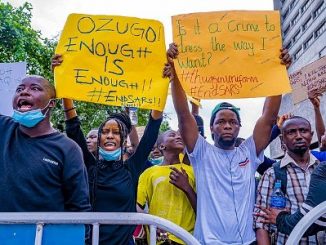
Experiences of the explosion of class struggle

12/05/2012: Urgency of a working class alternative proven again

  Nigeria

Russia
Moscow left holds May Day Moscow demonstration

12/05/2012: Lively and political CWI contingent attracts variety of activists

  May Day, Russia

May Day
Demonstration in Uleåborg Finland

12/05/2012: Meeting discusses involvement in Afghanistan

  Finland, May Day

Kazakhstan
Miners’ strike ends in victory for workers

11/05/2012: Campaign Kazakhstan reports that newspapers in Kazakhstan said a strike by miners at KazakhMys ended on 7 May with a complete victory for the workers.

  Kazakhstan

 Irish referendum
No to the austerity treaty!

10/05/2012: On 31 May Irish voters are asked to vote on the European fiscal treaty. This video explains what the treaty is about.

  Ireland Republic, Video

May Day in Nigeria
Fanfare fails to mask workers’ anger

10/05/2012: May Day should have offered opportunity for workers to pose their demands and agitation before the government

  May Day, Nigeria

France
Weekend that shocked Europe

09/05/2012: Austerity rejected in Eurozone’s second biggest economy

  France

Sri Lanka
United left May Day in Colombo

09/05/2012: Socialist organisations march to joint rally

  May Day, Sri Lanka

Britain
Legitimacy of Cameron and Clegg further shattered

07/05/2012: The Con-Dem government suffered a crushing defeat in last Thursday’s elections for local authorities and in the mayoral contests apart from London.

  Britain

The capitalist “vampire squid” and the class struggle in Europe

06/05/2012: As economic crisis worsens and class struggles continue in Spain, Greece, Portugal and elsewhere in Europe, the need for working class fight-back and to build the influence of Marxism grows.

  CWI Comment And Analysis, Europe

Hong Kong
Thousands march on May Day

05/05/2012: Socialist Action (CWI) campaigning against the capitalist 1% and against racism

  Hong Kong, May Day

Sweden
May Day in Gothenburg

05/05/2012: Bobby Seale as guest speaker

  May Day, Sweden

 Kazakhstan
Trial of Vadim Kuramshim resumes

04/05/2012: Solidarity needed to free Vadim!

  Kazakhstan, Solidarity

Pakistan
May Day in Sindh

04/05/2012: Fotos of impressive march

  May Day, Pakistan

Lebanon
Build a mass workers’ movement to get rid of the corrupt ruling class

03/05/2012: For a workers’ programme that puts forward the socialist alternative

  Lebanon, May Day

Germany
Heading towards days of action against Troika austerity

03/05/2012: Days of action planned in Frankfurt/Main against European Central Bank and big finance

  Germany

Britain
"We’re striking back on 10 May"

02/05/2012: Pension cuts, job cuts, service cuts

  Britain

Ireland
Water charges are just paving the way for privatisation

02/05/2012: Irish government doesn’t seem to have learned anything from the massive opposition to its Household Tax

  Ireland Republic

France
Down with Sarkozy and austerity policies!

02/05/2012: Make the rich and the bankers pay for their crisis!

  France

Sweden
Chinese premier’s visit met by vociferous democracy protests

01/05/2012: CWI supporter Zhang Shujie and other activists took to the streets when Wen Jiabao visited Stockholm and Gothenburg

  China, Sweden

May Day 2012
Celebrate working class history and fight for new victories!

30/04/2012: International Workers’ Day and the socialist alternative to austerity and barbarism

  CWI Comment And Analysis, May Day

Libya

No to Western military intervention

www.socialistworld.net, 18/03/2011
website of the committee for a workers' international, CWI

Victory to the Libyan revolution - Build an independent movement of workers and youth!

Robert Bechert, CWI

The UN Security Council’s majority decision to enact a militarily-imposed ‘no-fly-zone’ against Libya, while greeted with joy on the streets of Benghazi and Tobruk, is in no way intended to defend the Libyan revolution. Revolutionaries in Libya may think that this decision will help them, but they are mistaken. Naked economic and political calculations lay behind the imperialist powers’ decision. It is not a lifeline that could ‘save’ the revolution, in the real sense of the word, against Gaddafi. Major imperialist powers decided that they wanted now to exploit the revolution and try to replace Gaddafi with a more reliable regime. However the Libyan foreign minster’s announcement of an immediate ceasefire has complicated imperialism’s position.

Faced with a rapid eastwards advance of Gaddafi’s forces, many in eastern Libya seized hold of the idea of a no-fly-zone to help stem this tide, but this is not the way to defend and extend the revolution. Unfortunately, the revolution’s initial drive towards the west, where two-thirds of Libyans live, was not based on a movement, built upon popular, democratic committees that could offer a clear programme to win support from the masses and the rank and file soldiers, while waging a revolutionary war. This gave Gaddafi an opportunity to regroup.

The growing support for a no-fly-zone was a reversal of the sentiment expressed in the English language posters put up in Benghazi, in February, declaring: “No To Foreign Intervention – Libyans Can Do It By Themselves”. This followed the wonderful examples of Tunisia and Egypt, where sustained mass action completely undermined totalitarian regimes. The Libyan masses were confident that their momentum would secure victory. But Gaddafi was able to retain a grip in Tripoli. This, at least, relative stabilisation of the regime and its counter-offensive led to a change in attitude towards foreign intervention that allowed the largely pro-Western leadership of the rebel ’Interim Transitional National Council’ to overcome youth opposition to asking the West for aid.

However, despite the Gaddafi regime’s blood-curdling words, it is not at all certain that its relatively small forces could have launched an all-out assault on Benghazi, Libya’s second largest city, with around a million living in its environs. A mass defence of the city would have blunted the attack of Gaddafi’s relatively small forces. Now, if the ceasefire holds and Gaddafi remains in power in Tripoli, a de-facto breakup of the country could occur, returning to something like the separate entities that existed before Italy first created Libya after 1912 and which Britain recreated in the late 1940s.

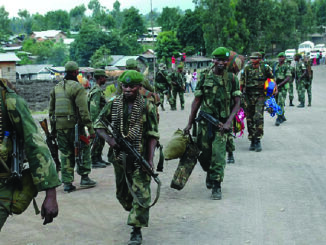
Fighters in Benghazi

Whatever the immediate effect the ‘no fly zone’, any trust placed in either the UN or the imperialist powers threatens to undermine all the genuine hopes and aspirations of the revolution that began last month. This is because the powers that have imposed threatened military action are no friends of the Libyan masses. Until recently, they were quite happy to deal with, and pander to, the murderous Gaddafi ruling clique, to maintain a ‘partnership’, especially concerning Libya’s oil and gas industries. Indeed, the day after the UN took its decision, the Murdoch-owned Wall Street Journal lamented that “the close partnership between the Libyan leader Col. Muammar Gaddafi’s intelligence service and the CIA has been severed” (18 March, 2011). The Journal reported “according to a senior US official” the previous ‘partnership’ was “especially productive”.

Now, having lost former dictatorial allies Mubarak, in Egypt, and Ben Ali, in Tunisia, imperialism is trying to take advantage of the popular uprising in Libya to both refurbish its “democratic” image and to help install a more “reliable” regime, or at least a part of Libya. As before, North Africa and the Middle East, with its oil and strategic location, are of tremendous importance to the imperialist powers.

This reveals the absolute hypocrisy of the main imperialist powers, which have shamelessly supported repressive dictatorial regimes throughout the Middle East for decades. At the very same time that they were deciding the No Fly Zone, the same powers did absolutely nothing to prevent Saudi Arabia and its Gulf allies’ increasingly brutal suppression of the majority of the Bahraini population and their attempt to ferment sectarianism. Within 12 hours of the UN decision, the armed forces another regional ally, Yemeni, ally shot dead at least 39 protesters in the capital city, Sanaa. The UN was only able to take its decision on Libya because the Arab League supported a no fly zone, but of course these mainly reactionary rulers say nothing about repression in Bahrain, Yemen or other Arab countries.

Gaddafi and Sarkozy in the past

Cameron and Sarkozy’s “concern” for Libya is at least partly motivated by domestic unpopularity and the hope that a foreign success will strengthen their standing. Cameron clearly hopes for a boost similar to that which Thatcher enjoyed after her victory in the 1983 Falklands war. But Thatcher achieved a quick military victory - the no fly zone operation will not will produce a similar military win. Sarkozy, after the disaster of his Tunisia policy that led to the resignation of the French Foreign Minister, needs a “success” to lift his low poll ratings as next year’s Presidential election looms closer.

Gaddafi zig-zags

Despite the imperialist powers’ recent rapprochement with Gaddafi, the tyrant always remained an unreliable ally. Throughout his nearly 42 years in power, Gaddafi zig-zagged in policy, sometimes violently. In 1971, he helped the Sudanese dictator, Nimeiry, crush a left coup that took place in reaction to the earlier suppression of the left, including the banning of the one-million member Sudanese communist party. Six years later, Gaddafi proclaimed a "people’s revolution" and changed the country’s official name from the Libyan Arab Republic to the Great Socialist People’s Libyan Arab Jamahiriyah. Despite the name change and the formation of so-called “revolutionary committees”, this was not genuine democratic socialism or a move towards it. The Libyan working people and youth were not running their country. Gaddafi remained in control. This was underlined by the increasingly prominent role that many of his children played in the regime.

Nevertheless, since 1969, on the basis of a large oil income and a small population, there was a big improvement in most Libyans’ lives, especially in education and health, which at least partly explains why Gaddafi still has some basis of support amongst the population. Even while there is growing opposition to the Gaddafi clique, especially amongst Libya’s overwhelmingly young and educated population, there is also fear about who might replace him and opposition to anything that smells of foreign rule. The revolutionaries’ widespread use of the old ruling monarchy’s flag was bound to alienate those who do not want to return to the past and was used by Gaddafi to justify his rule. Flying the old flag also risked alienating Libyans in the west of the country because the former king came from the east and had no historic roots in the area around Tripoli.

But these factors are not a complete explanation as to why Gaddafi was able, at least temporally, to stabilise his position. While there was a popular uprising in eastern Libya, Gaddafi was able to maintain his position in the west, where two-thirds of the population live, despite large protests in Tripoli and uprisings in Misrata, Zuwarah and a few other areas.

Role of the working class

Unlike in Egypt and Tunisia, the working class in Libya has not, so far, begun to play an independent role in the revolution. Furthermore, many workers in Libya are migrants who have fled the country in recent weeks.

The absence of a national focal point which, for example, the Tunisian UGTT trade union federation provided (despite its pro-Ben Ali national leadership), complicated the situation in Libya. The huge revolutionary enthusiasm of the population has not, so far, been given an organised expression. The largely self-appointed ‘National Council’ that emerged in Benghazi is a combination of elements from the old regime and more pro-imperialist elements. For example, the Council’s foreign spokesman, Mahmoud Jibril, the former head of Gaddafi’s National Economic Development Board, was described by the US Ambassador, in November 2009, as a “serious interlocutor who ‘gets’ the US perspective”.

It is easy for Gaddafi to present these people as a threat to Libyan living standards and agents of foreign powers. At the same time, this propaganda will have only a limited effect, as population’s living standards worsening and unemployment increased (standing at 10%) since from the end of the 1980s oil boom and the start of privatisation back in 2003.

Gaddafi’s use of the threat of imperialist intervention did gather some support and if the country becomes divided may gain more. How long this can sustain Gaddafi is another question. In addition to anti-imperialist rhetoric, Gaddafi made concessions to maintain support. Each family has been given the equivalent of $450. Some public sector workers have been given 150% wage increases and taxes and customs duties on food have been abolished. But these steps do not answer the demands for freedom or end the growing frustration of Libya’s youthful population, with an average age of 24, over the regime’s corruption and suffocating grip.

Around the world, millions of people follow, and are inspired by, the revolutions in North Africa and the Middle East. These events inspired protests against the effects of the continuing capitalist crisis in many countries. Some of those welcoming the revolutionary events in the region may support the UN’s ‘no fly zone’ but socialists argue that it is primarily made in the interests of the imperialist powers – the same powers that no nothing substantially to restrain the repressive actions of Gulf states against mass protests in their countries.

But what then can be done internationally to genuinely help the Libyan revolution? First of all, trade unions should block the export of Libyan oil and gas. Secondly, bank workers should organise the freezing of all the Gaddafi regime’s financial assets.

The ‘no fly zone’ will not automatically lead to the overthrow of Gaddafi, in fact, like Saddam Hussein, the Libyan leader could entrench his position for a time in those parts of the country he controls. As the experience of Egypt and Tunisia shows, the key to overthrow dictatorships is the movement of the working masses and youth.

A revolutionary programme

Thus the fate of the revolution will be decided inside Libya itself. Its victory requires a programme that can cut across tribal and regional divisions and unite the mass of the population against the Gaddafi clique and for a struggle for a better future.

A programme for the Libyan revolution that would genuinely benefit the mass of the population would be based on winning and defending real democratic rights; an end to corruption and privilege; the safeguarding and further development of the social gains made since the discovery of oil; opposition to any form of re-colonisation and for a democratically-controlled, publicly-owned, economic plan to use the country’s resources for the future benefit of the mass of people.

The creation of an independent movement of Libyan workers, poor and youth that could implement such a real revolutionary transformation of the country, is the only way to thwart the imperialists’ plans, end dictatorship and to transform the lives of the people.


Free Vadim! Europe

 video

Kazakhstan: MEP speaks out against repression, 15/05/2012

 further videos

CWI - get involved


solidarity

tamil solidarity campaign kazakhstan

featured links

Paul Murphy, MEP

cwi links

Marxist.net, CWI marxist archive

cwi comment & analysis

world economic crisis

analysis and commentary


cwi publications

marxism in today's world che

Che Guevara: Símbolo de Lucha

Por Tony Saunois

A socialist world is possible, the history of the cwi with new introduction by Peter Planning green growth, a contribution to the debate on enviromental sustainability