

deutsch |  english |  español  |  français  |  italiano  |  nederlands  |  polski  |  português  |  svenska  |  türkçe  |  中文  |  عربي  |  русский

latest news

Sri Lanka
Working class beginning to move forward

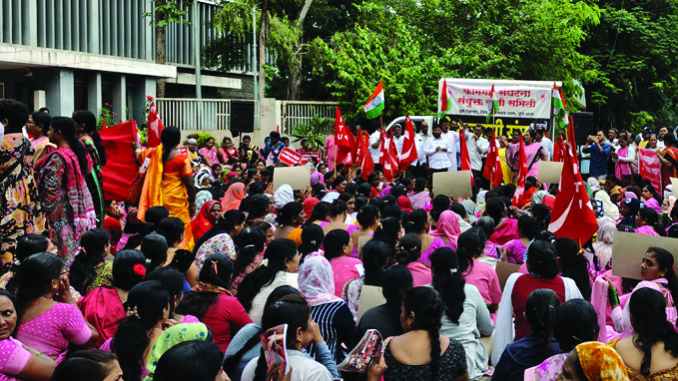
25/05/2013: The one day protest general strike held on 21 May was a significant step forward for the working class in Sri Lanka.

  Sri Lanka

Sweden
Riots in Stockholm working-class suburbs

24/05/2013: Neo-liberalism and police violence have created social time-bomb

  Sweden

30 years ago
Liverpool - a city that dared to fight

24/05/2013: Interview on Militant, the Labour Party and the struggle of the socialist led council 1983-87 in Liverpool

  Britain, History

Britain
Tories in turmoil over Europe

24/05/2013: The Tories are thrashing around in ever-deeper water on the issue of Europe.

  Britain, Europe

 Kazakhstan
Campaign leader sentenced to ten days in prison

23/05/2013: MEP demands immediate release of Housing Campaigners - solidarity still needed

  Kazakhstan, Solidarity

Britain
No to terrorism! No to racism! No to war!

23/05/2013: Statement on Woolwich killing

  Britain

 Tunisia
the Ministry of Women excuses violations against women rights

23/05/2013: In the «most developped country for women in the Arab world», the struggle for women rights remains more relevant than ever

  Tunisia, Women

Germany
DIE LINKE and the Euro

23/05/2013: After Lafontaine’s proposal to get rid of the Euro – what should the left say?

  Germany, New workers' parties

 Ireland
Tax haven for multinational corporations

22/05/2013: How Ireland is used as a tax haven by multinational corporations while the government is preparing to steal the property tax from people’s wages, social welfare and pensions

  Ireland Republic, Video

Germany
Strike at Amazon

22/05/2013: Union-agreed rates could bring Amazon workers 9000 euros more a year

  Germany

Taiwan
Sea shooting sees Filipino migrants become target of racist backlash

21/05/2013: Anti-racist campaign needed against corrupt ruling elites and capitalism

  Taiwan

Nigeria
President Jonathan declares state of emergency

21/05/2013: An expressway to attacks on democratic rights! For democratic mass working peoples’ defence committees!

  Nigeria

G8 Summit, Northern Ireland
’Why YOU should oppose the G8’

20/05/2013: This year’s G8 summit will be held in County Fermanagh, Northern Ireland, on 17th – 18th June. This gathering brings together the heads of government of eight of the world’s largest capitalist economies to discuss how they can further the interests of those they represent – the super-rich, big business and the bankers.

  Anti-globalisation, Ireland North

World economy
"Central banks are flying blind"

19/05/2013: Increasing concerns and contradictions

  World Economy

South Africa
Mass retrenchment threat in mining industry demands mass action

18/05/2013: Workers and Socialist Party calls for one-day-general strike

  South Africa

Iran
What would a Rafsanjani presidency mean?

18/05/2013: Iran’s June 14 presidential election takes place against the background of deep divisions in society and the regime.

  Iran

Australia
Labour approves WA’s first uranium mine

17/05/2013: Australia’s federal environment minister Tony Burke gave the go ahead to Toro’s $270 million uranium mining project in the Wiluna region of Western Australia.

  Australia, Environment

New Zealand
Racism and recession in New Zealand

15/05/2013: Working class unity needed to defend rights and living standards

  New Zealand

Australian budget
Say ‘NO’ to the cuts agenda of the major parties

14/05/2013: We shouldn’t let either of the major parties tell us that ‘tough decisions’ or ‘hard cuts’ are required.

  Australia

Ireland
‘Bus Eireann workers in front line of class war - We should all support them!’

13/05/2013: Bus workers take strike action over savage wage cuts and attacks on conditions

  Ireland Republic

Italy
The economic crisis becomes a political and institutional crisis

11/05/2013: The latest events that have happened in Italian politics mark a new phase of development in the crisis in the third European industrial power.

  Italy

Turkey / Kurdistan
PKK announces ceasefire

11/05/2013: On 8 May the PKK has begun to withdraw from Turkey. Millions are hoping now for an end to oppression and for democratic rights.

  Kurdistan, Turkey

Malaysia
Election ’victory’ based on fraud

10/05/2013: Ruling Barisan Nasional’s widespread fraud enrages opposition supporters and young people

  Malaysia

Greece
Challenging the Golden Dawn

10/05/2013: On 2 May the neo-fascist Golden Dawn attempted to distribute food in Syntagma square in Athens to people holding proof of Greek nationality.

  Greece

British county elections
Capitalist parties rejected

10/05/2013: Time for a new mass workers’ party

  Britain

Tunisia
The calm before the storm

09/05/2013: New clashes on the horizon

  Tunisia

Pakistan
General elections held amid political turmoil

08/05/2013: Big landlords, capitalists and influential families are calling the shots

  Pakistan

Sri Lanka
Successful May Day

08/05/2013: The United Socialist Party’s May Day demonstration passed successfully through a number of populous areas of Colombo, ending at Grand Pass Junction.

  May Day, Sri Lanka

Hong Kong
Dockworkers’ strike ends after 40 days

07/05/2013: Union representatives declare a “half success” with a pay rise of 9.8 percent – but important issues are unresolved

  Hong Kong

Britain’s ’precariat’
Fighting for real jobs

06/05/2013: ’Get a job!’ is the constant refrain of privileged Tory ministers and vicious right-wing tabloids. A million unemployed young people are the subject of a relentless campaign of smears and lies.

  Britain, Youth

Liverpool
Rally marks 30 year anniversary of election of socialist council

05/05/2013: Great event remembers the ’47’ struggle

  Britain, History

 Women and the struggle for socialism
It doesn’t have to be like this

05/05/2013: Christine Thomas’ book outlines how inequalities and discrimination against women have not disappeared and women’s struggles must be bound up with wider class struggle to be successful. Read the complete book online here.

  Women

Palestine

Nakba Day sparks mass protests

www.socialistworld.net, 21/05/2011
website of the committee for a workers' international, CWI

Arab revolutions inspire new generation to fight Israeli occupation

Shahar Ben-Khorin, Socialist Struggle Movement (CWI Israel/Palestine) and Jan Kowalski (CWI)

Tens of thousands of people demonstrated all around the occupied Palestinian territories, as well as inside Israel and in neighboring countries along its borders, to mark the day of remembrance of the Nakba (Arabic for "the Catastrophe”).

15 May is the Gregorian calendar anniversary of the creation of the state of Israel in the 1948 Arab-Israeli War. During this war over 750,000 Palestinians fled or were brutally forced from their homes by Zionist military forces and later by the new Israeli state itself. Ever since, the Israeli regime, in an attempt to enforce a Jewish majority, has emphatically denied the right of Palestinian refugees to return – even in regards to the "internally displaced" among the remaining Palestinian minority in Israel. In complete contrast, anyone who can claim a Jewish background can automatically become a citizen upon arriving in Israel. The continued processes of expropriation and dispossession of the Palestinians by the Israeli regime after 1948, including the 1967 occupation of Gaza and the West Bank and its horrific repercussions, are considered by many Palestinians as the "ongoing Nakba".

The Nakba Day is traditionally commemorated by mourning and protest. In 2000 it was the Palestinians’ strong protest of rage during Nakba Day which indicated that the Palestinian masses were about to arise against the fraud of the "peace process" at that time.

This year, against the background of the North African and Middle Eastern revolutions, the protests of Nakba Day reached an unprecedented scale. In support of the right of return of the Palestinian refugees and against the Israeli occupation and attacks on the Palestinians, parallel protests and "marches of return" were organized in Gaza, West Bank, East Jerusalem, inside Israel, and by Palestinian refugee communities and supporters in Lebanon, Syria, Jordan and Egypt. Some of the protests began already on Friday 13 May. In many of the demos, the protesters held symbolic keys that represented the homes left behind.

Many of the stormy protests this year met with tear gas and live ammunition, mostly from the Israeli Defense Forces (IDF). In total, more than 20 Palestinian demonstrators were killed, and many more wounded. The West Bank was put under military closure, and sharp clashes developed there and in East Jerusalem between protesters and Israeli military and police forces.

Jerusalem, 13 May

In the Silwan village (formally a neighbourhood in East Jerusalem) – where the residents have been struggling for years against attacks from the colonial settlements – a 17-year-old protestor was shot dead by the security guards or by the far-right settlers. His funeral march was also attacked.

Thousands participated in the main rally in Ramallah. Not far away, the 15 March youth movement and some of the ’popular committees’ organised a very militant demo of over 1,000 people at the Qalandiya refugee camp in front of the checkpoint that separates Ramallah from Jerusalem and southern West Bank. The demonstrators called for an end to the occupation, as well as for elections to the Palestinian National Council (of the Palestine Liberation Organization), with a right to vote for "any Palestinian everywhere". Fierce clashes with the Israeli military developed, with protesters trying to drive away the military with Molotov cocktails, stones and burning tiers barriers. The Israeli military used massive amounts of tear gas, stun grenades and rubber-coated steel bullets, and performed sudden arrests of adults and minors, using undercover agents. One protestor was killed on that demo.

Near Hebron

In Egyptian Rafah, Palestinians protested at the border with Gaza. In Cairo thousands marched on the Israeli embassy. The Egyptian riot police intervened and wounded, using live ammunition, 50 demonstrators. 150 were arrested.

Before Nakba day, the Egyptian authorities stopped potential demonstrators from Tahrir Square from entering Sinai and marching in solidarity to the border with the Gaza strip. This repression was ironically supported by the leader of the Hamas, Khaled Mash`al, who said, following Hamas’ reconciliation with Fatah, that no such protest is necessary at the moment. In parallel, the Jordanian security forces blocked a Palestinian protest on the border with Israel, where some attempted to cross the border with vehicles.

On the Israeli-Syrian border, a dramatic scene unfolded, when out of a demonstration of 1,000 Palestinians and supporters, 70 were able to pass the border from Syria and demonstrate in the village Majdal Shams, in the Golan Heights, occupied and annexed by Israel since 1967.

On the Israeli-Lebanese border several thousands of people protested and were stopped by the IDF. Ten were shot dead. In response, a day of mourning and a general strike was declared on 16 May in the 12 Palestinian refugee camps in Lebanon.

New movement in the light of the Arab spring

The revolutionary wave in the Arab countries and Northern Africa inspired the new level of Palestinian resistance. The mass movement of millions has been the decisive force in challenging brutal regimes and reshaping relations in the region.

This led to mass protests by a new generation of Palestinians on 15 March in cities in the West Bank and Gaza. Young people came together to demand the national unity of Palestine. They acted against the rival leaderships of both Fatah in the West Bank and Hamas in Gaza.

Given the background of the Arab revolution, this start of a rebellion from below was powerful enough to enforce a deal between Hamas and Fatah. Elections were promised in the next twelve month.

The Egyptian regime brokered these negotiations. They tried to use this opportunity to present themselves – the old military leadership just without the face of Mubarak – as a new force. But their attempts to stop the mass protests on 15 May shows the same approach as before Mubarak’s overthrow.

The Syrian regime – unlike previous years – was not in a position to stop demonstrators on Nakba day. Partially as an attempt to divert the attention away from the brutal oppression of the movement in Syria, Assad’s regime allowed the reporting of protests by TV stations like Al Jazeera for the first time– but only from the Golan Heights. On the other hand, the regime can no longer just enforce a silence against the will of ordinary people, including the hundreds of thousands Palestinian refugees in Syria.

The 15 May protests saw an increase, compared to the 15 March, in the involvement of Palestinians and others around the occupied territories, especially by refugees in the neighbouring countries. Their active involvement in a mass movement is changing the situation again.

Third Intifada?

The hopes of many Palestinians are now directed towards a decision by the United Nations (UN). Palestinian President Mahmoud Abbas, in office despite his election term ending a long time ago, is asking the UN general assembly to recognise the Palestinian state in the borders of 1967. The vote will be taken in September.

Again and again in the last 20 years the hopes in the peace process and in negotiations have risen – and with the same regularity they have brutally failed. Real steps forward were achieved after rebellions by the Palestinians themselves, especially the first Intifada. This Intifada started in 1987, with a revolutionary movement of mass resistance consisting of general strikes and protest marches against the occupation. This led to the partial withdrawal of the IDF from Palestinian cities, refugee camps and villages and to the establishment of the Palestinian Authority (PA) in 1994, allegedly as an interim step towards a future Palestinian state.

The disappointment over the PA and the lack of any further achievements in the peace process led to the second Intifada, starting in September 2000. Unfortunately, the character of it was more marked by the desperate and counterproductive individual bomb attacks on Israeli civilians than an active involvement of the masses.

If the decisions in September will not lead to a change in the situation on the ground, there is now the potential of a new mass or at least semi-mass uprising, a Third Intifada. Given the history of failed negotiations, the euphoria for any negotiations will be limited and the patience to wait for any talks to deliver changes is low.

The events now are already interpreted in Israeli and Palestine media as a potential dress rehearsal for the coming year.

Golan Heights, 15 May

Netanyahu trembles

The ruling class in Israel is frightened by the developments.

Over decades the Israeli regime used the brutal dictatorships in states around Israel, through de facto cooperation, to keep the Arab masses under control. At the same time, Israel’s ruling elite presented itself as being under siege of reactionary, hostile regimes.

US imperialism backed the Israeli state as one of their main tools to defend their interests in the region. On 20 May Israel’s prime minister, Binyamin Netanyahu, met Obama in the White House to elaborate on the new developments and find a way to deal with the new situation.

However, the events of 15 May again show the brutality of the Israeli regime in response to the movement of Palestinians.

The mass movements have forced Netanyahu to manoeuvre. $60 million (US) for the Palestinian authorities were blocked by the Netanyahu government after the deal of cooperation between Fatah and Hamas. This money has now been released. As international support for Palestinians is growing, pressure is increasing to achieve at least something in the coming UN debates. Imperialist forces fear that a failure to give some concessions to the Palestinians’ national demands now could end up in a dire geostrategic entanglement. There is a growing anti-imperialist mood throughout the region and a strong rejection of the imperialist plan of "two states", meaning of a "controllable" Palestinian puppet-state. The Israeli ruling class mainstream particularly fears that the Palestinian masses - soon to be a majority between the Jordan river and the sea – might then arise and fight for full rights within one state.

So, in comparison with the UN’s former support of the Palestinian declaration of independence in 1988, this time more concrete formal measures can be expected. However, this is not enough. The Israeli ruling elite will do everything they can to prevent any fundamental concessions required for a truly independent Palestinian state. They will sooner or later be forced to accept an empty token phrase of a so called "state" of the Palestinian authorities. However, recognising a Palestinian state alongside its border would be, to the Israeli regime, a threat in "its own backyard". A Palestinian state would be a pole of support for the demands of national rights of the Palestinian minority inside Israel.

The Israeli ruling class will not accept a Palestinian political entity that is independent of its dictates. The right wing of the Israeli government would try to “transfer” Palestinians currently living within the 1967 Israel borders to any new Palestinian state. This would increase the Israeli-Jewish majority in Israel, and could be used to enshrine division.  However, given the social problems in the region, the desperate struggle on water and housing, and the effects of the international capitalist crisis, the Israeli capitalist class strives to accept nothing but neo-colonial domination of a future Palestinian economy, subduing such a puppet-state to its own interests.

Netanyahu has ‘offered’ to give the ‘majority’ of the occupied West Bank to a demilitarised Palestinian state, keeping up to 40% of the territory occupied in 1967 for Israel, claiming all of Jerusalem and the large settlement blocs in the West Bank as well as a military presence in the Jordan Valley.

The Palestinian leaders of the PLO and especially Fatah, were desperately prepared to offer almost everything, just to get this token of a state. This was revealed by Al Jazeera, publishing the ‘Palestine papers’ in January this year, presenting leaked diplomatic correspondence relating to the Israeli-Palestinian peace process.

But this is not what the Palestinian masses can accept and will accept, especially given an increased self-confidence from the rebellions all around Arab countries.

How can the Israeli occupation be defeated?

Given the huge, overwhelming military advantage of the Israeli state, backed by US imperialism, it is not a primarily military question of how to end the occupation. It is a question of the social support and strength of the Israeli army. A strategy is needed to defend the Palestinians against the occupation forces, including military struggle, but also to challenge the social base of the IDF.

Against a background of a series of wars, individual bomb attacks and rockets against the civilian population in Israel only made it easier for the Israeli regime to create a feeling of national Jewish unity and pushes the Jewish workers and youth into the arms of the Israeli state and ruling class.

In contrast, mass movements of Palestinians appealing to Israeli workers on class lines, could build a powerful struggle for social demands and an end to oppression by the Israeli ruling class. This is what the Israeli ruling class fears the most.

Netanyahu, speaking in the Knesset, portrayed the demonstrators trying to enter Israel on 15 May as not arguing for a Palestinian state but for the destruction of Israel.

The Israeli ruling class tried to increase the feeling of fear amongst Israeli workers during the whole period of the Arab and North African revolutions. The fall of Mubarak was presented as the fall of a barrier against attacks on Israel and against Islamist forces taking control.

The Israeli regime attempts to use this fear to counter any sympathy developing inside Israel for the struggle of workers and youth in Egypt and elsewhere. They do everything to hide the role of mass movements and the potential of the working class - threatening Ben Ali in Tunisia and Mubarak in Egypt with general strikes - behind a curtain of dangers and fear.

So far there is a very mixed mood in Israel.

Food and other prices not only rocketed in the Arab world, but also in Israel. In February, the Histadrut trade union leadership had to use the threat of a general strike against the effects of inflation. There was a popular feeling of ‘what they can do in Egypt is something we can do here’.

Last week train workers took action against privatisation. Strike leaders were arrested. One of these leaders referred to the struggle of the Arab masses for democracy: This inspires her and the workers to strongly demand their rights and stand up to the attacks and demonising propaganda, she said afterwards.

The class struggle in Israel has also seen growing opposition inside the General Histadrut, the main trade union. More than 10,000 social workers shocked the leadership of this union, traditionally very close to the Israeli state, by refusing to accept a brokered deal in March. Despite the end of the strike afterwards, enforced by courts, debates about the role of the leadership in the trade union and attempts to form organised opposition are developing at the moment.

Other workers went further and left Histadrut. This happened for example with the Haifa Chemical workers, who are on strike at the moment and are members of a new, fighting trade union called Power to the Workers (see article).

On the other side, the feeling of siege and being in danger in an isolated position in the Middle East is widely spread and mobilised not only by the far-right government but all the capitalist media in Israel. Mubarak’s overthrow and the weakness of the Jordanian regime are seen as opening the war to Israel being completely surrounded by more or less hostile regimes. Despite its rhetoric the Syrian regime was not prepared for renewed direct clashes with Israel, but what could happen if it collapsed is a different question. The Assad’s regime allowed the Nakba day protests on the Golan Heights as a warning of how unstable the situation could be if the regime was toppled.

Given the mass border protests on 15 May, the capitalist media started to discuss how to answer this challenge of marches in support of the right of Palestinians to return. The far right will try to use it as an argument for brutal repression and war. A more far-sighted wing of capitalism is searching for other ways to deal with this question. The reliable reactionary Middle East regimes of the past helped them to avoid such circumstances. Now things have changed.

The propaganda in Israel has some effect on Jewish workers and youth, and this might even increase in the near future. Given the absence of a mass workers’ party and the rotten role of the main trade unions’ leadership, the dominating trend can be for a limited period towards Zionist nationalism. But this will not be homogeneous and long lasting.

Need of strategy for the Palestinians’ struggle

On 15 May, an Israeli-Palestinian truck driver ran over walkers in southern Tel-Aviv, killing one. While it is not yet certain that this was motivated on nationalist basis, it was nevertheless used by Israeli media as another example of the potential of future escalation, putting the lives of ordinary Jewish workers and youth into danger.

Protesters coming from Syria, 15 May

While the struggle for an end of the occupation of Palestinians has all rights of resistance, including the right of self-defence and armed struggle, this underlines the need for a clear strategy of the movement of Palestinians to achieve freedom and social change.

It is necessary to strengthen the mobilisation and involvement of the masses, organised by democratic elected committees from below. This is necessary to overcome corruption and mismanagement, as well as the undemocratic governments of both Fatah and Hamas, which are an obstacle in the road to achieving genuine liberation. Fearful of the developments of a mass struggle from below, they tried to keep the mass mobilisation in check, both in Gaza and the West Bank.

Mass resistance has to be organised and linked to the struggle to overcome the social misery for the oppressed masses. A glimpse of the power of the working class was seen in the developments in Tunisia and Egypt. Independent trade unions and workers committees are necessary to develop this as an essential part of the struggle.

A new mass party with a socialist programme is needed to offer a way out of exploitation, oppression and imperialist domination.

A class appeal to the Jewish working class in Israel is necessary to end the ability of the Israeli state to rest on the Jewish part of the population. This can also seriously weaken and paralyse the IDF itself as it could trigger a wider refusal of Jewish youth to serve in the occupied territories or in an occupying army.

Such an appeal is only possible on the basis of overcoming the fears of Jewish workers. As long as they feel threatened as Jews, the bridge between Israeli and other workers in the region will not be built. Without this bridge being built, the Palestinian masses could win many gains against the occupation and settlements, and for national rights, but would not fully achieve their goal of national liberation, including a future in which the right of return for the refugees could be respected.

The Jewish and Palestinian socialists of the CWI in Israel - the Socialist Struggle Movement - is energetically supporting the mass movements of Palestinians against the occupation and for absolutely equal national and democratic rights. Socialist Struggle Movement is working to unite workers and youth of all nationalities in the struggle against oppression, exploitation and war. A lasting solution will only be possible, if the social needs are met and the questions of housing, water and refugees are solved. Therefore the struggle against the occupation is inseparably linked to the struggle against capitalism and imperialism.

Striving for a socialist confederation of the Middle East, with a genuinely independent socialist Palestine alongside a socialist and truly democratic Israel, can help to develop a united struggle, offering guarantees of security for people of all nationalities, under the conditions of full rights for all minorities in all areas.


Europe

 video

Ireland: Tax haven for multinational corporations, 22/05/2013

 further videos

CWI - get involved


solidarity

tamil solidarity campaign kazakhstan

featured links

Paul Murphy, MEP

cwi links

Marxist.net, CWI marxist archive

cwi comment & analysis

world economic crisis

analysis and commentary


cwi publications

marxism in today's world che

Che Guevara: Símbolo de Lucha

Por Tony Saunois

A socialist world is possible, the history of the cwi with new introduction by Peter Planning green growth, a contribution to the debate on enviromental sustainability

NEWS

Sri Lanka: Working class beginning to move forward
25/05/2013, Srinath Perera, United Socialist Party (USP – CWI, Sri Lanka):
The one day protest general strike held on 21 May was a significant step forward for the working class in Sri Lanka.

Sweden: Riots in Stockholm working-class suburbs
24/05/2013, Reporters of Offensiv, paper of Rättvisepartiet Socialisterna (CWI Sweden):
Neo-liberalism and police violence have created social time-bomb

30 years ago: Liverpool - a city that dared to fight
24/05/2013, Peter Taaffe speaking to "Tony Snell in the Morning", BBC Radio Merseyside:
Interview on Militant, the Labour Party and the struggle of the socialist led council 1983-87 in Liverpool

Britain: Tories in turmoil over Europe
24/05/2013, Editorial of the Socialist, paper of the Socialist Party (CWI England & Wales):
The Tories are thrashing around in ever-deeper water on the issue of Europe.

Kazakhstan: Campaign leader sentenced to ten days in prison
23/05/2013, Campaign Kazakhstan:
MEP demands immediate release of Housing Campaigners - solidarity still needed

Britain: No to terrorism! No to racism! No to war!
23/05/2013, Greenwich Socialist Party (CWI England & Wales), London:
Statement on Woolwich killing

Tunisia: the Ministry of Women excuses violations against women rights
23/05/2013, Aïda, CWI sympathiser in Tunisia:
In the «most developped country for women in the Arab world», the struggle for women rights remains more relevant than ever

Germany: DIE LINKE and the Euro
23/05/2013, Sascha Stanicic and Lucy Redler, SAV (CWI Germany):
After Lafontaine’s proposal to get rid of the Euro – what should the left say?

Ireland: Tax haven for multinational corporations
22/05/2013, Paul Murphy, MEP, Socialist Party (CWI Ireland):
How Ireland is used as a tax haven by multinational corporations while the government is preparing to steal the property tax from people’s wages, social welfare and pensions

Germany: Strike at Amazon
22/05/2013, An Amazon activist reporting to SAV (CWI Germany):
Union-agreed rates could bring Amazon workers 9000 euros more a year

Taiwan: Sea shooting sees Filipino migrants become target of racist backlash
21/05/2013, Chris Dite and CWI Taiwan reporters, article from Chinaworker.info:
Anti-racist campaign needed against corrupt ruling elites and capitalism

G8 Summit, Northern Ireland:’Why YOU should oppose the G8’
20/05/2013, Socialist Party, Northern Ireland (CWI Ireland):
This year’s G8 summit will be held in County Fermanagh, Northern Ireland, on 17th – 18th June. This gathering brings together the heads of government of eight of the world’s largest capitalist economies to discuss how they can further the interests of those they represent – the super-rich, big business and the bankers.

South Africa: Mass retrenchment threat in mining industry demands mass action
18/05/2013, DSM (CWI South Africa) reporters:
Workers and Socialist Party calls for one-day-general strike

Iran: What would a Rafsanjani presidency mean?
18/05/2013, Kave Heydari, Iranian CWI supporter in Britain:
Iran’s June 14 presidential election takes place against the background of deep divisions in society and the regime.

Australia: Labour approves WA’s first uranium mine
17/05/2013, Socialist Party (CWI Australia) reporters Perth:
Australia’s federal environment minister Tony Burke gave the go ahead to Toro’s $270 million uranium mining project in the Wiluna region of Western Australia.

New Zealand: Racism and recession in New Zealand
15/05/2013, Jared Phillips, CWI New Zealand:
Working class unity needed to defend rights and living standards

Australian budget: Say ‘NO’ to the cuts agenda of the major parties
14/05/2013, Editorial comment from ‘The Socialist’, paper of the Socialist Party (CWI Australia):
We shouldn’t let either of the major parties tell us that ‘tough decisions’ or ‘hard cuts’ are required.

Ireland: ‘Bus Eireann workers in front line of class war - We should all support them!’
13/05/2013, Socialist Party (CWI Ireland) Reporters:
Bus workers take strike action over savage wage cuts and attacks on conditions

May Day in Nigeria: Jonathan government intensifies attacks on democratic rights
12/05/2013, Ebike Iseru, DSM (CWI Nigeria):
15 DSM members arrested at May Day rallies

Italy: The economic crisis becomes a political and institutional crisis
11/05/2013, Marco Veruggio, ControCorrente (CWI Italy):
The latest events that have happened in Italian politics mark a new phase of development in the crisis in the third European industrial power.

Malaysia: Election ’victory’ based on fraud
10/05/2013, Ravichandren, CWI Malaysia:
Ruling Barisan Nasional’s widespread fraud enrages opposition supporters and young people

Greece: Challenging the Golden Dawn
10/05/2013, Katerina Kleitsa , Xekinima (CWI Greece):
On 2 May the neo-fascist Golden Dawn attempted to distribute food in Syntagma square in Athens to people holding proof of Greek nationality.

British county elections: Capitalist parties rejected
10/05/2013, Editorial of the Socialist, paper of the Socialist Party (CWI England & Wales):
Time for a new mass workers’ party

Tunisia: The calm before the storm
09/05/2013, CWI reporter in Tunis:
New clashes on the horizon

Pakistan: General elections held amid political turmoil
08/05/2013, Khalid Bhatti, SMP (CWI Pakistan), Lahore:
Big landlords, capitalists and influential families are calling the shots

CWI Comment and Analysis

ANALYSIS

Nigeria: President Jonathan declares state of emergency
21/05/2013, Segun Sango, Protem National Chairperson, Socialist Party of Nigeria:
An expressway to attacks on democratic rights! For democratic mass working peoples’ defence committees!

World economy: "Central banks are flying blind"
19/05/2013, Per-Åke Westerlund, from Offensiv, newspaper of Rättvisepartiet Socialisterna (CWI Sweden):
Increasing concerns and contradictions

Turkey / Kurdistan: PKK announces ceasefire
11/05/2013, Festus Okay, Sosyalist Alternatif (CWI Turkey):
On 8 May the PKK has begun to withdraw from Turkey. Millions are hoping now for an end to oppression and for democratic rights.

Women and the struggle for socialism: It doesn’t have to be like this
05/05/2013, Christine Thomas, Controcorrente (CWI Italy):
Christine Thomas’ book outlines how inequalities and discrimination against women have not disappeared and women’s struggles must be bound up with wider class struggle to be successful. Read the complete book online here.

Cyprus: On the edge of a catastrophic slump
25/04/2013, Niall Mulholland, CWI:
Socialist polices needed to resolve crisis in the interests of majority

US: After the Boston Tragedy
23/04/2013, Bryan Koulouris, Boston, Socialist Alternative (CWI supporters in the US):
NO to Racism and Repression

Britain: Combating violence against women
14/04/2013, Hannah Sell, on behalf of the Socialist Party (CWI England & Wales) Executive Committee:
A socialist perspective on fighting women’s oppression

Thatcher: A class warrior for capitalism
12/04/2013, Alistair Tice, Socialist Party regional secretary, Yorkshire:
Millions have been waiting for this day, 8 April 2013. Margaret Thatcher will never be forgiven for the devastation that her Tory governments’ policies wrought on working class communities in the 1980s - and is still being felt today.

Britain: Margaret Thatcher dies
08/04/2013, Peter Taaffe, Socialist Party (CWI England & Wales) general secretary:
Thatcher’s bitter legacy

Britain: A further round of savage austerity
08/04/2013, Peter Taaffe, Socialist Party (CWI England & Wales) general secretary:
We must stop them!

Israel: “There is a future” – of cuts, racism and resistance
05/04/2013, Socialist Struggle Movement (CWI Israel/Palestine):
Weak Israeli government will try to implement austerity budget, and would try to maintain the occupation, possibly under a new cover of "negotiations" with Palestinians. Resistance likely on all fronts.

Cyprus: “Working people pay high price for crisis of euro and capitalism”
31/03/2013, Niall Mulholland spoke with Athina Kariati from New Internationalist Left (CWI in Cyprus) about Cyprus’s deal with the Troika, what it will mean for working people and what is the socialist solution to the crisis:
Interview with a Cypriot socialist

China: New leadership rejects democratisation
28/03/2013, Vincent Kolo, chinaworker.info:
At annual NPC-CPPCC meetings Xi Jinping and Li Keqiang talk of ‘tough reforms’ for economy, but rule out ‘Western models’

Venezuela: After the death of Hugo Chávez
24/03/2013, Tony Saunois, CWI, a shorter version of this article was first published in Socialism Today, magazine of the Socialist Party (CWI England & Wales:
Radical, populist policies and anti-imperialism helped transform the political situation

Italy’s clowns: No joke for establishment parties
23/03/2013, Christine Thomas, ControCorrente (CWI in Italy), first published in Socialism Today, magazine of the Socialist Party (CWI England & Wales):
In his ‘tsunami’ election tour Grillo began to give voice to the deep discontent at economic crisis and austerity

Cyprus/EU: Eurozone back in turmoil
22/03/2013, Tony Saunois, CWI:
No trust in capitalist government! No austerity for the Euro! Kick out the Troika! For a socialist alternative!
[Updated article, 25 March]
South Africa: Workers & Socialist Party launched in Pretoria
21/03/2013, CWI reporters, South Africa:
Launch surpassed all expectations

Iraq: Ten years since ‘shock and awe’
20/03/2013, Niall Mulholland, from The Socialist, weekly newspaper of the Socialist Party (CWI England and Wales):
Imperialism’s harvest of death and destruction

March 8th: The day of international working women’s solidarity
07/03/2013, Clare Doyle, CWI:
Beware the anger of women against the bosses’ system!

Hugo Chavez dies: The struggle continues
06/03/2013, Tony Saunois, CWI Secretary:
Millions of Venezuelan workers, the poor and youth will mourn the death of Venezuelan president, Hugo Chavez

Lebanon: Public sector workers on indefinite strike over wages
04/03/2013, Tamer Mahdi, CWI:
Workers’ unity against big business shows potential for anti-sectarian, socialist alternative

Portugal: New explosion against austerity and the government
03/03/2013, socialistworld.net:
“Screw the Troika – the people are the best rulers”

Tunisia: ‘Buckshot’ Ali Larayedh appointed prime minister
27/02/2013, CWI supporters in Tunisia:
Down with the Ennahdha regime! Down with the system!

Italy: Voters reject austerity in ‘tsunami’ election
27/02/2013, Chris Thomas, Controcorrente (CWI in Italy):
Political instability, crisis and new opportunities ahead