deutsch |  english |  español  |  français  |  italiano  |  nederlands  |  polski  |  português  |  svenska  |  türkçe  |  中文  |  عربي  |  русский

latest news

Sweden
Riots in Stockholm working-class suburbs

24/05/2013: Neo-liberalism and police violence have created social time-bomb

  Sweden

30 years ago
Liverpool - a city that dared to fight

24/05/2013: Interview on Militant, the Labour Party and the struggle of the socialist led council 1983-87 in Liverpool

  Britain, History

Britain
Tories in turmoil over Europe

24/05/2013: The Tories are thrashing around in ever-deeper water on the issue of Europe.

  Britain, Europe

 Kazakhstan
Campaign leader sentenced to ten days in prison

23/05/2013: MEP demands immediate release of Housing Campaigners - solidarity still needed

  Kazakhstan, Solidarity

Britain
No to terrorism! No to racism! No to war!

23/05/2013: Statement on Woolwich killing

  Britain

 Tunisia
the Ministry of Women excuses violations against women rights

23/05/2013: In the «most developped country for women in the Arab world», the struggle for women rights remains more relevant than ever

  Tunisia, Women

Germany
DIE LINKE and the Euro

23/05/2013: After Lafontaine’s proposal to get rid of the Euro – what should the left say?

  Germany, New workers' parties

 Ireland
Tax haven for multinational corporations

22/05/2013: How Ireland is used as a tax haven by multinational corporations while the government is preparing to steal the property tax from people’s wages, social welfare and pensions

  Ireland Republic, Video

Germany
Strike at Amazon

22/05/2013: Union-agreed rates could bring Amazon workers 9000 euros more a year

  Germany

Taiwan
Sea shooting sees Filipino migrants become target of racist backlash

21/05/2013: Anti-racist campaign needed against corrupt ruling elites and capitalism

  Taiwan

Nigeria
President Jonathan declares state of emergency

21/05/2013: An expressway to attacks on democratic rights! For democratic mass working peoples’ defence committees!

  Nigeria

G8 Summit, Northern Ireland
’Why YOU should oppose the G8’

20/05/2013: This year’s G8 summit will be held in County Fermanagh, Northern Ireland, on 17th – 18th June. This gathering brings together the heads of government of eight of the world’s largest capitalist economies to discuss how they can further the interests of those they represent – the super-rich, big business and the bankers.

  Anti-globalisation, Ireland North

World economy
"Central banks are flying blind"

19/05/2013: Increasing concerns and contradictions

  World Economy

South Africa
Mass retrenchment threat in mining industry demands mass action

18/05/2013: Workers and Socialist Party calls for one-day-general strike

  South Africa

Iran
What would a Rafsanjani presidency mean?

18/05/2013: Iran’s June 14 presidential election takes place against the background of deep divisions in society and the regime.

  Iran

Australia
Labour approves WA’s first uranium mine

17/05/2013: Australia’s federal environment minister Tony Burke gave the go ahead to Toro’s $270 million uranium mining project in the Wiluna region of Western Australia.

  Australia, Environment

New Zealand
Racism and recession in New Zealand

15/05/2013: Working class unity needed to defend rights and living standards

  New Zealand

Australian budget
Say ‘NO’ to the cuts agenda of the major parties

14/05/2013: We shouldn’t let either of the major parties tell us that ‘tough decisions’ or ‘hard cuts’ are required.

  Australia

Ireland
‘Bus Eireann workers in front line of class war - We should all support them!’

13/05/2013: Bus workers take strike action over savage wage cuts and attacks on conditions

  Ireland Republic

Italy
The economic crisis becomes a political and institutional crisis

11/05/2013: The latest events that have happened in Italian politics mark a new phase of development in the crisis in the third European industrial power.

  Italy

Turkey / Kurdistan
PKK announces ceasefire

11/05/2013: On 8 May the PKK has begun to withdraw from Turkey. Millions are hoping now for an end to oppression and for democratic rights.

  Kurdistan, Turkey

Malaysia
Election ’victory’ based on fraud

10/05/2013: Ruling Barisan Nasional’s widespread fraud enrages opposition supporters and young people

  Malaysia

Greece
Challenging the Golden Dawn

10/05/2013: On 2 May the neo-fascist Golden Dawn attempted to distribute food in Syntagma square in Athens to people holding proof of Greek nationality.

  Greece

British county elections
Capitalist parties rejected

10/05/2013: Time for a new mass workers’ party

  Britain

Tunisia
The calm before the storm

09/05/2013: New clashes on the horizon

  Tunisia

Pakistan
General elections held amid political turmoil

08/05/2013: Big landlords, capitalists and influential families are calling the shots

  Pakistan

Sri Lanka
Successful May Day

08/05/2013: The United Socialist Party’s May Day demonstration passed successfully through a number of populous areas of Colombo, ending at Grand Pass Junction.

  May Day, Sri Lanka

Hong Kong
Dockworkers’ strike ends after 40 days

07/05/2013: Union representatives declare a “half success” with a pay rise of 9.8 percent – but important issues are unresolved

  Hong Kong

Britain’s ’precariat’
Fighting for real jobs

06/05/2013: ’Get a job!’ is the constant refrain of privileged Tory ministers and vicious right-wing tabloids. A million unemployed young people are the subject of a relentless campaign of smears and lies.

  Britain, Youth

Liverpool
Rally marks 30 year anniversary of election of socialist council

05/05/2013: Great event remembers the ’47’ struggle

  Britain, History

 Women and the struggle for socialism
It doesn’t have to be like this

05/05/2013: Christine Thomas’ book outlines how inequalities and discrimination against women have not disappeared and women’s struggles must be bound up with wider class struggle to be successful. Read the complete book online here.

  Women

Australian budget
Say ‘NO’ to the cuts agenda of the major parties

04/05/2013: Those who created the crisis should be forced to pay.

  Australia

Greece

Referendum proposal sends markets into turmoil

www.socialistworld.net, 04/11/2011
website of the committee for a workers' international, CWI

For a socialist, internationalist solution

Interview with Andreas Payiatsos, Xekinima (CWI in Greece) From Socialist View, the political journal of the Socialist Party (CWI Ireland)

This week, Greece’s Prime Minister, George Papandreou, shocked EU leaders and sent markets into turmoil after calling for a referendum on an EU deal to bail out debt-ridden Greece.

The EU bailout deal, agreed last month, would give the indebted Greek government 130bn euros, see a 50% write-off on private holders of Greek debts, and bring in yet more deeply unpopular austerity measures.

Following months of strikes and mass protests against cuts, and last week’s unprecedented protests during public WW2 commemorations, Papandreou desperately gambled on trying to ‘sell’ the latest package and to hold onto office by calling a referendum.

But he soon came under enormous pressure from EU leaders, particularly Germany and France, who denounced the referendum plans. EU leaders fear that a NO vote in a referendum could risk spreading the Greek debt crisis to other EU economies, particularly Italy.

German Chancellor Merkel and French president Sarkozi demanded that the referendum should be held on whether Greece wanted to be part of the EU or not. The next tranche of Greece’s existing bailout was thus put on hold, to exert extra pressure.

There were also divisions inside the ruling Greek Pasok party over the referendum, with Finance Minister and Vice President of the government, Evangelos Venizelos, and other key figures from the government, publicly opposing it and stating on 4 November that the referendum is scrapped.

Papandreou now faces new calls to resign and a crucial no-confidence vote in parliament later today. It is speculated that a ‘national unity’ government may be formed.

Andreas Payiatsos, Xekinima (CWI Greece), spoke to Socialist View, the political journal of the Socialist Party (CWI Ireland) about recent developments. We publish an edited version of the interview below.-

Socialistworld.net

Why did Prime Minister Papandreou call for a referendum?

The reason why Papandreou wanted to proceed with a referendum is because the resistance of the Greek people against his Pasok government’s cuts policies was so colossal that they were in danger of total loss of control and authority over the country.

The month of October was a month of total paralysis, nothing was working in the country, even the ‘money collecting’ mechanisms of the state, such as the Revenue office etc. On the 19th of October we had the biggest 48 hour general strike in the post war history of the country. October was a month of massive escalation of the resistance of the Greek workers. The 28th of October, a day of “national pride” and parades, developed in every city across Greece into angry anti-government demonstrations. All this was inevitably reflected in Papandreou’s party, which was in danger of collapsing, losing the majority in Parliament and falling from office.

Greek Prime Minister George Papendreou

Papandreou was, therefore, obliged to take this step - a huge risk in order to continue implementing his policies. The Referendum is, in essence, an attempted blackmail of the Greek people. It would put to them that “you either vote for the 26th October ‘bail –out’ agreement by the EU or Greece goes bankrupt, leaves the eurozone, and we will all go hungry”.

What is the situation within the government party now?

PASOK (Greece’s version of ‘New Labour’ in Britain) now has 152 MPs out of 161 that they had when the present government was first formed. This is a marginal majority, as there are 300 MPs, in total, in the Greek parliament. At the time of the last vote in the parliament, on the 20th of October, there were quite a few MPs - leading figures, not backbenchers - who said that it is the last time they will vote for these measures, i.e. another vicious austerity package. And they said so publicly.

So, Papandreou knows that every time he receives an ‘aid package’ he will have to impose another austerity package. Every three months, the Troika (ECB, EU and IMF) will be in Greece asking for more austerity. This is taken for granted in Greece, as it has happened on every single occasion that the Troikans (as they are called by the working class and the Left) have visited the country and had to decide on the release of another tranche of the bailout.

ECB Building

This situation is a result, actually, of the policies they apply. Because they are pushing the economy into such deep recession state revenues are collapsing and on top of that, an ever increasing number of people are on unemployment benefit, as joblessness skyrockets. Their plans are falling apart. Papandreou knows that there will have to be more austerity measures. He feared that next time he asks MPs to vote for more austerity measure, his government would collapse. So he took his chances making a call for a referendum but has had to ditch it.

How would Greeks vote in a referendum, if it was put to them?

The mood of the people is for a massive “no” to whatever the government asks for. I would say that the outcome would be negative for the government and the ruling class, but on the other hand this should not be taken for granted! Because if a referendum took place the Greek people would be subjected to powerful propaganda and crude blackmails and ultimatums, of the kind: ‘If you don’t vote YES, the country will go bankrupt. There will be no money for salaries and pensions. We will find ourselves outside the eurozone and back to the Drachma [former Greek national currency] and all your savings will lose their value. We will go back to the times of high inflation, like it was with the Drachma’.
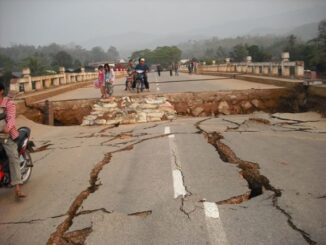
Indeed, many people are fearful of a return to the old currency. All polls show 90% of the Greek people are against government policies but only 20% of people believes we should leave the eurozone.

So the referendum would be a battle! Many people could get confused and might be pushed to abstention, under the pressure of mass propaganda by the Greek Murdochs. This would assist Papandreou and the ruling class, who would need to get 50% YES votes out of a minimum of 40% of the registered vote. If abstention approached 60%, with just over 20% of the voters Papandreou could get a YES vote.

Such a development would represent a blow to the development of the mass movement.

If a NO vote meant a return to the Drachma, what is Xekinima’s position?

If the dilemma they are putting us in is to destroy our lives to remain in the eurozone our answer is: we don’t accept that our lives are jeopardised and our living standards completely ruined. We can’t sacrifice our livelihoods in the name of the euro. At the same time, we don’t bluntly say let’s leave the euro. We stress that there are no solutions on a national and capitalist basis. We link our proposals to the need to connect all these ideas clearly with genuine internationalism - the need for a socialist society - a socialist Europe. There are no solutions on the basis of capitalism! Only with the prospect of an alternative socialist society can we see light at the end of the tunnel! Only with the prospect of common struggle with the workers in the rest of Europe can we find an alternative to the Europe of big capital, the bankers and the IMF. Our position is thus internationalist. We cannot sow illusions in a so-called “progressive and sovereign national currency policy” that sections of the Greek left, supporting a return to the drachma, are calling for.

The international press puts a great emphasis on inflated public sector and corruption. What is the real situation?

Greek workers have faced unbelievable slander in the international press and from the representatives of the ruling class, in Europe and internationally. It is infuriating!

The cost of wages in the public sector in Greece is below the EU average, in relation to GDP (9% for Greece, 10% for the EU-27). Public sector wages are about half the cost of the public sector in Scandinavia – much below France, Germany etc – always in relative, percentage terms. It is a “cheap” public sector. They never say this, although this is from their own statistics - EU statistics - not “Greek” statistics!

When it comes to ‘laziness’ and tax-evasion, Greek workers, according research carried out by the EU last July, are the most hard-working in Europe, labouring 108 hours above the European average per year, more than East European workers who labour 103 hrs above the EU (27) average.

The pro-capitalist press will never tell the truth. They will distort everything to suit their policies.

Tax evasion in Greece is not something that workers are in a position to carry out, be it in the public sector or private sector. Their incomes are declared to the state and the state is responsible for taxing them. Those who tax-evade are the rich strata of society, professionals, etc, who are able to tax-evade. Why then make the Greek working class pay? But apart from illegal tax evasion, there is legal tax-evasion that the government has designed and voted through parliament. For example, the richest layer of the Greek ruling class, the ship owners, have 58 different tax-exemptions laws (none for workers, of course). This actually is the main problem – not illegal tax evasion (without wanting to underestimate that this does play a role) but legal transfers of wealth from the workers to the rich, to, supposedly “advance investment” etc., is by far the decisive factor in all this mess that the economy is in.

Greek Parliament

Why did the debt reach 120% of the GDP before the crisis?

The Greek debt was always high, 100-110% of GDP, similar to Belgium and Italy. The reason it remained high is that all “extra” revenues of the Greek state were used to ‘support’ the Greek capitalists, bankers, ship owners, construction companies, etc, to increase their profits, face international competition and, very importantly, to expand to the Balkans and Eastern Europe in the 1990’s... This policy continued until 2007.

What caused havoc was the economic crisis that hit Greece, as a repercussion of the global crisis, in 2009, pushing the economy into recession, making it impossible to repay debt. The banks were under threat and to save the banks and bankers the governments followed policies of huge bail-outs, which meant the state borrowing huge amounts, as we all know. It then meant severe austerity for workers in order to give money to the big bankers.

In 2009, the debt was around 115-120%. In the spring of 2010 it had gone up by about 15-20 percentage points. The Greek government was then borrowing from the “markets” at 7% interest rate, with the lender banks borrowing from the ECB at 1%! Absolute theft! And we now have to pay for all this plunder!

Then came the Troika to “save” us. The IMF and EU policies have shrunk the Greek economy by 15% over the last 3 years. Under their policies the debt shot up to 170% today, and was heading to 198% end of next year – this is their statistics! This is what forced them to give it a “haircut”. As international media stated repeatedly, such a collapse of GDP has never happened during peace time in any “developed” country (note that before the crisis, the Greek people were counted as belonging to the top 8% of the ‘rich people’ of the planet – though they were poor by Western standards). The economy could not generate more money and more money could not squeezed out of it either. So, the debt kept getting higher and higher. In other words, the increase of the debt during the last two years is a direct result of the IMF and EU intervention.

Does the so-called Greek debt ‘haircut’ really amount to 50%? What are the exact terms?

The 50% “haircut” or losses, is only about the private part of the Greek debt. The Greek debt is divided in two parts: the total sum is currently 360-370 billion euro. Of this, 200 billion is owed to private bankers/institutions, the rest, 160-170 billion, comes mainly from the European Central Bank and the IMF. The money lent by Troika will not be part of the haircut. When they talk about a 50% haircut they are only referring to the 200 billion, which will hit privately owned bonds that expire within the decade, i.e. by the year 2020. The 160 billion is either long-term bonds -15-30 years- or loans from the IMF and are not subject to any reduction.

All this means that the Greek debt will go down by about 100 billion euro from 360 billon (if the bankers accept the haircut – because it supposed to be a “voluntary” haircut…).

But that is not the end of the story. The Greek government will be spared 100 billion but will have to borrow another 130 billion to be able to repay the remaining debt and to cover the losses of the Greek banks. So the Greek debt will be cut in order to rise again!

To sum up, the ‘haircut’ saves the Greek government 100 billion and makes us borrow another 130 billion! This 130 billion will come from the Troika and will be given within the next 2 years (and again this loan is not subject to a ‘haircut’). The debt will be reduced from 170% of the GDP today, to about 150%, and then it will start going up again. Theoretically, after rising it will then begin to decline, as the economy goes back to growth. The official target is that by 2020 the debt is 120% of the GDP, like it was in 2009. To put it simply, they will spend a full decade causing the savage destruction of Greek society just to bring the debt back to where it was in 2009.

What does all this imply for Greek workers? Is further austerity underway?

Just to get to reach this agreement, the Greek government passed a series of laws under the directives of the Troika that push two thirds of Greek people into poverty. To give a few examples, the salaries of public sector workers will be cut by about 50% (compared to what they were at beginning of 2010) and the minimum “legal” wage will go down to 500 euro per month. But at the same time collective bargaining has been abolished by the bill passed on October 20! So the new basic wage is not legally binding. The cuts have already led to 43% of youth (under 24 years of age), becoming unemployed (and those in employment are not in full employment – the idea of full employment is now non-existent in Greece). The government is firing people from the civil service. Around 30,000 workers will be ‘reserve labour’ until the end of this year but will officially be sacked if they are not given a new post, and all we know that they will not. The Troika demands that in total 250,000 people are sacked from the civil service. Currently the civil service workforce stands at 700,000 (including the armed forces, the police and clergy) so the cuts they want to get through amount to more than one third of the workforce.

Beds in hospitals have already been reduced by 30% and a 50% reduction is intended. The situation was already very bad, so you can imagine what that means for public health services. The situation is similar in schools and higher education. In October, when most cuts measures started to be implemented, there were many civil servants who received 20-40-100 euros a month - this is mostly workers who have mortgages and banks take their mortgage payments at source and the workers are given the remainder. So, with all the new taxation, the so called ‘solidarity tax’ and the back-dated taxation, household tax and so on that amounts to hundreds of euros per month (there are civil servants expected to survive on 20-50 euro per month). There are millions of people that were previously relatively well-off (the ‘middle layers’ as they are called), and are now driven into deprivation. There are many reports from the teachers’ and parents’ associations, in Athens in particular, about children approaching their teachers to complain that they are hungry, with some kids even fainting in class, as a result of hunger. Schools started back in September but children have not been given books, but CDs instead, because of cuts. Greek schools do not have one pc per child – they have a limited number only. So the Troikans drive kids to starvation but expect them to have their own pc!

What has been the reaction of the working class?

In October, we had a magnificent unprecedented show of strength by the working class during a 48 hour general strike that paralysed simply everything – even judges and corner kiosk owners went on strike. Around 500,000 people were on the streets of Athens, according to the unions. CNN actually reported 800,000! This was the biggest union demonstration in the post war history of Greece. It is also very important to stress the sit-ins and occupations taking place everywhere, from public services to ministerial buildings and schools.

Protesters at Greek Parliament on October 20

After the 48 hour strike, the most significant development that took place was the 28th October parades – I have already mentioned. The 28th October is a national holiday for Greece, commemorating the country’s role during WW2. This is celebrated all over the country, with parades, where school children, scouts, veterans and the army march in the main streets of every city. There is always VIP seats for ministers, MPs, clergy and army officials and those marching in the parade are expected to turn their gaze towards the VIP seats.

This year, the parades were transformed into anti-government protests, all over the country. The city of Thessaloniki was the most impressive of all, where all the VIPs were forced to leave and people held their parade without them. In Patras, on the island of Crete... everywhere it was the same. Only in Athens, did the parade take place with the VIPs because of very heavy police presence. But when school students arrived in front of the VIP’s they either turned their gaze away or did insulting gestures towards the VIPs. This was impressive and it created real panic for the establishment. The TV news that night showed that their panic was very evident, as they realised that people’s rage is getting out of control. And I think this was a factor that that gave a final push to Papandreou to decide to call a referendum.

What are the trade unions doing?

The union tops are not really organising the fight. They do call the general strikes, 13 up to now in the course of 18 months, under the pressure of the masses. They have no plan, no strategy, not to mention an alternative political programme.

There are however a number of unions that have fought really determined in the last period. A number of them have broken their connections with PASOK, which constitutes a significant development. These unions involve council workers, primary school teachers, railway workers and the telecommunications workers. So there is a section of the union movement that is moving in a more radical, more combative direction. The civil servants’ union, also controlled by PASOK, called for a no-vote of confidence in the Parliament, for Friday 4/11. The longest strike that took place during the last few months was by the Council Workers’ Union, which decided to end its links with PASOK. At the same time, however, though these unions are splitting away from Pasok, they were not able to provide a plan of action, tactics and strategy for the magnificent struggles that took place in the last period. So it is not clear how far they will go. We call on them to leave PASOK and to work to split the best from Pasok to help form a new workers’ party, on bold socialist policies. Time will show how far to the left they would be willing to go.


Europe

 video

Ireland: Tax haven for multinational corporations, 22/05/2013

 further videos

CWI - get involved


solidarity

tamil solidarity campaign kazakhstan

featured links

Paul Murphy, MEP

cwi links

Marxist.net, CWI marxist archive

cwi comment & analysis

world economic crisis

analysis and commentary


cwi publications

marxism in today's world che

Che Guevara: Símbolo de Lucha

Por Tony Saunois

A socialist world is possible, the history of the cwi with new introduction by Peter Planning green growth, a contribution to the debate on enviromental sustainability

NEWS

Sweden: Riots in Stockholm working-class suburbs
24/05/2013, Reporters of Offensiv, paper of Rättvisepartiet Socialisterna (CWI Sweden):
Neo-liberalism and police violence have created social time-bomb

30 years ago: Liverpool - a city that dared to fight
24/05/2013, Peter Taaffe speaking to "Tony Snell in the Morning", BBC Radio Merseyside:
Interview on Militant, the Labour Party and the struggle of the socialist led council 1983-87 in Liverpool

Britain: Tories in turmoil over Europe
24/05/2013, Editorial of the Socialist, paper of the Socialist Party (CWI England & Wales):
The Tories are thrashing around in ever-deeper water on the issue of Europe.

Kazakhstan: Campaign leader sentenced to ten days in prison
23/05/2013, Campaign Kazakhstan:
MEP demands immediate release of Housing Campaigners - solidarity still needed

Britain: No to terrorism! No to racism! No to war!
23/05/2013, Greenwich Socialist Party (CWI England & Wales), London:
Statement on Woolwich killing

Tunisia: the Ministry of Women excuses violations against women rights
23/05/2013, Aïda, CWI sympathiser in Tunisia:
In the «most developped country for women in the Arab world», the struggle for women rights remains more relevant than ever

Germany: DIE LINKE and the Euro
23/05/2013, Sascha Stanicic and Lucy Redler, SAV (CWI Germany):
After Lafontaine’s proposal to get rid of the Euro – what should the left say?

Ireland: Tax haven for multinational corporations
22/05/2013, Paul Murphy, MEP, Socialist Party (CWI Ireland):
How Ireland is used as a tax haven by multinational corporations while the government is preparing to steal the property tax from people’s wages, social welfare and pensions

Germany: Strike at Amazon
22/05/2013, An Amazon activist reporting to SAV (CWI Germany):
Union-agreed rates could bring Amazon workers 9000 euros more a year

Taiwan: Sea shooting sees Filipino migrants become target of racist backlash
21/05/2013, Chris Dite and CWI Taiwan reporters, article from Chinaworker.info:
Anti-racist campaign needed against corrupt ruling elites and capitalism

G8 Summit, Northern Ireland:’Why YOU should oppose the G8’
20/05/2013, Socialist Party, Northern Ireland (CWI Ireland):
This year’s G8 summit will be held in County Fermanagh, Northern Ireland, on 17th – 18th June. This gathering brings together the heads of government of eight of the world’s largest capitalist economies to discuss how they can further the interests of those they represent – the super-rich, big business and the bankers.

South Africa: Mass retrenchment threat in mining industry demands mass action
18/05/2013, DSM (CWI South Africa) reporters:
Workers and Socialist Party calls for one-day-general strike

Iran: What would a Rafsanjani presidency mean?
18/05/2013, Kave Heydari, Iranian CWI supporter in Britain:
Iran’s June 14 presidential election takes place against the background of deep divisions in society and the regime.

Australia: Labour approves WA’s first uranium mine
17/05/2013, Socialist Party (CWI Australia) reporters Perth:
Australia’s federal environment minister Tony Burke gave the go ahead to Toro’s $270 million uranium mining project in the Wiluna region of Western Australia.

New Zealand: Racism and recession in New Zealand
15/05/2013, Jared Phillips, CWI New Zealand:
Working class unity needed to defend rights and living standards

Australian budget: Say ‘NO’ to the cuts agenda of the major parties
14/05/2013, Editorial comment from ‘The Socialist’, paper of the Socialist Party (CWI Australia):
We shouldn’t let either of the major parties tell us that ‘tough decisions’ or ‘hard cuts’ are required.

Ireland: ‘Bus Eireann workers in front line of class war - We should all support them!’
13/05/2013, Socialist Party (CWI Ireland) Reporters:
Bus workers take strike action over savage wage cuts and attacks on conditions

May Day in Nigeria: Jonathan government intensifies attacks on democratic rights
12/05/2013, Ebike Iseru, DSM (CWI Nigeria):
15 DSM members arrested at May Day rallies

Italy: The economic crisis becomes a political and institutional crisis
11/05/2013, Marco Veruggio, ControCorrente (CWI Italy):
The latest events that have happened in Italian politics mark a new phase of development in the crisis in the third European industrial power.

Malaysia: Election ’victory’ based on fraud
10/05/2013, Ravichandren, CWI Malaysia:
Ruling Barisan Nasional’s widespread fraud enrages opposition supporters and young people

Greece: Challenging the Golden Dawn
10/05/2013, Katerina Kleitsa , Xekinima (CWI Greece):
On 2 May the neo-fascist Golden Dawn attempted to distribute food in Syntagma square in Athens to people holding proof of Greek nationality.

British county elections: Capitalist parties rejected
10/05/2013, Editorial of the Socialist, paper of the Socialist Party (CWI England & Wales):
Time for a new mass workers’ party

Tunisia: The calm before the storm
09/05/2013, CWI reporter in Tunis:
New clashes on the horizon

Pakistan: General elections held amid political turmoil
08/05/2013, Khalid Bhatti, SMP (CWI Pakistan), Lahore:
Big landlords, capitalists and influential families are calling the shots

Sri Lanka: Successful May Day
08/05/2013, USP(CWI, Sri Lanka):
The United Socialist Party’s May Day demonstration passed successfully through a number of populous areas of Colombo, ending at Grand Pass Junction.

CWI Comment and Analysis

ANALYSIS

Nigeria: President Jonathan declares state of emergency
21/05/2013, Segun Sango, Protem National Chairperson, Socialist Party of Nigeria:
An expressway to attacks on democratic rights! For democratic mass working peoples’ defence committees!

World economy: "Central banks are flying blind"
19/05/2013, Per-Åke Westerlund, from Offensiv, newspaper of Rättvisepartiet Socialisterna (CWI Sweden):
Increasing concerns and contradictions

Turkey / Kurdistan: PKK announces ceasefire
11/05/2013, Festus Okay, Sosyalist Alternatif (CWI Turkey):
On 8 May the PKK has begun to withdraw from Turkey. Millions are hoping now for an end to oppression and for democratic rights.

Women and the struggle for socialism: It doesn’t have to be like this
05/05/2013, Christine Thomas, Controcorrente (CWI Italy):
Christine Thomas’ book outlines how inequalities and discrimination against women have not disappeared and women’s struggles must be bound up with wider class struggle to be successful. Read the complete book online here.

Cyprus: On the edge of a catastrophic slump
25/04/2013, Niall Mulholland, CWI:
Socialist polices needed to resolve crisis in the interests of majority

US: After the Boston Tragedy
23/04/2013, Bryan Koulouris, Boston, Socialist Alternative (CWI supporters in the US):
NO to Racism and Repression

Britain: Combating violence against women
14/04/2013, Hannah Sell, on behalf of the Socialist Party (CWI England & Wales) Executive Committee:
A socialist perspective on fighting women’s oppression

Thatcher: A class warrior for capitalism
12/04/2013, Alistair Tice, Socialist Party regional secretary, Yorkshire:
Millions have been waiting for this day, 8 April 2013. Margaret Thatcher will never be forgiven for the devastation that her Tory governments’ policies wrought on working class communities in the 1980s - and is still being felt today.

Britain: Margaret Thatcher dies
08/04/2013, Peter Taaffe, Socialist Party (CWI England & Wales) general secretary:
Thatcher’s bitter legacy

Britain: A further round of savage austerity
08/04/2013, Peter Taaffe, Socialist Party (CWI England & Wales) general secretary:
We must stop them!

Israel: “There is a future” – of cuts, racism and resistance
05/04/2013, Socialist Struggle Movement (CWI Israel/Palestine):
Weak Israeli government will try to implement austerity budget, and would try to maintain the occupation, possibly under a new cover of "negotiations" with Palestinians. Resistance likely on all fronts.

Cyprus: “Working people pay high price for crisis of euro and capitalism”
31/03/2013, Niall Mulholland spoke with Athina Kariati from New Internationalist Left (CWI in Cyprus) about Cyprus’s deal with the Troika, what it will mean for working people and what is the socialist solution to the crisis:
Interview with a Cypriot socialist

China: New leadership rejects democratisation
28/03/2013, Vincent Kolo, chinaworker.info:
At annual NPC-CPPCC meetings Xi Jinping and Li Keqiang talk of ‘tough reforms’ for economy, but rule out ‘Western models’

Venezuela: After the death of Hugo Chávez
24/03/2013, Tony Saunois, CWI, a shorter version of this article was first published in Socialism Today, magazine of the Socialist Party (CWI England & Wales:
Radical, populist policies and anti-imperialism helped transform the political situation

Italy’s clowns: No joke for establishment parties
23/03/2013, Christine Thomas, ControCorrente (CWI in Italy), first published in Socialism Today, magazine of the Socialist Party (CWI England & Wales):
In his ‘tsunami’ election tour Grillo began to give voice to the deep discontent at economic crisis and austerity

Cyprus/EU: Eurozone back in turmoil
22/03/2013, Tony Saunois, CWI:
No trust in capitalist government! No austerity for the Euro! Kick out the Troika! For a socialist alternative!
[Updated article, 25 March]

South Africa: Workers & Socialist Party launched in Pretoria
21/03/2013, CWI reporters, South Africa:
Launch surpassed all expectations

Iraq: Ten years since ‘shock and awe’
20/03/2013, Niall Mulholland, from The Socialist, weekly newspaper of the Socialist Party (CWI England and Wales):
Imperialism’s harvest of death and destruction

March 8th: The day of international working women’s solidarity
07/03/2013, Clare Doyle, CWI:
Beware the anger of women against the bosses’ system!

Hugo Chavez dies: The struggle continues
06/03/2013, Tony Saunois, CWI Secretary:
Millions of Venezuelan workers, the poor and youth will mourn the death of Venezuelan president, Hugo Chavez

Lebanon: Public sector workers on indefinite strike over wages
04/03/2013, Tamer Mahdi, CWI:
Workers’ unity against big business shows potential for anti-sectarian, socialist alternative

Portugal: New explosion against austerity and the government
03/03/2013, socialistworld.net:
“Screw the Troika – the people are the best rulers”

Tunisia: ‘Buckshot’ Ali Larayedh appointed prime minister
27/02/2013, CWI supporters in Tunisia:
Down with the Ennahdha regime! Down with the system!

Italy: Voters reject austerity in ‘tsunami’ election
27/02/2013, Chris Thomas, Controcorrente (CWI in Italy):
Political instability, crisis and new opportunities ahead