
deutsch |  english |  español  |  français  |  italiano  |  nederlands  |  polski  |  português  |  svenska  |  türkçe  |  中文  |  عربي  |  русский

latest news

World economy
"Central banks are flying blind"

19/05/2013: Increasing concerns and contradictions

  World Economy

South Africa
Mass retrenchment threat in mining industry demands mass action

18/05/2013: Workers and Socialist Party calls for one-day-general strike

  South Africa

Iran
What would a Rafsanjani presidency mean?

18/05/2013: Iran’s June 14 presidential election takes place against the background of deep divisions in society and the regime.

  Iran

Australia
Labour approves WA’s first uranium mine

17/05/2013: Australia’s federal environment minister Tony Burke gave the go ahead to Toro’s $270 million uranium mining project in the Wiluna region of Western Australia.

  Australia, Environment

New Zealand
Racism and recession in New Zealand

15/05/2013: Working class unity needed to defend rights and living standards

  New Zealand

Australian budget
Say ‘NO’ to the cuts agenda of the major parties

14/05/2013: We shouldn’t let either of the major parties tell us that ‘tough decisions’ or ‘hard cuts’ are required.

  Australia

Ireland
‘Bus Eireann workers in front line of class war - We should all support them!’

13/05/2013: Bus workers take strike action over savage wage cuts and attacks on conditions

  Ireland Republic

Italy
The economic crisis becomes a political and institutional crisis

11/05/2013: The latest events that have happened in Italian politics mark a new phase of development in the crisis in the third European industrial power.

  Italy

Turkey / Kurdistan
PKK announces ceasefire

11/05/2013: On 8 May the PKK has begun to withdraw from Turkey. Millions are hoping now for an end to oppression and for democratic rights.

  Kurdistan, Turkey

Malaysia
Election ’victory’ based on fraud

10/05/2013: Ruling Barisan Nasional’s widespread fraud enrages opposition supporters and young people

  Malaysia

Greece
Challenging the Golden Dawn

10/05/2013: On 2 May the neo-fascist Golden Dawn attempted to distribute food in Syntagma square in Athens to people holding proof of Greek nationality.

  Greece

British county elections
Capitalist parties rejected

10/05/2013: Time for a new mass workers’ party

  Britain

Tunisia
The calm before the storm

09/05/2013: New clashes on the horizon

  Tunisia

Pakistan
General elections held amid political turmoil

08/05/2013: Big landlords, capitalists and influential families are calling the shots

  Pakistan

Sri Lanka
Successful May Day

08/05/2013: The United Socialist Party’s May Day demonstration passed successfully through a number of populous areas of Colombo, ending at Grand Pass Junction.

  May Day, Sri Lanka

Hong Kong
Dockworkers’ strike ends after 40 days

07/05/2013: Union representatives declare a “half success” with a pay rise of 9.8 percent – but important issues are unresolved

  Hong Kong

Britain’s ’precariat’
Fighting for real jobs

06/05/2013: ’Get a job!’ is the constant refrain of privileged Tory ministers and vicious right-wing tabloids. A million unemployed young people are the subject of a relentless campaign of smears and lies.

  Britain, Youth

Liverpool
Rally marks 30 year anniversary of election of socialist council

05/05/2013: Great event remembers the ’47’ struggle

  Britain, History

 Women and the struggle for socialism
It doesn’t have to be like this

05/05/2013: Christine Thomas’ book outlines how inequalities and discrimination against women have not disappeared and women’s struggles must be bound up with wider class struggle to be successful. Read the complete book online here.

  Women

Australian budget
Say ‘NO’ to the cuts agenda of the major parties

04/05/2013: Those who created the crisis should be forced to pay.

  Australia

 Nigerian May Day arrests
All DSM members released [updated]
03/05/2013: The last set of DSM members still in the detention of the state security service (SSS) in Kaduna, Northwest Nigeria, and Ibadan Oyo state, Southwest Nigeria, as of yesterday, has been released.

  May Day, Nigeria, Solidarity

 Pakistan
May Day 2013

03/05/2013: Progressive Workers Federation (PWF), TURCP and SMP organised and intervened in the May Day activities across the country

  May Day, Video

Bangladesh building collapse
Casualties of a rotten profit system

03/05/2013: It is said that where labour is cheap, life is cheap. This is never more so than in the recent horrific deaths of over 400 garment workers crushed in a collapsed building in Dhaka, the capital of Bangladesh.

  Bangladesh

Hong Kong
Dockers’ strike shines a spotlight on Li Ka-shing’s business empire

03/05/2013: Li Ka-shing owns 13 percent of the world’s port capacity and much more besides…

  Hong Kong

Taiwan
Over 20,000 march on May Day

02/05/2013: ‘Defend pensions! Stop corruption!’

  May Day, Taiwan

Pakistan
May Day demonstration in Sindh

02/05/2013: Photos of May Day demonstration in Sindh

  May Day, Pakistan

 Nigeria
Militarisation of May Day rallies

02/05/2013: DSM comrades arrested and detained

  May Day, Nigeria, Solidarity

Portugal
Constitutional court ruling sends government into disarray

01/05/2013: CC rules budget illegal for second time, government declares war against it

  Portugal

May Day Greetings

01/05/2013: The CWI sends revolutionary greetings and solidarity to workers, young people and all those exploited by capitalism.

  May Day

Europe
EU austerity budget – cuts, cuts, cuts

30/04/2013: Irish Presidency brought unprecedented levels of cuts to the EU budget.

  Europe

Scotland
Anti-Bedroom Tax Federation launched

29/04/2013: Writing off of any debt accrued due to the bedroom tax, supporting the building of new social housing, opposing all cuts and austerity measures

  Scotland

Britain
Break with Thatcher’s legacy!

28/04/2013: Socialist policies needed

  Britain

Israel
Social worker union prepares for the coming battle

28/04/2013: SSM member, Suiher Daska and other left candidates were elected to the leadership of the union on the background of the coming struggles against austerity

  Israel / Palestine

Syria

Is there an alternative to the developing civil war?

www.socialistworld.net, 08/08/2012
website of the committee for a workers' international, CWI

Syria’s agony continues unabated.

Niall Mulholland, CWI

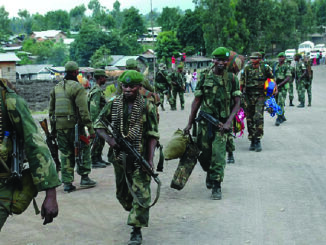
Across the country there are indiscriminate attacks by the Assad regime forces and their militias, bloody sectarian reprisals by the armed opposition, refugee floods and humanitarian disasters. The second city, Aleppo, is the latest focus of fighting between armed opposition forces and the Syrian army. Since the rebels entered Aleppo on 20 July, many residents have fled for Damascus and Turkey.

The battle for Aleppo is important for both sides. Larger than the capital, Damascus, it is the main economic centre, with an important manufacturing sector. The rebel Free Syrian Army (FSA) advanced on the city trying to capitalise on momentum they believed they made during an assault on Damascus and the bombing of a government intelligence meeting, which killed four generals. The Syrian army is gathering heavy armour and troops on the outskirts of Aleppo and stepping up its offensive.

Like the rest of Syria, Aleppo is made up of a patchwork of religious and ethnic groups. The majority of the city’s population are Sunni Muslims or Kurds. There are also Armenians and other Christians from the Syrian, Maronite and Greek Orthodox churches. Many government employees in the city are from president Assad’s Alawite sect. Until recently Aleppo saw relatively little violence. Now the bloody death-toll across the country, estimated at around 100 a day in July, is set to dramatically rise as the battle for the city is fully joined.

Bread queues at FSA-controlled bakeries

Popular movement

The March 2011 uprising in Syria began as a genuine, popular movement against Assad’s police state, the erosion of social welfare, high levels of poverty and unemployment, and the rule of the rich, corrupt elite. Bashar al-Assad’s dictatorship responded to the wave of mass protests against 40 years of dictatorial rule – widely seen as part of the ‘Arab Spring’ - with vicious repression.

Brutal suppression of demonstrators led some activists to take up arms. The Committee for a Workers’ International (CWI, the socialist international organisation to which the Socialist Party is affiliated) advocated democratically run workers’ self-defence committees that could protect communities and cut across sectarian lines.

At the same time, the CWI called for this to be linked to a programme demanding the end of the Assad dictatorship and for fundamental democratic, social and economic change.

But crucially the mass protests lacked an independent working class leadership. This allowed sectarian and pro-capitalist oppositionist figures to partially fill the political space. Reactionary Gulf regimes, along with Turkey, and with Western imperialist backing, intervened with guns and money for the opposition, political strings attached, of course.

The US, Britain and France have long regarded Assad’s regime as a troublesome obstacle to their imperialist interests in the region. In its place they want to see a pliant, pro-Western administration.

Crucial to their plans is to fundamentally weaken their main foe in the region, Iran.

Tehran is an ally of the Syrian regime. The fall of Assad could also strengthen pro-US Sunni Gulf regimes, while weakening Shia-based Hezbollah in Lebanon and Russian imperialism’s position in the region.

What began as a popular uprising in Syria descended into a civil war, with increasing sectarian dimensions. Working people and the poor pay the greatest price for the failure of the revolt to develop into a powerful, independent movement based on a united working class. The estimated death toll now stands at 20,000. The United Nations (UN) believes that 150,000 people have fled the country.

But the words of concern for the people of Syria from the mouths of Western politicians are just so much hypocritical cant. Only a few years ago, the Bush administration sent ‘terrorist suspects’ to Damascus to be tortured by Assad’s thugs. Now President Obama claims he wants to see Bashar al-Assad’s dictatorship replaced with “democracy”.

Yet with US blessing, two of the US’s closest allies in the region, the reactionary autocracies of Qatar and Saudi Arabia are busily arming and financing the Syrian rebels. They are not interested in bringing democratic rights to Syria any more than the US or Britain. The Saudi regime represses its own Shia minority, while backing reactionary sectarian Salafists in Syria.

The Turkish government, a Nato (US dominated military alliance) member, loudly denounces oppression in Syria. At home, it is suppressing the media and the Kurds, who are pressing their own demands in both Turkey and Syria.

Assad and opposition

However the role of Western powers and reactionary Gulf regimes are no reasons to support the Assad regime. It is not some sort of ‘bulwark’ against imperialism, as some on the Left in the region and beyond portray.

For socialists the alternative was displayed during last year’s revolutions in Tunisia and Egypt, as well as the early promise of the 2011 Syrian revolt. They showed that it is the mass united movement of working people and youth that can remove despots and their regimes, resist imperialism and fight for real social and political change.

While it may only be a matter of time before Assad falls, the conflict shows no sign of a quick ending. “With or without Bashar al-Assad as its leader, Syria now has all the makings of a grim and drawn out civil war,” warns Vali Nasr, an academic and former advisor to Obama’s special representative for Afghanistan and Pakistan (New York Times, 28 July 2012).

While Assad has lost control of parts of Syria and the opposition is buoyed up, claiming the regime’s power is seriously eroding, the conflict is likely to become protracted.

The high profile defection of some military and diplomatic figures, including Riad Hijab the recently appointed prime minister, has given the impression of a regime in slow-motion collapse. Yet Assad shows no sign of standing down.

To date, Assad has shown he has the military power and enough support in Syria, including from many Sunni business people, to keep fighting. But, although it appears unlikely at the moment, the possibility that Assad could be ousted by a palace coup cannot be ruled out.

While the opposition has made some ground and is now reportedly using heavy weaponry, it is divided “among some 100 groups without clear political leadership”, according to Vali Nasr.

Moreover, the reactionary character of the largely Sunni-based, pro-big business Syrian National Council, which is linked to the Free Syrian Army and their Sunni-elite Gulf backers, means that many of Syria’s Alawite, Christian and Kurdish minorities, as well as some Sunnis, fear what would follow Assad’s overthrow.

The summary execution of unarmed pro-regime fighters by opposition militias in Aleppo, widely viewed on YouTube, will only deepen the fears of Syria’s minorities.

Jihadi organisations are reportedly establishing a foothold in the east of the country, including al-Qaida group, Jabhat a Nusra (Solidarity Front). Foreign jihadists have entered Syria from Turkey, the Caucasus, Bangladesh and the Gulf Arab states, which is helping to stir up divisions within the opposition leadership.

Many of these fighters are battle-hardened veterans of the conflict in Iraq during US occupation. The jihadists in Iraq are, in turn, emboldened by events in neighbouring Syria. The al-Qaida-linked Islamic State of Iraq killed hundreds in July, alone.

Sectarian conflagration

Even if Assad decided to leave office or was removed by his own ruling clique, his military machine, dominated by the Alawite sect, and its allied sectarian militias, could fight on. Syria could face the terrible prospect of breaking up into ethnic enclaves, like the former Yugoslavia, bitterly fighting over territory for years. This would resemble a re-run of the Lebanon’s civil war (which lasted from the mid-1970s to the early 1990s - up to 200,000 died) but on a greater scale. An added horror would be the current regime’s chemical and biological weapons being deployed.

A sectarian conflagration would most likely embroil other countries in the region. Turkey, Iran, Israel and the Gulf States could be drawn into the maelstrom. The Syrian conflict has already spilled over into Lebanon, where the Assad regime has support from Hezbollah, which is part of the coalition government.

The Syrian army has shelled Lebanese villages. Fighting between Sunni and pro-Assad Alawites in the northern Lebanese city of Tripoli and other areas has left scores dead. While the main political forces in Lebanon want to avoid an escalation of Sunni and Shia clashes, regular shootings and kidnappings in Beirut have raised fears of a slide towards sectarian conflict.

UN rendered impotent

The United Nations is incapable of acting as an ’honest broker’ in the Syrian crisis. It cannot prevent atrocities against civilians or resolve armed conflicts in the interests of working people.

The organisation is beholden to the world’s major powers, particularly the UN Security Council members, which are deeply divided over Syria.

The UN’s impotence was underlined with the resignation of Kofi Annan, the UN and Arab League special envoy, on 2 August.

Russia and China have voted against US, British and French-sponsored anti-Assad resolutions. Despite the rhetoric, the US and Russia positions have nothing to do with the plight of the Syrian people. It is all to do with the interests of their respective ruling classes and those of their closest allies.

Russia regards Assad’s regime as a crucial ally in the region. The Kremlin and Beijing are resolutely opposed to any Western military intervention, particularly after the bitter experience of last year’s Libyan conflict.

While some US, British and French politicians have mooted the idea of Western military action against Assad’s regime, last year’s Nato attacks in Libya cannot be simply repeated in this context.

Syria has a much larger population than Libya and the regime has at its disposal a much more powerful and better trained and equipped military.

A Nato bombing campaign would have to overcome Syria’s extensive air defence system, while a land invasion would require large scale military forces. Western troops would face being intractably bogged down in hostile urban areas.

These steps would risk an internationalisation of the conflict, particularly as such Western action would be widely seen in the Arab world as strengthening the regional position of Israel.

Western intervention

While the US is reportedly concerned about the Syrian opposition – the White House remains ‘haunted’ by memories of the catastrophic fall-out from its backing of the Mujahadeen guerrillas during the 1980s war in Afghanistan – the Western powers are concentrating on supporting and aiding the Free Syrian Army and other armed oppositionists. They do this primarily by enforcing sanctions against Damascus and by giving Gulf States the green light to arm and fund the opposition and for Turkey to provide logistical support.

The White House is also taking direct, covert action to support Assad’s armed opponents. According to a Reuters news agency report (1 August 2012), president Obama signed a secret order earlier this year authorising US support for the armed opposition, including the deployment of the CIA and other US agencies. This led to “noticeable improvements in the coherence and effectiveness of Syrian rebel groups in the last few weeks”.

Tory foreign secretary William Hague recently confirmed that Britain is also giving covert support to anti-Assad forces.

The US and other Western powers hope such actions will eventually see the downfall of Assad. However some pro-Western commentators warn that Assad’s fall would be a Pyrrhic victory. It would just be the beginning of even greater conflict in Syria and the region.

They counsel the White House to work towards a ‘transitional plan’, to create a post-Assad power-sharing arrangement that “all sides” can agree on. This would entail a UN ‘peace-keeping’ force. To reach such an agreement would mean involving Russia and Iran, Vali Nasr believes, who may come to see the writing on the wall for Assad.

Even if such a scenario was eventually cobbled together after much more bloodshed and destruction, it would not bring democracy, stability or prosperity for Syria.

It would see the imposition of a Western military-dominated regime, involving reactionary pro-capitalist and sectarian-based forces. It would be no answer to the needs of the Syrian masses and working class.

Working class

The working people and the poor in Syria face a desperate situation and the real danger of being engulfed in ethnic and sectarian warfare. Socialists everywhere must do all they can to help the workers of Syria to build class unity to resist and overcome these divisions.

In the current situation, these are herculean tasks. Yet there is no other way to successfully unite the masses to overthrow the brutal Assad regime, to oppose the meddling of local reactionary states and imperialism, and to win real democratic rights and fundamental social and economic change.

Despite their terrible plight, the Syrian masses are not alone. Their fate is inextricably linked to the ongoing revolutionary movements in Tunisia, Egypt and elsewhere throughout North Africa and the Middle East.

There have been 18 months of revolution and counter-revolution and the process is far from over.

While sectarianism is on the rise in Egypt, so too is class struggle, as a new wave of strikes and occupations sweeps the country. Egyptian workers are not waiting for the new government to improve their lives. They are building their own organisations and taking independent action. This is the model to follow!

By practically and politically linking up the class interests of workers in Syria, Egypt, Tunisia and throughout the region, workers’ mass organisations, such as independent trade unions and new mass parties, can be built.

By basing itself on a united workers’ programme with socialist policies for fundamental change - democratic workers’ control and management of the economy to transform living conditions, creating jobs with a living wage, free quality education, health and housing and so on – such a movement would inspire workers and youth all across the region to unite to kick out the tyrants and imperialism.

This would lead to a struggle for a voluntary and equal socialist confederation of the Middle East, in which the rights of all minorities would be guaranteed.


Europe

 video

Pakistan: May Day 2013, 03/05/2013

 further videos

CWI - get involved


solidarity

tamil solidarity campaign kazakhstan

featured links

Paul Murphy, MEP

cwi links

Marxist.net, CWI marxist archive

cwi comment & analysis

world economic crisis

analysis and commentary


cwi publications

marxism in today's world che

Che Guevara: Símbolo de Lucha

Por Tony Saunois

A socialist world is possible, the history of the cwi with new introduction by Peter Planning green growth, a contribution to the debate on enviromental sustainability

NEWS

South Africa: Mass retrenchment threat in mining industry demands mass action
18/05/2013, DSM (CWI South Africa) reporters:
Workers and Socialist Party calls for one-day-general strike

Iran: What would a Rafsanjani presidency mean?
18/05/2013, Kave Heydari, Iranian CWI supporter in Britain:
Iran’s June 14 presidential election takes place against the background of deep divisions in society and the regime.

Australia: Labour approves WA’s first uranium mine
17/05/2013, Socialist Party (CWI Australia) reporters Perth:
Australia’s federal environment minister Tony Burke gave the go ahead to Toro’s $270 million uranium mining project in the Wiluna region of Western Australia.

New Zealand: Racism and recession in New Zealand
15/05/2013, Jared Phillips, CWI New Zealand:
Working class unity needed to defend rights and living standards

Australian budget: Say ‘NO’ to the cuts agenda of the major parties
14/05/2013, Editorial comment from ‘The Socialist’, paper of the Socialist Party (CWI Australia):
We shouldn’t let either of the major parties tell us that ‘tough decisions’ or ‘hard cuts’ are required.

Ireland: ‘Bus Eireann workers in front line of class war - We should all support them!’
13/05/2013, Socialist Party (CWI Ireland) Reporters:
Bus workers take strike action over savage wage cuts and attacks on conditions

May Day in Nigeria: Jonathan government intensifies attacks on democratic rights
12/05/2013, Ebike Iseru, DSM (CWI Nigeria):
15 DSM members arrested at May Day rallies

Italy: The economic crisis becomes a political and institutional crisis
11/05/2013, Marco Veruggio, ControCorrente (CWI Italy):
The latest events that have happened in Italian politics mark a new phase of development in the crisis in the third European industrial power.

Malaysia: Election ’victory’ based on fraud
10/05/2013, Ravichandren, CWI Malaysia:
Ruling Barisan Nasional’s widespread fraud enrages opposition supporters and young people

Greece: Challenging the Golden Dawn
10/05/2013, Katerina Kleitsa , Xekinima (CWI Greece):
On 2 May the neo-fascist Golden Dawn attempted to distribute food in Syntagma square in Athens to people holding proof of Greek nationality.

British county elections: Capitalist parties rejected
10/05/2013, Editorial of the Socialist, paper of the Socialist Party (CWI England & Wales):
Time for a new mass workers’ party

Tunisia: The calm before the storm
09/05/2013, CWI reporter in Tunis:
New clashes on the horizon

Pakistan: General elections held amid political turmoil
08/05/2013, Khalid Bhatti, SMP (CWI Pakistan), Lahore:
Big landlords, capitalists and influential families are calling the shots

Sri Lanka: Successful May Day
08/05/2013, USP(CWI, Sri Lanka):
The United Socialist Party’s May Day demonstration passed successfully through a number of populous areas of Colombo, ending at Grand Pass Junction.

Hong Kong: Dockworkers’ strike ends after 40 days
07/05/2013, Vincent Kolo, chinaworker.info:
Union representatives declare a “half success” with a pay rise of 9.8 percent – but important issues are unresolved

Britain’s ’precariat’: Fighting for real jobs
06/05/2013, Claire Laker-Mansfield, Socialist Party (CWI England & Wales), first published in The Socialist:
’Get a job!’ is the constant refrain of privileged Tory ministers and vicious right-wing tabloids. A million unemployed young people are the subject of a relentless campaign of smears and lies.

Liverpool: Rally marks 30 year anniversary of election of socialist council
05/05/2013, Dave Walsh, Unite Convener for Liverpool City Council, from The Socialist, paper of the Socialist Party (CWI England & Wales):
Great event remembers the ’47’ struggle

Australian budget: Say ‘NO’ to the cuts agenda of the major parties
04/05/2013, Editorial comment from the May 2013 edition of ‘The Socialist’, paper of the Socialist Party (CWI Australia):
Those who created the crisis should be forced to pay.

Nigerian May Day arrests: All DSM members released [updated]
03/05/2013, Press statement by Segun Sango, general secretary DSM (CWI Nigeria):
The last set of DSM members still in the detention of the state security service (SSS) in Kaduna, Northwest Nigeria, and Ibadan Oyo state, Southwest Nigeria, as of yesterday, has been released.

Pakistan: May Day 2013
03/05/2013, Syed Fazal Abass Shah, secretary general PWF, Pakistan:
Progressive Workers Federation (PWF), TURCP and SMP organised and intervened in the May Day activities across the country

Bangladesh building collapse: Casualties of a rotten profit system
03/05/2013, The Socialist, paper of the Socialist Party (CWI England & Wales):
It is said that where labour is cheap, life is cheap. This is never more so than in the recent horrific deaths of over 400 garment workers crushed in a collapsed building in Dhaka, the capital of Bangladesh.

Hong Kong: Dockers’ strike shines a spotlight on Li Ka-shing’s business empire
03/05/2013, Dikang, Socialist Action (CWI supporters in Hong Kong):
Li Ka-shing owns 13 percent of the world’s port capacity and much more besides…

Taiwan: Over 20,000 march on May Day
02/05/2013, Chris Dite in Taipei, chinaworker.info:
‘Defend pensions! Stop corruption!’

Pakistan: May Day demonstration in Sindh
02/05/2013, SMP (CWI Pakistan), Sindh:
Photos of May Day demonstration in Sindh

Nigeria: Militarisation of May Day rallies
02/05/2013, Press statement by Segun Sango, general secretary DSM (CWI Nigeria):
DSM comrades arrested and detained

Portugal: Constitutional court ruling sends government into disarray
01/05/2013, Goncalo Romeiro, Socialismo Revolucionario (CWI in Portugal):
CC rules budget illegal for second time, government declares war against it

CWI Comment and Analysis

ANALYSIS

World economy: "Central banks are flying blind"
19/05/2013, Per-Åke Westerlund, from Offensiv, newspaper of Rättvisepartiet Socialisterna (CWI Sweden):
Increasing concerns and contradictions

Turkey / Kurdistan: PKK announces ceasefire
11/05/2013, Festus Okay, Sosyalist Alternatif (CWI Turkey):
On 8 May the PKK has begun to withdraw from Turkey. Millions are hoping now for an end to oppression and for democratic rights.

Women and the struggle for socialism: It doesn’t have to be like this
05/05/2013, Christine Thomas, Controcorrente (CWI Italy):
Christine Thomas’ book outlines how inequalities and discrimination against women have not disappeared and women’s struggles must be bound up with wider class struggle to be successful. Read the complete book online here.

Cyprus: On the edge of a catastrophic slump
25/04/2013, Niall Mulholland, CWI:
Socialist polices needed to resolve crisis in the interests of majority

US: After the Boston Tragedy
23/04/2013, Bryan Koulouris, Boston, Socialist Alternative (CWI supporters in the US):
NO to Racism and Repression

Britain: Combating violence against women
14/04/2013, Hannah Sell, on behalf of the Socialist Party (CWI England & Wales) Executive Committee:
A socialist perspective on fighting women’s oppression

Thatcher: A class warrior for capitalism
12/04/2013, Alistair Tice, Socialist Party regional secretary, Yorkshire:
Millions have been waiting for this day, 8 April 2013. Margaret Thatcher will never be forgiven for the devastation that her Tory governments’ policies wrought on working class communities in the 1980s - and is still being felt today.

Britain: Margaret Thatcher dies
08/04/2013, Peter Taaffe, Socialist Party (CWI England & Wales) general secretary:
Thatcher’s bitter legacy

Britain: A further round of savage austerity
08/04/2013, Peter Taaffe, Socialist Party (CWI England & Wales) general secretary:
We must stop them!

Israel: “There is a future” – of cuts, racism and resistance
05/04/2013, Socialist Struggle Movement (CWI Israel/Palestine):
Weak Israeli government will try to implement austerity budget, and would try to maintain the occupation, possibly under a new cover of "negotiations" with Palestinians. Resistance likely on all fronts.

Cyprus: “Working people pay high price for crisis of euro and capitalism”
31/03/2013, Niall Mulholland spoke with Athina Kariati from New Internationalist Left (CWI in Cyprus) about Cyprus’s deal with the Troika, what it will mean for working people and what is the socialist solution to the crisis:
Interview with a Cypriot socialist

China: New leadership rejects democratisation
28/03/2013, Vincent Kolo, chinaworker.info:
At annual NPC-CPPCC meetings Xi Jinping and Li Keqiang talk of ‘tough reforms’ for economy, but rule out ‘Western models’

Venezuela: After the death of Hugo Chávez
24/03/2013, Tony Saunois, CWI, a shorter version of this article was first published in Socialism Today, magazine of the Socialist Party (CWI England & Wales:
Radical, populist policies and anti-imperialism helped transform the political situation

Italy’s clowns: No joke for establishment parties
23/03/2013, Christine Thomas, ControCorrente (CWI in Italy), first published in Socialism Today, magazine of the Socialist Party (CWI England & Wales):
In his ‘tsunami’ election tour Grillo began to give voice to the deep discontent at economic crisis and austerity

Cyprus/EU: Eurozone back in turmoil
22/03/2013, Tony Saunois, CWI:
No trust in capitalist government! No austerity for the Euro! Kick out the Troika! For a socialist alternative!
[Updated article, 25 March]

South Africa: Workers & Socialist Party launched in Pretoria
21/03/2013, CWI reporters, South Africa:
Launch surpassed all expectations

Iraq: Ten years since ‘shock and awe’
20/03/2013, Niall Mulholland, from The Socialist, weekly newspaper of the Socialist Party (CWI England and Wales):
Imperialism’s harvest of death and destruction

March 8th: The day of international working women’s solidarity
07/03/2013, Clare Doyle, CWI:
Beware the anger of women against the bosses’ system!

Hugo Chavez dies: The struggle continues
06/03/2013, Tony Saunois, CWI Secretary:
Millions of Venezuelan workers, the poor and youth will mourn the death of Venezuelan president, Hugo Chavez

Lebanon: Public sector workers on indefinite strike over wages
04/03/2013, Tamer Mahdi, CWI:
Workers’ unity against big business shows potential for anti-sectarian, socialist alternative

Portugal: New explosion against austerity and the government
03/03/2013, socialistworld.net:
“Screw the Troika – the people are the best rulers”

Tunisia: ‘Buckshot’ Ali Larayedh appointed prime minister
27/02/2013, CWI supporters in Tunisia:
Down with the Ennahdha regime! Down with the system!

Italy: Voters reject austerity in ‘tsunami’ election
27/02/2013, Chris Thomas, Controcorrente (CWI in Italy):
Political instability, crisis and new opportunities ahead

Spain: Corruption scandal leaves government on the brink
24/02/2013, Danny Byrne, CWI:
What strategy to do away with rotten government and system?