deutsch |  english |  español  |  français  |  italiano  |  nederlands  |  polski  |  português  |  svenska  |  türkçe  |  中文  |  عربي  |  русский

latest news

World economy
"Central banks are flying blind"

19/05/2013: Increasing concerns and contradictions

  World Economy

South Africa
Mass retrenchment threat in mining industry demands mass action

18/05/2013: Workers and Socialist Party calls for one-day-general strike

  South Africa

Iran
What would a Rafsanjani presidency mean?

18/05/2013: Iran’s June 14 presidential election takes place against the background of deep divisions in society and the regime.

  Iran

Australia
Labour approves WA’s first uranium mine

17/05/2013: Australia’s federal environment minister Tony Burke gave the go ahead to Toro’s $270 million uranium mining project in the Wiluna region of Western Australia.

  Australia, Environment

New Zealand
Racism and recession in New Zealand

15/05/2013: Working class unity needed to defend rights and living standards

  New Zealand

Australian budget
Say ‘NO’ to the cuts agenda of the major parties

14/05/2013: We shouldn’t let either of the major parties tell us that ‘tough decisions’ or ‘hard cuts’ are required.

  Australia

Ireland
‘Bus Eireann workers in front line of class war - We should all support them!’

13/05/2013: Bus workers take strike action over savage wage cuts and attacks on conditions

  Ireland Republic

Italy
The economic crisis becomes a political and institutional crisis

11/05/2013: The latest events that have happened in Italian politics mark a new phase of development in the crisis in the third European industrial power.

  Italy

Turkey / Kurdistan
PKK announces ceasefire

11/05/2013: On 8 May the PKK has begun to withdraw from Turkey. Millions are hoping now for an end to oppression and for democratic rights.

  Kurdistan, Turkey

Malaysia
Election ’victory’ based on fraud

10/05/2013: Ruling Barisan Nasional’s widespread fraud enrages opposition supporters and young people

  Malaysia

Greece
Challenging the Golden Dawn

10/05/2013: On 2 May the neo-fascist Golden Dawn attempted to distribute food in Syntagma square in Athens to people holding proof of Greek nationality.

  Greece

British county elections
Capitalist parties rejected

10/05/2013: Time for a new mass workers’ party

  Britain

Tunisia
The calm before the storm

09/05/2013: New clashes on the horizon

  Tunisia

Pakistan
General elections held amid political turmoil

08/05/2013: Big landlords, capitalists and influential families are calling the shots

  Pakistan

Sri Lanka
Successful May Day

08/05/2013: The United Socialist Party’s May Day demonstration passed successfully through a number of populous areas of Colombo, ending at Grand Pass Junction.

  May Day, Sri Lanka

Hong Kong
Dockworkers’ strike ends after 40 days

07/05/2013: Union representatives declare a “half success” with a pay rise of 9.8 percent – but important issues are unresolved

  Hong Kong

Britain’s ’precariat’
Fighting for real jobs

06/05/2013: ’Get a job!’ is the constant refrain of privileged Tory ministers and vicious right-wing tabloids. A million unemployed young people are the subject of a relentless campaign of smears and lies.

  Britain, Youth

Liverpool
Rally marks 30 year anniversary of election of socialist council

05/05/2013: Great event remembers the ’47’ struggle

  Britain, History

 Women and the struggle for socialism
It doesn’t have to be like this

05/05/2013: Christine Thomas’ book outlines how inequalities and discrimination against women have not disappeared and women’s struggles must be bound up with wider class struggle to be successful. Read the complete book online here.

  Women

Australian budget
Say ‘NO’ to the cuts agenda of the major parties

04/05/2013: Those who created the crisis should be forced to pay.

  Australia

 Nigerian May Day arrests
All DSM members released [updated]
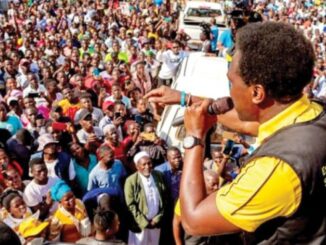
03/05/2013: The last set of DSM members still in the detention of the state security service (SSS) in Kaduna, Northwest Nigeria, and Ibadan Oyo state, Southwest Nigeria, as of yesterday, has been released.

  May Day, Nigeria, Solidarity

 Pakistan
May Day 2013

03/05/2013: Progressive Workers Federation (PWF), TURCP and SMP organised and intervened in the May Day activities across the country

  May Day, Video

Bangladesh building collapse
Casualties of a rotten profit system

03/05/2013: It is said that where labour is cheap, life is cheap. This is never more so than in the recent horrific deaths of over 400 garment workers crushed in a collapsed building in Dhaka, the capital of Bangladesh.

  Bangladesh

Hong Kong
Dockers’ strike shines a spotlight on Li Ka-shing’s business empire

03/05/2013: Li Ka-shing owns 13 percent of the world’s port capacity and much more besides…

  Hong Kong

Taiwan
Over 20,000 march on May Day

02/05/2013: ‘Defend pensions! Stop corruption!’

  May Day, Taiwan

Pakistan
May Day demonstration in Sindh

02/05/2013: Photos of May Day demonstration in Sindh

  May Day, Pakistan

 Nigeria
Militarisation of May Day rallies

02/05/2013: DSM comrades arrested and detained

  May Day, Nigeria, Solidarity

Portugal
Constitutional court ruling sends government into disarray

01/05/2013: CC rules budget illegal for second time, government declares war against it

  Portugal

May Day Greetings

01/05/2013: The CWI sends revolutionary greetings and solidarity to workers, young people and all those exploited by capitalism.

  May Day

Europe
EU austerity budget – cuts, cuts, cuts

30/04/2013: Irish Presidency brought unprecedented levels of cuts to the EU budget.

  Europe

Scotland
Anti-Bedroom Tax Federation launched

29/04/2013: Writing off of any debt accrued due to the bedroom tax, supporting the building of new social housing, opposing all cuts and austerity measures

  Scotland

Britain
Break with Thatcher’s legacy!

28/04/2013: Socialist policies needed

  Britain

Israel
Social worker union prepares for the coming battle

28/04/2013: SSM member, Suiher Daska and other left candidates were elected to the leadership of the union on the background of the coming struggles against austerity

  Israel / Palestine

Mali

French army intervention will amplify the chaos

www.socialistworld.net, 17/01/2013
website of the committee for a workers' international, CWI

For a mass struggle of workers and poor to defeat imperialism and fundamentalist reaction

Leila Messaoudi, Gauche Révolutionnaire (CWI in France)

The sudden decision for a direct French military intervention in Northern Mali has not come from nowhere. Preparations for this have been underway for a number of weeks. French President, Francois Hollande, and Foreign Minister, Laurent Fabius, had announced they intended to intervene soon in one form or another in Mali supposedly “to help the Malian president to counter the offensive of the Islamists” who took control of two thirds of the Northern part of the country. The predictable collapse of the Malian army and state has accelerated things.

On 11 January, France launched the ‘Serval operation’ and the first fighting took place, with the first dead. Already, the military staff has announced an intervention that will “take the time it takes”, weeks or even more. Former Prime Minister, Dominique Villepin, speaks of a possible “stalemate”. This is because this French intervention, under the pretext of the fight against terrorism, has other motives and presents other challenges, similar to the “wars against terrorism” waged in Afghanistan and Iraq, which still continue 10 years after they began.

What is happening in the Sahel and Mali?

The victorious offensive by insurgent forces in the winter of 2012 (based on a precarious deal between elements of the separatist Tuareg organisation MNLA –National Movement for the Liberation of Azawad- with Islamist and Jihadist fighters of ‘Al Qaeda in the Islamic Maghreb’, AQMI, and of ‘Ansar Dine’, an Islamist split from the MNLA) led quickly to a split in the Malian State. A coup, organised by a military officer, Captain Sanogo, deposed the President, officially for incompetence in the fight against the insurgents. Even if the coup of 21 March did not receive direct support from France, the introduction of a new constitutional process (and therefore the eviction by force of the government and president) by the body at the head of the coup (CNRDRE), accepted by the Community of the States of West Africa (ECOWAS), was supported by France, from the first days of April, two weeks after the coup.

But this coup was not enough, by itself, to restore sufficient order in the country to fight the insurgents. On the contrary, it encouraged the latter to make further advances, despite their strong internal divisions. The imperialists, particularly the French state, thus gradually made the choice to engage more strongly in favour of the Malian Provisional Government. Sanogo gradually became the new ‘strong man’ of the regime. Neighbouring or close countries have also gradually brought support to the regime, and they will now bring it concrete military support, fearing that instability will quickly spread beyond the borders of Mali.

Aftermath of colonization and crisis of capitalism = a country in decomposition

If Mali is in such a state of disarray, it is not by chance. As a country emerging from French colonization, Mali has artificial aspects (its borders having been partially drawn arbitrarily by the colonizers), and its central state has kept it together due to the repression of various social movements and movements of cultural minorities.

But what has definitely ruined the country is the different policies at the service of imperialism. In exchange for foreign investment, the IMF pushed Mali to adopt, in 1997-98, neo-liberal policies. In the name of the ‘Structural Adjustment Plan’, Mali was ordered to privatise public services, orientate the agricultural economy towards the export of cotton at the expense of other crops, and in 1994, the Malian currency, the CFA franc, was devalued by 50%. Hidden behind the official figures of economic growth, a decay of the country and of its economy followed, an economy now export-oriented, at the expense of domestic development. Remote areas of the Niger River valley experienced the most severe declines. Cotton prices collapsed in 2005, leading producers to ruin. Today, cotton is sold at a loss by peasants.

Disintegration of the state, and economic collapse: here is the picture of the actual situation in Mali, despite the country having been portrayed by imperialism as an exemplary democracy in West Africa for two decades. This situation explains the inability of the Malian government to maintain itself without outside backing, as well as its lack of support among the population. Indeed, this period was accompanied by a corrupt regime, that of Amadou Toumani Touré, himself an architect of a previous coup, and denounced for years for his corruption and nepotism.

A new possible devaluation of the CFA franc, as is discussed within the IMF, would have very aggravating consequences, turning the economy even more towards exports and preventing any import of vital products for the population.

French interests in the Sahel

Sahel countries are historically territories dominated by the former French colonial power, which has largely created these States for its own interests. Senegal, Mauritania, Mali, Algeria, Burkina Faso and Chad are among the countries of the Sahel region, between the Sahara and the savannahs of Africa. All are pretty much former French colonies.

This region is, in many respects, strategic for France. Of course the intervention is first aimed at maintaining its influence in the region, but also at protecting French interests there. The French company, Areva, has for example an uranium extraction mine in Mali. French employees of Areva are currently held as hostages in the region. Since yesterday 16 January, new Western hostages have been held by a Jihadist group in Southern Algeria, as a “retaliation against the French intervention in Mali”. Many of them have been presumably killed following an assault by the Algerian army. This last example shows how this war is not going to bring security for French or Western expatriates or workers living in those areas, quite the contrary in fact.

The development of Islamist groups and militias in the region directly threatens the strategic interests of French capitalism, especially as the Sahel is one of the few areas in which the terrain has not yet been fully explored and exploited: this is a lucrative prospect. Mali is the third biggest African gold exporter (behind Ghana and South Africa), and some see it as a future first, entering the top 10 worldwide.

Furthermore, an inter-imperialist rivalry lies in the background, and has pushed France to undertake the intervention to preserve a leading role in its ‘playground’.

France’s Malian policy

The shift in the power dynamics flowing from the so-called ‘Arab Spring’ helped to precipitate the Malian crisis, already brewing up for years. The fall of Qaddafi in Libya initially helped to rekindle the Tuareg rebellion, as thousands of Tuareg fighters who had served Qaddafi’s regime - they made up an important part of his army - fled South West towards remote Saharan areas in South Algeria, Niger and Mali, bringing with them a lot of weapons.

When it became independent the Malian State integrated, through force, a number of different national and ethnic peoples who continue to be oppressed, in particular those who were not originally from the Niger River valley, among them the Tuaregs.

France had bet on the Tuaregs in the neighbouring Niger to stem the rise of the Islamists of AQMI. But a new secessionist rebellion by the MNLA against the Malian State in January 2012, added to a tactical and temporary agreement between part of Tuaregs’ leaders and AQMI, has changed the balance of forces. This is especially the case now that in Northern Mali, the weak and secular MNLA has been virtually sidelined and chased out by Islamist factions.

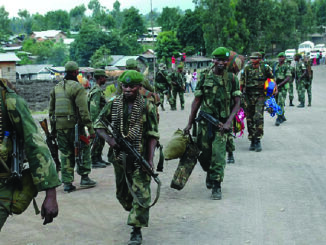
MNLA fighters

Tuareg people have been marginalised and oppressed for decades, often treated as second-class citizens, and facing catastrophic living conditions. Gauche Revolutionnaire and the CWI defend equal rights for Tuareg people, including crucially their right to self-determination. We stand against discrimination of any minority and against the divide-and-rule policies which have been applied for a long time by imperialism and by the local ruling classes in the region.

However, by allying themselves with ultra-reactionary forces and supporters of an Islamist dictatorship , how can the MNLA still even pretend to defend the democratic and legitimate rights of the Tuaregs?

As far as Ansar Dine and AQMI are concerned, they are not homogeneous, and what they did, especially in Timbuktu (massacres, requisitioning of houses etc..), show that they are not liberators, as some may have expected. In reality, these forces are just occupying a vacuum. They rose up with those permanent mercenaries - jihadists and others - who were notably released by the explosion of the situation in Libya. These are the same Islamists as those in Benghazi: those people who helped to sabotage the Libyan revolution in the making, with the assistance of the imperialist powers. According to Human Rights Watch, they have started to form troops of child soldiers with the goal of leading a holy war against the small “French Satan”.

So, for the French army, leaving the quagmire of Afghanistan for the Sahel seems risky. It is about using the military firepower of France for economic and geopolitical interests, as previous Presidents have done. France, by doing nothing, might have been gradually sidelined by the USA which had started intelligence missions and military training in the region. This is why Hollande has decided to do the job himself, even if it is by engaging in a war and supporting a corrupt power.

A former minister of the dictator Traoré in power

The current Malian government does not shine for its democratic character. Hollande and Fabius are engaging in a ground military offensive, through support for the army of Diango Sissoko, the current president of Mali. The latter came to power on 11 December 2012. In a country in disarray, where military putschists and mediocre politicians all portray themselves as “rectifiers” of democracy, the choice of Diango Sissoko was made. Yet he was a faithful follower of the authoritarian regime of Moussa Traoré, which fell in March 1991 following a revolt. Diango Sissoko was Secretary General of the Presidency with the rank of minister. But he managed to gradually find his feet and regain influence in the state apparatus, and in 2002 he found himself in the cabinet of the very person who ousted Traoré.

In the absence of other solution, they opt for more of the same, hoping to find a brief period of calm. This is somehow the choice of France and the reason for the current military intervention. If the Malian State explodes, it would leave a political vacuum in the central Sahara and in the Sahel. France has a vested interest in ensuring a strong power in Mali, even an authoritarian one, if it is not to see French interests being threatened, and uncontrolled Islamist groups getting access to the capital, Bamako.

Is it justified to intervene militarily in the region?

On the international plane, the French intervention in Northern Mali is welcomed by the other countries. In France, almost all political parties support the position of Hollande. Jean-Luc Mélenchon of the Front de Gauche and Noel Mamère (Greens) might denounce the non-consultation of the National Assembly, but do not clearly oppose the war.

Images of people from Bamako gladly welcoming the French intervention suggest that this intervention is ’just’ from a human and moral point of view. It is supposedly carried out to prevent Islamist groups from ransacking, burning and killing, and imposing reactionary laws justified by Sharia law. Everything happens as if it was a ‘just war’, the militias prevailing through elements of terror and plunder. About 150,000 people have fled to neighbouring countries, while over 230,000 are reported to have been internally displaced.

Three cities in the North of Mali are now controlled by the AQMI, and in surrounding villages, Islamist militants settle down and get married and some services have been reinstated. Here, the Malian state was virtually non-existent, and some militias are playing the role of a state and are partially organizing society. We cannot say that local inhabitants are in favour of the Islamists, but they can hardly be described as in favour of the current Malian State, which has abandoned them for decades.

Moreover, the Malian army does not stand by integrity and democratic methods, being itself responsible for numerous atrocities and abuses, as has been extensively reported by Amnesty International (which cites arbitrary arrests, killings, bombings and tortures against Tuareg people, “apparently only based on ethnic grounds”). Also, many legitimately fear that the imperialist-backed offensive is likely to be accompanied by further violent retaliations against Tuareg people, and to fuel ethnic tensions.

Inequality and poverty provide the ground for the rise of reactionary forces. A real alternative to these forces will not come from the French government, which proposes to reinstate the same corrupt people as before, or others who will turn out the same way. The fact that Foreign Minister, Laurent Fabius, declared he was confident that “Gulf Arab states would help the Mali campaign”, says a lot about the supposedly ‘democratic’ intentions of the French government in this war.

It is a safe bet to say that the French military intervention will increase tensions. It is likely to be a drawn-out military campaign whose costs will also be put on the shoulders of the French working class at a time of rising austerity and economic crisis. The “fight against terrorism” is also used to justify an increased presence of police and military on the streets of French cities.

The French government will also certainly aquire, on the back of the Malian people that it pretends to protect and liberate, a few “advantages” (concessions on resources or land etc) at the detriment of Mali’s development.

France’s entering into war has triggered a state of emergency throughout Mali. It is impossible for Malians opposed to the war and to AQMI to publish their views in the press, and censorship is reinstalled. Only a resolute struggle for the rights of all, in the North as in the South, for a decent life and for the control by the population of the country’s resources in order to satisfy the needs of all , would reduce the influence of, and ultimately stop, the Islamists.

We demand:

•Withdrawal of the French troops and of the ECOWAS - against imperialism. It is not bombs and airplanes that the Malian people need, but economic cooperation and development that is not done according to the interests of French multinationals and others.

•The wealth of Mali belongs to the Malian people! For the nationalization of the land and of the commanding heights of the economy, and the financing of a real economic development plan based on the needs of, and democratically controlled by, the Malian masses

•No to the state of emergency, for the reinstatement of all democratic freedoms in Mali

•Self-determination for the peoples of the Sahel and the Sahara, as well as of the peoples within each country, on the basis of equality of rights

The only solution would be for the Malian people to come together in the neighbourhoods and in the workplaces and organize themselves, to formulate their demands and to set up armed multi-ethnic defense committees, in order to oppose any dictatorship (whether the one to be put in place with the help of France, or the one that the Islamists want to establish).

The Tunisian and Egyptian revolutions have shown the way - that only through mass struggle by working people and the poor can change be achieved.


Europe

 video

Pakistan: May Day 2013, 03/05/2013

 further videos

CWI - get involved


solidarity

tamil solidarity campaign kazakhstan

featured links

Paul Murphy, MEP

cwi links

Marxist.net, CWI marxist archive

cwi comment & analysis

world economic crisis

analysis and commentary


cwi publications

marxism in today's world che

Che Guevara: Símbolo de Lucha

Por Tony Saunois

A socialist world is possible, the history of the cwi with new introduction by Peter Planning green growth, a contribution to the debate on enviromental sustainability

NEWS

South Africa: Mass retrenchment threat in mining industry demands mass action
18/05/2013, DSM (CWI South Africa) reporters:
Workers and Socialist Party calls for one-day-general strike

Iran: What would a Rafsanjani presidency mean?
18/05/2013, Kave Heydari, Iranian CWI supporter in Britain:
Iran’s June 14 presidential election takes place against the background of deep divisions in society and the regime.

Australia: Labour approves WA’s first uranium mine
17/05/2013, Socialist Party (CWI Australia) reporters Perth:
Australia’s federal environment minister Tony Burke gave the go ahead to Toro’s $270 million uranium mining project in the Wiluna region of Western Australia.

New Zealand: Racism and recession in New Zealand
15/05/2013, Jared Phillips, CWI New Zealand:
Working class unity needed to defend rights and living standards

Australian budget: Say ‘NO’ to the cuts agenda of the major parties
14/05/2013, Editorial comment from ‘The Socialist’, paper of the Socialist Party (CWI Australia):
We shouldn’t let either of the major parties tell us that ‘tough decisions’ or ‘hard cuts’ are required.

Ireland: ‘Bus Eireann workers in front line of class war - We should all support them!’
13/05/2013, Socialist Party (CWI Ireland) Reporters:
Bus workers take strike action over savage wage cuts and attacks on conditions

May Day in Nigeria: Jonathan government intensifies attacks on democratic rights
12/05/2013, Ebike Iseru, DSM (CWI Nigeria):
15 DSM members arrested at May Day rallies

Italy: The economic crisis becomes a political and institutional crisis
11/05/2013, Marco Veruggio, ControCorrente (CWI Italy):
The latest events that have happened in Italian politics mark a new phase of development in the crisis in the third European industrial power.

Malaysia: Election ’victory’ based on fraud
10/05/2013, Ravichandren, CWI Malaysia:
Ruling Barisan Nasional’s widespread fraud enrages opposition supporters and young people

Greece: Challenging the Golden Dawn
10/05/2013, Katerina Kleitsa , Xekinima (CWI Greece):
On 2 May the neo-fascist Golden Dawn attempted to distribute food in Syntagma square in Athens to people holding proof of Greek nationality.

British county elections: Capitalist parties rejected
10/05/2013, Editorial of the Socialist, paper of the Socialist Party (CWI England & Wales):
Time for a new mass workers’ party

Tunisia: The calm before the storm
09/05/2013, CWI reporter in Tunis:
New clashes on the horizon

Pakistan: General elections held amid political turmoil
08/05/2013, Khalid Bhatti, SMP (CWI Pakistan), Lahore:
Big landlords, capitalists and influential families are calling the shots

Sri Lanka: Successful May Day
08/05/2013, USP(CWI, Sri Lanka):
The United Socialist Party’s May Day demonstration passed successfully through a number of populous areas of Colombo, ending at Grand Pass Junction.

Hong Kong: Dockworkers’ strike ends after 40 days
07/05/2013, Vincent Kolo, chinaworker.info:
Union representatives declare a “half success” with a pay rise of 9.8 percent – but important issues are unresolved

Britain’s ’precariat’: Fighting for real jobs
06/05/2013, Claire Laker-Mansfield, Socialist Party (CWI England & Wales), first published in The Socialist:
’Get a job!’ is the constant refrain of privileged Tory ministers and vicious right-wing tabloids. A million unemployed young people are the subject of a relentless campaign of smears and lies.

Liverpool: Rally marks 30 year anniversary of election of socialist council
05/05/2013, Dave Walsh, Unite Convener for Liverpool City Council, from The Socialist, paper of the Socialist Party (CWI England & Wales):
Great event remembers the ’47’ struggle

Australian budget: Say ‘NO’ to the cuts agenda of the major parties
04/05/2013, Editorial comment from the May 2013 edition of ‘The Socialist’, paper of the Socialist Party (CWI Australia):
Those who created the crisis should be forced to pay.

Nigerian May Day arrests: All DSM members released [updated]
03/05/2013, Press statement by Segun Sango, general secretary DSM (CWI Nigeria):
The last set of DSM members still in the detention of the state security service (SSS) in Kaduna, Northwest Nigeria, and Ibadan Oyo state, Southwest Nigeria, as of yesterday, has been released.

Pakistan: May Day 2013
03/05/2013, Syed Fazal Abass Shah, secretary general PWF, Pakistan:
Progressive Workers Federation (PWF), TURCP and SMP organised and intervened in the May Day activities across the country

Bangladesh building collapse: Casualties of a rotten profit system
03/05/2013, The Socialist, paper of the Socialist Party (CWI England & Wales):
It is said that where labour is cheap, life is cheap. This is never more so than in the recent horrific deaths of over 400 garment workers crushed in a collapsed building in Dhaka, the capital of Bangladesh.

Hong Kong: Dockers’ strike shines a spotlight on Li Ka-shing’s business empire
03/05/2013, Dikang, Socialist Action (CWI supporters in Hong Kong):
Li Ka-shing owns 13 percent of the world’s port capacity and much more besides…

Taiwan: Over 20,000 march on May Day
02/05/2013, Chris Dite in Taipei, chinaworker.info:
‘Defend pensions! Stop corruption!’

Pakistan: May Day demonstration in Sindh
02/05/2013, SMP (CWI Pakistan), Sindh:
Photos of May Day demonstration in Sindh

Nigeria: Militarisation of May Day rallies
02/05/2013, Press statement by Segun Sango, general secretary DSM (CWI Nigeria):
DSM comrades arrested and detained

Portugal: Constitutional court ruling sends government into disarray
01/05/2013, Goncalo Romeiro, Socialismo Revolucionario (CWI in Portugal):
CC rules budget illegal for second time, government declares war against it

CWI Comment and Analysis

ANALYSIS

World economy: "Central banks are flying blind"
19/05/2013, Per-Åke Westerlund, from Offensiv, newspaper of Rättvisepartiet Socialisterna (CWI Sweden):
Increasing concerns and contradictions

Turkey / Kurdistan: PKK announces ceasefire
11/05/2013, Festus Okay, Sosyalist Alternatif (CWI Turkey):
On 8 May the PKK has begun to withdraw from Turkey. Millions are hoping now for an end to oppression and for democratic rights.

Women and the struggle for socialism: It doesn’t have to be like this
05/05/2013, Christine Thomas, Controcorrente (CWI Italy):
Christine Thomas’ book outlines how inequalities and discrimination against women have not disappeared and women’s struggles must be bound up with wider class struggle to be successful. Read the complete book online here.

Cyprus: On the edge of a catastrophic slump
25/04/2013, Niall Mulholland, CWI:
Socialist polices needed to resolve crisis in the interests of majority

US: After the Boston Tragedy
23/04/2013, Bryan Koulouris, Boston, Socialist Alternative (CWI supporters in the US):
NO to Racism and Repression

Britain: Combating violence against women
14/04/2013, Hannah Sell, on behalf of the Socialist Party (CWI England & Wales) Executive Committee:
A socialist perspective on fighting women’s oppression

Thatcher: A class warrior for capitalism
12/04/2013, Alistair Tice, Socialist Party regional secretary, Yorkshire:
Millions have been waiting for this day, 8 April 2013. Margaret Thatcher will never be forgiven for the devastation that her Tory governments’ policies wrought on working class communities in the 1980s - and is still being felt today.

Britain: Margaret Thatcher dies
08/04/2013, Peter Taaffe, Socialist Party (CWI England & Wales) general secretary:
Thatcher’s bitter legacy

Britain: A further round of savage austerity
08/04/2013, Peter Taaffe, Socialist Party (CWI England & Wales) general secretary:
We must stop them!

Israel: “There is a future” – of cuts, racism and resistance
05/04/2013, Socialist Struggle Movement (CWI Israel/Palestine):
Weak Israeli government will try to implement austerity budget, and would try to maintain the occupation, possibly under a new cover of "negotiations" with Palestinians. Resistance likely on all fronts.

Cyprus: “Working people pay high price for crisis of euro and capitalism”
31/03/2013, Niall Mulholland spoke with Athina Kariati from New Internationalist Left (CWI in Cyprus) about Cyprus’s deal with the Troika, what it will mean for working people and what is the socialist solution to the crisis:
Interview with a Cypriot socialist

China: New leadership rejects democratisation
28/03/2013, Vincent Kolo, chinaworker.info:
At annual NPC-CPPCC meetings Xi Jinping and Li Keqiang talk of ‘tough reforms’ for economy, but rule out ‘Western models’

Venezuela: After the death of Hugo Chávez
24/03/2013, Tony Saunois, CWI, a shorter version of this article was first published in Socialism Today, magazine of the Socialist Party (CWI England & Wales:
Radical, populist policies and anti-imperialism helped transform the political situation

Italy’s clowns: No joke for establishment parties
23/03/2013, Christine Thomas, ControCorrente (CWI in Italy), first published in Socialism Today, magazine of the Socialist Party (CWI England & Wales):
In his ‘tsunami’ election tour Grillo began to give voice to the deep discontent at economic crisis and austerity

Cyprus/EU: Eurozone back in turmoil
22/03/2013, Tony Saunois, CWI:
No trust in capitalist government! No austerity for the Euro! Kick out the Troika! For a socialist alternative!
[Updated article, 25 March]

South Africa: Workers & Socialist Party launched in Pretoria
21/03/2013, CWI reporters, South Africa:
Launch surpassed all expectations

Iraq: Ten years since ‘shock and awe’
20/03/2013, Niall Mulholland, from The Socialist, weekly newspaper of the Socialist Party (CWI England and Wales):
Imperialism’s harvest of death and destruction

March 8th: The day of international working women’s solidarity
07/03/2013, Clare Doyle, CWI:
Beware the anger of women against the bosses’ system!

Hugo Chavez dies: The struggle continues
06/03/2013, Tony Saunois, CWI Secretary:
Millions of Venezuelan workers, the poor and youth will mourn the death of Venezuelan president, Hugo Chavez

Lebanon: Public sector workers on indefinite strike over wages
04/03/2013, Tamer Mahdi, CWI:
Workers’ unity against big business shows potential for anti-sectarian, socialist alternative

Portugal: New explosion against austerity and the government
03/03/2013, socialistworld.net:
“Screw the Troika – the people are the best rulers”

Tunisia: ‘Buckshot’ Ali Larayedh appointed prime minister
27/02/2013, CWI supporters in Tunisia:
Down with the Ennahdha regime! Down with the system!

Italy: Voters reject austerity in ‘tsunami’ election
27/02/2013, Chris Thomas, Controcorrente (CWI in Italy):
Political instability, crisis and new opportunities ahead

Spain: Corruption scandal leaves government on the brink
24/02/2013, Danny Byrne, CWI:
What strategy to do away with rotten government and system?