
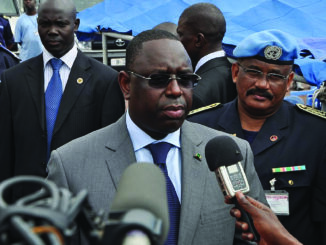

The southern Brazilian city of Porto Alegre hosted for the second year running the World Social Forum – billed as an alternative to the World Economic Forum, the international gathering of the representatives of capitalism, which took place at the same time in New York." />

deutsch |  english |  español  |  français  |  italiano  |  nederlands  |  polski  |  português  |  svenska  |  türkçe  |  中文  |  عربي  |  русский

latest news

Greece
New elections due as pro-austerity coalition talks fail

15/05/2012: For a Left government! For anti-austerity, pro-worker, socialist policies!

  Greece

Tunisia
General strikes, power struggles and an economic stalemate

15/05/2012: Republic’s president, Marzouki, afraid of ‘new revolution’

  Tunisia

 Kazakhstan
MEP speaks out against repression

15/05/2012: "Despite this ferocious oppression, the opposition and discontent of the working class cannot be silenced"

  Kazakhstan, Video

US
Socialist candidate challenges corporate politics in Washington state

13/05/2012: "During an election dominated by career politicians who are loyal to big business, I am running as a Socialist Alternative candidate to make sure there is at least one independent left-wing, pro-worker candidate in Washington State worth voting for."

  US

US
In calculated move, Obama supports gay marriage

12/05/2012: Step up the Struggle for Equality

  LGBT, US

Nigeria
Experiences of the explosion of class struggle

12/05/2012: Urgency of a working class alternative proven again

  Nigeria

Russia
Moscow left holds May Day Moscow demonstration

12/05/2012: Lively and political CWI contingent attracts variety of activists

  May Day, Russia

May Day
Demonstration in Uleåborg Finland

12/05/2012: Meeting discusses involvement in Afghanistan

  Finland, May Day

Kazakhstan
Miners’ strike ends in victory for workers

11/05/2012: Campaign Kazakhstan reports that newspapers in Kazakhstan said a strike by miners at KazakhMys ended on 7 May with a complete victory for the workers.

  Kazakhstan

 Irish referendum
No to the austerity treaty!

10/05/2012: On 31 May Irish voters are asked to vote on the European fiscal treaty. This video explains what the treaty is about.

  Ireland Republic, Video

May Day in Nigeria
Fanfare fails to mask workers’ anger

10/05/2012: May Day should have offered opportunity for workers to pose their demands and agitation before the government

  May Day, Nigeria

France
Weekend that shocked Europe

09/05/2012: Austerity rejected in Eurozone’s second biggest economy

  France

Sri Lanka
United left May Day in Colombo

09/05/2012: Socialist organisations march to joint rally

  May Day, Sri Lanka

Britain
Legitimacy of Cameron and Clegg further shattered

07/05/2012: The Con-Dem government suffered a crushing defeat in last Thursday’s elections for local authorities and in the mayoral contests apart from London.

  Britain

The capitalist “vampire squid” and the class struggle in Europe

06/05/2012: As economic crisis worsens and class struggles continue in Spain, Greece, Portugal and elsewhere in Europe, the need for working class fight-back and to build the influence of Marxism grows.

  CWI Comment And Analysis, Europe

Hong Kong
Thousands march on May Day

05/05/2012: Socialist Action (CWI) campaigning against the capitalist 1% and against racism

  Hong Kong, May Day

Sweden
May Day in Gothenburg

05/05/2012: Bobby Seale as guest speaker

  May Day, Sweden

 Kazakhstan
Trial of Vadim Kuramshim resumes

04/05/2012: Solidarity needed to free Vadim!

  Kazakhstan, Solidarity

Pakistan
May Day in Sindh

04/05/2012: Fotos of impressive march

  May Day, Pakistan

Lebanon
Build a mass workers’ movement to get rid of the corrupt ruling class

03/05/2012: For a workers’ programme that puts forward the socialist alternative

  Lebanon, May Day

Germany
Heading towards days of action against Troika austerity

03/05/2012: Days of action planned in Frankfurt/Main against European Central Bank and big finance

  Germany

Britain
"We’re striking back on 10 May"

02/05/2012: Pension cuts, job cuts, service cuts

  Britain

Ireland
Water charges are just paving the way for privatisation

02/05/2012: Irish government doesn’t seem to have learned anything from the massive opposition to its Household Tax

  Ireland Republic

France
Down with Sarkozy and austerity policies!

02/05/2012: Make the rich and the bankers pay for their crisis!

  France

Sweden
Chinese premier’s visit met by vociferous democracy protests

01/05/2012: CWI supporter Zhang Shujie and other activists took to the streets when Wen Jiabao visited Stockholm and Gothenburg

  China, Sweden

May Day 2012
Celebrate working class history and fight for new victories!

30/04/2012: International Workers’ Day and the socialist alternative to austerity and barbarism

  CWI Comment And Analysis, May Day

 Kazakhstan
Three activists jailed for 15 days

29/04/2012: Immediate protests and financial help needed

  Kazakhstan, Solidarity

Iceland
The crisis is far from over

28/04/2012: “Up to half of all Icelandic families are bankrupt”

  Iceland

Referendum in Ireland
Irish Congress of Trade Unions decides not to take a stance on European fiscal treaty

27/04/2012: Socialist MEP calls for unions to advocate ‘No’ vote on ‘austerity’ treaty

  Ireland Republic

State repression
European court condones police ‘kettling’

27/04/2012: Eleven years after the ‘kettling’ (containment) of an anti-capitalist protest in central London, the European Court of Human Rights delivered its judgment on the police tactic.

  Britain

Nigeria
42% youth unemployment

26/04/2012: Build A Mass Movement To Fight For Jobs

  Nigeria, Youth

Senegal elections
No hope in pro-capitalist Sall

25/04/2012: Despite the enormous agricultural and mineral resources of the country, the various capitalist political elites could neither resolve the economic nor nationality problem.

  Africa

Nigeria
May Day - workers’ struggle of the past year and the tasks ahead

25/04/2012: Since last May Day, fierce battle between public sector workers and the capitalist ruling class of different shades and disguises have erupted.

  May Day, Nigeria

Brazil

Porte Alegre 2002

www.socialistworld.net, 15/02/2002
website of the committee for a workers' international, CWI

cwi The southern Brazilian city of Porto Alegre hosted for the second year running the World Social Forum – billed as an alternative to the World Economic Forum, the international gathering of the representatives of capitalism, which took place at the same time in New York.

Tony Saunois, Committee for a Workers International, 15 February 2002

16,000 delegates from a multitude of diverse organizations from all over the world attended the Forum in Porte Alegre along with tens of thousands of people came from all over Latin America and the world. The theme of this massive international gathering was ‘Another World Is Possible’. The local PT (Workers Party) led state government had billboards throughout the city announcing the same slogan and promise.

Diverse organisations

Represented amongst the tens of thousands present were every imaginable campaign or grouping that is in conflict with neo-liberal policies and with every other aspect of capitalist society. Every day representatives of a variety of oppressed and exploited peoples could be found at the city’s principle university – venue to the main conference settings. From Brazil thousands were present representing health workers, water workers, the landless MST movement, students and the indigenous peoples. Human rights campaigners from Paraguay, Argentina and other countries, Palestinians, Iraqis and others came to represent their cause. Environmentalists, Greens, Gay rights campaigners, campaigns for access to drugs at affordable prices for those infected with HIV and an array of other interests lobbied every day. These were joined by lobbyists for Esperanto and other groups.

The sheer size of the gathering and the different interests represented clearly refuted speculation by capitalist commentators and analysts that the anti-capitalist movement had died following the attacks on the World Trade Center on September 11 th 2001 and Bush’s ‘war against terrorism’. Porte Alegre this year took place not only following the events that followed September 11 th. The mass social explosion and toppling of five Presidents in Argentina, the forthcoming election in Brazil and the recent decision of the Brazilian CUT trade union federation to call a general strike on March 21 st, formed the decisive background to WSF.

Porte Alegre demonstrated that the anti-capitalist movement continues and is growing in support amongst certain groups. This was shown in the unofficial youth camp in Porte Alegre that this year was attended by up to 10,000 people, compared with 3/4,000 last year. The largest delegation at the Forum came from Brazil. Significantly the second largest delegations, with 1,400 each, came from Argentina and Italy.

Reflected at this years World Social Forum was the growing opposition to the neo-liberal policies and globalisation of the world economy that were the overwhelmingly dominant tendency in capitalism during the 1990’s. The policies of privatisations, lowering of tariffs, greater integration of the world economy have massively widened the gap between the rich and poor. The tightened grip on the neo-colonial world by the main western imperialist powers has deepened the huge gulf between the so-called colonial world and the imperialist countries. It has also resulted in a much sharper division between rich and poor within all countries.

Increasing exploitation

The consequences of modern capitalism – the growing gap between rich and poor, increasing exploitation and outbreak of national, ethnic and religious clashes - have produced massive opposition to both these horrors and even to capitalism itself. This is what was reflected at Porte Alegre in the idea that "Another World Is Possible", something that was supported by all those present.

However, while tens of thousands came to Porte Alegre looking for an alternative to the capitalist world, in the official WSF activities there was no explanation of what is the alternative to capitalism. At Porte Alegre there was in reality two conferences – the official meetings and the unofficial discussions, lobbies and events.

While the youth, workers and other groups exploited by capitalism rallied to the idea that "another world is possible" at the Forum there was no explanation of what this world was to be or any perspective of how to fight to achieve it.

In the official conferences, representatives from numerous organizations, including trade union, NGO’s intellectual and others were developing a set of alternative ideas to neo-liberalism and globalisation. The ideas that they were developing point to an attempt to offer a new set of "reformist policies" to replace the neo-liberalism of the 1990’s. However, the ideas that they overwhelmingly put forward amounted to a programme to build a more humane version of capitalism – capitalism with a human face.

Also present in Porte Alegre were some capitalist politicians and their representatives who have been party to implement the neo-liberal policies of the 1990’s. Amongst them were representatives of the French President Chirac, four French Cabinet Ministers, the Belgian Prime Minister, Mario Soares, former Portuguese Socialist Party President responsible for helping prevent a socialist revolution in Portugal in the 1970’s, and Mary Robinson , the former Irish President who is now working with the UN.

The presence of these representatives of capitalism point to the emergence of a wing of capitalist representatives who are now being compelled to develop alternative capitalist policies to the neo-liberal programmes of the 1990’s. This is being forced on them by the onset of the economic crisis and the prospect of "other Argentinas". Their presence also helped to act as a check on some of the more radical intellectuals who were present.

However, the brutality of capitalism in the more period is a product of the deepening economic crisis of capitalism that means that, even in the main imperialist countries, the reforms and concessions that could be paid for during the post Second World War upswing of capitalism can no longer be afforded. Attempts to create a more "humane capitalism" will not be able to satisfy the demands of the protestors outside the official sessions of the World Social Forum or eliminate the worsening social conditions that are being created internationally by the deepening economic crisis.

Multi-class composition

The World Social Forum had a multi-class composition and reflected the different class interests and objectives of those participating in it – in both the official and unofficial sessions. The workers, youth and others protesting outside the official sessions were looking for an alternative to capitalism and a means of fighting against it. The radical intellectuals in the main sought to develop ideas that would remove the brutality and poverty of capitalism, but without challenging the basis of it or explaining the need for an alternative to the market.

It is necessary to build a socialist alternative in the anti-capitalist movement with a programme that can overthrow capitalism and imperialism, and begin to build another world – a socialist one. Some proponents of the ‘new reformist’ ideas that are emerging quite skilfully attack the brutality of modern capitalism and argue that the rule of capital needs to be challenged. However, they do not explain how this is can be done and all of them put forward proposals that remain within the framework of the market or capitalist economy but with constraints and checks applied.

Susan George for example, from ATTAC France and one of the most radical leaders of the anti-capitalist movement, outlined the devastating situation that exists in the capitalist world today. She argued that a multiple crisis confronts the world in relation to poverty, the environment, and democracy where "citizens can not be heard". 50% of the world lives on US$2 or less per day and the rest of the world faces lay offs and over capacity. The devastating situation facing the neo-colonial world was illustrated by Brazil that, between 1980 and 2000, had paid US$587 billion back to the world banking system only to find itself with a debt four times greater than that which existed in 1980!

Susan George

She correctly argued that conditions were now being driven back to those that existed in the 19th century as every gain made during the last 100 years is now under attack by the "establishment".

However, having made a devastating criticism of capitalism, she then limited herself to proposals that should be put forward within the market economy. To meet the domination of the new global economy, Susan George argued, international action was now needed as national reforms had been implemented in the past. These measures should include the cancellation of foreign debt, an international tax not only on financial transaction but on mergers should be implemented together with a clampdown on tax havens. These steps should she argued finance a world "Marshall Plan" similar to that which was implemented after the Second World War in western Europe. The multi-nationals should be legally controlled.

What her programme does not face up to is the fact that the driving force of capitalism itself as a system is the maximization of the profits of major companies at national and international level. What Susan George failed to answer is how and which organisations should implement such a programme? What should the movement do when the multi-national corporation and financial system refuse to accept such controls on their interests she did not address.

The question of controlling the multi-national companies was a recurring theme put forward by some of the more radical intellectuals at the Forum. This was the major theme by Kevin Danaher from ‘Global Watch USA’. He explained that the "interests and right of humanity" had become "subordinate to capital, money values and the transnational corporation". Going further than some other speakers he supported the abolition of the IMF and World Bank and wanted the separation of corporations from the state.

Having pointed out the power and control the multi-national companies have, Danaher then leaves this to one side and seems to imagine that they will meekly accept controls being imposed on them by parliaments whose members’ interests are overwhelmingly linked to the interests of the major companies and capitalism.

Going further than any of the other intellectual Danaher went on to argue the need to build a mass movement based on alliances. Once this was achieved then individual multi-nationals such as Exxon should be targeted one at a time for a campaign against them and then be nationalised. However, even this was not argued from the point of view replacing capitalism with socialism. The idea is to convince companies to behave better. "If the big ones get the message then the smaller corporation will get the message."

Ultimate goal

In answer to questions from members of the CWI he accepted that socialism would develop internationally and was the ultimate goal. However, he argued that socialism should not be spoken about because it, as a word it had become "polluted" under the regimes in eastern Europe. The issue was therefore if "capital was to rule or civil society".

Walden Bello from the Philippines clearly spelt out that his proposal to transform the plight of the mass of the world’s population remained within capitalism. His ideas centre on dealing with the excesses of capitalism and the dominant trend of globalisation during the 1990’s. The IMF is now obsolete, he argued, and its power should be emasculated and some institutions abolished. No new centralized power is necessary what should be strengthened is "to give more space to space and compromise. There needs to be a system of multi-checks and balances" Organisations such as the ILO should be strengthened along with regional trading blocks such as Mercosur in Latin America.

As the CWI has explained previously the onset of a world economic recession will see the checking, and in some cases a partial reversal, of the dominant trend of globalisation of the world economy. This will result in the emergence of clashes both between the various regional blocks and individual countries that could see the adoption of policies such as trade tariffs and other measures to try and protest their own interests. As recent events in Argentina have demonstrated, others steps such as state intervention into sectors of the economy will also be adopted, representing a change from the dominant tendency of the 1990’s.

However, such measures, which may also involve some temporary concessions being given to workers, the middle classes and others, will not fundamentally change capitalism’s character. Furthermore so long as capitalism exists, any concessions won through struggle or given by governments seeking to win support, will ultimately be undermined and possibly taken away by new crises.

However, any such measures taken by different representatives of the capitalist class will not resolve the horrors facing the mass of the population in the different regions of the capitalist world. Implicit in Bello’s argument was the illusion idea that the regional capitalist leaders in such blocks as Mercosur would be better than the imperialist western powers in their dealings with the working class, the middle class, land workers and others suffering under capitalism. The history of Latin American itself, where practically every single country has experienced a brutal military dictatorship at some time over the last fifty years, undermines Bello’s illusion.

An international feature today is the very sharp rightward move of the trade union leaders away from any idea of class struggle and towards the acceptance of capitalism and "partnership" with bosses. The result is that, in many countries, the privileged trade union bureaucracy is an important obstacle currently confronting workers seeking to fight for their interests. In the Forum this was clearly illustrated by a representative of the International Metal Workers Federation. Marcelo Melentacchi, who said the trade unions should negotiate with the multi-nationals because "we want them to contribute to the economy and society", in other words try to be their partners!

A theme present in many of the contributions from the official speakers was the need to maintain the diversity of the anti-capitalist movement and to forge alliances. This was used as an argument against "sectarianism" and any idea that one group could conduct the struggle alone.

Socialists support the idea of unity in struggle of all those oppressed by capitalism. At the same time it is the working class that has the central role to play in the struggle to overthrow capitalism and build socialism. This is because under capitalism it develops a collective understanding and common class interest that enables it to be the decisive force in ending the capitalists’ private ownership and control over the decisive sectors of the economy and society.

However, many speakers attempted to diminish the role of the working class and in effect tried to "de-class" the anti-capitalist movement. The role of other groups was emphasized along with emphasis on the need for alliances. Danaher argued this point: "You are a workers for only eight hours a day. You are a consumer for a certain number of hours. But you are a citizen for twenty four hours a day."

Even trade union representatives such as Willie Madisha from COSATU emphasized that the trade unions and workers were too weak and needed alliances with other forces. While underestimating the strength of the workers movement, these statements did not refer to those countries where workers and their families are a minority of the population. For such leaders these are coded statements that they will do not intend to lead a struggle to replace capitalism and use the issue of forging alliances with other forces as an excuse not to struggle for socialism. They ignore experiences like January’s two-day general strike in Nigeria, two weeks before the Forum, which was supported by the overwhelming majority of people in Africa’s most populous country and showed in practice how the working class could lead an entire nation in struggle.

As recent events in Argentina, and the massive general strike in South Africa against privatisation last year, have demonstrated the working class and others exploited by capitalism can either force trade unions to act or go over the heads of the trade union leaders and struggle against the effect of capitalism and the policies introduced by its representatives.

Even most radical leaders of the movement failed to outline a clear perspective or proposals to organise the movement forward and take it forward. The question of building a political alternative to capitalism and an organised force of workers and others exploited by capitalism is, as events in Argentina have demonstrated, more urgent than ever. New mass parties of the working class, that are democratically controlled, in which the leadership is accountable and not corrupt, with a fight socialist programme are needed.

Susan George argued that the movement should be strengthened, maintain its diversity and as an international movement, rest on strong national alliances. These alliances should be based on the workers, peasants and intellectuals. However, this perspective was not developed to concrete proposals but left in the air with abstractions. Porte Alegre, Susan George commented, was creating a "new world order. A society of society was being created." But then cautioned, " not to expect too much too soon."

Danaher, urged the targeting of specific multi-national companies, boycotting the likes of GAP and building alternative organic economies.

The Forum in Porte Alegre in many respects represented a new phase in the emergence of the anti-capitalist movement. In particular the question of the programme and ideas that it supports was a central part this events. The youth and workers who can to these events were looking for a clear alternative to capitalism. However nothing was put forward by the leaders of the movement that offered an alternative to the capitalist rule of society.

This contradiction is certain to increase in the coming period and lead to conflict within the movement about the way forward. The need to build a socialist current within the anti-capitalist movement as an alternative to the idea of creating a better version of capitalism is more urgent than ever because of the deepening crisis and mass struggles that are now emerging in Latin America and internationally. The upheavals in Argentina clearly show that the mass of workers and middle class are now prepared to fight against neo-liberal policies and even capitalism. What is now needed is to campaign for socialism to be seen as the only viable alternative to capitalism. The emblem of the World Social Forum – ‘Another World is Possible’ is correct. However it is essential to add that ‘A Socialist World is Necessary’ and explain what programme and task are necessary to achieve it.


Free Vadim! Europe

 video

Kazakhstan: MEP speaks out against repression, 15/05/2012

 further videos

CWI - get involved


solidarity

tamil solidarity campaign kazakhstan

featured links

Paul Murphy, MEP

cwi links

Marxist.net, CWI marxist archive

cwi comment & analysis

world economic crisis

analysis and commentary


cwi publications

marxism in today's world che

Che Guevara: Símbolo de Lucha

Por Tony Saunois

A socialist world is possible, the history of the cwi with new introduction by Peter Planning green growth, a contribution to the debate on enviromental sustainability